
 EN (English)



Rider–Waite–Smith Tarot
The deck that defined modern tarot.
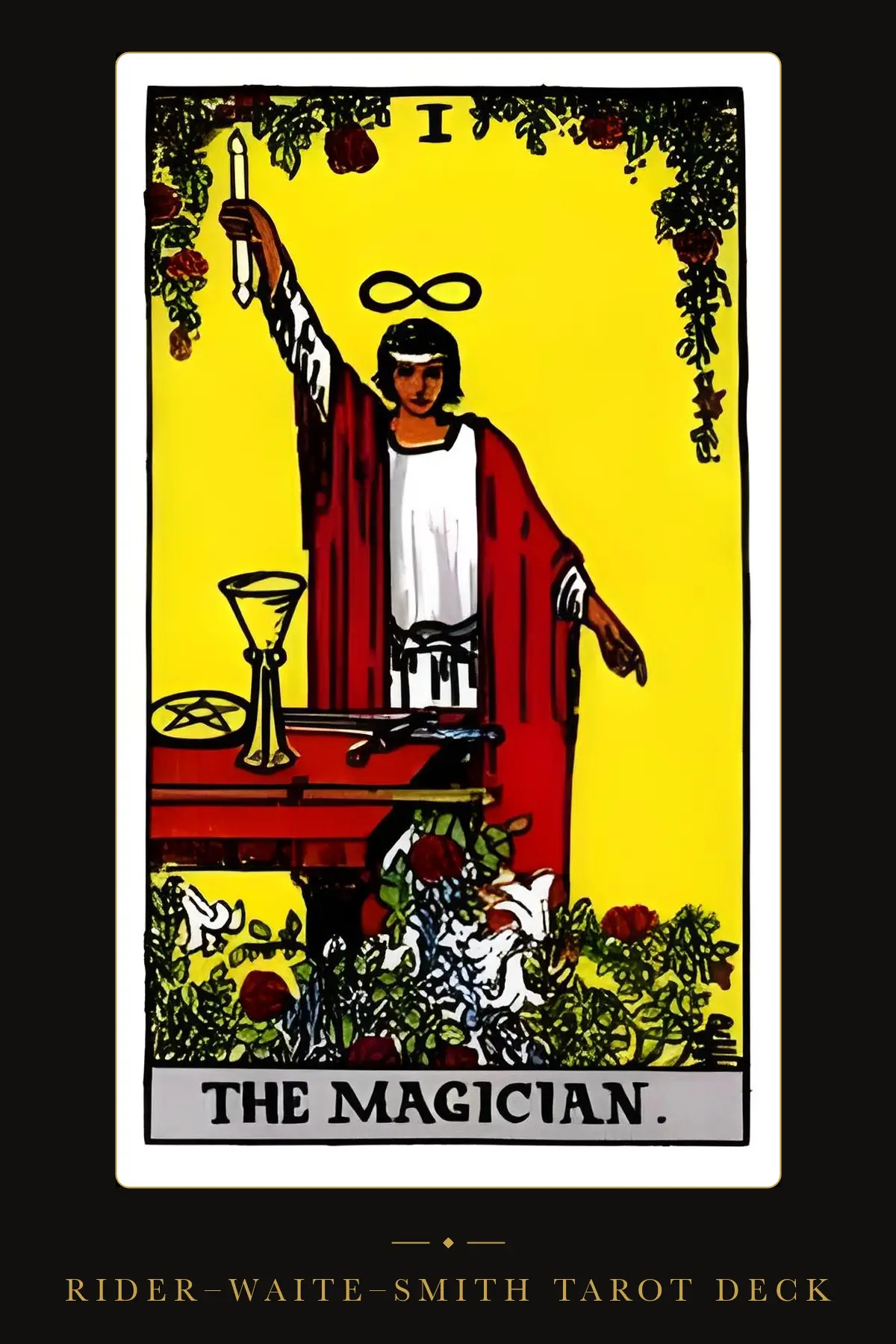
The Rider–Waite–Smith Tarot (1909) is the foundational deck of modern cartomancy: 78 cards conceived by Arthur Edward Waite and illustrated by Pamela Colman Smith. It was the first mass-market deck with fully illustrated Minor Arcana.
- Cards
- 78
- Major Arcana
- 22
- Minor Arcana
- 56
RT
What makes it matter
- First deck in history with fully illustrated scenic Minor Arcana, inspired by the 15th-century Sola Busca Tarot
- Major Arcana realigned to the Golden Dawn's zodiacal sequence: Strength moved to VIII, Justice to XI
- Built on the Qabalistic Tree of Life: 4 suits = 4 worlds, 10 pip ranks = 10 Sephirot, 22 trumps = 22 paths
- Over 100 million copies in circulation in more than 20 countries
- Source of the Celtic Cross spread and the 'Fool's Journey' reading of the Major Arcana
- The structural blueprint for nearly every modern tarot deck
About the deck
First published in December 1909 by William Rider & Son of London, the Rider–Waite–Smith Tarot transformed tarot from an obscure Continental curiosity into the world's most widely used tool for divination and self-reflection. The deck was conceived by Arthur Edward Waite, a scholar of Western mysticism, and painted by Pamela Colman Smith. Both were initiates of the Hermetic Order of the Golden Dawn, the secret society whose teachings shaped the deck's inner architecture.
Its great revolution was visual. Where earlier decks such as the Tarot of Marseilles showed only geometric arrangements of suit symbols on the Minor Arcana, Smith gave every one of the 56 suit cards a full allegorical scene: human figures and landscapes that make each card's meaning legible on sight. Drawing on the 15th-century Sola Busca Tarot and on her own background in theatre design, she created images that read like frozen moments on a stage, open to intuition even for a complete beginner.
Beneath the accessible surface lies a rigorous esoteric system. Waite realigned the Major Arcana to the Golden Dawn's astrological correspondences — famously swapping Strength and Justice — and bound the whole deck to the Qabalistic Tree of Life: four suits for the four worlds of creation, ten pip ranks for the ten Sephirot, twenty-two trumps for the twenty-two connecting paths. With over one hundred million copies in circulation, the Rider–Waite–Smith deck remains the visual and structural blueprint for nearly every tarot deck published since.
The Rider–Waite–Smith Tarot: History, Symbolism, and Meaning
The Rider–Waite–Smith Tarot — also known as the Rider–Waite, Waite–Smith, or simply the Rider Tarot — is the most influential tarot deck ever created. First published in December 1909 by William Rider & Son of London, it turned tarot from a niche divinatory tool into a global visual language for introspection and spiritual exploration. Today, with an estimated one hundred million copies in circulation across more than twenty countries, it serves as the structural template for nearly every modern deck. Learning the Rider–Waite–Smith is, in effect, learning the grammar of tarot itself.
Who created the Rider–Waite Tarot?
The deck was the work of two very different people from London's turn-of-the-century occult scene. Arthur Edward Waite (1857–1942) was a scholarly mystic devoted to uncovering what he called the Secret Tradition — a hidden current of spiritual enlightenment he believed ran through Masonic, Rosicrucian, and Hermetic teachings. A member of the Hermetic Order of the Golden Dawn, Waite set out to produce a "rectified" tarot: a deck purged of historical accretions and aligned with a coherent system of universal archetypes.
The deck's images, however, belong to Pamela Colman Smith (1878–1951). Nicknamed "Pixie," Smith was a painter, illustrator, folklorist, and theatre designer who had studied at the Pratt Institute and exhibited at Alfred Stieglitz's New York gallery. In 1909 she produced all eighty paintings for the project, and was paid only a token fee. Her role was marginalized for decades, and she died in poverty in Cornwall, buried in an unmarked grave. The modern shift from "Rider–Waite" to "Rider–Waite–Smith" or "Smith–Waite" is a deliberate act of recognition for the artist whose vision made the deck what it is.
The revolution of the illustrated Minor Arcana
Before 1909, decks in the Marseilles tradition showed the Minor Arcana as bare arrangements of suit symbols: three swords, seven cups, and so on. Waite, focused on the trumps, gave Smith only sparse keyword lists for the 56 suit cards — and that freedom produced the deck's defining innovation: the scenic pips. Every suit card became a miniature stage scene, and its meaning could now be read at a glance, with no keyword lists to memorize.
Smith found her key inspiration in the Sola Busca Tarot, a Northern Italian deck from around 1491 and the earliest known complete 78-card tarot with fully illustrated suit cards. She studied photographs of it at the British Museum in 1907–1908, and the influence is unmistakable: her Three of Swords — a heart pierced by three blades — is drawn directly from the Sola Busca, and the burdened figure of the Sola Busca Ten of Swords reappears as her Ten of Wands. Around these Renaissance borrowings she painted the countryside she knew best, the hills of Kent and East Sussex, which gives even the strangest cards a familiar English backdrop.
Waite's structural reforms: why Strength and Justice are swapped
Waite's own contribution was the systematic realignment of the Major Arcana with the teachings of the Golden Dawn. His most famous change reversed a five-hundred-year-old convention: in the Marseilles tradition, Justice was trump VIII and Strength trump XI; Waite exchanged them. The reason was astrological. With Strength (the Lion, Leo) at VIII and Justice (the Scales, Libra) at XI, the trumps follow the natural order of the zodiac — Cancer (The Chariot), Leo (Strength), Virgo (The Hermit), Libra (Justice). The renumbering also places Justice at the exact mathematical center of the 22 trumps, a fitting position for the card of cosmic balance.
Waite also softened the deck's medieval Catholic imagery into a universal symbolic language: the Papess became The High Priestess, crowned with the lunar horns of Isis and seated between the pillars of Solomon's Temple; the Pope became The Hierophant, a universal revealer of mysteries; The Lovers were redrawn as Adam and Eve beneath the Archangel Raphael; and the House of God was renamed The Tower to match its Golden Dawn correspondence with Mars.
The Qabalistic architecture of the deck
Beneath the pictures lies a precise map of the Hermetic Qabalah's Tree of Life. The four suits correspond to the four worlds of creation and the four letters of the divine name: Wands to Atziluth and Fire, Cups to Briah and Water, Swords to Yetzirah and Air, Pentacles to Assiah and Earth. The pip cards from Ace to Ten trace the descent of energy through the ten Sephirot: from the pure spark of the Ace (Keter) through the conflict of the Five (Gevurah) and the harmony of the Six (Tiferet) to the full material manifestation of the Ten (Malkuth). The 22 Major Arcana correspond to the 22 paths connecting the Sephirot, each assigned a Hebrew letter and an astrological force: The Fool to Aleph and Air, The Magician to Beth and Mercury, all the way to The World, Tau, and Saturn.
The Fool's Journey and the Celtic Cross
The deck's narrative density invites reading the Major Arcana as a single story: the Fool's Journey. The unnumbered Fool travels through three septenaries of seven cards: the first (Magician to Chariot) develops the conscious self and mastery of the material world; the second (Strength to Temperance) confronts society, mortality, and the inner life; the third (Devil to World) faces transpersonal forces and ends in cosmic integration.
Waite's companion book, The Pictorial Key to the Tarot, also popularized the ten-card Celtic Cross, still the world's most widely used spread. Six cards form a cross mapping the querent's situation — what covers, crosses, crowns, and underlies them, what lies behind and before — while a four-card staff reads the self, the environment, hopes and fears, and the final outcome.
Editions and printings: from Pam A to the Centennial
Collectors distinguish the early printings by their line art and card stock: the prized "Pam A" (1910–1920) with its "cracked mud" back design, followed by the recut Pam C, Pam B, and Pam D editions of the 1920s–1930s. After U.S. Games Systems acquired the rights in 1971, recolored editions multiplied: the vivid Albano–Waite (1968), the soft pastel Universal Waite (1990), the luminous Radiant Rider–Waite (2003), and the Smith–Waite Centennial Edition (2009), which restores the muted 1909 palette and places the artist's name first. All of them keep the 1909 structure intact; only the palette, borders and line weight change. That is why a Pam A from 1910 and a glossy borderless edition printed last year still read as the same deck.
The deck at a glance
- Created by
- Arthur Edward Waite
- Illustrated by
- Pamela Colman Smith
- First published by
- William Rider & Son
- Year
- 1909
- Country
- UK
- Tradition
- Hermetic Order of the Golden Dawn
- Also known as
- Rider Tarot, Rider–Waite Tarot, Waite–Smith Tarot, Smith–Waite Tarot, RWS
- Influences
- Sola Busca Tarot (c. 1491), Tarot of Marseilles, Hermetic Qabalah and the Tree of Life, Golden Dawn astrological correspondences
- Court ranks
- Page · Knight · Queen · King
- Reversals
- Read upright and reversed
- Recommended spreads
- Celtic Cross, Three Card, Card Of The Day
- Best for
- Beginner
Esoteric correspondences
Astrology
Numerology
Kabbalah
Elements
All 78 cards
Every card links to its full page: meanings upright and reversed, symbolism, and readings across love, career and more.
Major Arcana

The Fool

The Magician

The High Priestess

The Empress

The Emperor

The Hierophant

The Lovers

The Chariot

Strength

The Hermit

Wheel of Fortune

Justice

The Hanged Man

Death

Temperance

The Devil

The Tower

The Star

The Moon

The Sun

Judgment

The World
Wands

Ace of Wands

Two of Wands

Three of Wands

Four of Wands

Five of Wands

Six of Wands

Seven of Wands

Eight of Wands

Nine of Wands
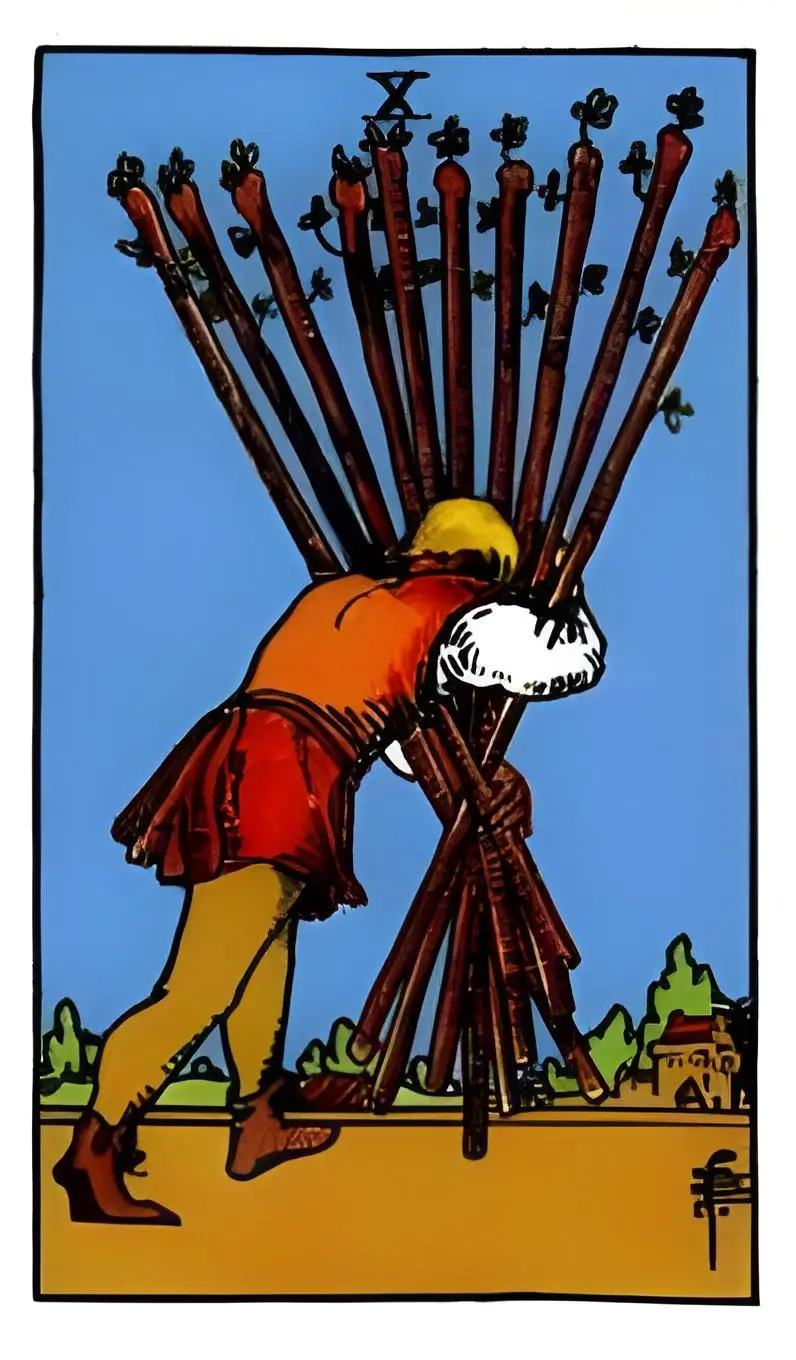
Ten of Wands

Page of Wands
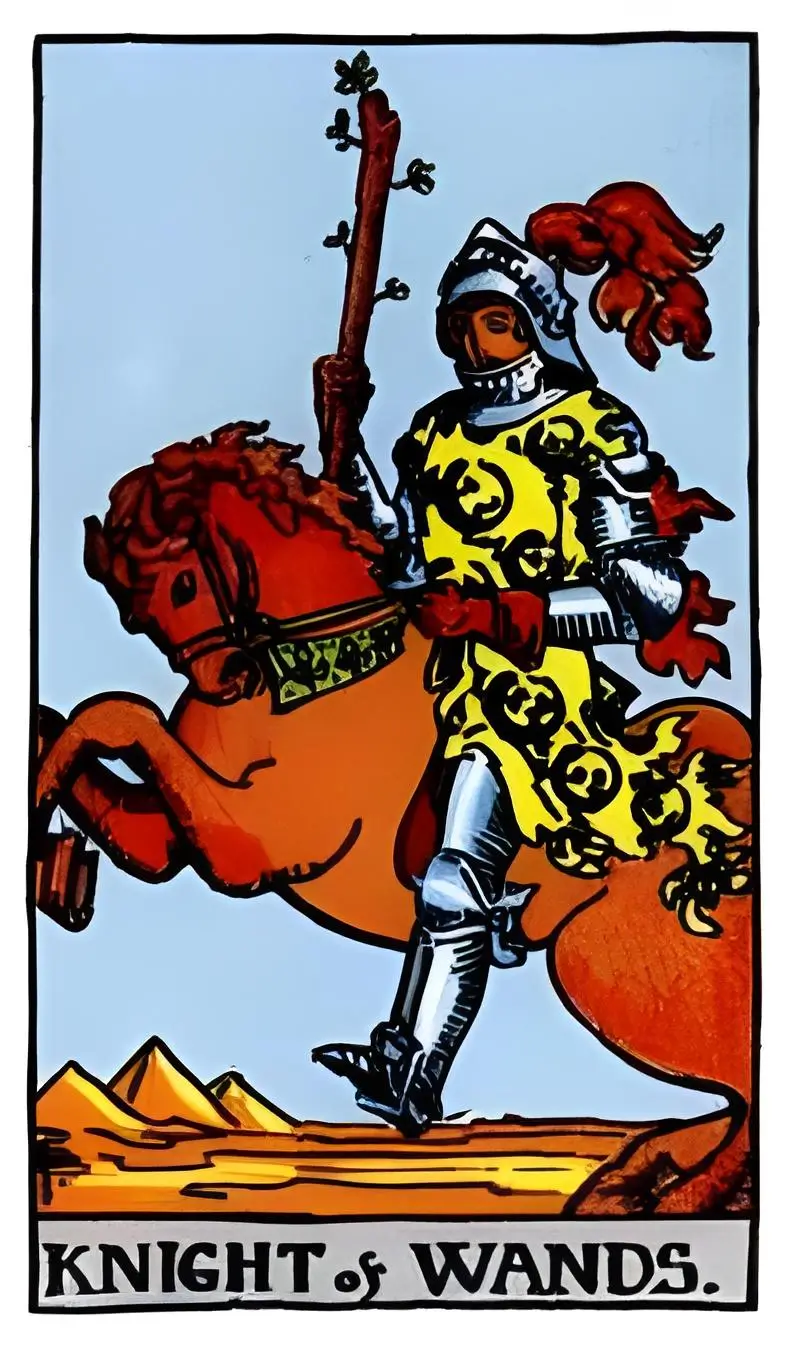
Knight of Wands

Queen of Wands

King of Wands
Cups

Ace of Cups

Two of Cups

Three of Cups

Four of Cups

Five of Cups

Six of Cups

Seven of Cups

Eight of Cups

Nine of Cups

Ten of Cups

Page of Cups

Knight of Cups

Queen of Cups

King of Cups
Swords

Ace of Swords

Two of Swords

Three of Swords

Four of Swords

Five of Swords

Six of Swords

Seven of Swords

Eight of Swords

Nine of Swords
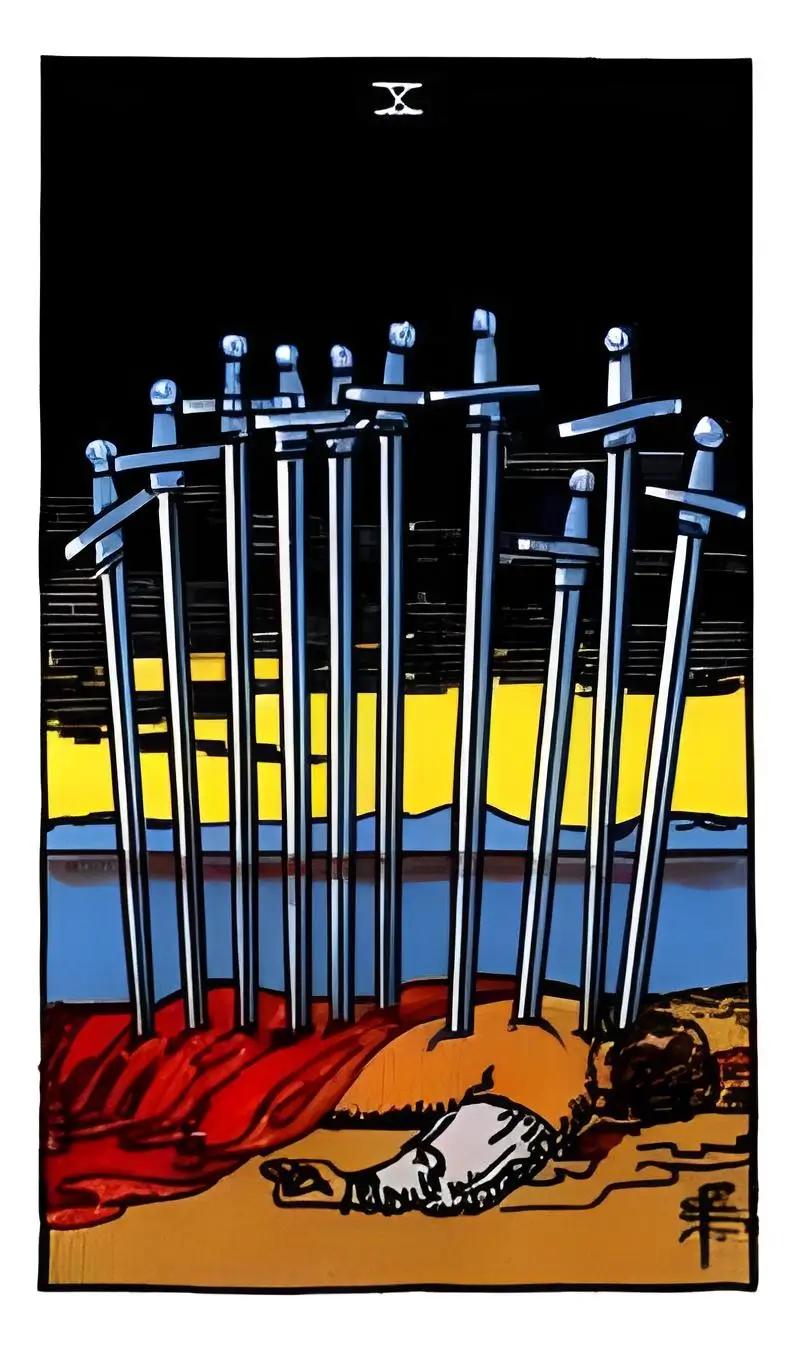
Ten of Swords

Page of Swords

Knight of Swords

Queen of Swords

King of Swords
Pentacles
On every card page
Each of the deck's cards is described through the same set of lenses, so you can compare like with like.
Card at a glance
The card in each deck
Imagery and symbolism
Core meaning
Upright meaning
Reversed meaning
Historical notes
Correspondences
Psychological perspective
The card across decks
In combination and context
Questions for reflection
Frequently asked questions
More decks in the library
View all decksFrequently asked questions
Latest Posts
Discover the ancient wisdom of tarot cards and unlock the mysteries of your spiritual journey. Our blog is your gateway to understanding the rich symbolism, meanings, and practical applications of tarot reading.




















































