
 HI (हिन्दी)


टैरो
टैरो
एक डेक, अठहत्तर कार्ड, और छह शताब्दियों का क्रमिक विकास। टैरो में चार सूटों के अंतर्गत 22 मेजर आर्काना और 56 माइनर आर्काना होते हैं, जो जीवन की लगभग किसी भी स्थिति के लिए एक संपूर्ण प्रतीकात्मक भाषा प्रदान करते हैं। डेक ब्राउज़ करें, और फिर एक-एक करके कार्ड की संरचना को समझें।
- 78
- कार्ड
- 22
- मेजर आर्काना
- 56
- माइनर आर्काना
- 4
- सूट
टैरो डेक
नीचे दिया गया हर डेक 78 कार्डों की टैरो संरचना पर चलता है। किसी एक को खोलकर उसके कार्ड पढ़ें, या उस साझा प्रणाली को जानें जो इन सबकी नींव में है।
टैरो क्या है?
टैरो 78 कार्डों की एक प्रणाली है, जो 15वीं सदी में इटली के एक ताश के खेल के रूप में शुरू हुई और छह सौ वर्षों में पश्चिमी गूढ़ विद्या का आधार-ग्रंथ तथा आत्म-चिंतन का एक आधुनिक साधन बन गई। इसकी टिकाऊ शक्ति इसकी संरचना से आती है: छवियों का एक निश्चित और संपूर्ण समूह, जिसमें हर युग अपना अर्थ पढ़ सकता है।
दो हिस्सों वाला डेक
हर टैरो डेक दो भागों में बँटा होता है। मेजर आर्काना 22 ट्रम्प कार्ड हैं, द फूल से द वर्ल्ड तक, जो जीवन के बड़े मूलरूपी मोड़ों को रेखांकित करते हैं। माइनर आर्काना चार सूटों में बँटे 56 कार्ड हैं, और वे रोज़मर्रा के अनुभव की बुनावट सँभालते हैं: काम, भावना, विचार और संसाधन। दोनों मिलकर रीडर को पूरा विस्तार देते हैं, पौराणिक से लेकर साधारण तक।
चार सूट, चार तत्व
माइनर आर्काना वैंड्स (अग्नि), कप्स (जल), तलवारें (वायु) और पेंटाकल्स (पृथ्वी) में बँटे हैं। तत्वों का यह मेल 19वीं सदी के अंत में हर्मेटिक ऑर्डर ऑफ द गोल्डन डॉन ने व्यवस्थित किया, जिसने हर सूट को कबाला के चार लोकों में से एक से जोड़ा, प्रेरणा की पहली चिंगारी से लेकर भौतिक अभिव्यक्ति तक। हर सूट ऐस से दस तक चलता है, और फिर चार कोर्ट कार्ड आते हैं: पेज, नाइट, रानी और राजा।
द फूल की यात्रा
क्रम से पढ़ने पर 22 मेजर आर्काना एक ही कहानी बनाते हैं, जिसे 1970 के दशक में ईडन ग्रे ने द फूल की यात्रा नाम दिया। द फूल (0) चट्टान के किनारे से कदम बढ़ाकर एक नए चक्र में उतरता है और सात-सात कार्डों के तीन समूहों से गुज़रता है: आत्म का निर्माण, छाया और संकट में उतरना, और अंतिम एकीकरण, जो द वर्ल्ड पर पूरा होता है। यह वही आकार है जिसे मिथकशास्त्री जोसेफ कैंपबेल ने नायक की यात्रा कहा था।
राइडर-वेट-स्मिथ मानक
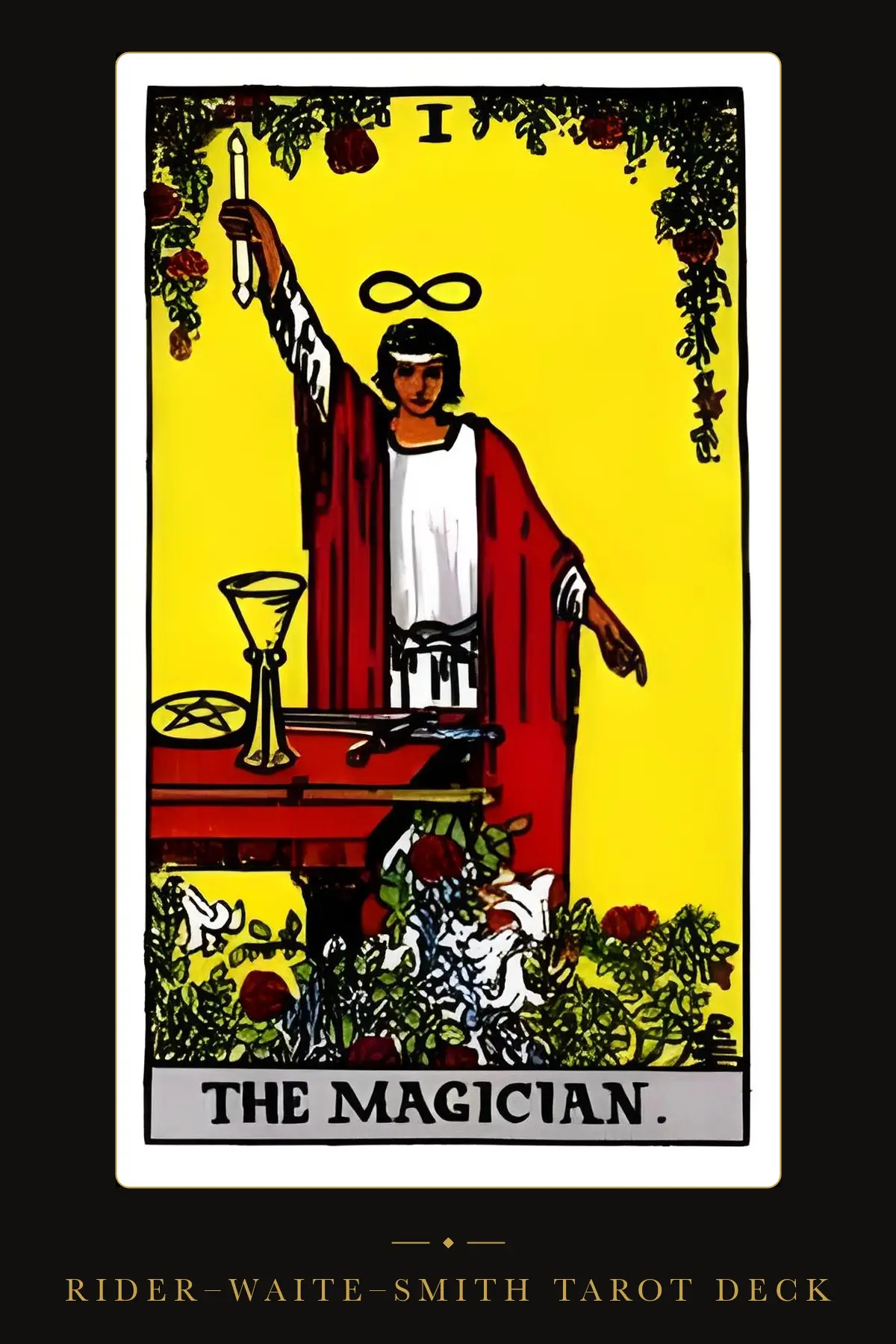
1909 में आर्थर एडवर्ड वेट और चित्रकार पामेला कोलमैन स्मिथ ने राइडर-वेट-स्मिथ डेक प्रकाशित किया। इसकी बड़ी उपलब्धि इसके चित्र थे: कोलमैन स्मिथ ने माइनर आर्काना के हर कार्ड को सूट के प्रतीकों की सादी सजावट के बजाय एक पूरे मानवीय दृश्य के रूप में बनाया। इससे एक अमूर्त गूढ़ पहेली ऐसे डेक में बदल गई जिसे लगभग कोई भी पढ़ सकता था। वेट ने ट्रम्प को राशिचक्र के साथ मिलाने के लिए स्ट्रेंथ (VIII पर) और जस्टिस (XI पर) की जगहें भी आपस में बदल दीं। यह डेक दुनिया भर का मानक बन गया, और पूरी टैरो अकादमी में इसी को संदर्भ माना जाता है।
टैरो की संरचना
राइडर-वेट-स्मिथ डेक वह मानक संदर्भ है जिसका उपयोग पूरी टैरो अकादमी में होता है। हर डेक उसी ढाँचे की नई व्याख्या करता है: 22 ट्रम्प और सूट वाले 56 कार्ड।
🌟
मेजर आर्काना 22
22 ट्रम्प कार्ड, जिन पर 0 से 21 तक की संख्याएँ हैं। डेक की मूलरूपी रीढ़: हर कार्ड जीवन का एक बड़ा विषय है, शुरुआत से पूर्णता तक।
🃏
माइनर आर्काना 56
चार तत्वों में बँटे सूट वाले 56 कार्ड। जहाँ मेजर आर्काना मूलरूपों में बोलते हैं, वहाँ माइनर आर्काना रोज़मर्रा के जीवन का वर्णन करते हैं: परिस्थितियाँ, भावनाएँ, चुनाव और परिणाम।
🔥
वैंड्स अग्नि
कर्म की प्रेरणा, रचनात्मकता, जुनून और इच्छाशक्ति। किसी विचार की चिंगारी और उसे आगे बढ़ाने की ऊर्जा।
💧
कप्स जल
भावना, संबंध, अंतर्ज्ञान और जुड़ाव। भीतरी जीवन और दिल के मामले।
💨
तलवारें वायु
विचार, संघर्ष, सच और संवाद। काम में लगा मन, भले के लिए भी और बुरे के लिए भी।
🌍
पेंटाकल्स पृथ्वी
काम, धन, शरीर और भौतिक संसार। वह सब जो बनाया, सँभाला और साकार किया जाता है।
टैरो: ताश की मेज़ से भीतरी नक़्शे तक
भविष्यवाणी का साधन बनने से पहले एक खेल
टैरो की शुरुआत मनोरंजन के रूप में हुई। 1430 और 1440 के दशकों में उत्तरी इटली के दरबारों में मिलान के विस्कोंटी और स्फोर्ज़ा जैसे धनी परिवारों ने trionfi यानी विजयों के हाथ से चित्रित डेक बनवाए, हाथ जीतने वाले एक ऐसे खेल के लिए जो आज के ब्रिज से बहुत अलग नहीं था। सबसे पुराने बचे हुए कार्ड, जैसे येल में रखा विस्कोंटी डी मोद्रोन डेक, अपने काग़ज़ के वॉटरमार्क के आधार पर 1437–1442 के माने गए हैं। ये विलासिता की वस्तुएँ थीं: ट्रम्प और कोर्ट की आकृतियों के पीछे सोने का वरक़, पिप कार्डों के पीछे चाँदी, और उन पर शासक घरानों के सदस्य उस दौर की पोशाक में चित्रित। बचे हुए कार्डों की घिसावट बताती है कि उन्हें फेंटा और खेला जाता था, केवल सहेजकर नहीं रखा जाता था।
दो हिस्सों वाली जो संरचना आज भी डेक की पहचान है, वह शुरू से मौजूद थी। चार सूट (कप, तलवारें, बैटन और सिक्के) रोज़मर्रा के कार्ड सँभालते थे, और उनके ऊपर 21 क्रमांकित ट्रम्प और बिना संख्या वाला द फूल था। वही ट्रम्प मेजर आर्काना बने, और सूट वाले कार्ड माइनर आर्काना हैं। 78 कार्डों का सबसे पुराना पूरा बचा हुआ डेक, सोला बुस्का, पहले से ही ऐसी विचित्र, कीमियाई छवियाँ लिए हुए था जो ताश के खेल की सीमाओं से बहुत बाहर थीं।
बैठक का एक खेल भविष्य बताने का ज़रिया कैसे बना
खेल से भविष्यवाणी की ओर यह बदलाव फ़्रांस में हुआ। 1781 में पादरी आंतोआन कोर्ट द गेबेलिन ने एक लंबा-चौड़ा इतिहास प्रकाशित किया, जिसमें दावा था कि ये कार्ड प्राचीन मिस्र के ज्ञान का आख़िरी बचा हुआ टुकड़ा हैं, एक खोई हुई "बुक ऑफ थोथ" जो सदियों से चली आ रही थी। इस सिद्धांत का कोई प्रमाण नहीं है, पर यह उस समय आया जब यूरोप पर मिस्र की प्राचीन वस्तुओं की धुन सवार थी, और यह टिक गया। लगभग उसी दौर में एटेइला नाम से लिखने वाले गूढ़विद ज्यां-बैप्टिस्ट एलियेट ने कार्ड पढ़ने की शुरुआती पुस्तिकाओं में से एक तैयार की: उन्होंने हर कार्ड का एक अर्थ तय किया, स्प्रेड को परिभाषित किया, और उल्टे कार्ड पढ़ने की प्रथा शुरू की। इन दोनों ने मिलकर खेल के एक डेक को भविष्य बताने के औज़ार में बदल दिया।
गोल्डन डॉन और राइडर-वेट-स्मिथ डेक
डेक ने अपना सबसे व्यवस्थित रूप विक्टोरियाई इंग्लैंड में पाया। एलिफास लेवी पहले ही 22 ट्रम्प को हिब्रू वर्णमाला के 22 अक्षरों और कबाला के जीवन के वृक्ष के 22 पथों से जोड़ चुके थे। 1888 में लंदन में स्थापित हर्मेटिक ऑर्डर ऑफ द गोल्डन डॉन ने उस संकेत को अनुरूपताओं के एक पूरे जाल में विकसित किया। उन्होंने 78 कार्डों के पूरे डेक को जीवन के वृक्ष पर बिठाया और तत्वों की वह योजना तय की जो सूट आज भी लिए चलते हैं: वैंड्स अग्नि से, कप्स जल से, तलवारें वायु से, पेंटाकल्स पृथ्वी से। हर सूट ऐस से दस तक चलता है और फिर चार कोर्ट कार्ड आते हैं।
इस कठोर व्यवस्था को नए चित्रों की ज़रूरत थी। 1909 में गोल्डन डॉन के सदस्य आर्थर एडवर्ड वेट और चित्रकार पामेला कोलमैन स्मिथ ने राइडर-वेट-स्मिथ डेक प्रकाशित किया। वेट ने स्ट्रेंथ और जस्टिस की संख्याएँ आपस में बदल दीं, स्ट्रेंथ को VIII पर और जस्टिस को XI पर रखा, ताकि ट्रम्प राशिचक्र के साथ मेल खाएँ। कोलमैन स्मिथ ने जो किया वह ज़्यादा टिकाऊ साबित हुआ: उन्होंने माइनर आर्काना के हर कार्ड को सूट के प्रतीकों की सादी सजावट के बजाय एक पूरे मानवीय दृश्य से चित्रित किया, और इसी कारण तलवारों का आठ या कप्स का दस एक नज़र में समझ आ जाता है। उस एक चुनाव ने एक अमूर्त गूढ़ पहेली को कहानी कहने के औज़ार में बदल दिया, और इसी कारण RWS डेक पूरी टैरो अकादमी में संदर्भ के रूप में इस्तेमाल होता है।
द फूल की यात्रा
क्रम से पढ़ने पर मेजर आर्काना एक ही कहानी कहते हैं। लेखिका ईडन ग्रे ने 1970 के दशक में इसे द फूल की यात्रा नाम दिया। 0 संख्या वाला द फूल चट्टान के किनारे से कदम बढ़ाकर एक नए चक्र में उतरता है और सात-सात कार्डों के तीन समूहों से गुज़रता है। पहले आत्म आकार लेता है, जादूगर, द हाई प्रीस्टेस, द एम्प्रेस, द एम्परर और द हायरोफैंट से होकर; फिर कहानी भीतर की ओर, संकट और छाया की तरफ़ मुड़ती है, व्हील ऑफ फॉर्च्यून से डेथ और द डेविल तक। तीसरा समूह फिर से निर्माण करता है, द टावर के ढहने से द स्टार की आशा तक बढ़ता है और द वर्ल्ड पर समाप्त होता है। जोसेफ कैंपबेल ने मिथकों में यही आकार पहचाना और उसे नायक की यात्रा कहा।
आधुनिक डेक: प्रक्षेपण और थेरेपी
बीसवीं सदी में गूढ़ विद्या का ढाँचा ढीला पड़ा और उसकी जगह मनोवैज्ञानिक पठन ने ले ली। कार्ल युंग ने कार्डों के आकर्षण का कारण किसी छिपी शक्ति को नहीं, बल्कि सामूहिक अचेतन से निकले मूलरूपों को माना। ग़ैर-धार्मिक दृष्टि से पढ़ने वालों के लिए डेक रोर्शाक परीक्षण के ज़्यादा क़रीब है: 78 छपी हुई छवियाँ जिनकी अपनी कोई शक्ति नहीं, और जो इसलिए काम आती हैं कि एक अस्पष्ट पर मन को छूने वाली तस्वीर आपको अपनी स्थिति उस पर प्रक्षेपित करने का न्योता देती है। कुछ थेरेपिस्ट टैरो का उपयोग इसी तरह करते हैं, एक दृश्य शब्दावली के रूप में, जो क्लाइंट को किसी भावना को नाम देने, उसे सुरक्षित दूरी पर रखने और उसके बारे में बात करने में मदद करती है। हर स्थिति में मूल्य पढ़ने वाले में होता है, कार्ड में नहीं।
यही खुलापन डेक का दुरुपयोग भी आसान बना देता है। सोशल मीडिया मंचों पर छोटी "सामूहिक रीडिंग" बार्नम प्रभाव के सहारे चलती हैं, यानी उस प्रवृत्ति के, जिसमें कोई अस्पष्ट और चापलूसी भरा कथन ऐसा सुनाई देता है मानो वह आपके लिए ही लिखा गया हो। अनुभवी रीडर, गूढ़ परंपरा वाले भी और ग़ैर-धार्मिक भी, प्रश्नों को प्रायः भीतर की ओर मोड़ते हैं: "क्या वे लौट आएँगे" कम, और "इस पर मेरा अपना प्रक्षेपण क्या है, और मुझे वास्तव में क्या चाहिए" ज़्यादा। यही डेक का सबसे उपयोगी रूप है: क्रिस्टल बॉल नहीं, एक स्थिर दर्पण।
अक्सर पूछे जाने वाले सवाल
नवीनतम पोस्ट
टैरो कार्ड्स की प्राचीन ज्ञान की खोज करें और अपनी आध्यात्मिक यात्रा के रहस्यों को अनलॉक करें। हमारा ब्लॉग टैरो रीडिंग के समृद्ध प्रतीकवाद, अर्थ और व्यावहारिक अनुप्रयोगों को समझने का आपका द्वार है.




















































