
 FA (فارسی)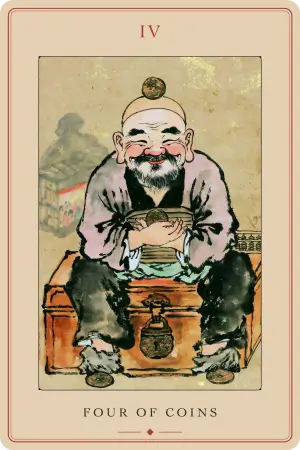


آرکانای کوچک · سکهها (خاک)
پنج سکه
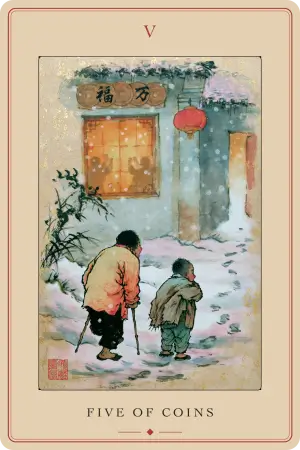
کتیبه ده هزار برکت بر تارک خیابان آویخته است و دو تن در بیرون چایخانهای روشن یخ میزنند بدون آنکه به سمت در پیچ بزنند.
راهنمای کامل را بخوانید: کارت پنج سکه: راهنمای کامل نمادگرایی و معنا
کارت در یک نگاه
- عددشناسی
- 5
- عنصر
- زمین، عطارد در ثور
- طالعبینی
- عطارد در نشان ثور
- مسیر کابالایی
- گبوراه در آسیاه
- زمانبندی
- دوره تنگنای موقت · نیاز به کمک گرفتن
- بله / خیر
- مستقیم خیر، فعلاً چالش مادی وجود دارد · معکوس بهبود تدریجی
مستقیم
تنگنای مالی
سختی موقت
احساس انزوا
آزمون پایداری
نیاز به همراهی
محرومیت ظاهری
توجه به کمک موجود
صبوری
معکوس
بهبود اوضاع
پایان سختی
پذیرش کمک
بازگشت گرمی
امید تازه
درمان فقر
ورود به پناهگاه
گشایش مالی
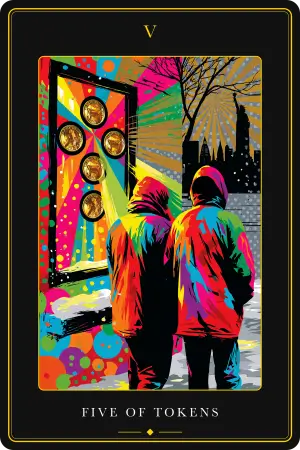
پنج سکه در هر دسته
دستههای مختلف، همان کهنالگوها را بازتفسیر میکنند. تصویرگریها را مقایسه کنید و برای خواندن تفسیر کامل، دسته مورد نظر را باز کنید.
تصویرسازی و نمادگرایی
در تاروت پکن، پنج سکه شبی زمستانی در بیرون چیانمن است. دو چهره پشت به ما در برف ایستادهاند: مردی مسن با کاپشنی نازک، تکیه داده بر عصا با یک لنگه شلوار که خالی از قدرت آویزان است، و در کنار او پسری با کتی پاره و گشاد، که دستانش را دور خود پیچیده است. آنها پاسخ این دسته کارت به دو گدای کارت رایدر-ویت هستند، یکی مجروح در جسم و دیگری مجروح در شرایط، همراهانی در بدبختی که با همراهی یکدیگر، هم را زنده نگه میدارند.
این کارت به شیوه فنگ زیکای کشیده شده است: تعدادی خطوط آرام قلممو، سایهروشنهای خاکستری و سیاه بر روی کاغذ کرافت گرم زرافشان، مهر قرمز کوچک در گوشه پایین. تقریباً تمام گرما در دو شیء، یک پنجره کاغذی درخشان و یک فانوس قرمز، نگه داشته شده است، و تقریباً تمام جوهر خاکستری و سیاه متعلق به بیرون است. گرما در این کارت غایب نیست. بلکه در مجاورت است.
در بالای این دو چهره، تابلوی نام یک چایخانه جایگزین پنجره شیشهای رنگی کارت سنتی شده است. این تابلو از پنج سکه مسی گرد با سوراخهای چهارگوش ساخته شده است، پنج «پنتاکل» صحنه، و روی آن نوشته شده است 万福، ده هزار برکت. این برکت مستقیماً بالای سر گدایان آویزان است و هیچکدام به بالا نگاه نمیکنند. این طنز اصلی کارت است: فراوانی حضور دارد، نام برده شده، و به دیوار میخکوب شده است، و چیزی که وجود ندارد توجه است.
پنجره کاغذی به رنگ نارنجی میدرخشد و از میان آن سایههای افرادی در حال تست زدن با فنجانهای برافراشته حرکت میکنند. در این دسته کارت، چایخانه ظرف ارتباط انسانی است، زیرا تمام خال فنجانهای چای در آنجا زندگی میکنند، بنابراین ایستادن در بیرون پنجره چایخانه دقیقاً تصویر این دسته کارت از طرد شدن است. نه تبعید از ثروت در معنای انتزاعی، بلکه تبعید از میز. فانوسی قرمز بالای تیر دروازه میسوزد، نشانه همیشگی مهماننوازی که خانه مهمان میپذیرد. این فانوس برای این دو نفر همانقدر روشن است که برای بقیه؛ آنها صرفاً آن را به عنوان نشانهای برای خود درک نمیکنند.
در لبه سمت راست درگاهی نیمهباز ایستاده است که رنگی گرم را روی برف میریزد، و خطی از ردپاها از کنار چهرهها میگذرد و به سمت آن میپیچد. کسی قبلاً از این راه رفته و وارد شده است. مسیر رسیدن به گرما در برف نقش بسته است، و پیروی از آن تنها به غروری کمتر و چشمانی برافراشته نیاز دارد. شاخه لختی از آلو زمستانی در سمت چپ به داخل خم شده است، وعده آرام این دسته کارت، زیرا در نقاشی چینی، آلو دقیقاً در برف شکوفه میدهد. برف به طور مساوی بر سر گدایان و فانوس میبارد، که میگوید آب و هوای ثروت بیطرف است و تفاوت در این است که چه کسی پناهگاه پیدا کرده است.
معنی اصلی
پنج سکه، همان پنج پنتاکل پکن است، و موضوع آن مشکلات مادی واقعی است: از دست دادن درآمد، هزینههای پیشبینینشده، بیماری، سرمای واقعی. این میتواند نشاندهنده از دست دادن خانه، شغل، یا جایگاه باشد، یا صرفاً احساس اینکه بقیه در داخل مشغول ضیافت هستند در حالی که شما بیرون در کوچه هستید. کارت چهار سکه قبل از آن، صاحب امانتفروشی بود که در اتاق کرکرهدار خود با یک سکه زیر هر کفش پنهان شده بود و احتکار میکرد. کارت پنج چیزی است که وقتی باد شانس تغییر میکند و خانواده را به خیابان باز پرتاب میکند، رخ میدهد.
آنچه این کارت را تیزتر از بدشانسی ساده میکند، جغرافیای آن است. کمک وجود دارد و نزدیک است. تابلوی نام بالای سر ده هزار برکت را میخواند، در دور پیچ کوچه است، ردپاها از قبل مسیر را نشان میدهند، و هیچیک از اینها دیده نمیشود. این بحران تا حدی بحران نگاه نکردن، نپرسیدن، و دور نزدن پیچ است. بنابراین خوانش این دسته کارت دوگانه است: برف برفی واقعی است و سرما گزنده است، اما زخم عمیقتر این باور است که وقتی کمک در فاصله نیم متری آویزان است، هیچ کمکی وجود ندارد. کارت از شما میخواهد آنچه را که واقعاً ندارید از آنچه که صرفاً در یافتن آن ناکام بودهاید جدا کنید، و از شما اجازه نمیدهد که پیادهروی سخت در برف را عاشقانه جلوه دهید. کارت نمیخواهد شما در میان برف قدم بزنید و عکس بگیرید. میخواهد سر خود را بالا بیاورید و تابلو را بخوانید.
معنی حالت مستقیم
Upright, the Five of Coins signals a lean season and a difficult change of fortune: contraction, the withdrawal of comforts you had relied on, survival mode where the present takes all your energy and the future has to wait. Take honest stock of what you actually lack. Then do the thing the two figures fail to do, which is to look up, ask for help, and walk around the corner to the door that is already there.
در عشق. Two people crossing a hard winter together, or failing to. Money troubles, illness, exhausting work, or an emotional cold spell presses on the bond, and the lit window they pass may be the memory of their own early days. Hardship does not destroy love; walking through hardship separately does. The pair in the snow survives because the strong one slows for the lame one and the small one warms against the tall one.
در شغل. A cold stretch: job loss or the fear of it, a search that drags through the snow, or a workplace where you feel like the figure outside the glass, unthanked and passed over while others toast. Effort and reward have come apart. The card points overhead to help that is nearer than despair admits: an internal opening, a former colleague who would vouch for you, a skill you discount because it comes easily.
در امور مالی. Loss of income, debts, the budget stretched thin as the boy's torn coat, money that was counted on failing to arrive. The card also diagnoses the manner of the poverty, attention fixed downward on the lack while resources hang unnoticed above: help not applied for, a skill unmonetized, a relative unasked, a door untried. It warns against letting pride price itself into the budget.
در سلامتی. The most physically explicit card of the suit, since one of its figures walks on crutches. It can indicate illness, injury, chronic fatigue, or a body worn down by cold, poor food, and worry, often when self-care was the first budget line cut. Its counsel is the deck's central gesture: look up and read the sign, because the clinic around the corner and the friend who would walk with you are closer than the despair claims.
معنی حالت معکوس
Reversed, the Five of Coins is the moment one figure notices the footprints curving around the corner and follows them to the door. It marks the first thaw after a hard period: work returns, debts ease, health mends, the household begins to warm. Help arrives, or rather help that was always nearby is finally accepted. It can end an isolation too, with readmission to the table and reconciliation with people whom scarcity had estranged.
در عشق. The couple coming in from the cold. The crisis passes its worst point and the relationship warms from the inside, often because the two finally turn the corner together and have the conversation that should have happened a season ago. What was endured jointly becomes the new foundation. Rebuild the small rituals of warmth deliberately and do not audit the winter for blame.
در شغل. The thaw of a professional winter: an offer after a long search, reinstatement, a transfer to a warmer room, recognition returning where there had been cold shoulders. The break often comes through the door around the corner, the unglamorous adjacent role or the recommendation from someone you finally asked. Accept the imperfect but warm position over the perfect but imaginary one.
در امور مالی. The worst of the shortage is passing. Income resumes or a new source appears, a debt is restructured, help is accepted at last. This is the stage of applying for what you are owed and taking the modest work that keeps the stove lit. Recover in small, steady, square-holed increments and avoid the gambler's urge to win the winter back in one night.
در سلامتی. Convalescence, the fracture knitting and strength returning in the undramatic increments by which strength actually returns. Care resumes: the postponed appointment kept, the treatment begun, the crutch needed less. Rebuild gently and communally, the way elders move through slow tai chi at the Temple of Heaven, and keep one habit from the hard time, which is walking beside someone.
یادداشتهای تاریخی
این کارت به عنوان یک پیپ ساده شروع شد. در دستههای ویسکونتی-اسفورزا و کری-یل در حدود سال ۱۴۵۰، پنج سکه پنج سکه هندسی بود بدون هیچ روایتی از رنج، صرفاً یک ارزش عددی برای بازیهای مجلسی درباری. دسته سولا بوسکا در سال ۱۴۹۱ با تصویرسازی صحنههای کامل روی خالهای ساده خود همه چیز را تغییر داد، و پیپهای روایی آن پیشینهای بود که پاملا کلمن اسمیت پس از اینکه او و آرتور ادوارد ویت عکسهای دسته کارت را در موزه بریتانیا مطالعه کردند، از آن الهام گرفت.
تاروت مارسی الگوی هندسی را حفظ کرد، پنج سکه در میان تزئینات گلدار، و این عدد را به عنوان اولین اختلال در عدد پایدار چهار خواند. در آن سنت، «پنج سکه» کمتر وضعیت ویرانی بود تا یک اصرار ضروری و ناراحتکننده برای خرج کردن یا حرکت. دسته رایدر-ویت-اسمیت در سال ۱۹۰۹ تصویر مدرن را ثابت کرد: دو گدای ژندهپوش در کولاک برف که از کنار پنجره روشن کلیسایی میگذرند، و ویت کارت را به عنوان مشکلات مادی، فقر و هرج و مرج تعریف کرد. یک زنگوله کوچک بر گردن مرد، زنگوله جذامیان قرون وسطی بود که معنای کارت را به عنوان طرد اجتماعی و انگ زدن نشان میداد، نه فقط فقر.
کرولی و بانو فریدا هریس کهنالگو را در دسته تحوت در سال ۱۹۴۴ به سمت دیگری بردند و نام خال را به دیسکها تغییر دادند و این کارت را «نگرانی» نامیدند: پنج دیسک ترکخورده در یک پنتاگرام وارونه روی زمین در حال فروپاشی، چهرههای انسانی از بین رفتهاند. تاروت پکن صحنه رایدر-ویت را حفظ میکند اما آن را جابجا میکند. کلیسا به چایخانه، شیشههای رنگی به پنجره کاغذی، و پنج پنتاکل به پنج سکه مسی در تابلویی که میخواند 'ده هزار برکت' تبدیل میشود. دوگانگی ویت از رنج جسمانی و پناهگاه دیده نشده زنده میماند و به جغرافیای زمستان هوتونگ ترجمه میشود.
تطبیقها و ارتباطات
عدد. Five, the number of upheaval and forced change, which breaks the settled square of four and sends its contents rolling down the lane. Four hoards; five is the world correcting the hoard, or simply the wind changing. Five is also the number of the crossroads and the open road, the fresh angle of vision, and the card's composition teaches that redemptive side: the footprints curve, the door stands ajar, the blessing hangs unread. The crisis is real and so is its exit.
اخترشناسی. The first decan of Taurus, roughly April 21 to 30, ruled by Mercury. Taurus is the fixed-earth sign of stability and the well-stocked household, precisely the things the card shows threatened. Mercury is the card's hidden door, the messenger and reader of signs, and the whole predicament is a failure of reading: the name-board says Ten Thousand Blessings and no one looks up. Where Taurus endures the winter, Mercury finds the door.
عنصر. Earth, carried in this deck by the suit of Coins, the square-holed copper cash: work, body, household, the weight of the material world. The five disturbs that element the way a hard frost disturbs a courtyard. Nothing is destroyed forever, but everything living must prove it can survive the season.
کابالا. All fives belong to Geburah, the fifth sphere on the Tree of Life, whose name means Severity and whose planet is martial Mars. The suit of Coins corresponds to Assiah, the dense material world, so the formula is Geburah in Assiah: severity applied directly to resources, finances, and the body. Where the Four sat in Chesed, mercy and benevolent accumulation, the Five is the sudden retraction of that security.
دیدگاه روانشناختی
این روانشناسیِ آگاهی از فقر است، و برای ظاهر شدن نیازی به فقر واقعی ندارد. فرد ممکن است از نظر سکه فقیر باشد، یا از نظر سکه ثروتمند و از نظر گرما فقیر باشد، اما در هر صورت توجه آنها به ردپای خودشان معطوف است. آنها واقعاً پنجره روشن، تابلو نام، کمک کشیده شده از نیم متری را نمیبینند. آنها به اخبار خوب بیاعتماد هستند، و تنهایی حتی در میان جمعیت نیز آنها را دنبال میکند. غرور آنها از آن نوع خاص پکن است که ترجیح میدهند با پشتی صاف از کنار چایخانه رد شوند تا اینکه در بزنند و نیازمند دیده شوند.
تمرین مدرن اغلب این را به عنوان یک ذهنیت کمبود میخواند که پس از علت خود ادامه مییابد: احتکار، تجزیه و تحلیل بیش از حد هزینههای جزئی، یا سندرم ایمپاستر که حتی زمانی که حسابها درست هستند، همیشه انتظار ویرانی را دارد. کار با سایه سوالی را که چهرهها با عبور از کنار در باز مطرح میکنند، شفافتر میکند: چرا کمکی را که در دسترس است رد کنیم؟ پاسخ اغلب امنیت پیشبینیپذیری است. اگر یک هویت بر اساس طرد شده ابدی بودن یا تحملکننده فداکار بودن ساخته شده باشد، پذیرش کمک به معنای از بین بردن آن هویت است، و این میتواند پرهزینهتر از سرما احساس شود. با این حال چهرهها تحمل میکنند و به ندرت به تنهایی راه میروند. آنها با وفاداری که متمولان کمتر میآموزند به یک همراه میچسبند، و این وفاداری جایی است که بهبود معمولاً شروع میشود.
پنج در عرشههای گوناگون
رایدر-ویت-اسمیت. Two crippled beggars trudge through a snowstorm past an illuminated church window of five golden pentacles, one figure barefoot and one on crutches with a leper's bell. Waite read it as destitution and material trouble, the sanctuary present but unseen. Beijing keeps this scene almost intact and only moves it indoors to a Chinese street, church to teahouse.
تاروت مارسی. The Cinq de Deniers stays geometric, five coins among floral flourishes, read as the disruptive urge that breaks the stable four rather than as literal ruin. Beijing keeps the number's disruptive charge but tells it as narrative rather than pattern.
کرولی-توت. Retitled 'Worry' and stripped of people, five cracked disks form an inverted pentagram over fracturing earth, the Tattvas showing the material world itself destabilized. Beijing shares the astrology of Mercury in Taurus but keeps the human warmth Crowley removed, so its worry has a face and a companion.
دستههای مدرن. The Pagan Otherworlds card shows a barren snowy landscape with no figures, elemental harshness alone, while the Light Seer's places a luminous key glowing behind a weeping figure who will not turn to see it. Beijing belongs with these psychological readings: its key is the name-board overhead and the footprints in the snow, help made visible in the picture precisely so the failure to look becomes the lesson.
در ترکیب و زمینه کارتها
پنج سکه یک چیدمان را با فقدان و طردی که به دنبال آن میآید رنگآمیزی میکند، و همسایگان آن معمولاً نشان میدهند که زمستان در حال پایان است یا ریشهدار میشود. در کنار کارتهای بهبود، ذوب شدن، یا خال فنجانهای چای، این کارت به سمت خوانش معکوس متمایل میشود، در پیدا شده و میز دوباره به هم پیوسته، زیرا فنجانهای چای خانه ارتباط در این دسته کارت هستند و حضور آن به انزوای کارت به طور مستقیم پاسخ میدهد. در کنار سایر پنجهای سخت و سکههای سنگین، به عنوان فصلی طولانیتر خوانده میشود و نسبت به اشتباه گرفتن استقامت با فضیلت هشدار میدهد.
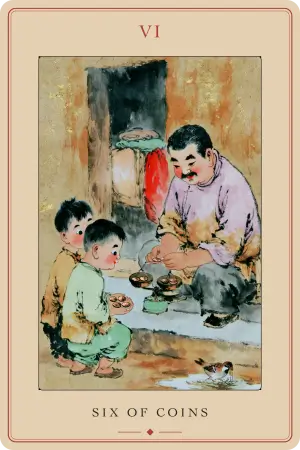
با یک آس، اغلب پایینترین نقطه را درست قبل از یک شروع مادی جدید نشان میدهد، در نیمهباز در لبه کارت. ششهای این خال، به ویژه شش سکه با خیرات داده و گرفته شدهاش، قوسی را که کارت معکوس وعده میدهد تکمیل میکنند: گدای یک فصل به دهنده فصل بعد تبدیل میشود. در چیدمانهای پول و کار، نصیحت آن عملی است تا سرنوشتساز، زیرا بحرانی که نشان میدهد با خواندن علائم و درخواست صریح قابل اصلاح است. وقتی این کارت مدام در یک خوانش بازمیگردد، با آن کمتر به عنوان پیشبینی ویرانی و بیشتر به عنوان یک تعقیبکننده برخورد کنید که به داستان کمبودی که برای خودتان میگویید اشاره میکند، و همانطور که دسته کارت پاسخ میدهد به آن پاسخ دهید: به بالا نگاه کنید، برکات بالای سر شما در خیابان آویزان هستند.
پرسشهایی برای تأمل
- چه چیزی درست بالای سر شما آویزان است که آن را نخواندهاید، کمک یا برکتی که حضور دارد، نام برده شده و نزدیک است؟
- کجا دارید از کنار یک پنجره روشن رد میشوید زیرا غرورتان ترجیح میدهد با پشتی صاف یخ بزند تا اینکه در بزند و نیازمند دیده شود؟
- واقعاً چه چیزی کم دارید و چه چیزی را صرفاً به این دلیل که چشمانتان روی ردپاهای برف مانده بود، نتوانستید پیدا کنید؟
تفسیر عام کارتها بر اساس دسته رایدر–ویت–اسمیت آماده شده که مرجع اصلی آکادمی تاروت است. برای دیدن نگاه ویژه هر دسته، میتوانید آن را جداگانه باز کنید.
پرسشهای متداول
کاوش در تاروت
آخرین نوشتهها
حکمت باستانی کارتهای تاروت را کشف کنید و اسرار سفر معنوی خود را باز کنید. وبلاگ ما دروازه شما به درک نمادگرایی غنی، معانی و کاربردهای عملی خواندن تاروت است.




















































