
 UZ (o'zbekcha)


Katta Arkan · 16
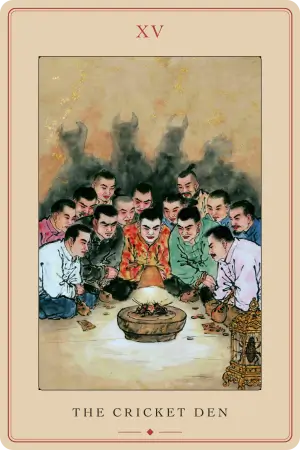
Chigirtkalar uyasi
O'zingiz bog'lagan kishanlar: har bir hamyon ipi o'z egasining bilagiga tugilgan va eshik tun bo'yi ochiq turadigan tutunli uya.
Karta haqida qisqacha
- Numerologiya
- XV
- Unsur
- Yer
- Astrologiya
- Saturn · Tog' echkisi
- Kabbala yo'li
- Ayin (Xod → Tiferet)
- Vaqt
- Qish · Tog' echkisi fasli
- Ha / Yo'q
- To'g'ri tushganda yo'q · Teskari tushganda ha
To'g'ri holat
vassvasa
bog'lanib qolish
qaramlik
vasvasa
o'z-o'ziga taqilgan kishan
moddiyat
nazorat
oltin qafas
Teskari holat
ozodlik
tugunni yechish
anglash
qafasdan chiqish
irodani qaytarib olish
ochiq eshik
o'z taqdirini o'zi belgilash
tashqariga chiqish
Har bir to'plamda Chigirtkalar uyasi
Har bir dek ayni bir arxetipni o'zicha qayta talqin qiladi. Rasmlarni solishtiring, so'ng to'liq talqinni o'qish uchun dekni oching.
Tasvirlar va ramzlar
Beijing tarotida Iblis kartasi o'z o'rnini Chigirtkalar uyasiga (蛐蛐赌局) bo'shatib bergan. Bu yer Qianmen ortidagi tutunga to'la orqa xona bo'lib, erkaklar sayoz loy qozon atrofida tiz cho'kib, ikkita chigirtka jangini kuzatmoqdalar. Bu yerda shoxli xudo yo'q va dasta uning bo'lishi shart emasligini ta'kidlaydi. Qadimgi arkanning barcha ma'nolari (qaramlik, vasvasa va biz tanlaydigan zanjirlar) to'liq saqlanib qolgan va ular kichik, insoniy tafsilotlar orqali yetkazilgan.
Markazdagi loy qozon kartaning mehrobidir. Xonadagi butun yorug'lik faqat uning ustiga tushadi. Shu sababli yuzlar, do'stliklar va tashqaridagi tun soya ostida qoladi hamda davra markaziga nima qo'yadigan bo'lsak, o'sha narsa ustamizga aylanadi. Ikkita jang qiluvchi chigirtka eski dastalardagi zanjirlangan juftlik o'rnini egallaydi: tomoshabinlarning zavqi va foydasi uchun bir-biriga qarshi qo'yilgan ikkita kichik mavjudot. Bu huddi insonning ichida ehtiroslar qo'yib yuborilib, ularning egasi o'zini faqat tomoshabindek his qilishiga o'xshaydi.
Qimorbozlar zanjirlanmagan. Har bir kishining hamyon ipi o'z bilagiga tugilgan bo'lib, bu Rider-Waite tasviridagi bo'sh yoqalarning ushbu dasta uchun versiyasidir hamda bu tugunni har kim o'zi bog'lagan. Kartaning butun falsafasi shundan iborat: bu yerda qaramlik hech qachon tashqaridan o'rnatilmaydi. U o'g'irlanmasligi uchun, ko'pincha qulaylik bahonasi bilan, o'z qo'lingiz orqali qotiriladi. Olomon ortida eshik tun bo'yi ochiq turadi, lekin biron kishi ham o'girilib qaramaydi. Ozodlik qulflanmagan, u shunchaki e'tibor doirasidan tashqarida joylashgan. Qozon ustidagi chiroq eshik oldini qorong'i qilib ko'rsatadi, garchi tashqaridagi tun shunchaki yorug'siz bo'lsa ham. Bu eski kartadagi teskari mash'al ko'taradigan haqiqiy va soxta yorug'likni o'zgartirib yuboradi.
O'yinchilar tepasidagi devorda chiroq ularning birlashgan soyalarini aks ettiradi hamda soyalarning shoxlari bor. Ushbu dastadagi Iblis bu o'yinchilar birgalikda yaratadigan shakl bo'lib, ularning har qandayidan kattaroq, ammo hech biriga tegishli bo'lmagan jamoaviy siluet sifatidagi vassvasadir. Chigirtkalar uyasida kim Iblisni qidirsa, faqat o'zining konturini topadi. Burchakda xonadagi eng chiroyli qafas, zarhal bilan bezatilgan kichik saroy joylashgan, uning ichida eng katta chigirtka bor va u kuylashdan to'xtagan. Bu kartaning eng sokin ramzidir: o'yin sovrini to'liq yutib olingandan keyin jimib qoladi. Poldagi sochilib yotgan tangalar va qog'oz tikish varaqlari dastadagi halol to'rtburchak teshikli pullarni yutuq hamda yo'qotishlarga aylantiradi. Burchakdagi kichkina qizil muhr ochiq eshik ortida hamon kutayotgan kunduzgi shaharning imzosi kabi turibdi.
Asosiy ma'nosi
Chigirtkalar uyasi bu Beijing dastasi Iblisi bo'lib, uning markaziy g'oyasi sahnaga yozilgan: xonada hech kim kishanlanmagan. Har bir hamyon o'z egasining bilagiga o'z qo'li bilan tugilgan, eshik esa tun bo'yi ochiq turibdi. Kanonik Iblis ikkita bog'langan figura ustidan shoxli qiynoqchi sifatida kelgan joyda, bu dasta qamoqchini butunlay olib tashlaydi. Qaramlik bu biz saqlash uchun tugib qo'yadigan va keyin qanday ko'rishni unutadigan tugun, uni ushlab turadigan yagona narsa shuki, e'tibor doirasi shunchalik torki, ochiq eshik uning tashqarisida qoladi.
Karta ozodlikni cheklaydigan hamda o'sishni to'xtatadigan yashirin ehtiroslar, xohishlar va bog'liqliklarni ifodalaydi. Keng ma'noda qaramlik, ushbu dastada birinchi navbatda qimor o'yinlari, shuningdek, ichkilik, ovqat, maqom, egalik qilish va yutib yuboruvchi munosabatlarni o'z ichiga oladi. U ro'yobga chiqmagan salohiyatni va shaxsning e'tiborsiz qoldirilgan qorong'i tomonini ko'rsatadi, bir kichik jangga shu qadar sho'ng'igan odamning atrofida qolgan butun hayoti qorong'ilashadi. Karta savol beruvchini yovuz deb hukm qilmaydi. U o'yinni kechiktirish uchun mo'ljallangan qiyinroq savolni beradi: siz aslida nima tikyapsiz va agar to'liq yutsangiz, mukofot qanday qiymatga ega bo'ladi.
To'g'ri tushgandagi ma'nosi
To'g'ri holatda, Chigirtkalar uyasi o'z-o'zini yo'q qilishga olib keladigan qaramlik va bog'liqliklarni, nazoratsiz ehtiroslar va egalik qilish istagini ko'rsatadi. U sizning dunyongizda salbiy ta'sir ko'rsatadigan odamni fosh qilishi mumkin: sizni stolda ushlab turadigan hamkasb qimorboz yoki eng yaxshi qafasga ega bo'lgan hamkor. Sizga beriladigan maslahat qozondan bosh ko'tarib qarashdir. E'tibor doirangizni eshik ko'ringuncha kengaytiring, bu qiziqish sizga nimaga tushganiga e'tibor bering. Bilagingizdagi tugun o'z qo'lingiz bilan bog'langanini unutmang, ya'ni uni o'z qo'lingiz bilan yechishingiz ham mumkin.
Sevgida. Qaramlikka yaqin bo'lgan chuqur jalb qilish va ehtiros. Aloqa magnitli bo'lib, unutilmas his-tuyg'ularni taqdim etishi mumkin, biroq xuddi shunday tezlikda sizning erkinligingiz uchun asosiy to'siqqa aylanishi ham ehtimoldan xoli emas. Ikki kishi xuddi qozondagi chigirtkalardek bir xil kichik maydonga qamalib, o'z qo'rquvlarining auditoriyasi uchun shiddat ko'rsatadigan holatda qolishi mumkin. Uyaning klassik harakatlariga e'tibor bering: kuzatuv sifatidagi rashk, egalik qilish bilan o'lchanadigan sevgi va doimiy o'sib boruvchi tikilgan puldek boshqa odamga bo'lgan ehtiyoj.
Karyerada. Ish joyiga va uning odatlariga bog'lanish: daromad hamda natijalar jadvaliga qattiq e'tibor qaratish, hamkasblarni kundalik o'yindagi raqiblar kabi ko'rish, deraza yonidagi stol kabi kiyiladigan aslida zarhal qafas bo'lgan maqom. Bu qizil kurtkali odam uyani boshqarganidek bir kishi xonani ushlab turadigan hamda xohlasa ham, xohlamasa ham hamma o'ynaydigan avtoritet va bosim muhitini tasvirlashi mumkin. Ijobiy tomoni, u ishga bo'lgan haqiqiy ishtiyoq va og'ir sharoitlarda chidamlilikni beradi.
Moliyada. Tikishlar kartasi. Pulni tez ko'paytirishga bo'lgan kuchli ishtiyoq sizni nopok sxemalar va ochiq firibgarlikka, o'zingizniki yoki boshqasi tomonga tortishi mumkin. Shuning uchun aniq yutuq isini beradigan har qanday taklifdan ehtiyot bo'ling. Uyada aniq yutuq bu ularning sizni o'tirishga ko'ndirish usulidir. Bu manipulyatsiya orqali olingan resurslar, pulsiz qolishdan chuqur qo'rqish yoki imzolash paytida sezganingizdan ko'ra bilagingizga qattiqroq tugilgan shartnomani anglatishi mumkin. Uyaning tagi boshqa odamlarning tangalari bilan sochilib yotibdi.
Sog'liqda. Tana xohishlari va ishtaha chiroq nuri markaziga ko'chib o'tgan bo'lib, tanaga parvarish qilinishi, ko'rsatilishi va pul tikilishi kerak bo'lgan chempion chigirtkadek munosabatda bo'linadi. To'g'ri yo'naltirilganda bu mashg'ulotlardagi intizom hamda o'z holatiga bo'lgan samimiy g'amxo'rlikka aylanadi. Yo'naltirilmaganda esa majburiylikka aylanadi: tormozsiz ishtaha, salomatlikdan ustun turadigan zavq izlash, ko'zguni tikishlar ko'payib boradigan stolga aylantiradigan shuhratparastlik.
Teskari tushgandagi ma'nosi
Teskari holatda, uyaning og'ir energiyasi ko'tariladi. Karta qaramlikdan ozod bo'lishni va buzg'unchi naqshlarning buzilishini ko'rsatadi: qimorboz o'yin o'rtasida tangalarini cho'ntagiga solib, o'girilib ochiq eshik tomon yurgan palla, endi xona uning ustidan o'z kuchini yo'qotadi. U, shuningdek, teskarisi haqida ogohlantirishi mumkin: javobgarlikni olishni istamaslik, hamyonini o'z bilagiga tugib qo'ygan holda, "o'yin meni tuzoqqa tushirdi" deydigan kishi. Eng yomon holatda bu irodasizlik va o'z-o'zini aldash bo'lib, ochiq haqiqatni ko'ra olmaslikdir. Maslahat o'z iblislaringizga ism berishdir, chunki nomlangan chigirtka shunchaki qozondagi hasharotdir. Eshik ochiq turganida unga qarab yurishni boshlang, u qulflanmaydi, lekin siz uni boshqa ko'rmay qolishingiz mumkin.
Sevgida. Og'ir bog'lanishdan qutulish yoki majburiy jalb etilishning so'nishi. To'g'ri holatdagi karta o'yin isitmasi bo'lsa, teskari holatdagisi tungi havo orqali uyga qaytishdir. Siz qozonda o'ynagan rolingizni tushunib yetishingiz, berganidan ko'ra ko'proq oladigan munosabatlardan voz kechishingiz mumkin. Dastlabki oylarda ehtiyot bo'ling, chunki shiddat odati odamni shunchaki jimjitlik g'ayrioddiy tuyulgani uchun keyingi uyaga tortishi mumkin.
Karyerada. Ish bilan bog'liq qo'rquvlardan ozod bo'lish: daromad, maqom yoki ofisning yozilmagan qoidalariga qaramlik. Bu bosimdan xalos bo'lishni va yangi imkoniyatlarni izlash mavsumini anglatadi. Chiqish eshigi qulflanmagan, faqat hozirgi e'tibor doirangizdan tashqarida. Shuning uchun variantlarni o'rganing hamda o'zgarishlardan qo'rqmang. Agar siz allaqachon uzoq vaqt kechiktirilgan iste'fonoma topshirgan bo'lsangiz, chiroq nuriga orqaga qaramang.
Moliyada. Moliyaviy qaramlikdan qutulish: qarzlarni to'lash, soxta o'yindan chiqish, mol-mulkni nosog'lom ushlab turishni yumshatish. Siz yo'qotishlarni ta'qib qilish sizni og'ir ahvolga solganini tan olishingiz va undan qutulish uchun jiddiy qadamlar tashlashingiz mumkin. Chiqish yo'lida qandaydir resurslarni yo'qotish ehtimoli bor. Bunga eshikning narxi sifatida qarang hamda bundan buyon ehtiyotkorlik bilan tanlang.
Sog'liqda. Kurashni yengib o'tish uchun ijobiy belgi: hushyorlikka qaytish, jismoniy qaramlikni buzish, stressli muhit tashvishidan xalos bo'lish. Bu ayni tanga ikkinchi tomonini ham ko'rsatishi mumkin, tana haqida uyalish yoki unga e'tiborsizlik. Har qanday holatda ham maslahat muvozanatdir. Tugunni asta-sekin yeching, chunki tana jazodan ko'ra barqaror g'amxo'rlikka tezroq javob beradi.
Tarixiy qaydlar
Iblis eng yosh trumplardan biridir. O'n beshinchi asr o'rtalariga oid Visconti-Sforza dastasi, ya'ni asosiy italyan Taroti, usiz saqlanib qolgan: asl yetmish sakkizta kartadan saqlanib qolgan yetmish to'rttasida Minora ham, Iblis ham yo'q. Minoraning yo'qligi ko'pincha siyosiy jihatdan o'qiladi, chunki Viscontining asosiy raqiblari della Torre oilasi bo'lib, ularning nomi "Minoradan" degan ma'noni anglatadi. Iblisning yo'qligi kengroq narsaga ishora qiladi. 1400-yillarning o'rtalarida nasroniy iblisining standartlashtirilgan tasviri yo'q edi. Faqat mahalliy yirtqich hayvonlar va grotesklarning tarqoq qatori mavjud bo'lgan. O'n beshinchi trumpni mustahkamlaydigan kodlangan figura deyarli bir asr o'tgunga qadar italyan karta ishlab chiqarishida o'rnashmagan.
O'n oltinchi asrga kelib karta o'ziga xoslikka ega bo'ldi va xalq sehri uchun diqqat markaziga aylandi. Venetsiya inkvizitsiyasining yozuvlari javobsiz qolgan oshiqlarni majburlash uchun Iblis kartasini javonga qo'ygan holda, uch kecha davomida Egamizning ibodatini teskari o'qigan ayollarni tasvirlaydi. Chunki Osmonga iltijolar bunday so'rovlar uchun mos kelmas edi. Marosimlar kartani xom ehtirosga, ortodoksal tuzilmalarga qarshi isyonga hamda huquqidan mahrum qilinganlar tomonidan hokimiyatni qaytarib olishga bog'ladi. Jazo choralari yengil bo'lib, inkvizitorlar bu xatti-harakatlarni bid'at emas, balki irim-sirim deb bilishgan.
Zamonaviy tasvir 1910 yildagi Rider-Waite-Smith dastasi bilan keladi, uning Iblisi Elifas Levining 1855 yildagi Baphomet asaridan olingan: qora poydevorda yarim echki figurasi, peshonada teskari pentagramma, bir qo'li barakani masxara qilib ko'tarilgan, ikkinchisi esa yerdagi ehtirosga qarab mash'alani pastga qaratib turibdi. Uning oyoqlariga zanjirlangan ikkita yalang'och figura Oshiqlar juftligining buzilgan davomi hisoblanadi. Zanjirlar ko'rinib turibdiki, deyarli kulgili darajada bo'sh. Asirlar yoqalarini boshlari ustida ko'tarib, xohlagan daqiqada ketishlari mumkin edi. Aynan mana shu yagona tafsilotni, o'z-o'ziga taqilgan kishanlarni, Beijing Taroti butunlay noldan tiklaydi, bo'sh yoqani o'z qo'li bilan bog'langan tugunga va shoxli iblisni esa o'yinchilarning o'zlari tashlaydigan soyaga almashtiradi.
Muvofiqliklar
Raqam. XV, Iblisning trump ketma-ketligidagi o'rni. Qisqartirilganda 1 va 5 raqamlari yig'indisi 6 ni tashkil etadi, bu esa kartani Oshiqlar (VI) bilan o'zining qalin, soyali ko'zgusi sifatida bog'laydi: Oshiqlarning sof tanlovi asosiy istakka, zaharli bog'lanishga hamda o'z-o'zini yo'q qilishga aylanadi. Ushbu dastada 1 davradan turib chiqib keta oladigan yagona figura. 5 ishlatilmayotgan ochiq eshikdir va 6 uchinchi xonadagi bilakka tugilgan pul egasining orqada kutayotgan xonadoni.
Astrologiya. Saturn, cheklash va sekin intizom sayyorasi, shuningdek asosiy yer belgisi Tog' echkisi. Tog' echkisining shuhratparastligi, nazorati hamda sabrli ko'tarilishi uyaning eng yaxshi o'yinchilarida paydo bo'ladi, ular buzg'unchilikka hisobchining intizomini olib keladi. Karta ushbu ko'tarilishning soyasini ko'rsatadi: ochko'zlikka aylanib ketgan sog'lom shuhratparastlik, nazoratga aylantirilgan intizom, tog' cho'qqisi bilan adashtirilgan zarhal qafas.
Element. Yer, qidiruvchini jismoniy olamda, jismoniy ehtiyojlar va moliyaviy voqeliklarda hamda qozon atrofida to'plangan moddiy qo'yilmalar kabi tanaga bog'lanishning muqarrar haqiqatiga asoslaydi.
Qabbala. Ibroniycha Ayin (Ko'z) harfi, Xoddan Tiferetgacha bo'lgan 26-yo'lda. Ezoteriklar buni Qalbning qorong'i tuni deb atashadi. Bu yerda izlanuvchining soxta g'oyalari hamda o'zini aldashi quyosh nuri ostiga tortiladi. Sinov illuziyaning haqiqatga qarshi kurashidir. Ko'z moddiy pardadan o'tib qarashni talab qiladi, bu aynan uyadagi o'yinchilar ko'rishdan bosh tortayotgan eshikdir.
Elementar qadr-qimmat. Yerdagi Saturniya trumpi sifatida Iblis illyuziyani nomlaydigan aniqlik hamda aqlning havo kartalari yonida zaiflashadi. U ishtaha va moddiy vaznning boshqa kartalari yonida qattiqlashadi hamda qozon atrofida ko'proq stavkalarni to'playdi.
Psixologik nuqtai nazar
Chigirtkalar uyasi bu dastaning soya ishi dvigateli bo'lib, ongli ong bostirgan hamda o'z holiga tashlab qo'ygan hamma narsa bilan to'qnashuvdir. Qorong'i tomonni e'tiborsiz qoldirish uni o'chirib tashlamaydi. O'yinchilar tepaga qarashlaridan qat'i nazar, shoxli soya tashlanadi va bostirilgan fazilatlar oxir-oqibat vasvasa va majburlash kabi e'tiborni talab qiladi. Kartaning ichki sabotajchisi sizning muhabbatga noloyiq ekaningizni yoki muvaffaqiyatga erisha olmasligingizni ta'kidlaydigan shivirdir. Uning eng katta aldovi bu sizning soyangiz ongli harakatlaringizdan ko'ra kuchliroq ekanligiga ishontirishidadir.
Karta beradigan eng qiyin savol shundaki, nima uchun odamlar qafasni tanlashda davom etishadi. Psixo-ruhiy ish ongsiz foydani nomlaydi. Qulaylik nevrologik jihatdan noma'lumlikdan ko'ra xavfsizroq tuyuladi, shuning uchun ma'lum baxtsizlik o'z ta'sirini saqlab qoladi. Shaxsiyat yara bilan bog'lanadi va zanjirlarni olib tashlash egoga qurilgan o'zlikni, ya'ni shahid yoki yaxshi qizni yo'qotish bilan tahdid qiladi. Bog'langan holda qolish shuningdek, uzoqlashish hukmidan hamda avtonom muvaffaqiyat xavfidan qochadi. Kartaning ijobiy yadrosi aniq ko'rish lahzasi, o'z kamchiliklarini xushomadgo'y tutunsiz ko'rishdir. Bunday tan olishdan so'ng, to'qnashuv katalizatorga aylanadi: inson istak tomonidan boshqarilish o'rniga uni o'zi boshqarishni boshlaydi, eshikni ko'radi hamda zarhal qafasning sabog'ini, ya'ni ba'zi g'alabalardan voz kechish kerakligini tushunadi.
Boshqa dastalarda Chigirtkalar uyasi
Marseille Taroti. O'n sakkizinchi asrdagi Marseille Iblisi ko'k terili, germafrodit yirtqich hayvon bo'lib, uning tanasi yarim avtonom qismlarga, qorindagi ikkinchi yuzga yoki tizzalarga o'rnatilgan ko'zlarga bo'lingan hamda poydevoriga ikkita kichik iblis zanjirlangan. Bu ongsizlikning ko'r kuchi, vujudga kelgan tartibsizlikdir. Chigirtkalar uyasi ushbu parchalangan, ko'r-ko'rona majburlash hissini saqlab qoladi, lekin uni bitta yirtqich hayvon emas, balki butun xonaga sochadi va uning soyasi yakka emas, balki jamoaviydir.
Rider-Waite-Smith. 1910 yilgi karta axloqiy o'qishni mustahkamlaydi: Baphomet poydevorda, teskari pentagramma, pastga qaratilgan mash'al va bo'sh yoqalar bilan zanjirlangan ikki figura xohlagan payt uni yechib ketishi mumkin. Beijing aniq tushunchani, ya'ni o'z-o'ziga kishan solishni saqlab qoladi, hamda yoqani kishi o'z bilagiga tugadigan hamyon ipiga, iblisni esa tomoshabinlar birgalikda tashlaydigan shoxli soyaga o'zgartiradi.
Crowley-Thoth. Crowleynning Iblisi axloqiy doirani butunlay yo'q qiladi. Tojli fallus oldidagi mag'rur echki, jazolangan asirlardan ko'ra potentsial urug' sifatida tutilgan inson qalblari, bosimga qarshi kuchning yuksalishini himoya qiladi. Chigirtkalar uyasi uning ortidan nishonlashga bormaydi. U Iblisni tashqi yirtqich hayvon sifatida ko'rib chiqishdan bosh tortgan holda RWS ogohlantirishiga yaqinroq turadi.
Zamonaviy qayta shakllantirishlar. So'nggi dastalar qullikni yengillashtiradi: Sci-Fi Tarot Iblisni devor o'lchamidagi kompyuterga aylantirib, uning oldiga ixtiyoriy ravishda zanjirlanmagan ikki figura keladi. Bu ekranlar hamda bildirishnomalarga zanjirsiz qaramlik tasviri. Mythical Mystic Taroti o'z figuralarini foydalanishni istamagan olovga yaqin joylashgan stulga zanjirlaydi. Beijing Taroti ham ushbu harakatga tegishli bo'lib, uning uyasi o'z qo'li bilan bog'langan tugun va ochiq eshikdan qurilgan zanjirsiz qullikdir.
Kombinatsiya va kontekstda
Chigirtkalar uyasi yoyilmani bog'lanish, vasvasa hamda o'z-o'ziga yuklatilgan cheklovlar masalasiga tortadi. Odatda bu nazoratsiz istakni va so'rovchining atrofidagi kimningdir salbiy ta'sirini anglatadi. Shuning uchun qo'shni kartalar muhim ahamiyatga ega: ular ko'pincha pul tikishlarni kim ushlab turgani hamda bilakka aynan nima tugilganligini ochib beradi. Oshiqlar yonida juftlik aniqroq bo'lib, uning numerologik ko'zgusi so'zma-so'z ifodalanadi. Yuksaltiruvchi sevgi va zanjirband qiluvchi ehtiros o'rtasidagi chegara xiralashgan magnit hamda karmik aloqani belgilaydi. Dastadagi Imperator yoki avtoritet kartasi yonida, u nazorat tuzilmalarini, chiqish qiyin bo'lgan shartnoma yoxud ish joyini ko'rsatadi.
Aniqlik, xabardorlik yoki ketish kartalari bilan birga, teskari ma'no kuchayadi, qimorboz allaqachon ochiq eshik tomon buriladi. Boshqa ishtaha hamda moddiy og'irlik kartalari yonida, qiziqish chuqurlashadi va uya qattiqroq yopiladi. Karta yana yoyilmaga qaytib kelaversa, unga hukm sifatida emas, balki to'g'ridan-to'g'ri savol sifatida munosabatda bo'ling. Bilagingizga nima tugilganligini tekshiring, sovrin to'liq g'olib bo'lgach, hali ham sayraydimi, deb so'rang hamda ochiq eshikni e'tibor doirangizda saqlang. Agar davradan o'rnidan turish vaqti kelsa, tashqaridagi tungi havo Qianmen ortidagi eng yaxshi narsadir.
Fikr yuritish uchun savollar
- Hozir bilagingizga nima tugilgan va uni kimning qo'li bog'lagan? Agar halol javob o'zingiz bo'lsangiz, uni yechish ham faqat o'zingizning qo'lingizda.
- Ochiq eshigingiz qayerda: qulflanmagan, faqat joriy e'tibor doirangizdan tashqarida joylashgan chiqish yo'li qaysi?
- Ta'qib qilayotgan sovriningizni nomlang, so'ngra u to'liq yutilganda qanchalik qadrli bo'lishini so'rang. U hali ham kuylaydimi yoki zarhal qafasdagi chigirtkadek jim bo'lib qoladimi?
Umumiy ma'no Rider-Uayt-Smit talqiniga asoslanadi; Tarot Akademiyasida shu dek etalon sifatida ishlatiladi. Muayyan dekning o'z talqinini ko'rish uchun uni yuqoridan oching.
Ko'p beriladigan savollar
Tarotni kashf eting
So'nggi maqolalar
Taro kartalarining qadimiy donishmandligini kashf eting va ma'naviy yo'lingizdagi sirlarni oching. Blogimiz taro o'qishning boy ramziyligi, ma'nolari va amaliy qo'llanilishini tushunishga eltuvchi darvozadir.




















































