
 UZ (o'zbekcha)


Katta Arkan · 17
Darvozani buzish
Buzilishga mahkum etilgan shahar darvozasi ortida ufq ko'ringuniga qadar g'ishtma-g'isht qulatiladi.
Karta haqida qisqacha
- Numerologiya
- XVI
- Unsur
- Olov
- Astrologiya
- Mars
- Kabbala yo'li
- Peh (Netsax → Hod)
- Vaqt
- Kutilmagan to'ntarish · og'ib qolgan devor qulayotgan tushdan keyingi holat
- Ha / Yo'q
- To'g'ri holatda yo'q, lekin tozalanmoqda · Teskari holatda yo'q
To'g'ri holat
kutilmagan o'zgarish
buzilish
eskining qulashi
inqiroz
ozodlik
uyg'onish
tozalangan maydon
ochiq ufq
Teskari holat
xarobaga yopishish
inkor etish
kechiktirilgan qulash
o'zgarishdan qo'rqish
mahkum etilganni tirab turish
qochish
yo'nalishni yo'qotish
Har bir to'plamda Darvozani buzish
Har bir dek ayni bir arxetipni o'zicha qayta talqin qiladi. Rasmlarni solishtiring, so'ng to'liq talqinni o'qish uchun dekni oching.
Tasvirlar va ramziyat
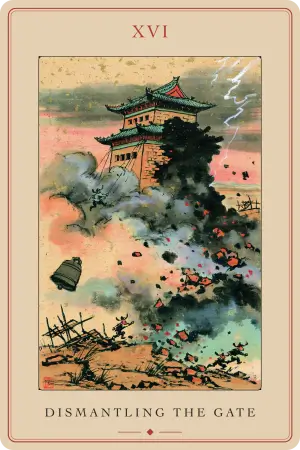
Pekin Tarotida Minora Darvozani buzish deb ataladi (拆城楼). Uni xudo qulatmaydi, balki ishchilar jamoasi bajaradi. Arqon tutgan kishilar eski shahar darvozasi minorasining g'ishtlarini tortib bo'laklarga ajratadi. Ulkan qo'ng'iroq chang-to'zon ichida ovozsiz pastga tushadi, ikkita qorovul esa havozadan sakrab uzoqlashadi. Qulayotgan siluet ortida, besh yuz yil ichida birinchi marta ochiq ufq paydo bo'ladi. Dasta o'zining yagona qoidasini halokat sahnasi uchun ham saqlab qolgan, ya'ni bu yerda chaqmoqlar yoki ilohiy jallodlar yo'q. Minoralarni qulatadigan kuch asosan vaqt hamda mehnat qilayotgan inson qo'llaridir.
Yashil koshinli tomlarga ega darvoza minorasi eski tuzumning so'nggi qoldig'idir. U shaharni atrofdan ajratib, uni asrlar davomida himoya qilgan. Uning qulashi Pekinni vayron qilmaydi. U shaharni ochiq qiladi. Arqon tortayotgan ishchilar ushbu dastadagi chaqmoq o'rnini bosadi, vayronagarchilik ilohiy jazo emas. Bu ko'chada ko'rinib turgan navbatdagi zaruriy hamda ongli mehnatdir.
Tutunga to'lgan osmonda chaqmoq ipi uchqunlab turibdi. Bu qulagan minoraning sharpasi, devor aslida qamoqxona bo'lganini anglab yetgan oningizni ifodalaydi. Bu yerda chaqmoq vayronagarchilikni keltirib chiqarmasdan, jarayonni yoritib turadi. Qulayotgan qo'ng'iroq havodan ovozsiz tushayotgan eski hayotning sadosi bo'lib, uning sukunati eski davr o'z nihoyasiga yetgan aniq vaqtni belgilaydi.
Sakraiyotgan ikkita qorovul klassik Minoradagi qulayotgan ikkita figurani o'rnini egallaydi. Ammo ular osmondan tashlanmaydi. Ular ixtiyoriy sakrashadi. Tutanqoqli tutun ichida qizil xaroba parchalari sochiladi, bu parchalangan narsa bir vaqtlar qadrli bo'lganini isbotlaydi. Minora ortidagi ufq ilk tongning och pushti rangida chizilgan, burchakdagi qizil muhr esa sahnani muhrlaydi: guvoh bo'lingan, qabul qilingan.
Asosiy ma'nosi
Darvozani buzish Pekin Minorasi bo'lib, u orqali dasta o'z darsini yetkazadi. Vayronagarchilik jazo emas, bu oddiy mehnatdir. Hayotingizda besh asr davomida tik turgan narsa, ya'ni nikoh, karyera, e'tiqod yo o'z-o'zini anglash asta-sekin qulayapti. Bu siz la'natlanganingiz uchun emas, uning vaqti o'tganligi sababli yuz bermoqda. Zarba rostmana, chang nafasni bo'g'adi, qadrdon qo'ng'iroq boshqa hech qachon jiringlamaydi. Qulashning ortida uzoq vaqt davomida birinchi marotaba ufq ko'rinadi.
Kanonik Minora osmondan zarba yeb, xudolarni ayblash uchun sabab qoldiradigan joyda, bu karta bevosita inson qo'li bilan yaratilganligini namoyish etadi. Arqon ushlagan oddiy qo'llardan ba'zilari o'zingizning chuqurroq o'zligingizga tegishli bo'lishi mumkin. Karta olib keladigan holatlar xavotirli va muhim. Uning ma'nosi aza tutishga arziydigan, ayni paytda musaffo osmonni ko'rishning yagona yo'li bo'lgan jarayonda mujassamdir.
To'g'ri holatdagi ma'nosi
To'g'ri holatda, karta sizni bir muhitdan boshqasiga o'tkazadigan keskin o'zgarishlar va qulash haqida ogohlantiradi. Bu munosabatlarning uzilishi, ishni yo'qotish, moliyaviy muammo yoki uzoq saqlangan illyuziyaning tugashi bo'lishi ehtimoli bor. Maslahat huddi buzuvchi ishchisinikidek. Arqonlarni tortib qolishga urunmang, sababi darvoza allaqachon mahkum etilgan. Qorovullar kabi chetga sakrang, g'ishtdan ko'ra qimmatli narsalarni asrab qoling. Qo'ng'iroq uchun aza tuting, so'ngra darvoza asrlar davomida yashirib kelgan ufqqa qarang. Xarobalarga toza maydondek yondashing va devor o'rnida nima qurishingizni rejalashtira boshlang.
Sevgida. Munosabatlarning eski shakli uzilish yoxud uzoq yillik sukunatdan so'ng oshkor bo'lgan haqiqat tufayli yemirilib boradi. Buzilayotgan narsa rishtaning o'zi yoki uning ichidagi yolg'on, hamkorlar o'zlari tanlamay yashagan majburiy ssenariydir. Bu og'riqli. Ammo agar munosabatlar inqirozdan omon qolsa, har ikki insonning asl qiyofasi aniq bo'lgan holda, yangi, ochiq va yetuk poydevorda tiklanadi.
Karyerada. Kutilmagan tarkibiy o'zgarish sodir bo'lishi mumkin. Masalan ishdan bo'shatish, tuzilmani o'zgartirish yoxud barqaror ko'ringan lavozimning tugashi. Siz minora, qorovul yoki ishchilar guruhidan qaysi biri ekanligingizni farqlang. Agar lavozimingiz qisqarayotgan bo'lsa, qorovuldek harakat qilib, tajriba va obro'yingiz bilan o'z xohishingizga ko'ra sahnani tark eting. Eski tizimni buzish vazifasi topshirilsa, ishchilar kabi hissiyotga berilmay, ehtiyotkor va kasbiy tarzda yondashing.
Moliyada. Daromadning birdan to'xtashi, kelishuvning buzilishi, qoidalarning o'zgarishi kabi keskin o'zgarishlar kuzatiladi. Shahar devoridek mustahkam deb ishonilgan tuzilma vayron bo'lishga mahkum ekanligi tasdiqlanadi. Biroq u qoldirgan ochiq maydon chinakamdir. Asl qiymatga ega bo'lgan tajriba hamda aloqalarni o'zida mujassam etgan parchalarni saqlab qoling. Ularni to'g'ri, mustahkam asosda qaytadan tashkil qiling.
Sog'liqda. Jismoniy holatning keskin o'zgarishi, jarohat yoki buzish buyrug'iga o'xshash tibbiy xulosa yuzaga chiqadi. Buning sababi tana bardosh bera olmagan noto'g'ri odatlar yoxud kun tartibi bilan bog'liq. Foydasi yo'q odatni saqlab qolishdan ko'ra, qorovullar kabi tezroq qaror qabul qilib, turmush tarzingiz hamda dam olish rejangizni yangidan, to'g'ri yo'nalishda tiklang.
Teskari holatdagi ma'nosi
Teskari holatda, karta buzilish arafasida turgan binoda yashab, devordagi xavf belgisini sezmaslikka olayotgan insonni ifodalaydi. Vayronagarchilik kechiktirilmoqda, ammo to'liq to'xtatilmagan. Muammoni asossiz bahonalar bilan yopishga urinish, qochish qulash xavfini yanada oshiradi. Teskari Minora shuni uqtiradiki, yuzaga kelgan xavfni e'tiborsiz qoldirish xavfsizlikni ta'minlamaydi. U qulashning to'satdan yuz berishini hamda qorovulning tayyorgarliksiz qolishini kafolatlaydi. Vaqt borida joyingizni o'zgartirganingiz ma'qul.
Sevgida. Barchaga ayon bo'lgan o'zgarishdan qochish, jiddiy suhbatdan o'zini olib qochish, his-tuyg'usiz davom etayotgan munosabatni shunchaki tashqi ko'rinish uchun saqlash ramzidir. Sheriklarning biri yoki ikkisi ham muammoni ko'rib, e'tiborsiz qoldiradi. Tugash arafasidagi munosabatni zo'rma-zo'raki ushlab turish faqat har ikki tomonga chuqur jarohat yetkazadi.
Karyerada. Ko'z o'ngida nihoyasiga yetayotgan jarayonga yopishib olish, o'zgarishlardan qo'rqib islohotlarni sekinlashtirishni ifodalaydi. Bu o'z vazifasini yo'qotgan joyni himoya qilayotgan inson harakatiga o'xshaydi. Ayrim hollarda, inqirozdan so'ng ham haqiqatni tan ololmayotgan odamni bildiradi. Nima yakunlanganini anglang, qimmatli narsalarni saqlab, yangi yo'nalishga qarab harakat qiling.
Moliyada. Zarur moliyaviy qarorlardan o'zini tortish, foyda keltirmayotgan daromad usulida qolish, zararli moliyaviy operatsiyalarni davom ettirish holatlarini bildiradi. Eskirgan tizimning samarasizligini tan olmaslik tufayli muammolar yig'ilib boradi. Ba'zida esa kutilmagan to'g'ri qaror bilan inqirozdan eson-omon chiqishni ham anglatadi.
Sog'liqda. Tananing berayotgan belgilari, tibbiy ko'riklarni paysalga solish, e'tiborsiz qoldirilgan ogohlantirishlarni ifodalaydi. Noto'g'ri turmush tarzini davom ettirish sog'ayish jarayonini sekinlashtiradi. Xavf belgisini o'z vaqtida payqang va eski odatlaringiz sog'lig'ingizga jiddiy zarar yetkazishidan avval, ularni o'zgartirishni boshlang.
Tarixiy qaydlar
Minora Katta Arkanadagi ko'pgina kartalarga nisbatan turli nomlar bilan atalgan, O'q, Olov, Chaqmoq, Iblisning uyi. Uning tarixi Bobil Minorasiga borib taqaladi. O'rta asrlarda ushbu rivoyatga minoraning kibrli me'mori Nimrodni qulatgan ilohiy chaqmoq zarbasi qo'shilgan, oqibatda minora qulab, olov uni qamrab olgani tasvirlangan. Bolonya hamda San Juminyano kabi shaharlar bu tasvirning aniq modelini yaratgan, raqobatchi oilalar minoralari tez-tez chaqmoq nishoniga aylangan, shuning uchun vayronagarchilik adolat ramzi hisoblangan.
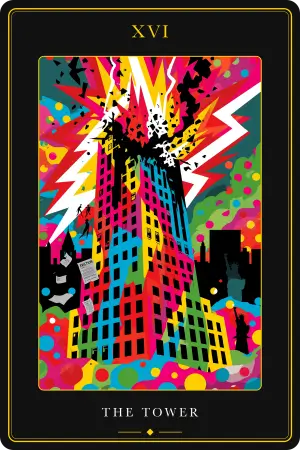
Fransiyada bu karta Marsel Tarotida (Tarot de Marseille) Xudoning uyi (La Maison Dieu) nomi ostida shakllandi. Bu tishli tepasi tojdek qulagan g'ishtli minora tasviri bo'lib, ikkita figura pastga tushayotgan holda berilgan. 1909 yilgi Rider-Waite-Smith dastasida esa zamonaviy shablon yaratildi: baland minora, tojni qulatgan chaqmoq, derazalardan chiquvchi alanga va yigirma ikkita uchqun.
Pekin Taroti qulash jarayonini saqlab qoladi. Vayronagarchilikka sabab bo'lgan ilohiy kuch yo'q. Buning o'rnida arqon tortayotgan ishchilar guruhi turadi. Karta minorangizni qulatadigan kuch osmon qahri emas, balki vaqt va inson harakati ekanligini ta'kidlaydi. Ovozsiz qulayotgan qo'ng'iroq ushbu dastaga xos bo'lib, eski tuzumning tugashini ramziy ma'noda anglatadi.
Mosliklar
Raqam. XVI, o'n olti, halokat va yangilanish raqami. U harakatni boshlagan 1 raqami bilan barqarorlik ifodasi bo'lgan 6 ni birlashtiradi. Ularning to'qnashuvi kartadagi asosiy jarayon, ya'ni eski devorni tortayotgan yangi kuchni ko'rsatadi. Qisqartirilganda (1+6) 7 ni beradi. Bu idrok hamda ochiq ufq raqami hisoblanadi. Vayronagarchilik faqatgina kelajakni aniqroq ko'rish uchun sodir bo'ladi.
Astrologiya. Mars, energiya, kuch va to'satdan yuz beruvchi hodisalar sayyorasi. U chaqmoq tarzida emas, balki arqon tortib ishlayotgan jamoa qiyofasida gavdalanadi. Bu g'azab emas, jismoniy mehnat, eskirgan tuzilmani buzish uchun yo'naltirilgan aniq kuch bo'lib, u keyinchalik qurilishga zamin yaratadi.
Element. Olov, buzilish tartibi sifatini aks ettiradi: aniq reja bilan harakat qilish, birgalikda ishlash va maydonni to'liq tozalash.
Kabbala. Ibroniycha harf Peh bo'lib, og'iz ma'nosini bildiradi. Bu Netsax va Hod o'rtasidagi yo'ldir. Peh harfi ushbu kartani Bobil Minorasiga bog'laydi. Aynan shu yerda tillarning chalkashuvi sodir bo'lgan. Minora so'zlar va muloqot tizimining buzilishini namoyon etadi.
Psixologik nuqtai nazar
Ushbu arkanada ko'rsatilgan inson o'zida ham minora, ham ishchilar guruhiga xos xususiyatlarni mujassam etadi. Ularda minoradek kuchli iroda, chidamlilik hamda e'tiqodga qat'iy ishonch bor. Shu bilan birga, ular ishchilar kabi zarur vaziyatda o'z qoidalarini mustaqil ravishda o'zgartirish layoqatiga ega. Bunday shaxslar o'z-o'zini tahlil qilishni chuqur tushunadi, inqirozni rivojlanish imkoniyatiga aylantiradi va kerak bo'lganda ortiqcha hissiyotlarsiz masalani yakunlashga kuch topadi. Ular o'z ishini ochiq va halol bajaradi. Bu esa har qanday qiyin sharoitda ham xotirjamlikni saqlab qolishga yordam beradi.
Uning salbiy jihati insonning bir joyda juda uzoq qolib ketishi bilan bog'liq. Qaysarlik hamda ortiqcha o'ziga ishonch ularni o'zgarishlarga moslashishdan to'xtatishi mumkin. Hayot to'liq islohotlarni talab qilmaguniga qadar, ular o'z qarashlariga to'g'ri kelmaydigan barcha narsani rad etishadi. Bundan tashqari, inqirozdan o'tgan kishi ba'zan faqat yengil tuzatish talab qiladigan vaziyatlarni ham butunlay buzishga moyil bo'lib qoladi. Bu yerda asosiysi farqni anglashdir. Barcha eskirgan tushunchalar yomon emas, shuningdek, barcha narsani qaytadan boshlash shart emas.
Boshqa dastalarda Darvozani buzish
Rider-Waite-Smith. Kanonik Minoraga qorong'i osmondan chaqmoq urilgan, tillarang toji pastga qulab tushgan, ikkita odam yigirma ikkita uchqun orasida bosh tuban tushmoqda. Darvozani buzish kartasi qulashni saqlab qolsa ham, bu jarayonni ishchilar guruhiga topshiradi, ya'ni bu ilohiy jazo emas, inson mehnati natijasidir.
Marsel Taroti. La Maison Dieu (Xudoning uyi) Minorasining tepa qismi tojdek uzilib tushadi, ikki kishi esa rangli sharlar yonidan o'tib ketadi. Pekin Taroti qulagan tojni eskirgan tartib belgisi sifatida qabul qilib, shaharni ajratib turgan eski darvozani tasvirlaydi. Yiqilayotgan odamlar o'rniga, o'z oyoqlarida xavfsiz joyga sakrayotgan qorovullar chizilgan.
Crowley-Thoth. Krouli Minorani Mars va Peh ramzi ostida sof vayronagarchilik holatida tasvirlagan, olov hamda ilonli jarayon orqali halokatni ifodalagan. Pekin kartasi o'sha Mars qudratini saqlasa-da, olov va vayronagarchilikni qasddan qilingan mehnat bilan almashtiradi, shu tariqa apokaliptik holatsiz o'zgarish yuz berishini ko'rsatadi.
Zamonaviy yondashuvlar. Yangi dastalarda Minora fojia emas, balki ozodlik, eski kishanlardan xalos bo'lish kartasi sifatida talqin etiladi. Pekin Taroti ham shu g'oyani ilgari surib, buzilish inson tomonidan amalga oshiriladigan ish ekanligini, chang bosgan maydon ortida esa toza ufq kutayotganligini bildiradi.
Kombinatsiya va kontekstda
Darvozani buzish kartasi istalgan tarqatmani to'satdan yuz beradigan o'zgarishlar va maydonni tozalash g'oyasiga yo'naltiradi. Uning ma'nosi yonidagi kartalarga qarab o'zgaradi. Agar u to'xtab qolish, qotib qolganlikni anglatuvchi kartalar yonida kelsa, uzoq vaqt davomida cho'zilgan holatning muqarrar barham topishini ko'rsatadi. Qayta qurish yoki yangi boshlanish kartalari bilan yondashganda esa u vayronalik ortidagi aniq ufqqa ishora qiladi, bo'shagan joyda amalga oshiriladigan yangi loyihalarni xabar qiladi.
Undan keyin keladigan Yulduz kartasi bilan birgalikda dasta g'oyasini mukammal ochib beradi: avvalgilaridan voz kechish, keyin esa toza hamda shifobaxsh yorug'lik. Moliyaviy va kasbiy savollarda ushbu qulash tashqi muhit, qonunchilik yoki iqtisodiy inqiroz ta'siridami, yoxud o'zingiz ongli ravishda qilgan rejamli islohotmi ekanligini aniqlash uchun atrofdagi kartalarga ahamiyat bering. Agar u tez-tez takrorlansa, dasta sizga maslahat bermoqda: muddati o'tgan masalalarni o'z vaqtida hal qilishni rejalashtiring, shunda kelajakdagi to'satdan yuz beradigan yo'qotishlarning oldini olasiz.
Fikr yuritish uchun savollar
- Hayotingizda qaysi devorni shunchaki o'rganib qolganingiz uchun ushlab turibsiz va u qulasa nimani ko'rgan bo'lardingiz?
- Eski biror jarayon o'z yakuniga yetganda, darhol uning o'rnini to'ldirishga urinmasdan, shunchaki uning to'xtashini qabul qila olasizmi?
- Siz duch kelayotgan hozirgi o'zgarishlarda o'zingizni minora, qorovul yoki ishchi deb bilasizmi?
Umumiy ma'no Rider-Uayt-Smit talqiniga asoslanadi; Tarot Akademiyasida shu dek etalon sifatida ishlatiladi. Muayyan dekning o'z talqinini ko'rish uchun uni yuqoridan oching.
Ko'p beriladigan savollar
Tarotni kashf eting
So'nggi maqolalar
Taro kartalarining qadimiy donishmandligini kashf eting va ma'naviy yo'lingizdagi sirlarni oching. Blogimiz taro o'qishning boy ramziyligi, ma'nolari va amaliy qo'llanilishini tushunishga eltuvchi darvozadir.




















































