Mažieji arkanai · Lazdos (Ugnis)

Lazdų šešetas

The returning hero: a public victory where earned confidence and the crowd's applause meet at once.

Trumpai apie kortą

Numerologija
Six
Stichija
Fire
Astrologija
Jupiter in Leo
Kabalistinis kelias
Tiphareth (Beauty) in Atziluth
Laikas
Early August, second decan of Leo
Taip / Ne
Upright yes · Reversed no

Tiesiai

Victory Recognition Public success Confidence Leadership Acclaim Momentum

Apverstai

Delayed recognition Imposter syndrome Hollow victory Ego Fall from grace Lack of support

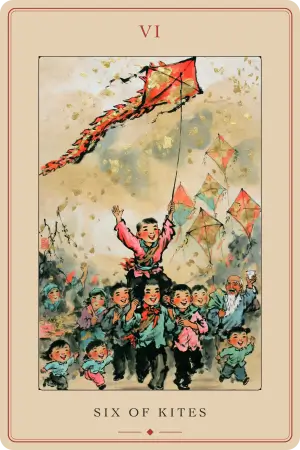
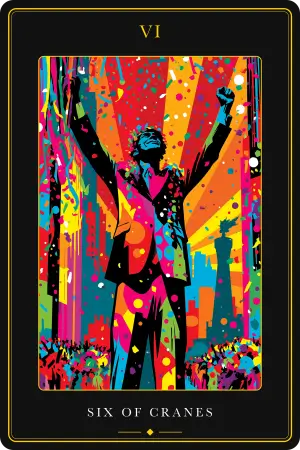
Lazdų šešetas kiekvienoje kaladėje

Kiekviena kaladė atspindi tą patį archetipą savais būdais. Palyginkite meną, tuomet atidarykite kaladę ir perskaitykite jos interpretaciją.

Imagery and symbolism

In the Rider-Waite-Smith image a rider crosses through a crowd of supporters on a white horse. He carries a wand crowned with a laurel wreath and wears a matching wreath on his head, while the crowd raises their own wands in shared celebration. The white horse stands for nobility, forward movement and a victory earned honestly, and it is caught mid-stride, a sign that this triumph is a plateau on a journey still underway.

The dual laurels are the key. In Greco-Roman custom laurel went to victors of games, contests and campaigns, so the wreath on the head marks inner realization while the one on the raised wand announces public acclaim, a rare alignment of private satisfaction and outside recognition. The crowd, carrying wands of their own, are fellow travellers who understand ambition and validate the win. Pamela Colman Smith's theatre background shows too: the horse is oddly draped like a costume stage horse and, like the horse on The Sun, wears no reins. That detail plants a quiet question about whether the triumph is fully genuine or partly a performance staged for the audience, and whether the celebrated rider remembers the unseen labour that carried him up.

Core meaning

The Six of Wands is the moment of triumph, self-belief crystallised and recognised by others. In numerology six is harmony and responsibility, the stabilising order that follows the chaos of five. Where the Five of Wands was a fractured group all fighting for dominance, the Six is a single figure emerging from the fray to claim the prize and give the collective direction.

The card sits on the theme of victory that serves a purpose beyond the ego. The rider brings inspiration and momentum to the crowd, and their success shows what focused will can do. But its wisdom is also in its transience: this is a beautiful, fleeting plateau, not a permanent throne. It asks the querent to enjoy the parade while keeping the difference clear between real self-worth and the roar of applause.

Upright meaning

Upright, the Six of Wands is an overwhelmingly positive omen: a period of struggle has ended in well-deserved triumph. Its themes are validation, visibility and the confidence to claim the spotlight. In a yes-or-no reading it is a clear yes, provided the goal is a healthy one, and its advice is to accept the recognition and use the momentum for what comes next.

In love. A harmonious, visible partnership where both partners champion each other and take open pride in the bond. For singles it says self-assurance and visible accomplishment are magnetic, drawing admirers who respect strength. The one caution readers raise is the trophy edge: check whether a partner values you or the status you provide them.

In career. The signature card of the promotion, the award, the won contract, the successful launch. Long effort is finally noticed by superiors, peers or the market, and the querent steps into leadership with the track record and clarity to make others want to follow.

In finances. Recognition that translates into stability, though the emphasis falls on the acknowledgment more than the sum. It rewards building on demonstrated competence rather than resting on a single win.

In health. Successful recovery and returning vitality, the triumph over a long illness or a stretch of lethargy. Proactive effort toward wellbeing is producing visible, encouraging results.

Reversed meaning

Reversed, the clean story of victory fractures, and the card becomes a mirror for the anxieties that shadow success. Read as yes or no it turns to no, and often warns of public failure or gossip if the current path is forced. It usually lands in one of three ways.

In love. A relationship where one person's effort goes unacknowledged, or, in feelings readings, a blunt no: the connection lacks the basic recognition it needs to grow. Beside darker cards it can show someone keeping the querent around mainly for the ego boost they provide.

In career. Recognition denied or delayed, being passed over despite strong work or watching a colleague take credit. The danger is having outsourced your sense of achievement to others, so that without applause the work feels meaningless. It can also be the hollow victory, a win achieved by unethical means or at too high a cost, the wreath secured but made of ash.

In finances. Success on paper that brings no real security, or rewards that arrive later and smaller than the effort deserved.

In health. Progress that goes unseen and saps motivation, or the strain of pushing for a visible result while feeling like a fraud underneath. The correction is internal validation: find worth in the mastery of the work itself, and remember the old triumph's memento mori, that pride left unchecked invites a humbling.

Historical notes

In the older pip decks the card was structural, not narrative. The Tarot de Marseille shows six batons in a rigid lattice with flowers breaking through, read as organic growth through solid structure and a steady, enduring triumph. The surreal 15th-century Sola Busca gave the Six of Batons a strange tree-woman under a blood-red moon, and while Pamela Colman Smith discarded that image, she kept the deck's innovation of fully illustrated pip cards.

Smith and Arthur Edward Waite published the familiar Roman-triumph scene in 1909, turning a geometric pattern into a relatable human narrative. Crowley's later Thoth deck named the card "Victory" and dropped the figures for six intersecting wands tipped with lotuses, Set-creatures and solar disks, flames rising in Leo orange against Jupiter violet. In his system the crisis of the Five titled "Strife" has been overcome and transmuted into stable, radiant gold, victory read as the alchemical resolution of past conflict.

Correspondences

Number. Six, harmony and responsibility, the equilibrium restored after the disruption of five. It links to The Lovers, trump six, and the theme of aligning personal goals with the wider community.

Astrology. Jupiter in Leo, the second decan of Leo. Expansive Jupiter magnifies Leo's theatrical, prideful fire into undeniable charisma and leadership, though Jupiter enlarges without discrimination, so the same energy can swell into vanity or a bottomless hunger for attention.

Element. Fire, in the world of Atziluth, the realm of pure will and emanation.

Kabbalah. Tiphareth, Beauty, the sixth Sephirah, at the exact centre of the Tree and the sphere of the Sun. It is the point of equilibrium and the redeemed, integrated ego, the beauty of the king, a real but temporary plateau before the energy descends toward denser, more practical challenges.

Elemental dignity. A Fire card that strengthens beside Air and meets tension with Water, so its neighbours shape whether the victory shines or curdles.

Psychological perspective

Psychologically, the Six of Wands names the human need for validation and treats it as real. Recognition by peers is a genuine part of self-actualisation, and in its bright state the card grants permission to celebrate a hard-won victory and lead with confidence. The trouble begins when the applause becomes oxygen.

Its shadows map that trouble precisely. On one side, imposter syndrome, receiving the praise yet feeling fraudulent and shrinking from the spotlight, sometimes tied to a deeper fear of the responsibility that visibility brings. On the other, ego overgrowth, where the leader who needed applause hardens into a tyrant who treats others as stepping stones. The ancient antidote is the memento mori whispered to the triumphant Roman general, remember you are mortal, and the card carries the same reminder: enjoy the parade, but generate your worth from within, not from the crowd.

The Six of Wands across decks

The archetype holds while the imagery varies. In the Tarot de Marseille it is six batons in a flowering lattice, an enduring structural triumph read by geometry. In the surreal Sola Busca it is an arcane tree-woman under a red moon, mystical and strange, but structurally the ancestor of Smith's illustrated pips. In Crowley's Thoth deck it is "Victory," abstract intersecting wands where the strife of the Five resolves into floating gold.

Modern decks tend to turn the victory inward. Kim Krans' Wild Unknown shows a luminous butterfly rising from a dark thicket of tangled wands, a personal liberation and emergence of the true self where the crowd's applause is beside the point. The Rider-Waite-Smith version this page follows keeps the outward, public triumph, the returning hero recognised by the community that witnessed the win.

In combination and context

The Six gains meaning from its place in the suit's arc. It is the direct resolution of the Five, a single victor emerging from the scramble, and it differs from the egalitarian, inclusive Four of Wands by being hierarchical, one figure raised above the rest. It also sets up the Seven of Wands: once the rider is on top, he becomes the target, and yesterday's cheering crowd can turn into tomorrow's challengers he must fend off. Later, the Nine and Ten warn that the leadership won here can harden into burden and burnout.

Against other victory cards its flavour is specific. The Chariot is the willpower of the journey itself, while the Six is the parade after the finish line. The Sun is broad, existential joy free of any need for applause, while the Six is a particular, hard-fought social win. With The World it becomes a lasting culmination; with The Devil it warns of success that has trapped the ego; with The Tower or the Five of Cups it reads as bittersweet or built on a fragile, hubristic foundation. As advice it says claim the recognition, then stay honest about why the victory mattered.

Klausimai apmąstymui

  • What recent success have I not let myself fully own, and whose approval am I still waiting for?
  • Is the recognition I want tied to the work itself, or to how the work makes others see me?
  • If the crowd went quiet, would this victory still feel worth having?

Bendra reikšmė remiasi Rider-Waite-Smith tradicija, kuri yra kanoninė Tarot Academy platformoje. Atidarykite konkrečią kaladę aukščiau, kad pamatytumėte unikalią jos interpretaciją.

Frequently asked questions

Latest Posts

Atraskite senovinę Taro kortų išmintį ir atrakinkite savo dvasinio kelio paslaptis. Mūsų tinklaraštis yra jūsų vartai į Taro skaitymo turtingos simbolikos, reikšmių ir praktinių taikymų supratimą.