
 TL (Tagalog)



Minor Arcana · Mga Tungkod (Apoy)
Apat ng mga Tungkod
Apat na tungkod na pinalamutian ng mga bulaklak ay nakatayong parang pintuan, dalawang pigura ang nagwawagayway ng kanilang mga palumpon sa ilalim ng mga ito, at ang kastilyo ay naghihintay sa kabila ng moat: tapos na ang anihan at ang threshold ay handa na para tawirin.
Kard sa isang sulyap
- Numerolohiya
- Apat
- Elemento
- Apoy
- Astrolohiya
- Venus sa Aries, ikatlong decan (Abril 11–20)
- Landas ng Kabala
- Chesed (Awa) sa Atziluth
- Panahon
- Kalagitnaan ng Abril, ikatlong decan ng Aries
- Oo / Hindi
- Tuwid oo · Baliktad hindi
Tuwid
Katatagan
Pagdiriwang
Pag-uwi
Konsolidasyon
Mga alyansa
Pagtatagumpay
Pahinga
Kasiyahan ng pamilya
Baligtad
Kawalan ng katatagan
Nabalewalang mga plano
Hindi pagkakasundo
Marupok na alyansa
Kakulangan ng suporta
Pagkawala ng sigla
Pakiramdam na hindi tanggap
Apat ng mga Tungkod sa bawat deck
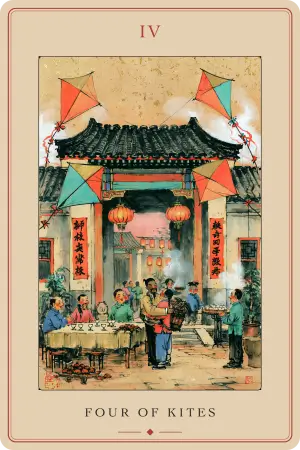
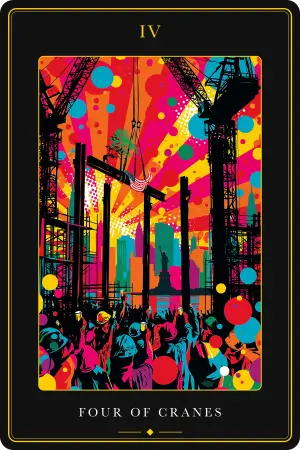
Muling inilalarawan ng bawat deck ang parehong arketipo. Ihambing ang sining, pagkatapos ay magbukas ng deck upang basahin ang buong interpretasyon nito.
Imahen at simbolismo
Binuo ni Pamela Colman Smith ang card na ito bilang isang set ng entablado na may tatlong lalim. Sa unahan, apat na matataas na kahoy na tungkod ang nakatayo nang matatag at pantay sa lupa, nakatali sa tuktok ng isang mayabong na garland ng mga prutas, dahon, at bulaklak. Sa gitna, dalawang pigura ang nagtataas ng kanilang mga braso at nagwawagayway ng maliliit na palumpon. Sa likod nila ay may isang matibay na kastilyong bato, at ang mga nagdiriwang ay nagkakatipon sa isang tulay na tumatawid sa moat patungo sa manor. Ang mga pinalamutiang tungkod ay direktang hango sa chuppah, ang canopy para sa kasal ng mga Hudyo, kaya't ang card ng deck na ito ay mahigpit na nauugnay sa kasal, mga rito ng paglipat, at pormal na seremonya.
Malapit na binabasa ng deck na ito ang sarili nitong mga props. Ang korona ng mga sanga ng laurel na napapalibutan ng apat na tungkod ay panalo at tagumpay, ang pagtatapos ng isang proseso patungo sa isang layunin, at ang mga nagdiriwang ay may suot na mga korona sa kanilang mga ulo upang ulitin ang punto. Ang mismong apat na tungkod ay lumilikha ng isang nakapaloob na espasyo na kumakatawan sa tahanan, estruktura, at kaayusan: bumubuo sila ng isang pundasyon, ang pagtatapos ng isang proseso, at simula ng susunod na yugto. Ang kastilyo ay lakas, seguridad, at materyal na kagalingan na nakamit sa pamamagitan ng pagsisikap. Ang anihan ay kumakatawan sa mga espirituwal at materyal na tagumpay na nakamit sa pamamagitan ng sipag.
Kulay ang nagdadala ng mood. Ang dilaw na background ay enerhiya, sigla, pagdiriwang, at kagalakan; ang mga tono ng dilaw at berde sa buong tagpo ay nagbabasa bilang yaman, kasaganaan, at pagpaparami; at ang pula at berdeng kasuotan ng mga nagdiriwang ay nagpapahiwatig ng pagnanasa, aksyon, masidhing emosyon, pagpapanibago, at saganang biyaya. Ang mga berdeng puno at masayang kasuotan ay pumupuno sa isang kapaligiran ng kagalakan.
May isa pang ginawa si Smith, at napansin ito nang mabuti ng mga makabagong mambabasa. Ang tumitingin ay nasa labas ng tagpo, hiwalay sa pagdiriwang ng mga nakapaligid na tungkod sa harap at ng moat sa likod. Ang harapan ay gumaganap bilang isang threshold, ang mga pigura sa gitna bilang pagganap, at ang kastilyo sa likod bilang santuwaryo. Inaanyayahan ka ng disenyo ni Waite na tawirin ang tulay at pumasok, ngunit ang pagtatanghal ay tumatanggap din ng isang mas malamig na pagbasa: isang pampublikong pagpapakita ng kagalakan na pinapanood mula sa kabila ng tubig, at doon nagsisimula ang nakatagong anino ng card.
Pangunahing kahulugan
Sa deck ng Rider-Waite, ang Apat ng mga Tungkod ay kasaganaan, katatagan, at pagkakasundo sa tahanan at pamilya: konsolidasyon ng posisyon, kapayapaan pagkatapos ng isang magulong panahon, ang kagalakan ng isang nakamit na layunin, at kasiyahan sa sama-samang pagsisikap. Tinawag ng Golden Dawn ang card na ito na "Panginoon ng Perpektong Gawain," at ang ginawa nina Waite at Smith noong 1909 ay isinalin ang abstraksyong iyon sa isang yugto ng tao na makikilala ng sinuman. Ligtas nang nakolekta ang anihan, inangkin na ang teritoryo, at ang komunidad ay handa nang magpahinga at magdiwang.
Ang numerong apat ay nagbibigay sa mapakali na suit ng Apoy ng unang tunay na lalagyan nito. Kung saan ang Alas ay nagbigay ng spark, ang Dalawa ay nagplano, at ang Tatlo ay nanood sa mga barko, ang Apat ay itinanim ang mga tungkod sa lupa at nagsabit ng isang garland sa kanila. Ito ay isang sinadyang paghinto, isang estrukturang pahinga bago ang tunggalian ng Lima, at ang katatagan na ibinibigay nito ay tunay habang ito ay tumatagal.
Payak ang sariling payo ng deck: kilalanin at ipagdiwang ang iyong nakamit, magpahinga, at maglaan ng oras kasama ang mga mahal sa buhay. Kahit na ang mga tagumpay na hindi umabot sa huling layunin ay nararapat markahan. Pahalagahan ang sandali ng katatagan at seguridad, at gamitin ito upang patibayin ang ugnayan sa iyong mga tao at sa iyong tahanan.
Tuwid na kahulugan
Kapag tuwid, inilalarawan ng card na ito ang isang panahon ng katatagan at kasiguruhan kung saan ang pagsisikap ay sa wakas nagbubunga ng nakikitang resulta. Tumuturo ito sa mga pundasyon, matitibay na koneksyon, at kasalukuyang mga nakamit, at ito ay nakatuon nang husto sa tahanan at pamilya: seguridad, pagbuo ng isang base, pakiramdam na nasa bahay kasama ang mga kaibigan. Ito ay nagmamarka ng isang unyon, isang pagpupulong, isang kahandaang bumuo ng hinaharap, ang pagtatatag ng isang pamilya, o isang proyekto ng pamilya. Sa isang oo-o-hindi na pagbasa, ito ay isang oo. Bilang isang card ng araw, sinasabi nito na humakbang pabalik mula sa pagsusumikap, tipunin ang iyong mga tao, at hayaang ang kagalakan ang maging gantimpala na nagpapasulit sa trabaho.
Sa pag-ibig. Katatagan, pagkakasundo, at kapwa paggalang, isang relasyong binuo sa matitibay na damdamin kung saan ang parehong kapareha ay pantay na nag-aambag. Ito ay isang klasikong palatandaan ng pagiging malapit, kasal, o isang pangmatagalang romansa, isang masayang tahanan, ibinahaging mga sosyal na kaganapan, at pagdiriwang, at posibleng pagsasama sa isang bahay. Ang panahong darating ay kalmado at ligtas, sinusuportahan ng ibinahaging mga layunin at ambisyon.
Sa karera. Nakamit na gawain at itinatag na kontrol: ang matagumpay na pagtatapos ng isang proyekto o propesyonal na yugto, madalas na sinasabayan ng balita tungkol sa promosyon, parangal, o pagkilala mula sa propesyonal na komunidad. Ang trabaho ay nagdudulot ng kasiyahan at pagmamalaki, at ang sandali ay humihingi ng pagdiriwang kasama ang mga kasamahan at pagtangkilik sa pakiramdam ng pagkakaisa. Sa negosyo, nagpapakita ito ng paglago sa matitibay na pundasyon, isang negosyo ng pamilya o grupo, isang napapanatiling pakikipagsosyo, at isang paborableng pagkakataon para sa pagpapalawak o mga bagong direksyon kapag nakapagpahinga ka na.
Sa pananalapi. Tagumpay, katatagan, at konsolidasyon ng mga nakamit: isang panahon ng pananalapi na maayos, tuloy-tuloy na daloy ng pera, kita mula sa isang nakumpletong yugto o proyekto, o mga pamumuhunan na nagbubunga. Ang hinaharap ay nangangako ng katatagan at kasaganaan, at ang card ay nagbibigay ng ligtas na posisyon upang tunay na masiyahan sa bunga ng paggawa. Maaaring magdala ang mga pagdiriwang ng bukas-palad na mga regalo, at malalaking gastusin na kasama nila.
Sa kalusugan. Katatagan at paglago sa pamamagitan ng pang-araw-araw na pag-aalaga: disiplina sa mga ehersisyo, pagkakasundo sa katawan at sa mga kakayahan nito, at mga kasanayan tulad ng yoga, Pilates, o pagtakbo. Humanap ng kagalakan sa paggalaw at isang balanseng diyeta, pakinggan kung ano ang kailangan ng katawan, at hayaang ang pag-aalaga sa sarili ay maging bahagi ng pagdiriwang sa halip na maging isa pang gawain.
Baliktad na kahulugan
Kapag baliktad, nagugulo ang pagkakasundo na ipinangako ng card na ito. Ang pagbasa ay lumiliko sa pagkabalisa at kawalan ng katatagan: ang mga nakaraang tagumpay ay hindi na nagbibigay-kasiyahan, ang mga plano ay nagiging hindi tiyak, at ang pakiramdam ng tahanan o pagiging kabilang ay humihina. May mga hindi pagkakasundo sa pamilya, kakulangan ng sigla sa tahanan, mga proyektong hindi maisakatuparan, at kahirapan sa pag-abot ng kasunduan. Sa isang oo-o-hindi na pagbasa, ito ay nagiging hindi. Ang payo ng deck ay lutasin ang mga isyu sa halip na iyakan ang sitwasyon: suriin ang iyong posisyon sa mga relasyong mahalaga, ayusin ang komunikasyon, repasuhin ang plano, at manatiling matiyaga upang hindi lamonin ng pagkabigo ang mas malaking larawan.
Sa pag-ibig. Kawalan ng katatagan, tensyon, o bukas na alitan: pagkabalisa, kawalan ng kasiyahan, o takot sa pangako. Ang mga layunin ay nawawalan ng pagkakatugma, lumalamig ang interes, at maaaring madama na parang ang isang kapareha ay nagdadala ng mas malaking bigat kaysa sa isa. Hinihiling ng card na tanggapin ng magkabilang panig ang mga problema nang tapat, bigyan ang isa't isa ng espasyo kung kinakailangan, at iwasan ang mga padalus-dalos na desisyon o hindi malusog na panggigipit.
Sa karera. Mga problema sa pinagtatrabahuhan: ang matinding pagsisikap ay hindi nabibigyan ng pabuya, isang proyektong nabigong maghatid ng resulta, paghihiwalay sa koponan, o ang mga kalagayan sa bahay na nakakaapekto sa trabaho. Ang pagkasawa at pagod sa trabaho ay umaabot sa sukdulan at humihingi ng panibagong enerhiya o bagong pananaw. Sa negosyo, nagbababala ito sa mga alitan sa koponan, hindi sapat na pagpaplano, hindi pagkakasundo sa pagitan ng mga kasosyo, at naantalang kooperasyon; kailangan ang mga negosasyon bago tuluyang magkawatak-watak ang estruktura.
Sa pananalapi. Stagnation o kawalan ng katatagan kung saan inasahan ang seguridad. Isang espasyong dating itinuturing na ligtas ang ngayon ay pinagbabantaan, isang matibay na estruktura ang lumalabas na marupok, nakakabigo ang mga kita, mataas ang mga gastusin, at ipinagpapaliban ang mga tubo. Muling suriin ang estratehiya sa ekonomiya, repasuhin ang mga plano, at isaalang-alang ang mga panganib bago pa man sila dumating.
Sa kalusugan. Hindi sapat na atensyon sa katawan: nawalang disiplina sa diyeta, walang rutina, at walang ehersisyo. Nagbababala ang card tungkol sa mga kahihinatnan ng labis na pagkonsumo o pagpapabaya at humihingi ng masusing pagbabalik sa mga pangunahing kaalaman, dahil ang pundasyong nayayanig dito ay pisikal.
Mga tala sa kasaysayan
Bago sina Waite at Smith, walang tagpo ang card. Ang apat na baton ng Tarot de Marseille ay naghahabi sa isang matibay na lattice o X na umaabot sa mga sulok ng card, na may mga bulaklak na sumusulpot mula sa mga siwang sa pagitan nila, na nagpapatunay na ang mahigpit na kaayusan ay maaari pa ring magbunga ng organikong paglago. Ang isang ika-17 siglong Belgian Marseille deck, ang Gerard Bodet, ay mayroon pang isang aksidente sa paglilimbag kung saan dumanak ang asul na tinta sa ibaba ng maapoy na card na ito, isang imaheng pinahalagahan ng maraming sumunod na mambabasa bilang hilaw na apoy na biglang lumamig at kumalma.
Ang manwal ng tagubilin ng Golden Dawn, ang Book T, ay nag-utos ng isang bagay na mas kakaiba kaysa sa isang sayaw sa nayon: dalawang puting mala-anghel na kamay na lumalabas mula sa mga ulap, magkahawak sa lihim na hawak ng Unang Orden, na may hawak na apat na magkakrus na tungkod na may apoy sa pinagsasalubungan, at mas maliliit na tungkod sa itaas at ibaba na nagdadala ng mga sigil ng Venus at Aries. Ang mga sukat ng kulay ng orden, na napanatili sa pamamagitan ng templong Whare Ra sa New Zealand, ay nanawagan ng esmeraldang berdeng tungkod sa isang kulay-dugong pulang background sa ilalim ng mga violet na ulap, at itinali ang card sa alchemical na yugto ng Calcination, ang Pagpula, kung saan nasusunog ang mga dumi upang ihayag ang isang matatag na ubod.
Ang rebolusyon nina Waite at Smith noong 1909 ay ang gawing tagpo ng tao ang makinaryang iyon: isang pagdiriwang ng anihan sa pintuan ng kastilyo, isang canopy para sa kasal, mga taong maiisip mong kasama mo. Ang Thoth deck ni Crowley sa paglaon ay bumalik sa geometry, tinawag ang card na "Completion" at nagkrus ng apat na tungkod na may dulo ng Ram ng Aries at Kalapati ng Venus sa paligid ng isang nag-iisang nakapaloob na apoy. Ang bersyon ng Rider-Waite ay nananatiling ang bersyon na gumawa sa Panginoon ng Perpektong Gawain na mababasa bilang isang karaniwan at masayang araw.
Mga ugnayan
Numero. Apat, ang numero ng katatagan, kapanatagan, at kalmado: ang apat na elemento, apat na direksyon, at apat na panahon, na nauugnay sa mga trump sa Ang Emperador. Sa numerolohiya ng deck na ito, inilalagay ng apat ang aktibong enerhiya ng mga Tungkod sa loob ng lakas at pagiging maaasahan ng pundasyon, na nagmamarka ng pagkumpleto ng isang gawain at karapat-dapat na pahinga pagkatapos ng tunay na pagsisikap, at sa lipunan ito ay kumakatawan sa komunidad, kasunduan, at ang kagalakan ng sabay-sabay na pag-abot sa isang karaniwang layunin.
Astrolohiya. Venus sa Aries, ang ikatlong decan ng Aries, Abril 11–20, isang sektor na ayon sa tradisyon ay pinamumunuan ng malawak na Jupiter, na nagpapalakas sa mga tema ng card ng pagdiriwang at magandang kapalaran. Ang Venus ay nasa detriment sa Aries, ang planeta ng pag-ibig na inilagay sa larangan ng digmaan ng Mars, at binabasa ng deck ang pagpapares na ito nang bukas-palad: nagdaragdag ang Venus ng pagkakasundo, alyansa, pagkahumaling, at ang pagnanais na ibahagi ang tagumpay, habang ang ikatlong decan ay nagbibigay sa Aries ng buong kumpiyansa at pragmatikong kahandaang ipaglaban ang mga layunin. Ang kagalakan ay malakas, agaran, at puno ng adrenaline, at hindi ito ginawa upang manatiling walang pagbabago.
Elemento. Apoy, sa Atziluth, ang mundo ng dalisay na kalooban at emanation. Dito ang apoy ay dinadala sa loob ng bahay sa apuyan, kung saan ito ay nagbibigay ng init, kaligtasan, at isang lugar na mapagtitipunan.
Kabbalah. Chesed, Awa, ang ikaapat na Sephirah, sa Atziluth: ang unang hakbang ng manipestasyon sa ibaba ng Abyss, kung saan ang banal na kalooban ay nagsisimulang maayos bilang ideal na estruktura. Ang mga anghel na tagapamahala ng decan, sina Nanael at Nithael, ay nagdaragdag ng dalawang hati ng pangako ng card, na pinagsasandigan ni Nanael ang maapoy na inspirasyon sa pilosopikong pag-unawa at binabantayan ni Nithael ang lehitimong awtoridad at ang katatagan ng santuwaryo.
Elemental na dignidad. Isang card ng Apoy na lumalakas katabi ang Hangin at nakakatagpo ng tensyon sa Tubig, kaya ang mga katabi nito ang nagpapasya kung magpapatuloy ang pagdiriwang o kung magbabago ang sitwasyon.
Sikolohikal na pananaw
Ang taong nagdadala ng tuwid na enerhiya ng card na ito ay nasa isang estado ng pagkakasundo at katatagan na nakuha sa pamamagitan ng pagsisikap at pagtitiyaga. Mayroon silang malinaw na pananaw sa kanilang mga layunin at ang sigasig na maisakatuparan ang mga ito, madaling makipagtulungan, at nakikita ang mas malaking larawan nang sapat upang magpatakbo ng ilang mga proyekto nang sabay-sabay habang nananatiling nakatapak sa lupa. Kapag baliktad, ang parehong tao ay nakakatagpo ng mga hadlang na umuubos sa sigla, motibasyon, at direksyon hanggang sa magsimula ang stagnation; pinapanatili ng takot sa pagbabago ang ilan sa kanila na makaalis, at pinupuno ng kawalan ng katatagan at kaguluhan ang espasyo kung saan dating naroon ang mga pangmatagalang layunin. Kailangan nila ng suporta o gabay upang maibalik ang kanilang kinatatayuan.
Ang mas malalim na sikolohiya ng card ay tungkol sa pagpapaubaya na maramdaman ang isang nakamit na layunin. Ang mga maapoy na ugali ay tumatakbo mula sa isang natapos na gawain direkta patungo sa susunod at nasusunog sa daan, at pinapahinto ng card na ito ang pag-ikot na iyon nang may utos na magpahinga, magtipon, at walang-konsensyang masiyahan sa kung ano ang natapos na. Pinararangalan nito ang mga malalaking okasyon, mga kasal, at mga pagtatapos, at pantay rin sa mga maliliit na milestone: isang malupit na linggo na nalampasan, isang mahirap na pag-uusap na sa wakas ay nagawa, isang tahimik na Sabado na parang ligtas. Ang kagalakang hindi nasasaksihan ay may posibilidad na lumiit; ang kagalakang ibinabahagi sa isang komunidad ay nag-uugat.
Ang anino ay ang lalagyan mismo. Nagbababala si Alejandro Jodorowsky na ang panganib ng Apat ay ang pag-stagnate nang hindi nagbabago, ang artistang nagpipinta ng parehong larawan habambuhay, ang mag-asawa na ang kanilang pagnanasa ay naging rutina. Ang apoy na masyadong matagal na nasa pugon nang walang bagong gatong ay mamamatay, at ang mga pader ng kuta na pakiramdam ay ligtas ay nagsisimulang maging parang isang ginintuang hawla. Tanggapin nang buo ang pagdating, at pagkatapos ay maging handang umalis sa parehong pintuang pinasukan mo.
Ang Apat ng mga Tungkod sa iba't ibang deck
Kung itatabi sa mga kamag-anak nito, ang natatanging galaw ng bersyon ng Rider-Waite ay hospitality: ito ang tanging klasikong rendering na nagtatanghal sa Perpektong Gawain bilang isang party na maaari mong salihan. Ang Tarot de Marseille ay nagpapanatili ng dalisay na geometry, apat na baton sa isang namumulaklak na lattice, ang kaayusan ay binabasa sa pamamagitan ng pattern at numero. Ang bersyon ng Book T ng Golden Dawn ay isang pangitain ng mala-anghel na mga kamay at nag-aapoy na tungkod sa ilalim ng mga sigil ng Venus at Aries, isang banal na resolusyon kaysa sa kasiyahan ng tao. Ang Thoth card ni Crowley, na pinamagatang "Completion," ay nagbabalanse sa agresibong Ram laban sa mapayapang Kalapati sa isang sarado at may mataas na tensyon na circuit sa paligid ng isang nakapaloob na sentral na apoy.
Itinutulak ng mga makabagong deck ang tagpo ng RWS sa mga bagong direksyon. Ginagawa ng Deviant Moon ni Patrick Valenza ang apat na tungkod bilang literal na mga haligi ng pundasyon ng kakaiba at bagong bahay ng isang mag-asawa, kung saan ang ugnayan ng card sa buhay tahanan at real estate ay ginawang arkitektura. Pinag-aabstraksyo ng Wild Unknown ni Kim Krans ang mga tungkod bilang magkakrus na mga sanga sa paligid ng isang asul na intuitive na ubod, isang portal kung saan ang mga enerhiya ay nagtatagpo at nagiging matatag. Ipinagpapalit ng Modern Witch ni Lisa Sterle ang pagdiriwang ng anihan para sa isang magkakaibang grupo ng magkakaibigan na sadyang huminto upang masiyahan sa buhay, piniling pamilya, at pag-aalaga sa sarili kapalit ng canopy ng kasal, at ang Shadowscapes ni Stephanie Pui-Mun Law ay tuluyang tinutunaw ang arkitektura upang maging mga fox, watercolour, at natural na pagkakasundo. Pinapanatili ng bawat isa kung ano ang itinatag ng pagtatanghal ni Smith: ang katatagan na nagkakahalagang ipagdiwang, at ang kasama upang ipagdiwang ito.
Sa kombinasyon at konteksto
Ang pagpapares na pinakamadalas ipagkamali ng mga mambabasa ay sa Tatlo ng mga Kopita, ang isa pang mahusay na card ng pagdiriwang ng deck, at ang pagkakaiba ay elemental. Ang Tatlo ng mga Kopita ay Tubig: tuluy-tuloy, sosyal, at nagpapahayag ng emosyonal na kagalakan, na medyo panandalian sa kalikasan. Ang Apat ng mga Tungkod ay Apoy na nakabatay sa estruktura, at ang pokus nito ay ang permanenteng pundasyon na inilalagay, ang kasal na legal na bumubuo ng isang pamilya, ang pagbili ng isang tahanan, ang negosyong inkorporada. Ipinagdiriwang ng isa ang pakiramdam ng pagtitipon; ipinagdiriwang ng card na ito ang pananatili sa isang lugar.
Mas pinapatalim pa ito ng mga kombinasyon. Katabi ang Ang Buwan sa isang tanong sa kalusugan, nagiging isa itong reseta sa halip na isang hula: ang pagkabalisa na dala ng Ang Buwan ay nangangailangan ng literal na pag-uwi na iniaalok ng card na ito, naroon ang pamilya, isang matatag na kapaligiran, tunay na pagpapagaling sa bahay pagkatapos ng sakit o ospital. Kapag baliktad kasama ng baliktad na Kabalyero ng mga Tungkod sa isang pagbasa ng pag-ibig, inilalarawan nito ang isang taong aktibong iniiwasan ang mga pangunahing hakbang na kinakailangan ng isang bono, pinapatigil ang mga plano at nagpapanatili ng distansya dahil sa takot sa pangako. At ang sariling pagtatanghal ng card ay nagbibigay ng pinakamahirap na pagbasa ng kombinasyon nito: kapag lumabas itong baliktad sa paligid ng mga card ng panlilinlang o matinding presyon, ang pagdiriwang ay maaaring isang facade, isang pampublikong pagpapakita ng pagkakaisa na ginaganap sa kabila ng moat habang ang pribadong realidad ay nananatiling hindi natutugunan.
Ayon sa posisyon, bilang payo ay sinasabi nito na huminto, markahan ang tagumpay, at ibahagi ito. Bilang isang hadlang, nagbababala ito na ang ginhawa o maagang pagdiriwang ay pumipigil sa iyo sa threshold. Bilang resulta, nangangako ito ng isang matatag na pagdating, kung saan ipinapaalala ng malayong kastilyo ni Smith na ang daan ay nagpapatuloy lampas sa party.
Mga tanong para sa pagninilay
- Inilagay ako ni Smith sa labas ng tagpo, sa kabila ng moat mula sa pagdiriwang. Saang bahagi ng aking buhay ako nanonood ng kagalakan mula sa labas, at anong tulay ang kailangan kong tawirin para makasali dito?
- Ang apat na tungkod ay may hawak na garland, hindi bubong. Ano ang naitayo ko na karapat-dapat ipagdiwang ngayon, bago ito kailangang maging permanente?
- Ang kastilyo ay nakatayo sa likod ng party, hindi mismong doon. Anong mas malaking seguridad ang nilalakaran ko pa rin, at mapapahintulutan ko ba ang aking sarili na magpahinga sa daan?
Ang pangkalahatang kahulugan ay sumusunod sa pagbasang Rider-Waite-Smith, ang sangguniang ginagamit sa buong Tarot Academy. Magbukas ng partikular na deck sa itaas para sa sarili nitong interpretasyon.
Mga madalas itanong
Tuklasin ang Tarot
Pinakabagong Post
Tuklasin ang sinaunang karunungan ng mga tarot card at buksan ang mga misteryo ng iyong espirituwal na paglalakbay. Ang aming blog ang iyong daan tungo sa pag-unawa sa mayamang simbolismo, kahulugan, at praktikal na gamit ng pagbasa ng tarot.




















































