Кіші аркандар · Тостағандар (Су)

Тостағандардың Үштігі

Қауымдастық, мереке және өзіңіз таңдаған отбасы

Картаға қысқаша шолу

Нумерология
3
Элемент
Су
Астрология
Меркурий Шаянда
Каббалалық жол
Бинадан (Түсінік) Брияға (Су әлемі) дейін
Уақыты
Шаянның екінші декадасы (2–11 шілде)
Иә / Жоқ
Иә, әсіресе әлеуметтік немесе бірлескен мәселелерге қатысты.

Тура

Мереке Таңдаулы отбасы Достық Қауымдастық Тиесілілік Ортақ қуаныш Қайта қауышу Ынтымақтастық

Төңкерілген

Өсек Жікке бөліну Шектен шығу Оқшаулану Қажу Үшінші тарап Дау-дамай Беткіқаралық араласу

Әр колодадағы Тостағандардың Үштігі

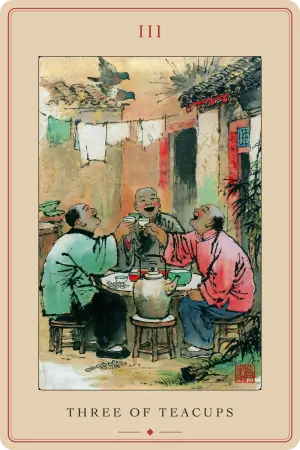
Әрбір колода сол бір архетипті қайта түсіндіреді. Өнерін салыстырып, оның толық түсіндірмесін оқу үшін колоданы ашыңыз.


Психологиялық перспектива

Психологиялық тұрғыдан алғанда, Тостағандардың Үштігі адамның топқа қосылу арқылы әлсіремей, қайта күшейетінін түсінетін сәтін көрсетеді. Тостағандардың Екілігі жақын жұпты білдірсе, Үштік үшінші элементті қосып, іштей байланысты қауымдастыққа, эгоның әлеуметтік өмірге қарай кеңеюіне айналдырады. Рэйчел Поллак өзінің ықпалды еңбегінде Кіші Аркандағы дәл осы кезеңді басқалармен бірігудің күнделікті жұмысы ретінде қарастырады.

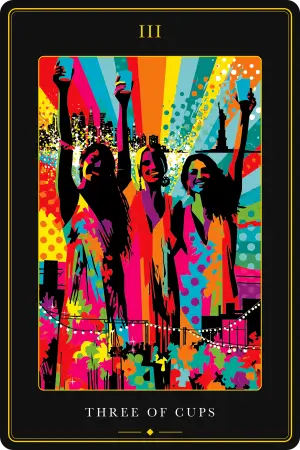
Бұл колода аталған ұмтылысты қаланың әлеуметтік дәнекері болып табылатын байланыстырушы адамдар бейнесінде береді. Олар кешкі асты ұйымдастырады, барменді таниды және ешкімнің жалғыз қалмауын қадағалайды. Олар үшін қала бәсекелес орта емес, ортақ тәжірибе орны. Олардың жылуы жомарт әрі айналаға тез тарайды.

Кері позицияда бұл қуат бұзылады. Бұл жағдай басқалармен байланыс орнату емес, өзінен қашуға айналады: қарым-қатынас мәселеден жалтару құралы ретінде қолданылады, назарда болу үшін қолдан драма жасалады немесе тек көңіл көтеру кезінде қасында болып, есепшот келгенде немесе жағдай қиындағанда жоғалып кететін уақытша дос пайда болады. Картаның алға қоятын міндеті: қуат беретін нағыз қауымдастықты қуатты тек сорып алатын жалған қауымдастықтан ажырата білу.

Тостағандардың Үштігі түрлі колодаларда

Ортақ қуаныш архетипі сурет өзгерсе де тұрақты күйде қалады. Висконти-Сфорца және басқа да ертедегі пип колодаларында бұл үшбұрыш пішінінде орналасқан үш алтын тостаған, яғни мағынасы тек саны мен костюмі бойынша оқылады. Райдер-Уэйт-Смит колодасында ол жүзім мен асқабаққа толы егін бағында билеп, тостағандарын көтеріп тұрған үш әйелге айналады, бұл Үш Грацияның жаңғырығы іспеттес. Кроулидің Тот колодасы бұл картаны «Молшылық» (Abundance) деп атап, оларды алтын лотостармен толтырылған және тыныш теңізге төгіліп жатқан үш анар тостағанына айналдырды, яғни бұл құнарлы әрі тыныш сезім.

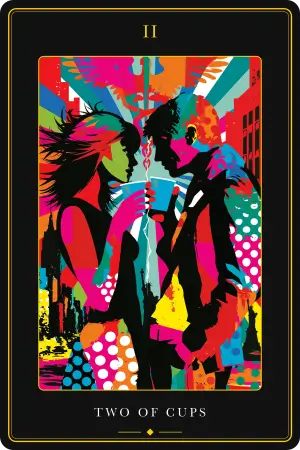
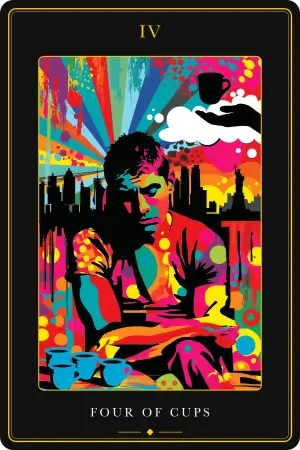
Tarot of New York City сол қызметтердің әрқайсысын сақтай отырып, ондағы заттарды қаланың өзіне тән атрибуттармен алмастырады. Бақша жартылай реңкті нүктелер астындағы түнгі отырысқа, алтын тостағандар әр бұрышта сатылатын көк түсті грек кофе стақандарына айналады, ал билеп жүрген үш бейне бет-әлпеті жоқ үш қара сұлбаға айналғандықтан, кез келген достар тобы өздерін солардың орнына қоя алады. Егін жинау кезіндегі күн поп-арт стиліндегі күн сәулесіне, ал құнарлы жер тек кездесу орны ретінде қызмет ететін ашық қызғылт түсті қала пейзажына айналады. Әр нұсқаның астарында басқалармен бірге көбейе түсетін сол баяғы Тостағандардың суы жатыр.

Үйлесімдер мен контексте

Тостағандардың Үштігі жанындағы карталарға байланысты өзгереді, өйткені ол топты сипаттайды, ал топтар оның құрамындағы адамдардан реңк алады. Тостағандардың Екілігімен қатар түскенде, бұл жақын жұптың айналасындағы кең ортаны, жұп төңірегіндегі қауымдастықты білдіреді. Патшайыммен (Императрицамен) немесе Күнмен бірге ол құнарлылыққа бейімделеді, жүктілікті немесе отбасының көбеюін атап өтуді, бардан гөрі нәрестені күтуге арналған кешті (baby shower) білдіреді. Махаббатқа жасалған таралымдарда оның үшінші адамға деген сандық нұсқауы алаңдаушылық тудыруы мүмкін, бірақ үшінші тарап тек ауыр карталар растағанда ғана опасыздыққа айналады: мысалы, сатқындық пен алдауды білдіретін Семсерлердің Үштігі мен Семсерлердің Жетілігі, немесе шектен шығуға негізделген уытты үшбұрышты білдіретін Ібіліс түскенде. Олар болмаған жағдайда үшінші элемент көбінесе зиянсыз болады: тым араласқыш дос, көп күш талап ететін жұмыс немесе көптен күткен жаңалық. Романтикалық таралымдарда Таяқшалардың Тоғыздығымен немесе Пентакльдердің Тоғыздығымен бірге түссе, бұл көбінесе тек платондық деңгейде қалатын шынайы сезімді, яғни френдзонаны білдіреді.

Оның позициясы мағынасын айқындай түседі. Кеңес ретінде ол шақыруды қабыл алуды және жетістікті басқалармен бөлісуді, жалғыздықты саналы түрде бұзуды ұсынады. Кедергі ретінде бұл қуат беретіннен гөрі көп күш алатын әлеуметтік өмірді немесе қиынырақ жалғыз атқарылатын міндеттен қашу үшін көпшілікке арқа сүйеуді білдіруі мүмкін. Кері позицияда немесе сатқындық карталарымен көлеңкеленген кезде ол өсек-аяң, жікке бөліну және жасанды көңіл көтеру туралы ескертеді. Тура позицияда және жақсы карталармен қолдау тапқанда, ол дәл қазір айналаңыздағы адамдар сіздің ең үлкен байлығыңыз екенін айқын уәде етеді.

Reversed meaning

Reversed, the Three of Cups is the hangover and the group text gone toxic. The celebration has run too long, or it was never real to begin with, and you can feel isolated in the middle of a crowded room. Go home early. Stop looking for deep connection in shallow places, and if a circle is draining you with drama or excess, step back and take stock of who you actually want around you.

In love. Third-party interference and misplaced priorities. Friends may be too involved in the relationship, handing out unsolicited advice or stirring drama, and it can point to a love triangle or to socializing that keeps crowding out intimacy. When one partner is spending more nights at the bar than tending the bond, the card's counsel is plain: put the partnership before the party.

In career. A cliquey, isolating workplace. Gossip and office politics make the job unbearable, collaboration breaks down as people take credit rather than share it, and a project can fail simply because the team could not work together. It can also mark the office party regretted the next morning. Keep your boundaries clear and address a toxic culture before it spreads.

In finances. Money bleeding out through the social calendar. You may be overspending to keep up with a certain crowd, or hemorrhaging cash on nightlife, and it can flag a dispute inside the group, an unpaid loan or a split bill that curdles into resentment. Tighten the budget and stop buying rounds you can't afford.

In health. The physical bill for overindulgence. Late nights, heavy drinking, and a diet run ragged by a hectic scene are catching up with the body, which is asking for a detox. It can also show the strain of social anxiety or of navigating a draining friend group. Prioritize rest and hydration, and take a real break from the scene.

Historical notes

Under the paper coffee cups sits one of the oldest cards in the deck. The Cups suit descends from the Mamluk playing cards that reached Europe in the 1370s, and in the Visconti-Sforza Tarot painted for the Milanese court around 1450 the Three was a plain pip: three golden cups set in a triangle against a bare ground, no figures and no scene, read purely for the number and the element.

Divinatory meaning was added during the occult revival. Etteilla, writing in 1783, tied the card to achievement, success, and relief, and later in the nineteenth century Papus read it through Venus as mutual affection realized. The scene most readers now picture arrived in 1909, when Pamela Colman Smith, working under Arthur Edward Waite, drew three maidens dancing in a harvest garden and raising golden cups in a toast, borrowing from the Three Graces of Botticelli's Primavera. Aleister Crowley's Thoth deck, painted with Lady Frieda Harris and published in 1944, abstracted the same idea into three cups fashioned from pomegranates, fed by golden lotuses and overflowing into a calm sea, and titled it Abundance. The Tarot of New York City keeps that thread of shared joy and swaps the garden for a rooftop, the golden chalices for deli coffee cups.

Correspondences

Number. Three, the number of creative synthesis, where two forces meet and something new is born. In this deck it is the city's own arithmetic: one person is a stranger, two are a couple, three are a crew. Three is the triangle, the first stable shape and the one the city builds its bridges from, and on this card that triangle is drawn in the raised arms and cups, friendship as load-bearing structure.

Astrology. The second decan of Cancer, roughly July 2 to July 11, ruled by Mercury. Cancer, a cardinal water sign of the Moon, supplies the emotional ground and the need for a chosen family. Mercury adds the exchange on top of it: the conversation and the shared laughter that pass almost without words among close friends.

Element. Water, the suit's element, here carrying feeling into the realm of community and shared emotion.

Kabbalah. Binah, the sphere of Understanding, in Briah, the Kabbalistic World of Water. The Golden Dawn placed the union of King and Queen resolving into the number three and named the result Abundance resulting from Love, the overflowing cup steadied under the discipline of Saturn so its emotion stays fruitful.

Elemental dignity. As a Water card it strengthens beside Earth and meets tension with Fire, so the neighbouring cards decide whether the celebration deepens or burns itself out.

Psychological perspective

Read psychologically, the Three of Cups is the moment the self discovers it is fortified rather than diminished by joining a group. The Two of Cups was the intimate pair. The Three introduces a third element and turns an inward-facing bond into a community, the outward expansion of the ego into social life. Rachel Pollack's influential reading placed exactly this stage in the Minor Arcana, the day-to-day work of integrating with others.

The deck gives that drive a face in its connectors, the social glue of the city. They are the ones who organize the dinner, know the bartender, and make sure nobody is left standing alone, and they read the city as a shared experience rather than a competition. Their warmth is generous and it spreads.

Reversed, the same energy sours. The scene becomes an escape from oneself rather than a connection to others, socializing as avoidance, drama manufactured to stay at the center of attention, the fair-weather friend who is present for the celebration and gone when the check lands or the mood turns serious. The task the card sets is to tell real community, which returns energy, from the false kind that only drains it.

The Three of Cups across decks

The archetype of shared joy holds steady while the picture changes. In the Visconti-Sforza and other early pip decks it is three golden cups in a triangle, meaning read from number and suit alone. In the Rider-Waite-Smith deck it becomes three women dancing in a harvest garden of grapes and pumpkins, raising their chalices in a toast, an echo of the Three Graces. Crowley's Thoth deck, which titles the card Abundance, abstracts them into three pomegranate cups filled by golden lotuses and overflowing into a still sea, emotion made fertile and calm.

The Tarot of New York City keeps each of those functions and swaps the objects for the city's own. The garden becomes a night out under halftone dots, the golden chalices become the blue Greek coffee cups sold on every corner, and the three dancing figures become three black silhouettes with no faces, so any group of friends can stand in them. The harvest sun becomes a pop-art sunburst, and the fertile ground becomes a hot-pink skyline that serves only as the venue. Under every version sits the same water of the Cups multiplied through company.

In combination and context

The Three of Cups shifts with the company it keeps, because it describes a group and groups take their color from who is in them. Beside the Two of Cups the wider circle sets off against the intimate pair, community around a couple. With The Empress or The Sun it leans fertile, the shared celebration of a pregnancy or a growing family, a baby shower rather than a bar. In love readings its numerical hint of a third person can turn anxious, but a third party only becomes cheating when the harder cards confirm it: the Three of Swords with the Seven of Swords for betrayal and deception, or The Devil for a toxic triangle ruled by excess. Without those, the third element is usually harmless, an over-involved friend, a demanding job, or a welcome new arrival. Paired with the Nine of Wands or Nine of Pentacles in a romance it often reads as the friendzone, real affection that stays firmly platonic.

Position sharpens it. As advice it says accept the invitation and share the credit, break isolation on purpose. As an obstacle it can be a social life that drains more than it gives, or a reliance on the crowd to avoid a harder solitary task. Reversed or shadowed by betrayal cards it warns of gossip, cliques, and the celebration that rings hollow. Upright and well-supported it is one of the deck's clearest promises that the people around you are, right now, your greatest asset.

Ойлануға арналған сұрақтар

  • Мен қандай шақырудан бас тартып жүрмін және осы аптада оған келісім беруім не әкелуі мүмкін?
  • Міндетті болғандықтан емес, өз қалауымен кім мен үшін шын мәнінде қасымнан табылады және мен оларға бұл туралы соңғы рет қашан айттым?
  • Мен қай жерде өз адамдарыммен бірге қуанышты сезінудің орнына оны аудитория үшін ойнап жүрмін?

Жалпы мағынасы Tarot Academy бойынша қолданылатын Райдер-Уэйт-Смит оқуына негізделген. Өз түсіндірмесі үшін жоғарыдағы нақты колоданы ашыңыз.

Жиі қойылатын сұрақтар

Соңғы жазбалар

Таро карталарының ежелгі даналығын ашыңыз және рухани саяхатыңыздың құпияларын ашыңыз. Блогымыз - Таро оқуындағы бай символизмді, мағыналарды және практикалық қолданбаларды түсінудің есігі.