
 HI (हिन्दी)


मेजर आर्काना · 17
द्वार गिराना
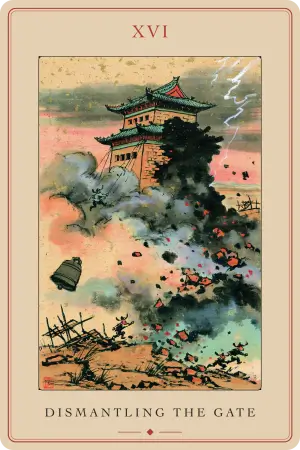
पुराने नगर द्वार को ईंट-दर-ईंट ढहाया जाना, जिससे उसके पीछे पहली बार खुला क्षितिज दिखाई देता है।
Read the complete guide: टैरो में टॉवर अर्काना: प्रतीकात्मकता और अर्थ की पूरी गाइड
कार्ड एक नज़र में
- अंक ज्योतिष
- XVI
- तत्व
- अग्नि
- ज्योतिष
- मंगल
- कब्बालिस्टिक पथ
- Peh (Netzach → Hod)
- समय
- अचानक उलटफेर · वह एक दोपहर जब झुकी हुई दीवार गिर पड़ती है
- हाँ / नहीं
- सीधा नहीं, लेकिन शुद्धिकरण · उल्टा नहीं
सीधा
अचानक परिवर्तन
ढांचा ढहाना
पुरातन का पतन
संकट
मुक्ति
जागृति
साफ की गई भूमि
खुला क्षितिज
उल्टा
खंडहरों से चिपके रहना
अस्वीकृति
विलंबित पतन
बदलाव का भय
जर्जर को सहारा देना
पलायनवाद
दिशाहीनता
प्रत्येक डेक में द्वार गिराना
हर डेक उसी मूलरूप को नए सिरे से रचता है। चित्रों की तुलना करें, फिर किसी डेक को खोलकर उसकी पूरी व्याख्या पढ़ें।
दृश्य और प्रतीकवाद
टैरो ऑफ बीजिंग में 'द टावर' को 'द्वार गिराना' (拆城楼, चाई चेंगलोउ) कहा गया है। यहाँ कोई देवता इसे नहीं गिराता, बल्कि मज़दूरों का एक दल इसे ढहाता है। रस्सियों के सहारे मज़दूर एक पुराने नगर फाटक की ईंटों को अलग करते हैं, धूल के गुबार के बीच एक विशाल घंटी खामोशी से नीचे गिरती है, और दो पहरेदार मचान से कूदकर खुद को सुरक्षित बचा लेते हैं। गिरते हुए ढांचे के पीछे, पाँच सौ वर्षों में पहली बार, खुला क्षितिज दिखाई देता है। यह डेक तबाही के चित्रण में भी अपने बुनियादी नियम का पालन करता है: न कोई आकाशीय बिजली, न कोई दैवीय संहारक। आपके टावरों को गिराने वाली शक्ति दरअसल समय, आवश्यकता और अपना काम करते इंसानी हाथ हैं।
हरी टाइलों वाली छतों वाला यह द्वार-बुर्ज पुरानी व्यवस्था का अंतिम अवशेष है; वह गौरव और रक्षा-पंक्ति जिसने सदियों तक शहर को बांटकर ही परिभाषित किया था। इसका गिरना बीजिंग को नष्ट नहीं करता, बल्कि उसके द्वार खोल देता है। रस्सियों को थामे मज़दूर इस डेक में बिजली का मानवीय विकल्प हैं। यहाँ विनाश एक सुविचारित और समन्वित श्रम है, जिसे आकाश के बजाय ज़मीन से एक आवश्यक दायित्व की तरह देखा गया है।
धुएं से भरे गहरे आकाश में बिजली की एक महीन लकीर अब भी कौंधती है, जो पुराने टावर का साया है। यह वह आत्मज्ञान है जिसमें आप अंततः देख पाते हैं कि सुरक्षा की वह दीवार वास्तव में एक कारागार थी। यहाँ यह बिजली विनाश का कारण बनने के बजाय ध्वंस के कार्य को प्रकाशित करती है। नीचे गिरती हुई घंटी इस कार्ड का सबसे मर्मस्पर्शी प्रतीक है, जो पुराने जीवन की उस आवाज़ को दर्शाती है जो हवा में खामोशी से विलीन हो रही है। उसका यह मौन उस निर्णायक क्षण को अंकित करता है जब पुरानी समय-गणना समाप्त हो जाती है।
छलांग लगाते दो पहरेदार क्लासिक टावर की गिरती आकृतियों का ही रूप हैं, लेकिन उन्हें नीचे फेंका नहीं गया है; वे स्वयं कूदते हैं। धुएं के बीच सिंदूरी मलबा बिखरता है, जो इस बात का प्रमाण है कि जो टूट रहा है वह कभी अत्यंत मूल्यवान था। बुर्ज के पीछे का क्षितिज भोर की हल्की गुलाबी आभा में चित्रित है, और कोने में लगी छोटी लाल मुहर इस दृश्य को किसी दस्तावेज़ की तरह प्रमाणित करती है: प्रत्यक्ष देखा गया, स्वीकार किया गया और सत्य।
मुख्य अर्थ
'द्वार गिराना' बीजिंग का टावर है, और यह डेक अपनी सीख को अत्यंत स्पष्ट रूप से रखता है: विनाश कोई दंड नहीं, बल्कि एक कार्य है। आपके जीवन में जो ढांचा सदियों से खड़ा था, चाहे वह कोई विवाह हो, करियर हो, कोई दृढ़ विश्वास हो या आपकी आत्म-छवि, वह अब गिर रहा है। वह इसलिए गिर रहा है क्योंकि उसका समय समाप्त हो चुका है, इसलिए नहीं कि आप पर कोई अभिशाप है। यह आघात वास्तविक है, धूल सांस रोकती है, और जिस घंटी की ताल पर आप जीवन जीते थे वह अब दोबारा कभी नहीं बजेगी। इसके बावजूद, इस मलबे के पीछे, वर्षों बाद पहली बार खुला क्षितिज सामने आता है।
जहाँ क्लासिक टावर पर आकाश से प्रहार होता है और उसका दोष देवताओं पर मढ़ा जा सकता है, वहीं यह दृश्य मानवीय स्तर का और इंसानों द्वारा निर्मित है। यही बात इसे अधिक सच्चा और स्वीकार करने में अधिक कठिन बनाती है। रस्सियों पर लगे हाथ साधारण हैं, और उनमें से कुछ हाथ आपकी अपनी अंतरात्मा के भी हो सकते हैं। इस कार्ड के दो मूल भाव हैं: भयावह और अनिवार्य, और ये दोनों एक साथ सच हैं। इसका संपूर्ण मर्म इसी संतुलन में निहित है कि यह एक ऐसा पतन है जिस पर शोक मनाना स्वाभाविक है, लेकिन यही वह एकमात्र मार्ग भी है जिससे जीवन में नया आकाश प्रवेश कर सकता है।
सीधा अर्थ
सीधी स्थिति में, 'द्वार गिराना' पतन और अचानक होने वाले अपरिवर्तनीय बदलाव को दर्शाता है जो आपको जीवन की एक अवस्था से दूसरी अवस्था में ले जाता है। कोई अलगाव, नौकरी का जाना, वित्तीय संकट या लंबे समय से पाले गए भ्रम का टूटना। कार्ड की सलाह उस ध्वंस-मज़दूर की तरह है: रस्सियों को पीछे खींचने में अपनी ऊर्जा व्यर्थ न करें, क्योंकि यह ढांचा पहले ही जर्जर घोषित हो चुका है। पहरेदारों की तरह समय रहते सुरक्षित कूद जाएं, ईंटों के बजाय जीवन को प्राथमिकता दें, घंटी के खोने का शोक मनाएं और फिर उस क्षितिज की ओर देखें जिसे इस द्वार ने सदियों से छिपा रखा था। मलबे को साफ की गई ज़मीन समझें और कल्पना करें कि आप दीवार की जगह क्या नया निर्माण करेंगे।
प्रेम में. रिश्ते का पुराना स्वरूप समाप्त होता है, चाहे वह किसी अलगाव, रहस्योद्घाटन या वर्षों की खामोशी के बाद सामने आए किसी कड़वे सच के माध्यम से हो। जो समाप्त होता है वह संबंध स्वयं हो सकता है या उसके भीतर का कोई दिखावा, जैसे पीढ़ियों से चला आ रहा कोई पारिवारिक ढर्रा जिसे दोनों साथी बिना चुने निभा रहे थे। इसमें पीड़ा होती है, और यह कार्ड इससे इनकार नहीं करता। यदि रिश्ता इस बदलाव के बाद भी बचता है, तो उसका पुनर्निर्माण ज़मीनी स्तर पर अधिक ईमानदारी, परिपक्वता और एक-दूसरे की यथार्थ समझ के साथ होता है।
करियर में. अचानक संरचनात्मक परिवर्तन: छंटनी, पुनर्गठन, या किसी ऐसे पद या विभाग का अचानक अंत जो स्थायी लगता था। ध्यान दें कि आप इस परिस्थिति में टावर हैं, पहरेदार हैं या मज़दूर। यदि आपका पद समाप्त होने वाला है, तो पहरेदार बनें और अपनी शर्तों पर अपने कौशल व प्रतिष्ठा के साथ समय रहते बाहर निकल आएं। यदि आपको पुरानी संरचना को हटाने का कार्य सौंपा गया है, तो मज़दूर की तरह गंभीर, शांत और पेशेवर बने रहें।
वित्त में. तीव्र और अचानक बदलाव: आय का अचानक बंद होना, किसी सौदे का टूटना, बाज़ार की भारी गिरावट या नियमों में ऐसा बदलाव जो पुरानी योजना को रातोंरात समाप्त कर दे। जो ढांचा नगर की दीवार की तरह स्थायी लगता था, वह ढहने के लिए तय निकलता है। फिर भी, इससे जो ज़मीन साफ होती है वह वास्तविक है। अपने मूल्यवान संपर्कों और कौशलों को सहेजें, और एक पारदर्शी व वर्तमान आधार पर पुनर्निर्माण शुरू करें।
स्वास्थ्य में. शरीर में अचानक और अप्रत्याशित परिवर्तन: स्वास्थ्य की स्थिति में तीव्र बदलाव, कोई चोट या ऐसा चिकित्सीय निदान जो किसी ध्वंस आदेश की तरह सामने आता है। इसके मूल में किसी पुरानी अस्वस्थ दिनचर्या या आहार-पद्धति का अंत होता है जिसे शरीर ने पूरी तरह अस्वीकार कर दिया है। असफल दिनचर्या की रक्षा करने के बजाय पहरेदारों की तरह तुरंत संभलें, और जीवनशैली व विश्राम को स्वस्थ नींव पर पुनर्गठित करें।
उल्टा अर्थ
उल्टी स्थिति में, यह कार्ड किसी ऐसे व्यक्ति को दिखाता है जो किसी जर्जर इमारत के भीतर रह रहा है और दीवार पर लगे ध्वंस के निशान को अनदेखा करने का नाटक कर रहा है। ध्वंस टल सकता है, लेकिन रद्द कभी नहीं होता। बहानों के सहारे दीवारों को टिकाया जाता है, अवश्यंभावी को नकारा जाता है, और जो दबाव एक झटके में मुक्त हो जाना चाहिए था वह भीतर ही भीतर घुटता रहता है। उलटा टावर इस बात पर ज़ोर देता है कि प्रक्रिया को टालने से द्वार सुरक्षित नहीं रहता; इससे केवल यह सुनिश्चित होता है कि जब वह गिरेगा तो बिना किसी चेतावनी के गिरेगा, जब पहरेदार मचान पर ही फंसा रह जाएगा। जब तक नीचे उतरना आपके हाथ में है, तब तक सुरक्षित उतर आएं।
प्रेम में. उस अंत का भय जिसे हर कोई पहले से देख रहा है: निर्णायक बातचीत से बचना, और समाप्त हो चुके संबंध पर औपचारिकता का पर्दा बनाए रखना। एक या दोनों साथी चेतावनी के निशान को देखकर नज़रें फेर लेते हैं। किसी समाप्त हो चुके ढांचे को ज़बरदस्ती थामे रखने से केवल इतना होता है कि जब वह गिरता है, तो दोनों लोग उसके मलबे के नीचे दब जाते हैं।
करियर में. किसी ऐसी भूमिका या प्रक्रिया से चिपके रहना जो प्रत्यक्ष रूप से समाप्त होने की कगार पर है; डर के मारे पुनर्गठन की गति को धीमा करना, या खाली फाटक की रखवाली करते पहरेदार की तरह पुरानी आदतों का बचाव करना। कभी-कभी यह किसी हालिया पतन के मलबे में खड़े उस व्यक्ति को दर्शाता है जो यह स्वीकार नहीं कर पा रहा कि सब खत्म हो चुका है। जो समाप्त हो गया है उसे स्वीकार करें, जो वास्तव में आपका है उसे साथ लें और खुले रास्ते से बाहर निकल आएं।
वित्त में. आवश्यक वित्तीय पुनर्गठन से बचना: आय के पुराने पड़ चुके मॉडल से चिपके रहना, घाटे के सौदे से बाहर निकलने से इनकार करना, या नए सिरे से योजना बनाने के बजाय बिगड़े हुए बजट को पैबंद लगाना। नुकसान इसलिए बढ़ता जाता है क्योंकि व्यक्ति यह स्वीकार नहीं करता कि पुरानी व्यवस्था समाप्त हो चुकी है। कभी-कभी इसका अर्थ मचान से सही समय पर कूदकर किसी बड़े वित्तीय संकट से बाल-बाल बचना भी होता है।
स्वास्थ्य में. शरीर की चेतावनियों की अनदेखी करना: जांच को टालना, लक्षणों को नजरअंदाज करना, और ऐसी दिनचर्या को जारी रखना जिसे शरीर ने बहुत पहले अस्वीकार कर दिया था। स्वास्थ्य लाभ में देरी इसलिए होती है क्योंकि पुरानी अस्वस्थ आदतों को बदलने के बजाय उनका बचाव किया जा रहा है। दीवार पर लगे निशान को तभी पहचान लें जब वह केवल एक निशान है, और अस्वस्थ आदतों को अपनी योजना के अनुसार छोड़ें, इससे पहले कि शरीर आपातकालीन स्थिति में आ जाए।
ऐतिहासिक संदर्भ
मेजर आर्काना के किसी भी कार्ड की तुलना में 'द टावर' के सर्वाधिक प्राचीन नाम रहे हैं: तीर, अग्नि, बिजली, और शैतान का घर (द हाउस ऑफ द डेविल)। इसकी सबसे पुरानी जड़ बेबीलोन के टावर (टावर ऑफ बेबेल) में है, जहाँ मध्यकालीन कल्पना ने धर्मग्रंथों के संदर्भ में दैवीय वज्रपात की बात जोड़ी जिसने टावर के अहंकारी वास्तुकार निम्रोद को नीचे गिरा दिया था और इमारत को आग ने भस्म कर दिया था। इटली के नगर-राज्यों जैसे बोलोना और सैन गिमिग्नानो ने इस छवि को भौतिक स्वरूप दिया, जहाँ प्रतिद्वंद्वी कुलीन परिवारों के ऊंचे बुर्ज अक्सर वास्तविक आकाशीय बिजली का शिकार बनते थे, जिससे किसी निरंकुश शासक के बुर्ज का गिरना ब्रह्मांडीय न्याय का प्रतीक बन गया।
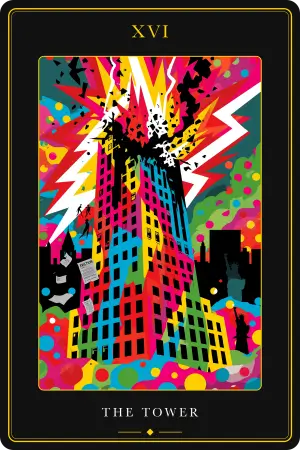
फ्रांस में प्रवेश करने पर टैरो डी मार्सिले में यह कार्ड 'ला मैसन दियू' (ईश्वर का घर) के रूप में स्थापित हुआ। इसमें एक ईंट का बुर्ज था जिसका मुकुट-रूपी कंगूरा कटकर गिर रहा था और दो आकृतियां रंगीन गोलों के बीच सिर के बल नीचे गिर रही थीं। 1909 के राइडर-वेट-स्मिथ डेक ने इसका आधुनिक प्रारूप तय किया: एक एकाकी चट्टान पर ऊंचा बुर्ज, सोने के मुकुट को गिराती आकाशीय बिजली, तीन खिड़कियों से निकलती लपटें, और 22 मार्गों व अक्षरों का प्रतिनिधित्व करती 22 योद (Yod) आकार की चिंगारियां।
टैरो ऑफ बीजिंग पतन के यथार्थ को बनाए रखता है लेकिन संहारक को हटा देता है। यहाँ निर्णय सुनाने वाला कोई देवता या वज्रपात नहीं है। उनके स्थान पर रस्सियों के साथ खड़ा मज़दूरों का एक दल है, जो इस कार्ड के दृष्टिकोण को पूरी तरह बदल देता है: आपके टावर को गिराने वाली शक्ति समय, आवश्यकता और मानवीय हाथ हैं, न कि स्वर्ग का क्रोध। खामोशी से नीचे गिरती घंटी इस डेक का अपना मौलिक प्रतीक है, जो पुरानी व्यवस्था की आवाज़ के शांत होने को दर्शाता है, जहाँ पुराने डेक केवल आग दिखाते थे।
पत्राचार और संबंध
संख्या. XVI, यानी 16, जो पतन और पुनर्गठन की संख्या है। यह 1 (एकल प्रयास और रस्सी उठाने वाला पहला मज़दूर) को 6 (पारंपरिक आँगन और गृहस्थी का स्थापित सामंजस्य) से जोड़ती है। 16 के भीतर उनका टकराव ही इस कार्ड का वास्तविक संघर्ष है: एक पुरानी दीवार को खींचता हुआ नया हाथ। संक्षिप्त करने पर 1 और 6 मिलकर 7 बनते हैं, जो अंतर्दृष्टि और आंतरिक दृष्टि की संख्या है, और इस डेक में सात स्वयं खुला क्षितिज है। यह ध्वंस केवल उस दृश्य को प्रकट करने के लिए घटित होता है।
ज्योतिष. मंगल, जो ऊर्जा, बल और अचानक होने वाली उथल-पुथल का ग्रह है। वह यहाँ आकाशीय बिजली बनकर नहीं उतरता; वह मज़दूरों के दल में खड़ा है, रस्सी पर ज़ोर लगाए हुए, जहाँ उसकी मांसपेशियां पाँच सौ साल पुरानी चिनाई का भार सहती हैं। यह क्रोध के बजाय श्रम के रूप में मंगल की उपस्थिति है; वह शक्ति जो उस ढांचे को गिराने के लिए आवश्यक है जो स्वयं मार्ग नहीं छोड़ता। वही शक्ति द्वार को गिराने के बाद नए निर्माण के लिए भी उपलब्ध रहती है।
तत्व. अग्नि तत्व, जो आकाश से होने वाले प्रहार के बजाय ध्वंस के अनुशासन के रूप में मौजूद है: सुविचारित प्रहार, एकजुट प्रयास और ज़मीन का पूर्ण शुद्धिकरण।
कबाला. इसका हिब्रू अक्षर पेह (Peh, मुख) है, जो नेत्ज़ाह (Netzach) और होद (Hod) के बीच का मार्ग है। पेह इस कार्ड को बेबीलोन की कथा से जोड़ता है, जिसका वास्तविक दंड मृत्यु नहीं बल्कि भाषाओं का भ्रम था। यह उन सभी काल्पनिक टावरों से भी जुड़ा है जिन्हें वाणी और खोखले तर्क से खड़ा किया जाता है। टावर वह स्थान है जहाँ शब्दों का यह मिथ्या ढांचा ढह जाता है।
मनोवैज्ञानिक दृष्टिकोण
इस आर्काना का व्यक्ति टावर और ध्वंस-दल दोनों का स्वभाव अपने भीतर रखता है। टावर की तरह उसके पास इच्छाशक्ति, सहनशीलता और अपने विश्वासों में अटूट दृढ़ता होती है। वहीं मज़दूरों के दल की तरह वह समय आने पर उन निश्चितताओं को अपने ही हाथों से गिराने का सामर्थ्य भी रखता है। ऐसे लोग गहरा आत्म-विश्लेषण कर सकते हैं, संकट को विकास में बदल लेते हैं, और टकराव की कीमत पर भी स्थितियों को स्पष्ट रूप से समाप्त करने का साहस रखते हैं। वे अंत के प्रति ईमानदार होते हैं, जो उन्हें नई शुरुआत में भरोसेमंद बनाता है, और धूल के घने गुबार के बीच भी वे याद रखते हैं कि उसके पीछे का आकाश एकदम स्वच्छ है।
इसकी छाया वह टावर है जो आवश्यकता से अधिक समय तक खड़ा रह गया। हठ और अत्यधिक आत्मविश्वास उसी व्यक्ति को जड़ और अडिग बना सकते हैं, जो अपनी सोच के ढांचे में न बैठने वाली हर सच्चाई को नकारता रहता है, जब तक कि जीवन के पास पूर्ण ध्वंस के सिवा कोई विकल्प न बचे। इसका एक अधिक नकारात्मक पहलू पतन का आदी हो जाना भी है: एक बार किसी बड़े पतन से उबरने के बाद, ऐसा व्यक्ति अपनी और दूसरों की उन संरचनाओं पर भी रस्सियां खींचना शुरू कर सकता है जिन्हें केवल मरम्मत की आवश्यकता थी। इसका मुख्य उपदेश विवेक है: हर पुरानी दीवार कारागार नहीं होती, और हर घंटी को शांत करना आवश्यक नहीं होता।
अन्य डेक में द्वार गिराना
राइडर-वेट-स्मिथ. क्लासिक टावर में काले आकाश से गिरती बिजली बुर्ज पर प्रहार करती है, उसका सोने का मुकुट खाई में गिर जाता है, और 22 योद आकृतियों के बीच दो वस्त्रधारी लोग सिर के बल नीचे गिरते हैं। 'द्वार गिराना' पतन और सत्य की कौंध को बनाए रखता है, लेकिन विनाश का दायित्व मज़दूरों के दल को सौंप देता है, जिससे यह पतन किसी दैवीय दंड के बजाय एक सचेत श्रम बन जाता है।
टैरो डी मार्सिले. 'ला मैसन दियू' में टावर का मुकुट-रूपी ऊपरी हिस्सा टूट जाता है जबकि दो आकृतियां रंगीन गोलों के पास से नीचे गिरती हैं। बीजिंग डेक गिरे हुए मुकुट को पुरानी व्यवस्था के पतन (शहर को बांधने वाला पुराना फाटक) के रूप में देखता है, और बेबस गिरती आकृतियों को ऐसे पहरेदारों में बदल देता है जो अपने पैरों पर खुद छलांग लगाते हैं।
क्रॉले-थोथ. क्रॉले ने टावर को मंगल की राशि और पेह अक्षर के तहत पूर्ण विनाश के रूप में चित्रित किया, जिसमें नीचे गिरते कबूतर और सर्प के साथ अग्नि दिखाई गई है। बीजिंग कार्ड उसी मंगल ऊर्जा को अपनाता है, लेकिन उस अग्नि को मज़दूरों की मांसपेशियों में स्थानांतरित कर देता है, जिससे प्रलयंकारी ड्रामे के बिना उन्हीं भ्रमों का अंत होता है।
आधुनिक पुनर्परिभाषाएं. समकालीन डेक तेजी से टावर को विशुद्ध तबाही के बजाय मुक्ति और विलंबित बोझ से छुटकारे के रूप में पढ़ते हैं। टैरो ऑफ बीजिंग इसी दृष्टिकोण का हिस्सा है और इसे और आगे ले जाता है, यह स्थापित करते हुए कि यह ध्वंस मानवीय प्रयास है जिसके मलबे के पार एक स्वच्छ क्षितिज प्रतीक्षा कर रहा है।
संयोजन और संदर्भ में
'द्वार गिराना' किसी भी स्प्रेड को अचानक बदलाव, अंत और भूमि के शुद्धिकरण की ओर मोड़ देता है। इसका अर्थ आस-पास के कार्डों के अनुसार बदलता है। ठहराव या किसी चीज़ से चिपके रहने वाले कार्डों के पास यह उस चीज़ के विलंबित पतन को दर्शाता है जिसे साधक ने बहुत लंबे समय से सहारा दे रखा था। पुनर्निर्माण या नई शुरुआत के कार्डों के पास यह धूल के पार क्षितिज की ओर इशारा करता है, और उस नए उद्यम को रेखांकित करता है जो दीवार की जगह पर खड़ा होगा।
क्रम में इसके ठीक बाद आने वाले कार्ड 'द स्टार' के साथ मिलकर यह डेक के सबसे गहरे वादे को पूरा करता है: पहले कठोरता से पुरानी परतों का हटना और फिर उसके बाद उपचारकारी खुलापन। धन और कार्य के स्प्रेड में आस-पास के कार्डों से यह समझें कि यह ध्वंस बाहरी कारणों (कानून, बाज़ार या संकट) से हो रहा है, या फिर यह आंतरिक है, यानी कोई ऐसी संरचना जिसे आपने स्वयं समाप्त करने का निर्णय लिया है। जब यह कार्ड रीडिंग में बार-बार आए, तो इसे डेक की स्पष्ट सलाह समझें: जो समाप्त हो चुका है उसे अपनी योजना से स्वयं हटा दें, ताकि आपको किसी अप्रत्याशित ध्वंस का सामना न करना पड़े।
विचार के लिए प्रश्न
- आप अपने जीवन में आदतवश किस दीवार को सहारा दे रहे हैं, और यदि वह अंततः गिर जाए तो आप उसके पीछे क्या देख पाएंगे?
- जब आपके जीवन की कोई पुरानी घंटी शांत हो जाती है, तो क्या आप उसकी जगह तुरंत कोई दूसरा शोर लाने के बजाय उस खामोशी को स्वीकार कर सकते हैं?
- जिस बदलाव का आप अभी सामना कर रहे हैं, उसमें आप टावर हैं, पहरेदार हैं, या रस्सी खींचने वाले मज़दूर?
सामान्य अर्थ राइडर-वेट-स्मिथ की रीडिंग पर आधारित है, जिसे पूरी टैरो अकादमी में संदर्भ माना जाता है। किसी डेक की अपनी व्याख्या के लिए ऊपर उस डेक को खोलें।
अक्सर पूछे जाने वाले प्रश्न
टैरो एक्सप्लोर करें
नवीनतम पोस्ट
टैरो कार्ड्स की प्राचीन ज्ञान की खोज करें और अपनी आध्यात्मिक यात्रा के रहस्यों को अनलॉक करें। हमारा ब्लॉग टैरो रीडिंग के समृद्ध प्रतीकवाद, अर्थ और व्यावहारिक अनुप्रयोगों को समझने का आपका द्वार है.




















































