
 LV (latviešu)


Mazie Arkāni · Zobeni (Air)
Zobenu desmitnieks
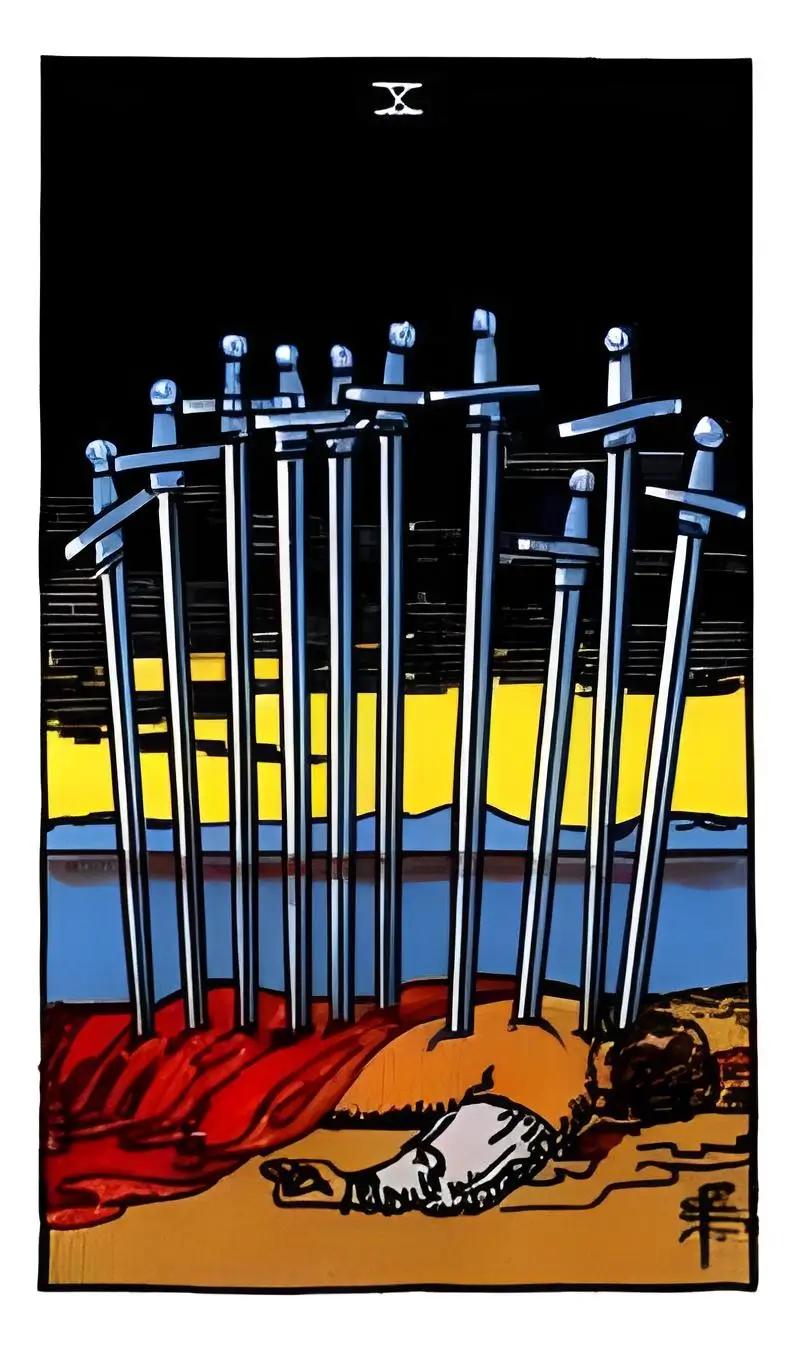
Pamelas Kolmanas Smitas zīmētā figūra guļ uz vēdera krastā ar desmit zobeniem mugurkaulā, virs galvas plešas melnas debesis, bet pie horizonta jau aust zelta rītausma.
Read the complete guide: Zobenu Desmitnieks Taro kartē: Pilnīgs ceļvedis simbolikai un nozīmei
Kārts īsumā
- Numeroloģija
- 10
- Elements
- Gaiss
- Astroloģija
- Dvīņu trešais dekāns (aptuveni no 11. līdz 20. jūnijam), ko pārvalda Saule
- Kabalas ceļš
- Malkut (Valstība), desmitā sfēra, kurā nonāk visi desmitnieki
- Laiks
- Vēlā Dvīņu sezona, pavasara pēdējās dienas, kas pāriet vasaras sākumā
- Jā / Nē
- Taisnā pozīcijā nē, ciklam sabrūkot; apgrieztā pozīcijā ar tieksmi uz jā, sākoties atveseļošanās procesam
Taisni
Sāpīgas beigas
Zemākais punkts
Nodevība
Sabrukums
Galīgums
Izsīkums
Ego nāve
Padošanās
Apgriezti
Atgūšanās
Izdzīvošana
Lēna dziedināšana
Atdzimšana
Pretošanās noslēgumam
Ietiepīga pieķeršanās
Iilgušas sāpes
Zobenu desmitnieks katrā kavā
Katra kava to pašu arhetipu interpretē citādi. Salīdziniet mākslas darbus, tad atveriet kavu, lai izlasītu pilnu skaidrojumu.
Vizuālais tēls un simbolika
Pamela Kolmana Smita (Pamela Colman Smith) 1909. gadā radīja Raidera-Veita Zobenu desmitnieku kā pilnīgi jaunu ainu, kas nebija aizgūta no senākām kavām. Vīrietis guļ izstiepies uz kailas krasta joslas, apsegts ar sarkanu apmetni, un desmit zobeni veido kārtīgu rindu gar viņa mugurkaulu no galvaskausa pamatnes līdz muguras lejasdaļai. Aiz viņa plešas mierīgs, līdzens ūdens, pretējā pusē redzami zemi, tumši kalni, un debesis virs galvas dalās divās daļās: smaga, melna masa augšpusē un koša, zeltaina josla gar horizontu. Pirmajā mirklī attēls liecina par katastrofālu neveiksmi, tomēr Smita tajā pašā kompozīcijā ir iekļāvusi rītausmas solījumu.
Desmit zobenu pārspīlējums. Lai atņemtu dzīvību, pietiktu ar vienu asmeni, tāpēc desmit zobeni ir apzināts teatrāls pārspīlējums. Tā kā Zobeni nes Gaisa elementu un prāta sfēru, šī fiziskā nāve kalpo kā metafora prātam, kas pats sevi nomocījis līdz spēku izsīkumam un ego sabrukumam. Veits darbā "Taro ilustrētā atslēga" (The Pictorial Key to the Tarot) rakstīja, ka figūra guļ zemē nogāzta, caurdurta ar visiem kārtij piederīgajiem zobeniem, radot pilnīgas padošanās tēlu.
Sarkanais apmetnis. Sarkanais audums pār ķermeņa lejasdaļu apzīmē kaislības un fizisko dzīvības spēku, kas ir nodots vai ar spēku apspiests. Sarkanā krāsa šajā kavā pauž arī drosmi, tāpēc audums kritušajam tēlam piešķir cieņu kā apliecinājumu reālai cīņai pirms sabrukuma.
Mierīgais ūdens. Zobenu divniekā un Zobenu sešniekā Smita ūdeni attēloja viļņotu, lai parādītu nemieru. Šeit ūdens virsma ir pilnīgi gluda, bez mazākā viļņa, atspoguļojot ķermeņa nekustīgumu un kluso mieru pēc ilgas cīņas noslēguma.
Melnās debesis un zelta horizonts. Debesis tieši virs figūras ir piķa melna masa, dvēseles tumšā nakts, taču pie horizonta parādās spoža zelta josla. Tas ir kārts nozīmīgākais cerības simbols. Tumšākā stunda ir sasniegusi kulmināciju, un saule jau aust, tāpēc šīs beigas nes neizbēgamu jauna cikla sākumu.
Kailais krasts un tālie kalni. Nedzīvā ainava uzsver brīža dramatismu, savukārt zemi kalni pie horizonta simbolizē pārvaramās grūtības un atveseļošanos, kas sākas, kad cilvēks pieceļas un dodas tālāk.
Saliektā roka. Vīrieša labā roka ir saliekta žestā, ko daudzi tulko kā Hierofanta pāvesta svētību, proti, žēlastības stāvokli nāves brīdī. Citi tajā saskata Austrumu baiļu pārvarēšanas mudru, Abhaya vai Bhumisparsha zīmogu. Pati diskusija rāda, kā kārts kļūst par spoguli, kurā savienojas fiziskas ciešanas un garīga padošanās.
Pamata nozīme
Zobenu desmitnieks Zelta Rītausmas sistēmā ir Posta valdnieks (Lord of Ruin), cikla zemākais punkts. Tas ir maksimāla piesātinājuma brīdis, vieta, no kuras vienīgais atlikušais virziens ir augšup. Kārts iezīmē galīgas, neapstrīdamas beigas: pašreizējo modeli vairs nav iespējams glābt, un mēģinājumi to atdzīvināt tikai paildzina mokas.
Šo kārti ir svarīgi nošķirt no Nāves kārts. Nāve (Lielais Arkāns XIII) nes dabisku, plašu un ārēju transformāciju, no kuras nav iespējams izvairīties. Zobenu desmitnieks ir lokāls un bieži vien paša izraisīts mentāls sabrukums, kur prāts pretojas padošanās brīdim, līdz pats sevi sagrauj. Novedot līdz pašam dibenam, kārts noārda ego un paralizējošo trauksmi, kas valdīja pirms kritiena. Vienpadsmitā zobena nav. Ciešanu slieksnis ir sasniegts, un tagad sākas atjaunotne.
Nozīme taisnā pozīcijā
Taisnā pozīcijā kārts vēsta par ciklu, kas ir pilnībā izsmelts un kura līdzšinējo veidolu vairs nav iespējams saglabāt. Tas ir smags un nogurdinošs brīdis, un kārts padoms aicina padoties: pieņemt beigas, izsērot un pārtraukt cīņu kaujā, kas jau ir zaudēta. Figūra guļ nekustīgi, jo tālāka pretošanās tikai iznieko enerģiju tam, ko nevar glābt. Ieroču nolikšana šeit nav sakāve, tas ir miera sākums.
Mīlestībā. Sāpīga šķiršanās, nodevība vai pēdējais strīds, kas pārkāpj robežu un liedz jebkādu atgriešanos. Attiecību dinamika ir pilnībā izsmelta, un centieni to atdzīvināt tikai paildzina sāpes. Kārts pieņem beigas kā nepieciešamu vietas atbrīvošanu patiesībai.
Karjerā. Atlaišana no darba, bankrots, skaļa projekta neveiksme vai kļūšana par upuri intrigām kolektīvā. Tas iezīmē profesionālo zemāko punktu, kur jāpieņem zaudējumi un jāsaprot, ka būs jāsāk viss no jauna.
Finansēs. Finansiāls kritums, parāds vai zaudējums, kas sasniedzis zemāko robežu. Atvieglojums slēpjas faktā, ka sliktāk vairs nevar kļūt, tāpēc galvenais uzdevums ir apturēt zaudējumus, balstīties faktos un sākt no jauna.
Veselībā. Pilnīga izdegšana, hronisks nogurums vai slimība, kas tieši saistīta ar smagu mentālo stresu. Tas ir nepārprotams bioloģisks brīdinājums, ka ķermenis atsakās darboties, jo prāts atteicās atpūsties.
Nozīme apgrieztā pozīcijā
Apgrieztā pozīcijā uzmanība pārvirzās no paša trieciena brīža uz sekām, un kārts nozīme sazarojas divos virzienos. Dziedinošajā nozīmē jūs pārdzīvojat traģēdiju, lēnām velkat zobenus ārā no muguras un saprotat, ka esat izturējuši pārbaudījumu, kurš šķita iznīcinošs. Tā ir izturība un lēna cerības atgriešanās, tumšākajai stundai piekāpjoties rītausmai.
Brīdinošajā nozīmē jūs turaties pie situācijas, kurā vairs nav dzīvības, ieņemat mocekļa lomu vai bailēs no nezināmā atsakāties no neizbēgamā noslēguma. Šāda pretošanās pārvērš skaidras beigas ilgstošās, nomācošās ciešanās. Apgriezta kārts liek izvērtēt, vai jūs patiešām atgūstaties, vai vienkārši atsakāties ļaut zobeniem izkrist.
Mīlestībā. Attiecību izsērošana, kas patiešām beigušās, un atveseļošanās sākums, vai arī pieķeršanās saiknei, kas jau ir pagātne, atkārtoti uzplēšot veco brūci.
Karjerā. Spēku atgūšana pēc profesionāla sabrukuma un pamata atrašana zem kājām, vai arī aizvainojuma un upura lomas uzturēšana ilgi pēc tam, kad situācija jau ir noslēgusies.
Finansēs. Pakāpeniska atgūšanās no finansiāla krituma, vai arī veco zaudējumu vilkšana līdzi tā vietā, lai novilktu svītru un sāktu no jauna.
Veselībā. Lēna spēku atjaunošanās pēc izdegšanas, vai arī brīdinājuma signālu ignorēšana, ļaujot spēku izsīkumam padziļināties.
Vēsturiskās piezīmes
Mazo Arkānu vizuālais apvērsums sakņojas Sola Busca taro, kas radīts ap 1491. gadu Ferrārā vai Venēcijā un ir senākā pilnīgā 78 kāršu kava ar pilnībā ilustrētām skaitļu kārtīm. Veits un Pamela Kolmana Smita (Pamela Colman Smith) pētīja tās melnbaltās fotogrāfijas Britu muzejā, kuras 1907. gadā bija dāvinājusi Buskas-Serbelloni (Busca-Serbelloni) dzimta, veidojot 1909. gadā izdoto Raidera-Veita-Smitas kavu.
Kolmana Smita aizguva no šī avota ļoti pārdomāti. Sola Busca Zobenu trijnieku viņa izmantoja gandrīz tieši, taču tās Zobenu desmitniekā bija attēlota antīka figūra, kas noliekusies ievieto desmit asmeņus tvertnē; šo pozu māksliniece pielāgoja savam Zižļu desmitniekam, kur vīrietis smagi soļo uz priekšu zem lielas nūju nastas. Caurdurtā cilvēka tēls pamestajā krastā bija pilnīgi jauna kompozīcija, kas radīta, lai iemiesotu Zelta Rītausmas astroloģiskos parametrus un tās titulu Posta valdnieks (Lord of Ruin). Mērija K. Grīra (Mary K. Greer) šo simboliku saista ar Grāla un brīvmūrnieku mistērijām, kas veidoja Veita uzskatus: Meistaru Celtnieku, kuru nogalināja viņa brāļi, nesalabojami sašķaidīto zobenu un paša Veita piezīmēm, kurās figūra saistīta ar bargu pārmācību, kas izkristalizē tīrāku garīgo būtību.
Ezotēriskās atbilstības
Skaitlis. Desmit, cikla pabeigšana un masta noslēguma robeža. Numeroloģijā tas savieno jaunu sākumu vieninieku ar bezgalīgā potenciāla nulli, tāpēc beigas jau sevī ietver nākamā sākuma sēklu.
Astroloģija. Dvīņu trešais dekāns, aptuveni no 11. līdz 20. jūnijam, ko pārvalda Saule. Dvīņi ir gaisīga, duāla un merkuriāla zīme, kas vienmēr redz divas puses vienlaikus. Kad Saules tiešais karstums sastopas ar zīmes izkaisītajiem pēdējiem grādiem, rezultāts ir pilnīga intelektuālā izdegšana, nepielūdzams prožektors, kas atsedz bezgalīgas prātošanas bezjēdzību un liek prātam apstāties.
Elements. Gaiss, intelekts, kas šeit ir tik pārslogots, ka nospiež pašu domātāju.
Kabala. Malkut (Valstība), visblīvākā materiālā sfēra Jecira pasaulē, racionālā prāta formējošajā vidē. Tā ir Malkut sfēra Jecira pasaulē: gaisīgs, bezveidīgs intelekts, kas spiests ieiet stingrā matērijā un spiediena ietekmē sašķīst. Tā kā Malkut ir arī Dzīvības Koka sakne, šis sabrukums kļūst par pamatu lēcienam atpakaļ uz Zobenu dūzi un jaunam intelektuālajam ciklam.
Elementu saderība. Zobens starp Zobeniem, dubults Gaiss, prāts bez citu elementu klātbūtnes, kas spētu to līdzsvarot.
Laika piesaiste un jā/nē. Kārts sliecas uz vēlo Dvīņu sezonu, pavasarim pārejot vasaras sākumā. Jautājumos ar atbildi jā vai nē taisnā pozīcijā tā nozīmē nē, ciklam sabrūkot, savukārt apgrieztā pozīcijā tā tiecas uz jā, sākoties atveseļošanās posmam.
Psiholoģiskais skatījums
Kroulijs (Crowley) šo kārti nodēvēja par ārprātā iedzītu saprātu, par stabilas enerģijas sabrukumu, kas rodas, kad intelekts darbojas bez sirds vai gara līdzsvara. Bezgalīga analīze noved pie cerības un ticības zuduma, un prāts pats sevi paralizē ar eksistenciālām bailēm. Mērijas K. Grīras (Mary K. Greer) pētījumi par emocionālo reakciju uz kavas attēliem atklāja, ka Zobenu desmitnieks pārliecinoši izraisīja tādus vārdus kā bezcerība, pārslodze un izmisums, apliecinot tās vietu starp emocionāli satraucošākajām Smitas zīmētajām kārtīm.
Mūsdienu taro lasītāji par šo kārti aktīvi diskutē. Daļa to skaidro caur katastrofizēšanu kā maigu aizrādījumu, ka cilvēks rada lielu drāmu no nelielas problēmas un piepilda paša izdomātu posta pareģojumu. Caur traumu pieredzi strādājošie lasītāji tam stingri iebilst, norādot, ka reālu sāpju noraidīšana kā melodrāma padara nenozīmīgas patiesas ciešanas. Abas pieejas gan satiekas vienā atvieglojumā: tā ir Zobenu deviņnieka gaidītā katastrofa, kas beidzot ir klāt, bailes ir piepildījušās, un cilvēks ir izdzīvojis. Kārts apliecina, ka apstākļi patiešām ir smagi, vienlaikus solot, ka sāpes vairs nepieaugs, tāpēc ego pabeidz savu nepieciešamo nāvi un var sākties atjaunotne.
Zobenu desmitnieks dažādās kavās
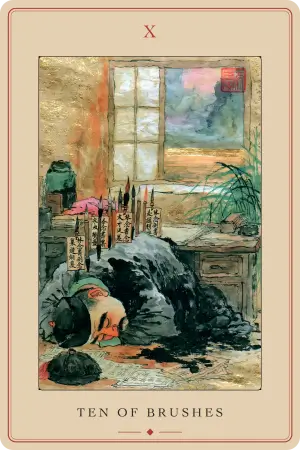
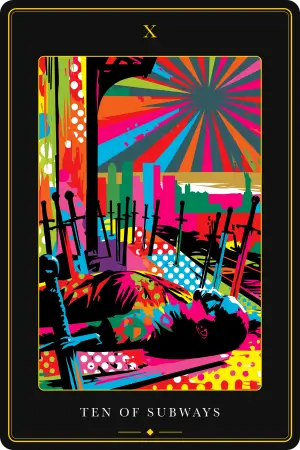
Pamelas Kolmanas Smitas (Pamela Colman Smith) ainas salīdzināšana ar citām tradīcijām izceļ viņas akcentus: kritušu ķermeni, rāmu jūru un tiešu rītausmu, ko neviens abstrakts zīmējums nespēj parādīt tik nepārprotami.
Marseļas taro. Neainavisks dizains, kur astoņi liekti asmeņi veido ovālu un divi taisni zobeni krustojas centrā. Pols Marto (Paul Marteau) to interpretēja kā spēkus stingrā līdzsvarā un fermentācijas alķīmisko posmu, kur mirst veci psihiskie modeļi, lai dzimtu augstāka apziņa, asmeņiem ierobežojot haosu, nevis durot uz āru.
Kroulija Tots. Lēdijas Frīdas Herisas (Lady Frieda Harris) gleznotā kārts atsakās no cilvēka tēla par labu agresīvai ģeometrijai: deviņi zobeni triecas uz iekšu, lai sašķaidītu centrālo asmeni uz sašķelta fona. Kroulijs to tieši nodēvēja par Postu (Ruin), harmoniskas enerģijas sabrukumu. Tomēr kārts augšpusē atrodas Saules simbols kā zīme, ka no šī posta atdzims tīrā Zobenu dūža dzirksts.
Mūsdienu un kultūras atbalsis. Itela Kolkuhūna (Ithell Colquhoun) 1977. gadā pārveidoja šo kārti abstraktā emaljas tintes tehnikā, kur violets tonis šķeļ dzelteno, lai parādītu psihisku sagrāvi bez asiņainām detaļām. Šī aina ir kļuvusi par kultūras simbolu sabrukumam, sākot ar AMC seriāla "Halt and Catch Fire" finālu, kas nosaukts šīs kārts vārdā, līdz metālmūzikas grupām, kas izmanto tās izmisīgo enerģiju, vienmēr norādot uz resursu pilnīgu izsīkumu un tam sekojošo rītausmas solījumu.
Kombinācijās un kontekstā
Zobenu desmitnieks noslēdz līniju, kas stiepjas no Astotnieka un Deviņnieka. Zobenu astotnieks ir paralīze, sajūta, ka esat sasiets un ar aizsietām acīm pakļauts ārējiem spēkiem. Zobenu deviņnieks ir bezmiega katastrofas gaidīšana, tēlam sēžot gultā ar galvu rokās. Desmitnieks ir šīs katastrofas iestāšanās, un lasītāji to bieži sagaida ar atvieglojumu, jo gaidīšana beidzot ir galā un neziņa pārvēršas mierā.
Konteksts precizē kārts vēstījumu. Blakus stingrām struktūras kārtīm, tādām kā Imperators vai Hierofants, tā var iezīmēt sāpīgu, nepieciešamu noslēgumu slepenības vai pienākumu posmam, sociālo zemāko punktu, pēc kura iespējams dzīvot autentiski. Izkārtojumā par to, kā cits cilvēks jūs redz, kārts liecina, ka otrs uzskata jūs par smagus pārbaudījumus piedzīvojušu un vecu brūču nomāktu, vai arī uztver situāciju kā pēdējo punktu attiecībās, kur komunikācija ir pilnībā pārtrūkusi. Jautājumos ar atbildi jā vai nē taisnā pozīcijā kārts nozīmē nē, ciklam noslēdzoties, kamēr tās zelta horizonts atgādina, ka nākamais cikls jau ir ceļā.
Jautājumi pārdomām
- Pret kādām beigām jūs joprojām cīnāties, lai gan patiesībā tās jau ir notikušas?
- Ja jūs pieņemtu, ka šis cikls ir beidzies, no kādas nastas nešanas jūs beidzot būtu brīvi?
- Kur savā dzīves horizontā jūs spējat saskatīt zelta gaismu pat no paša krasta dibena?
Vispārējā nozīme izriet no Raidera-Veita-Smita skaidrojuma, kas ir pamata atsauce Tarot Academy. Atveriet konkrētu kavu augstāk, lai iepazītos ar tās interpretāciju.
Biežāk uzdotie jautājumi
Izpētīt Taro
Jaunākie raksti
Atklājiet seno Taro kāršu gudrību un atveriet garīgās ceļojuma noslēpumus. Mūsu blogs ir jūsu vārti uz Taro lasīšanas bagātīgās simbolikas, nozīmes un praktiskās pielietošanas izpratni.




















































