
 LV (latviešu)



Mazie Arkāni · Zobeni (Air)
Zobenu astotnieks
Pamelas Kolmanas Smitas sasaistītā sieviete ar aizsietām acīm astoņu zobenu ielenkumā, kuru gūstā tur paša uzskati, nevis reāli šķēršļi.
Read the complete guide: Astoto Zobenu Taro karte: Pilnīgs ceļvedis tās simbolikai un nozīmei
Kārts īsumā
- Numeroloģija
- 8
- Elements
- Gaiss
- Astroloģija
- Jupiters Dvīņos (pirmā dekāde)
- Kabalas ceļš
- Hod (Gods)
- Laiks
- Dvīņu sezona, vēlīns pavasaris
- Jā / Nē
- Taisnā pozīcijā nē, apgrieztā pozīcijā drīzāk jā
Taisni
ierobežojumi
iesprostotības sajūta
bezspēcība
pašierobežojoši uzskati
apzināts aklums
trauksme
upura pozīcija
neizlēmība
Apgriezti
pašatbrīvošanās
atvieglojums
jauns skatpunkts
sevis pieņemšana
spēka atgūšana
izlaušanās
atmoda
skaidrība
Zobenu astotnieks katrā kavā
Katra kava to pašu arhetipu interpretē citādi. Salīdziniet mākslas darbus, tad atveriet kavu, lai izlasītu pilnu skaidrojumu.
Tēlainība un simbolika
Pamela Kolmana Smita (Pamela Colman Smith) piešķīra šai kārtij tēlu, ko vairums cilvēku iztēlojas, dzirdot tās vārdu. Purvainā augsnē stāv sasaistīta sieviete ar aizsietām acīm, kuru ieskauj astoņi vertikāli zemē iedurti zobeni. Pie viņas basajām kājām plešas sekla duļķaina ūdens peļķe, caur dubļiem spraucas zaļi asni, virs galvas klājas pelēkas debesis, bet tālumā uz augstas klints paceļas akmens pils un aiz muguras slejas kalni. No pirmā acu uzmetiena aina vēsta par stingru ierobežojumu, tomēr Smita gandrīz katru detaļu veidoja tā, lai klusi atspēkotu šo pirmo iespaidu.
Saites un brīvās plaukstas. Auduma lente figūru aptver visai vaļīgi. Ieskatoties Smitas zīmētajās līnijās, brīvums ir acīmredzams: sievietes pirksti un plaukstu locītavas nav sasietas, tāpēc ar nelielu piepūli viņa varētu atbrīvot rokas un nomest saites. Šis gūsts parāda robežu, kas pieņemta bez pārbaudes, nevis šķērsli, kas patiešām spēj noturēt.
Acu apsējs un mierīgā seja. Aizsegtās acis ir kompozīcijas galvenais fokusa punkts. Tā ir apzināta pretstats Zobenu divniekam, kur sieviete aizsien sev acis pēc pašas izvēles, lai taisnīgi izsvērtu lēmumu. Šeit audums nevis palīdz koncentrēties, bet gan apstādina intelektu. Tomēr tas neizraisa paniku. Aiz apsēja sievietes seja paliek mierīga, un šajā kavā šāds miers liecina par iekšēju spēku rezervē.
Zobeni kā caurlaidīgs nožogojums. Astoņi asmeņi simbolizē bailes, maldīgus priekšstatus un pašuzliktus prāta ierobežojumus. Tie izskatās pēc būra, tomēr nekad nenoslēdz pilnu loku. Zobeni ir statiski un iedurti zemē, nevis vērsti pret viņu. Starp tiem ir pietiekami daudz vietas, lai brīvi izietu cauri.
Zeme, debesis un pils. Pelēkās debesis atspoguļo apmigloto iekšējo stāvokli. Kalni aiz muguras atgādina par pagātnes pārbaudījumiem un senām neveiksmēm, kas radījušas šo bezspēcības sajūtu. Tālumā esošā pils iezīmē drošību vai mērķi, ko sieviete šobrīd nespēj saskatīt, jo skatu aizsedz šķēršļi. Ūdens un zaļie dzinumi pie kājām vēsta par attīrīšanos, cerību un atmodas sākumu skarbos apstākļos. Viņas kailās pēdas tieši pieskaras ūdenim, norādot, ka izeja rodama caur jūtām, nevis caur tālāku prātošanu.
Pamatnozīme
Veita-Smitas kavā Zobenu astotnieks ietver pašradīta cietuma arhetipu vienotā ainā. Ierobežojumi, bezspēcība, iesprostotības sajūta un upura pārliecība par izejas trūkumu šeit ir skaidri redzami, taču Smita kompozīciju veidojusi tā, lai glābiņš būtu iezīmēts līdzās pašam slazdam.
Veits šos nosacījumus definēja savā 1910. gada darbā "Taro ilustrētā atslēga" (The Pictorial Key to the Tarot), nosaucot kārti par "drīzāk īslaicīgu apcietinājumu nekā neatgriezenisku gūstu". Šī frāze precīzi raksturo kavas lasījumu. Ierobežojums šķiet patiess cilvēkam, kurš tajā atrodas, tomēr tas ir pagaidu stāvoklis, ko veido paša radītās bailes un aizspriedumi. Kavas galvenais uzsvars likts uz pašatbrīvošanos: zobeni, lente un acu apsējs ir iekšēju pārliecību projekcijas, un brīdī, kad cilvēks to apzinās, šīs barjeras zaudē savu varu.
Nozīme taisnā pozīcijā
Taisnā pozīcijā sastingums ir aktīvs. Jautātājs atrodas kognitīvā slazdā, jūtoties paralizēts un cietis situācijā, kuru prāts padarījis daudz draudīgāku par realitāti. Veits taisno kārti interpretēja drūmos toņos, saistot to ar sliktām ziņām, bēdām, krīzi un konfliktiem. Mūsdienu praksē tā kalpo galvenokārt kā diagnostisks rādītājs, kas atklāj, ka cilvēks pats ir savs cietuma uzraugs un robežas ir drīzāk psiholoģiskas nekā reālas.
Mīlestībā. Iestrēgšana bezizejas vai toksiskās attiecībās, uzskatot, ka trūkst spēka vai tiesību aiziet. Tā var liecināt par apstākļu uzspiestu īslaicīgu šķiršanos vai nespēju izteikt jūtas no bailēm atvērties. Pēc attiecību beigām kārts norāda uz palikšanu bijušā partnera gūstā, turot ap sirdi paša uzbūvētu aizsargsienu.
Karjerā. Iesprostotības sajūta nepiemērotā amatā vai profesionālajā lomā, pārliecinot sevi, ka pārmaiņas nav iespējamas. Tas ir spilgts viltvārža sindroma rādītājs, kur ierobežojumi vispirms rodas prātā, un apgalvojums "es nevaru" patiesībā slēpj nedrošu vēlmi mēģināt.
Finansēs. Resursi šķiet bloķēti vai nesasniedzami: parādi, maksājumu kavējumi vai ienākumi, kas neaug. Kārts aicina atgriezties pie realitātes, jo šķēršļus nereti pārspīlē bailes no nezināmā, un situācija prasa rūpīgu analīzi, nevis izmisumu.
Veselībā. Trauksme, prāta apjukums un pārmērīga domāšana. Stresa ietekmē smadzeņu spēja pieņemt lēmumus bloķējas, un, jo izmisīgāk mēģināt izdomāt izeju, jo ciešāks šķiet slazds. Tā ir ikdienas trauksme, kas vēl nav sasniegusi Zobenu deviņnieka dziļo izmisumu.
Nozīme apgrieztā pozīcijā
Apgrieztā pozīcijā acu apsējs sāk noslīdēt. Prāta migla izklīst, un jautātājs pamana iespējas un izejas ceļus, kas visu laiku atradās tepat līdzās. Mūsdienu taro lasītāji šo uzskata par vienu no atvieglojošākajām apgrieztajām kārtīm kavā: tā iezīmē atbrīvošanos no vecajām bailēm un pārliecības atgūšanu, cilvēkam atgriežoties pie sava spēka.
Agrīnie kartomanti to vērtēja citādi. Veits apgriezto kārti saistīja ar nemieru, grūtībām, pretestību un nodevību. Mūsdienu izpratne ir izteikti vērsta uz atbrīvošanos, lai gan pirmā skaidrība var nest nožēlu par laiku, kas zaudēts sevis sabotēšanā. Kārts mudina rīkoties saskaņā ar jauno skatījumu, pirms šaubas atkal uzceļ veco būri.
Mīlestībā. Iestrēguša vai nomācoša modeļa atpazīšana un drosme to mainīt, vai arī noslēgtas sirds atvēršana pēc ilga emocionāla sastinguma. Apzināts lēmums ļauj izlauzties no vecajām bailēm.
Karjerā. Apziņa, ka profesionālais būris bija paša uzbūvēts, un iziešana no tā. Viltvārža sindroms mazinās, iekšējās barjeras noārdās, un paveras iespējas, kuras šaurais skats iepriekš slēpa.
Finansēs. Atelpa no finansiālā spiediena: veco parādu nokārtošana, labāk apmaksāts darbs vai skaidra atziņa, ka nevajadzīgi tēriņi jāpārtrauc. Progress joprojām prasa godīgu resursu pārvaldību, taču spriedze ir mazinājusies.
Veselībā. Pārmērīgas domāšanas cikls pārtrūkst. Trauksme atkāpjas, kad apstrīdat drūmākos scenārijus, atsakāties no neefektīva režīma un sperat pirmo konkrēto soli ārā no paralīzes.
Vēsturiskās piezīmes
Veita-Smitas attēls šīs kārts vēsturē parādījās samērā vēlu. Marseļas taro (Tarot de Marseille), kas izveidojās ap 1650. gadu, skaitļu kārtīs nebija sižetisku ainu: Zobenu astotnieks rādīja astoņus liektus asmeņus, kas savijās ciešā un klaustrofobiskā rakstā, veidojot spiediena un robežu ģeometriju. Marseļas astotnieki smēlās spriedzi no diviem trumpjiem: Taisnīguma (VIII), kas ir auksts un racionāls, un Mēness (XVIII), kas ir iracionāls un pilns ilūziju. Tādējādi kārts atradās vietā, kur nepielūdzami fakti saduras ar zemapziņas bailēm.
Eteila (Etteilla) 18. gadsimta beigās piešķīra tai tādus atslēgvārdus kā negaidīti notikumi un nelieli šķēršļi, savukārt daži varianti apgriezto pozīciju saistīja ar cerību un atbalstu, kas bija agrīns mājiens uz vēlāko atbrīvošanās nozīmi. Papiss (Papus) 19. gadsimta 90. gadu okultisma atdzimšanas laikā tai piedēvēja ienaidnieku, kura uzvara ir "tikai daļēja", atstājot iespēju izbēgt. Zelta Rītausmas Hermētiskais ordenis (Hermetic Order of the Golden Dawn) darbā "Book T" to sistematizēja kā "Ierobežotā spēka valdnieku" (Lord of Shortened Force), brīdinot par spēka izšķiešanu sīkumos.
Pamela Kolmana Smita un Artūrs Edvards Veits 1909. gadā (izdevējs "William Rider & Son") pārvērta šo mantoto nozīmi pilnvērtīgā sižetiskā ainā. Smita pirmo reizi plaši izplatītā kavā ilustrēja katru Mazo Arkānu skaitļu kārti, un viņas sasaistītā sieviete ar aizsegtajām acīm kļuva par tēlu, kas iespiedās kopējā atmiņā. Veita formulējums par "īslaicīgu apcietinājumu" kopš tā laika ir noteicis kārts pamatnozīmi.
Atbilstības
Skaitlis. Astoņi, kas saistīts ar izvērtēšanu, struktūru un karmiskajām robežām, kā arī ar līdzsvaru un atjaunotni. Dzīvības Kokā visi astotnieki atbilst Hod, astotajai sfērai.
Astroloģija. Dvīņu pirmā dekāde (aptuveni no 21. līdz 31. maijam), mainīga Gaisa zīme Merkura vadībā, kur konkrētās dekādes pārvaldnieks ir Jupiters. Jupiters šeit atrodas trimdā: tas tiecas paplašināties plašās filozofijās, kamēr Dvīņi izkliedē enerģiju neskaitāmās divējādās domās, radot kognitīvo pārslodzi un rīcībnespēju. Prasmīgi izmantots, Jupiters nes jaunas iespējas, tiklīdz pārvērtēšana ir pabeigta.
Elements. Gaiss, ātrs un brīvs prāta elements, kas sastingst, sastopoties ar Hod stingro struktūru.
Kabala. Hod, kas nozīmē Slava vai Spožums, Barguma pīlāra pamatnē. Hod iemieso prāta struktūru, loģiku un kategorijas. Kad neierobežotie Zobeni ienāk šajā stingrajā sfērā, domas atduras pašas pret sevi un veido šauru mentālu cietumu.
Elementu mijiedarbība. Zobens starp Zobeniem, dubults Gaiss, tīrs intelekts, kas vērsts pret sevi bez cita elementa līdzsvarojošas klātbūtnes.
Laiks un "jā/nē". Kārts norāda uz vēlīnu pavasari un Dvīņu sezonu. Kā atbilde uz "jā" vai "nē" jautājumu taisnā pozīcijā tā nozīmē "nē", jo enerģija ir pārāk ierobežota labvēlīgam iznākumam, savukārt apgrieztā pozīcijā sliecas uz "jā", spriedzei atslābstot.
Psiholoģiskā perspektīva
Šis ir kavas portrets klīniskajai trauksmei un ierobežojošajiem uzskatiem. Zobeni attēlo kognitīvos izkropļojumus, katastrofizēšanu un vispārinājumus, kas izskatās asi un pārliecinoši, taču sastāv tikai no bailēm un projekcijām. Attēls precīzi ataino prāta miglas sajūtu, kad spēcīga trauksme bloķē racionālo spriestspēju un saspringtāka domāšana mezglu tikai savelk ciešāk.
Šī stāvokļa pamatā ir atteikšanās no personīgā spēka. Cilvēks tic, ka viņam nav izvēles iespēju, un ieņem upura lomu, gaidot ārēju glābēju, nevis rīkojoties pats. Šī dinamika bieži parādās, kad pagātnes neveiksmes vai kritika ir internalizēta tik dziļi, ka cilvēks jau iepriekš atsakās no jebkādiem centieniem, padarot šo par skaidru viltvārža sindroma zīmi. Smitas mierīgās sejas figūra nes pretspēku: iekšējā izturība šī stāvokļa pārtraukšanai jau pastāv, tā vienkārši netiek izmantota.
Kārtī iestrādātais terapeitiskais ceļš sasaucas ar kognitīvi biheiviorālo terapiju. Nosauciet vārdā un apstrīdiet ierobežojošo uzskatu, kas līdzvērtīgs acu apsēja noņemšanai. Ieraugot, ka iedomātie draudi ir pārvarami, tiek pamanītas spraugas starp zobeniem. Atliek meklēt atbalstu un spert vienu konkrētu soli, lai pārvarētu paralīzi. Astotnieks ir dienas laikā piedzīvota prātošana, kas atšķiras no Zobenu deviņnieka bezmiega nakts šausmām.
Zobenu astotnieks dažādās kavās
Salīdzinot ar citām tradīcijām, Veita-Smitas versija izceļas ar to, cik lielā mērā tā parāda izeju, nevis tikai pašu slazdu.
Marseļas taro. Astoņi liekti asmeņi savīti ciešā ģeometriskā mezglā bez cilvēka figūras, kur nozīmi pauž saspiestība un norobežotība, nevis stāstošs sižets.
Kroulija-Tota taro. Lēdijas Frīdas Herisas (Lady Frieda Harris) 1943. gadā gleznotā un par "Iejaukšanos" (Interference) pārdēvētā kārts pilnībā atsakās no sasaistītās sievietes tēla. Centrā divi smagi zobeni vērsti uz leju, un tos šķērso seši mazāki dažādu kultūru asmeņi: kriss, kukri, skramasaks un duncis, kas simbolizē pretrunīgu ideju sadursmi. Kroulijs to saista ar Jupiteru Dvīņos un sauc kļūmi par mehānisku: "kļūda būt labvēlīgam, kad labvēlība ir postoša", prātam iejaucoties savā spriestspējā līdz pilnīgam sastingumam.
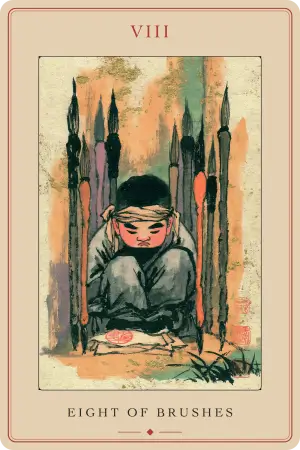
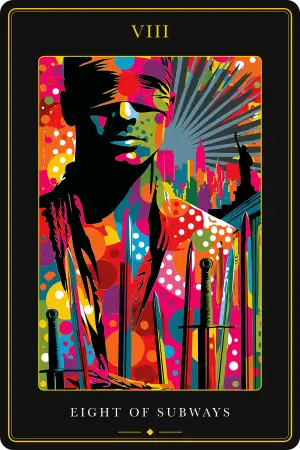
Mūsdienu kavas. Kimas Kransas "Wild Unknown" attēlo zirnekļtīklā ietītu tauriņu, kas karājas pie viena zobena, atmetot Smitas vieglo izeju, lai izceltu smacējošu bezizeju. Līzas Sterles "Modern Witch Tarot" saglabā vaļīgās virves, bet uzliek roku uz figūras pleca, parādot, ka neredzams atbalsts jau ir klāt. Izabellas Rotmanes "This Might Hurt" iedvesmojas no šibari, kur sasietā persona saglabā pilnīgu kontroli, atgādinot, ka jums ir vairāk spēka, nekā šķiet. Oksālijas taro (Tarot of Oxalia) ietin figūru vīteņaugos, kas aizsedz arī muti, uzsverot bailes nespēt pateikt savu patiesību.
Kombinācijās un kontekstā
Pieredzējuši taro lasītāji šo uzskata par aklās zonas kārti: jautātājs nepamana acīmredzamu, vienkāršu risinājumu, jo lepnums, spītība vai mirkļa drāma liek turēt acu apsēju. Cilvēkam jau pieder instrumenti atbrīvošanai, taču viņš izvēlas tos neizmantot.
Līdzās Tornim nozīme saasinās. Tornis vēsta par neizbēgamām pārmaiņām, kamēr Astotnieks parāda bailēs balstītu pieķeršanos viltus pamatiem. Kopā ar Pentaklu piecnieku, materiālo grūtību kārti, Astotnieks atklāj, kā mentālais gūsts padziļina finansiālās bailes, lai gan apgriezts Piecinieks blakus liecina par pagriezienu pretī palīdzībai un atveseļošanai, saitēm sākot atraisīties. Sekojot ūdenim pie basajām pēdām, tēlainība pāriet Zobenu deviņniekā, iezīmējot soli dziļāk trauksmē, kas tomēr kalpo par nepieciešamu attīstības posmu. "Jā" vai "nē" izkārtojumā taisnā pozīcijā kārts ir stingrs "nē", kamēr nav mainīts skatpunkts.
Jautājumi pārdomām
- Kuri no apkārt esošajiem zobeniem ir reāli šķēršļi, un kuras ir tikai bailes, ko nekad neesat pārbaudījis darbībā?
- Šajā attēlā jūsu plaukstas ir brīvas. Kādu nelielu soli jūs varētu spert jau šobrīd, par kuru bailes apgalvo, ka tas nav iespējams?
- Kurās situācijās jūs gaidāt glābēju no malas, lai gan jums pašam jau ir spēks ieviest pārmaiņas?
Vispārējā nozīme izriet no Raidera-Veita-Smita skaidrojuma, kas ir pamata atsauce Tarot Academy. Atveriet konkrētu kavu augstāk, lai iepazītos ar tās interpretāciju.
Biežāk uzdotie jautājumi
Izpētīt Taro
Jaunākie raksti
Atklājiet seno Taro kāršu gudrību un atveriet garīgās ceļojuma noslēpumus. Mūsu blogs ir jūsu vārti uz Taro lasīšanas bagātīgās simbolikas, nozīmes un praktiskās pielietošanas izpratni.




















































