
 IT (italiano)



Arcani Maggiori · XVIII
La Luna
La nebbia al chiaro di luna dove comanda l'istinto e nulla è davvero ciò che sembra.
Leggi la guida completa: L'Arcano della Luna nei Tarocchi: Una Guida Completa al Suo Simbolismo e Significato
La carta a colpo d'occhio
- Numerologia
- XVIII
- Elemento
- Acqua
- Astrologia
- Pesci · governati da Nettuno
- Sentiero cabalistico
- Qoph (Netzach → Malkuth)
- Tempistica
- Fine inverno · stagione dei Pesci · notte
- Sì / No
- Di norma no · troppa nebbia per proseguire
Diritto
illusione
paura
intuizione
subconscio
ansia
inganno
sogni
l'ignoto
Capovolto
chiarezza
liberazione dalla paura
verità svelata
confusione che si dirada
consapevolezza interiore
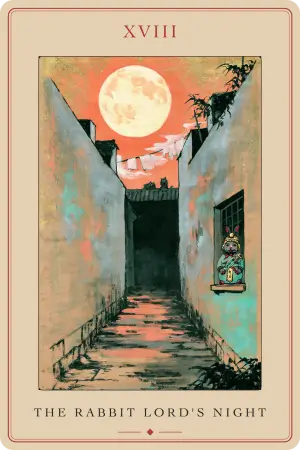
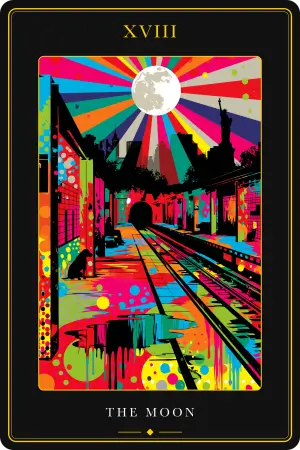
La Luna in ogni mazzo
Ogni mazzo reinterpreta lo stesso archetipo. Confronta le illustrazioni, poi apri un mazzo per leggerne l'interpretazione completa.
Iconografia e simbolismo
Una luna piena con un tenue profilo umano, racchiusa in una falce, sovrasta un ampio paesaggio notturno e attira verso l'alto l'umidità della terra, come una calamita posata sulle profondità primordiali. In basso si apre una piccola pozza, e da lì un gambero striscia sulla riva: il primo fremito della coscienza, un istinto antichissimo che emerge dall'inconscio collettivo per cominciare la sua lunga salita.
Sulla sponda stanno due animali, un cane domestico e un lupo selvatico, ed entrambi ululano alla luce. Sono le due metà della mente, l'io addomesticato e civile e l'es primitivo e indomito, e la carta li mostra ugualmente soggiogati dal richiamo irrazionale della luna. Tra loro un sentiero serpeggia verso l'orizzonte e passa tra due alte torri, che segnano la soglia tra il mondo conosciuto della mente cosciente e il territorio inesplorato dell'inconscio.
Lungo quel sentiero cadono dalla luna gocce di rugiada, un dettaglio che Éliphas Lévi disegnò per primo come una scia cosparsa di sangue. Tutta la scena è illuminata soltanto da luce riflessa, perché la luna non ne possiede una propria, e proprio questo è il punto: qui ogni cosa si vede di seconda mano, distorta, e si scambia facilmente per ciò che non è.
Significato centrale
La Luna è la carta dell'inconscio, dell'intuizione, dell'illusione e della notte oscura dell'anima. È l'acqua torbida dell'istinto e delle verità nascoste appena sotto la consapevolezza, e quando compare agisce meno come previsione che come specchio, riflettendo una realtà che in questo momento le paure, le proiezioni e le ferite irrisolte del consultante deformano.
Il suo avvertimento centrale è che le cose non sono ciò che sembrano. Il consultante si muove al buio, gli mancano informazioni di cui ha bisogno e la mente è insolitamente incline a ingannare se stessa. La carta è però anche un invito. Invece di combattere l'oscurità, ti chiede di scendervi dentro, di seguire i sogni e il materiale dell'ombra fino alla cosa sepolta che va recuperata prima che la nebbia possa alzarsi.
Significato al dritto
Al dritto, La Luna porta illusione, instabilità e insicurezza. Segnala che la situazione non è come appare, che informazioni vitali restano nascoste e che un ricordo rimosso può riaffiorare sotto forma di tristezza o ansia. Il suo consiglio pratico è semplice: nessuna decisione definitiva finché il sentiero è così oscurato.
In amore. Acque emotive torbide. Può indicare un inganno, una vita segreta o un'infedeltà, soprattutto accanto al Sette di Spade o al Diavolo. Altrettanto spesso, però, è paranoia interiore: una vecchia ferita che proietta malizia su un partner innocente e scambia un momento di flusso per un fallimento.
Nel lavoro. Un ambiente tossico costruito su bugie, programmi nascosti e false promesse, dove il contratto scritto può non coincidere con ciò che è stato detto a porte chiuse. Il consiglio è fidarti del tuo istinto, evitare qualsiasi azzardo e aspettare che il sole del mattino dissolva la nebbia prima di impegnarti.
Nelle finanze. Troppo poche informazioni per muoversi in sicurezza. Non è il momento della speculazione né del rischio.
Nella salute. In particolare la salute mentale, depressione, ansia e paranoia, e per le donne un legame con i cicli ormonali e mestruali. La carta si legge anche, con forza, come gravidanza: una vita che si sviluppa non vista nel buio del grembo.
Significato al rovescio
Al rovescio, la nebbia comincia a diradarsi e le illusioni si dissolvono. La carta segna la liberazione dalla paura, lo sblocco di emozioni represse e la fine di un periodo di confusione. La chiarezza libera, anche se il suo arrivo può essere brutale.
Spesso una Luna rovesciata significa che un segreto, una bugia o una verità scomoda rimasta sepolta viene finalmente trascinata alla luce del giorno. L'autoinganno non regge più, e per quanto quell'esposizione faccia male, il crollo dell'illusione porta un sollievo reale. Sparita la nebbia, il consultante può affrontare il problema a viso aperto e andare avanti con i piedi per terra.
In amore. Un inganno che viene a galla, oppure il dissolversi di una paranoia che stava avvelenando una relazione altrimenti sana.
Nel lavoro. La chiarezza che arriva finalmente, un programma nascosto smascherato, così che tornano possibili decisioni sicure e informate.
Nelle finanze. L'informazione mancante emerge, e una situazione che sembrava troppo rischiosa da toccare diventa finalmente leggibile.
Nella salute. L'ansia che si allenta e una lettura più nitida di ciò che il corpo stava davvero segnalando, una volta che la paura smette di distorcerlo.
Note storiche
L'iconografia della Luna rimase fluida per i suoi primi due secoli. Nel mazzo Visconti-Sforza del Quattrocento la carta non è affatto un paesaggio, ma la dea Diana che regge un arco senza corda o una cintura bianca, un'allegoria della castità per la corte milanese. Altri mazzi antichi erano ancora più strani: la carta di Budapest mostra un uomo che si piega sotto il peso della luna sorretta come Atlante, e il Tarocco di Parigi un uomo che al chiaro di luna fa la serenata a una donna affacciata al balcone.
La scena familiare arrivò con i Tarocchi di Marsiglia prodotti in serie nel Seicento e nel Settecento, che introdussero l'acqua, il gambero, i due cani ululanti e le due torri e spostarono il significato verso la notte e l'inganno, il modo in cui la luce lunare fa sembrare mostri gli alberi ordinari. Il primo significato divinatorio registrato, in un manoscritto del 1750, è semplicemente «Notte». Éliphas Lévi aggiunse poi il suo sentiero cosparso di sangue che serpeggia tra le torri, e Pamela Colman Smith conservò quel dettaglio quando lei e Waite fissarono l'immagine moderna nel 1909.
Corrispondenze
Numero. XVIII, il diciotto, che si riduce a nove e lega La Luna all'Eremita. Entrambe sono carte di isolamento e di ripiegamento interiore, ma dove l'Eremita si ritira di proposito alla luce della propria lanterna, La Luna è un'immersione forzata e inconscia nel buio.
Astrologia. I Pesci, il dodicesimo segno e l'oceano sconfinato dell'inconscio collettivo, con Nettuno come governatore, il pianeta dei sogni, dell'illusione e dei confini che si dissolvono, quello che sfuma la linea tra realtà e fantasia.
Elemento. Acqua, informe e riflettente, il mezzo dell'emozione e dell'istinto e uno specchio perfetto per una luna che la sua luce la prende soltanto in prestito.
Cabala. La lettera ebraica è Qoph, «la nuca», che rimanda al cervelletto e al tronco encefalico, la parte più antica e istintiva del cervello. Il suo sentiero è il diciannovesimo, che scende da Netzach a Malkuth, la discesa nella densa realtà materiale che il Sepher Yetzirah chiama Intelligenza Corporea.
Tempi. La stagione dei Pesci e le ore della notte. Come sì o no la carta risponde quasi sempre no, non come rifiuto definitivo ma come segno che c'è troppa nebbia e troppo poca informazione per procedere.
Prospettiva psicologica
La Luna è il ritratto più nitido dell'Ombra che il mazzo possieda: le parti rimosse e rinnegate del sé, tutti i desideri e i traumi che l'io cosciente trova troppo dolorosi da reggere. L'analista junghiana Marie-Louise von Franz lesse la luna come l'Anima, la corrente femminile sepolta degli umori e dell'intuizione, e in una lettura la carta tende a rispecchiare il clima interiore del consultante più che a prevedere un evento esterno.
Il sentiero di Qoph attraversa il tronco encefalico, ed è per questo che la logica qui serve così poco. Percorrerlo in discesa significa affrontare le pulsioni biologiche, le vecchie paure di sopravvivenza e le parti selvagge e irragionevoli della psiche, orientandosi in un paesaggio allucinatorio con la sola intuizione, senza scivolare nella paranoia. Il cane e il lupo dicono la stessa cosa in miniatura: il sé civile e il sé animale ululano entrambi alla stessa luce, e il lavoro della carta non è zittire l'uno o l'altro, ma camminare sul sentiero tra i due senza perdere l'equilibrio.
La Luna nei diversi mazzi
Visconti-Sforza. La versione più antica sopravvissuta è puramente allegorica, la cacciatrice Diana con l'arco senza corda e una cintura bianca per la castità, senza traccia del gambero, dei cani o delle torri che verranno dopo.
Tarocchi di Marsiglia. Qui si fissa il modello moderno: una pozza con un gambero, due cani che abbaiano a una luna dai molti raggi e due torri lungo la strada che si perde in lontananza, un paesaggio di distorsione notturna il cui primo significato registrato era soltanto «Notte».
Crowley-Thoth. Crowley e Lady Frieda Harris trasformano la carta in una Porta della Resurrezione. Due divinità dalla testa di sciacallo, Anubi, stanno come psicopompi a guardia di colonne scure, e sotto di loro il dio scarabeo Khepri spinge il disco del sole su attraverso gli inferi verso l'alba, mentre nove gocce di sangue a forma di Yod cadono lungo il sentiero come semi fecondati: terrore e rinascita tenuti insieme in una sola immagine.
In combinazione e nel contesto
La Luna viene confusa più spesso con L'Alta Sacerdotessa, e distinguerle è la chiave per leggerla. Sono entrambe carte lunari e femminili, di segreti e intuizione, ma la Sacerdotessa è il subconscio nella sua forma serena ed elevata, la saggezza che cerchi di portare alla luce, mentre La Luna è l'inconscio allo stato grezzo, i segreti che nascondi a te stesso per paura. La Sacerdotessa illumina la verità con delicatezza e chiede una meditazione silenziosa; La Luna la distorce e pretende un vero lavoro sull'ombra.
Le carte vicine ne affilano l'avvertimento. Con La Torre indica un autoinganno o una frode che innesca un crollo improvviso; con La Giustizia, false accuse o calunnie costruite su menzogne; con Gli Amanti, un'illusione d'amore o un falso amante. Accanto al Sette di Spade o al Diavolo si legge come un autentico segnale d'allarme per l'inganno, anche se un lettore esperto pesa sempre il tradimento esterno contro la paranoia interiore del consultante.
Un'eccezione luminosa taglia attraverso tutto questo. In una domanda sulla fertilità La Luna è un celebre segno di gravidanza, che rivaleggia con L'Imperatrice: la vita non vista che cresce nel buio del grembo, con le sue gocce che cadono lette come i semi del concepimento.
Domande di riflessione
- Quale verità nascondi a te stesso perché affrontarla alla luce del giorno ti sembra troppo pericoloso?
- La minaccia che temi è reale e fuori di te, o è un'ombra proiettata da una tua vecchia ferita?
- Quale decisione hai fretta di prendere nella nebbia, quando al mattino sarebbe molto più chiara?
Il significato generale segue la lettura Rider–Waite–Smith — il riferimento canonico utilizzato in Tarot Academy. Apri un mazzo specifico qui sopra per la sua interpretazione dedicata.
Domande frequenti
Esplora i Tarocchi
Ultimi Articoli
Esplora il simbolismo, i significati e le applicazioni pratiche della lettura dei tarocchi.




















































