
 UZ (o'zbekcha)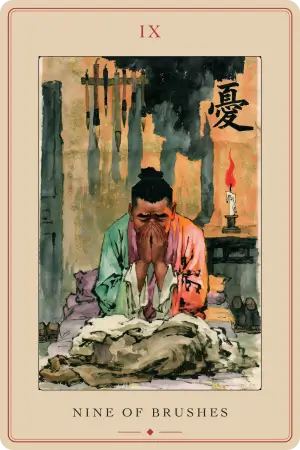
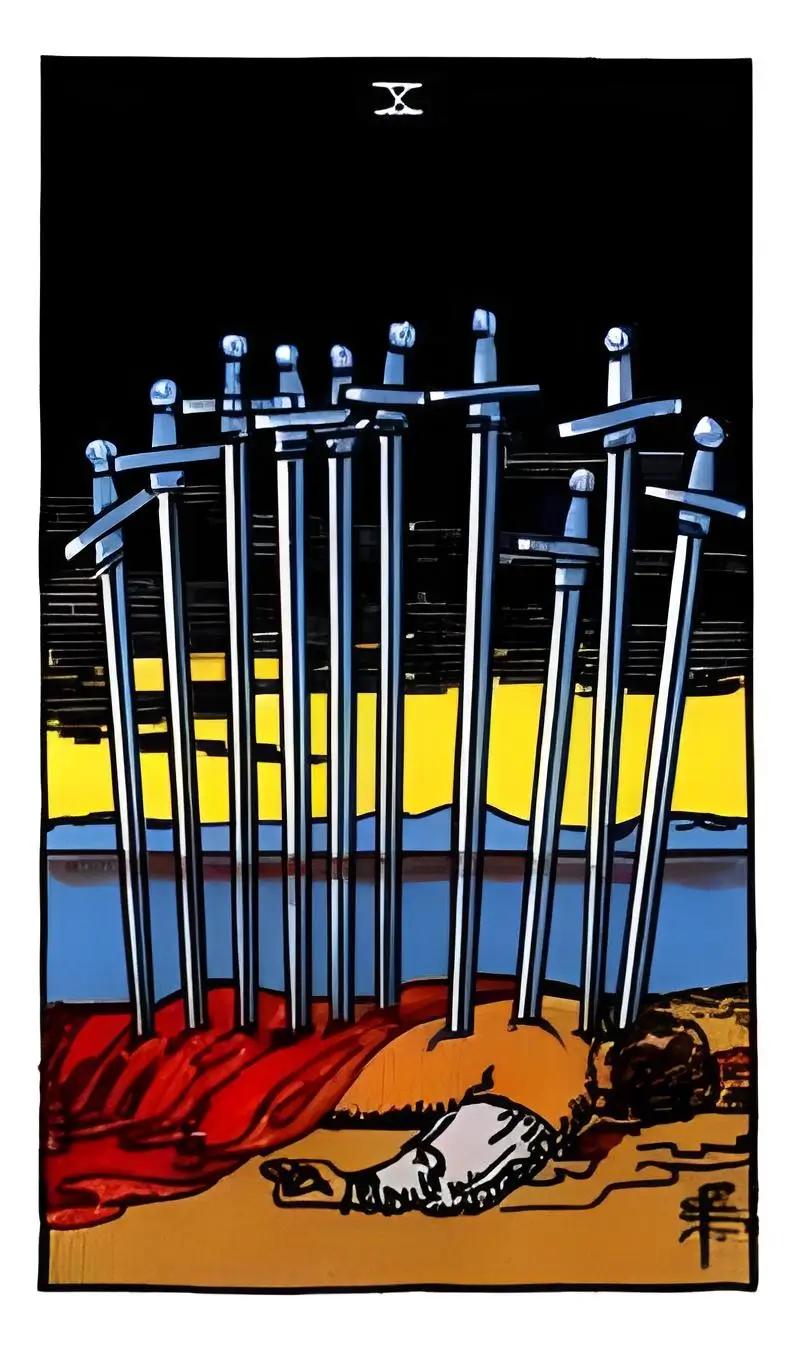

Kichik Arkan · Qilichlar (Havo)
O'n mo'yqalam
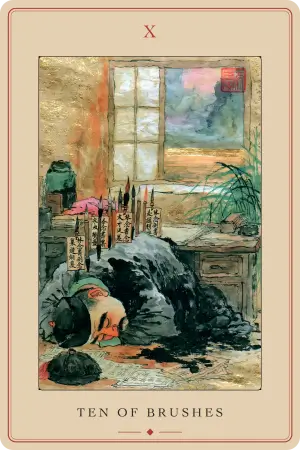
Yozma ravishda keladigan halokat: ishdan bo'shatilgan amaldor o'z stolida yuztuban yotibdi, orqasiga o'nta mo'yqalam sanchilgan va qog'oz derazada tong yorishmoqda.
Karta haqida qisqacha
- Numerologiya
- O'n
- Unsur
- Havo
- Astrologiya
- Quyosh Egizaklar burjida (uchinchi dekan)
- Kabbala yo'li
- Malkuth Yetzirahda
- Vaqt
- Tunning uchinchi qismidan tonggacha · Egizaklar mavsumi (11–20 iyun)
- Ha / Yo'q
- To'g'ri holatda yo'q · Teskari holatda sekin tiklanuvchi ha
To'g'ri holat
halokat
o'z yaqinlari tomonidan xiyonat
og'riqli yakun
ommaviy mag'lubiyat
uzoq muddatli harakatning qulashi
charchoq
eng tubiga tushish
taslim bo'lish
Teskari holat
sekin tiklanish
omon qolish
yakunni inkor etish
yo'qotilgan lavozimga yopishib olish
ozod bo'lish
chidamlilik
hukmni o'qish
tong
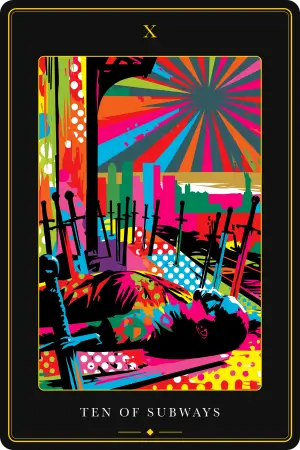
Har bir to'plamda O'n mo'yqalam
Har bir dek ayni bir arxetipni o'zicha qayta talqin qiladi. Rasmlarni solishtiring, so'ng to'liq talqinni o'qish uchun dekni oching.
Tasvir va ramzlar
Pekin tarotida O'n Qilich jang maydoni emas, balki ish xonasidir. Ishdan bo'shatilgan amaldor o'z stolida yuztuban yotibdi, u hamma narsani qurgan joyda yiqilgan va o'zi xizmat qilgan qurol bilan mag'lub bo'lgan. Bu kemada mo'yqalam fikr va nutqni bildiradi, birinchi chizgi esa qaytarilmasdir. O'nlik bitta odamga qarshi shunday o'nta chizgi tortilganda nima bo'lishini ko'rsatadi.
Uning orqasida o'nta mo'yqalam o'q kabi sanchilib turibdi. Har birida qog'oz yorliq, taxtga taqdim etilgan rasmiy qoralash qog'ozi bor, va har bir imzo sobiq do'stiga tegishli. Bu kartaning eng shafqatsiz aniqligi: begonalarning so'zlari chetlab o'tadi, ammo faqat ishonchli ismlar oxirigacha sanchiladi. Yorliqlar bosib olingan joy ustidagi kichik bayroqlar kabi hilpiraydi. Qon o'rniga boshining tagidan to'kilgan siyoh yoyilmoqda. Siyoh quriydi, qurigan siyoh esa shunchaki o'tmishdir.
Uning amaldorlik shlyapasi yerga tushgan, popugi pastga qaragan: unvon yo'qolgan, insonning o'zi qolgan. Sochilgan sahifalar hech qachon yuborilmaydigan himoya qoralamalari bo'lib, uning to'xtashi karta muzlatib qo'ygan donolik lahzasidir. Deraza yonida bambuk o'simligi tegib ketilmagan holda turibdi, shamolda egiladi, lekin sinmaydi. Qog'oz deraza ortida, shubhasiz, tongning birinchi kulrang-oltin chizig'i ko'rinib turibdi. Deraza ham qoralovchi xatlar bilan bir xil moddadan, ya'ni qog'ozdan qilingan, lekin bu varaq hukmlar o'rniga yorug'likni kiritadi.
Asosiy ma'nosi
O'n mo'yqalam, aql, so'zlar va sinovlar kemasini eng qattiq tasvir bilan yakunlaydi. Bu bosqichning uzil-kesil yakunini belgilaydi, qulash yozma ravishda amalga oshirilgan. Vaziyat allaqachon boshqa joyda, boshqa qo'llar bilan, boshqa siyoh bilan hal qilingan. Shikoyatlar foydasiz: hujjatlar topshirilgan, hukm e'lon qilingan, siyoh qurigan. Kanonik O'n Qilich halokatni qirg'oqdagi jasad sifatida ko'rsatsa, Pekin uni qog'ozbozlik sifatida ifodalaydi va jarohat o'z doirasidan keladi.
Shunga qaramay, karta shafqatsiz emas, xotirjamdir. Siyoh qon emas; odam o'lgan emas, xonavayron bo'lgan. O'n tugallangan siklning raqamidir. So'nggi harf yozilgan va boshqa birov nuqtani qo'ygan, o'n birinchi mo'yqalam yo'q. Mag'lubiyatning to'liqligi aynan yangi boshlanishni kafolatlaydigan narsadir. Nihoyat, og'riq ichiga yashiringan yengillik shuki: kutilish tugadi, eng yomoni sodir bo'ldi va qolgan yagona yo'nalish tong sari tepaga qarab borishdir.
To'g'ri holatdagi ma'nosi
To'g'ri holatda, O'n mo'yqalam uzil-kesil va muhokama qilinmaydigan yakundir. Bosqich tugadi, va o'nta shikoyatga javob yozish uchun sarflangan har bir soat tongdan o'g'irlangan vaqtdir. Raddiyalar yozishni to'xtating. Ba'zi hujjatlarga javob berib bo'lmaydi. Mo'yqalamni qo'ying, faqat o'zingizga tegishli narsalarni oling va yo'lning yorug'roq qismi tomon yuring. Imtihon tugadi, va qog'oz deraza ortidagi tong shunchaki metafora emas, balki hech qachon bekor qilinmagan dunyo tartibidir.
Sevgida. So'z bilan ifodalangan yakun: suhbat, xat, hech narsani qaytarib bo'lmaydigan xabar. Bu munosabatlarning yoki undagi uzoq davrning tugashini anglatadi, jarohat ishonch eng chuqur bo'lgan joyda eng og'ir bo'ladi. Yuzinchi bor o'qiganda yangi ma'no kasb etmaydigan yozishmalarni qayta o'qimang. To'g'ri motam tuting, so'ngra derazaga e'tibor bering.
Karyerada. Ishdan bo'shatish, iste'foga chiqish yoki qarsaklar o'rniga qulash bilan yakunlanadigan charchatuvchi loyiha. Qayta tashkil etish yoki o'nta shikoyatga aylanadigan tekshiruv tufayli lavozimni saqlab qolish imkonsiz bo'ladi. Bu ham ozodlikdir: u sizni har kuni jarohatlaydigan ish joyidan xalos etadi. Shlyapangizni yerdan oling va nutq so'zlamasdan keting.
Moliyada. Hisoblarning birovning qo'li bilan yopilishi: bekor qilingan shartnoma, talab qilingan qarz, xatlar bilan bekor qilingan sheriklik, ko'pincha sobiq ittifoqchilar ishtirokida. O'nta imzo bilan tugatilgan korxonani qutqarishga urinishlar yoki apellyatsiyalarga pul sarflamang. To'liq yopilish to'liq aniqlikni anglatadi, shuning uchun hamma narsani boricha qabul qiling va qog'ozda emas, g'ishtda qayta quring.
Sog'liqda. To'liq charchoq, stolida yiqilguncha chiroq nurida ishlagan olimning tanasi. Bu to'g'ridan-to'g'ri charchashni ko'rsatadi: asab tizimining toliqishi, uyqusizlik, tunda qilingan uzoq mehnatning yig'ilgan bahosi. Endi, tana o'zining shikoyat xatini yozmasidan oldin dam oling.
Teskari holatdagi ma'nosi
Teskari holatda, O'n mo'yqalam tunning eng uzun soatini ko'rsatadi: stoldagi odam qimirlay boshlaydi, lekin boshini ko'tarishdan bosh tortadi, chunki yuzi siyohda ekan, nima yozilganini o'qishga majbur emas. Bu rad etilayotgan yakunni, hali ham hozirgi zamonda gapirilayotgan yo'qotilgan lavozimni, yopilgan sudga qayta-qayta berilgan apellyatsiyani ko'rsatadi. Bu tiklanishning asl boshlanishini, birma-bir sug'urib olingan mo'yqalamlarni, har bir sug'urish og'riqli, lekin har biri orqani yengillashtirishini ham anglashi mumkin. Eng yomoni allaqachon sodir bo'ldi; qolgani uni tasdiqlash qo'rquvidir. Boring va e'lon qilingan natijalarni o'qing, chunki siz bilishdan ko'ra qaramaslikdan ko'proq azob chekasiz.
Sevgida. Yakundan keyingi uzoq tun, qayg'u o'rnashgan va bir xil satrlar atrofida aylanmoqda, lekin mo'yqalamlar allaqachon bo'shashmoqda. Bu siz ularning xabarlarini tekshirmagan birinchi haftani, stol og'rimaydigan birinchi tongni bildiradi. Shuningdek, ikkala tomon ham yakunni e'lon qilishni rad etayotgan bo'lishi mumkin, bu holda faqat jarohatlovchi jumlalar baland ovozda tan olinganida haqiqiy qayta qurish sifatida tiklanish mumkin.
Karyerada. Oqibat va uni tugatishni rad etish. Yo inqiroz o'tib, sekin tiklanish boshlangan, yoki siz eski stolda yuztuban yotib, bo'shatish xatini qayta o'qib, voqeani xayolan qayta ko'rib chiqmoqdasiz. Eski ish joyida hech narsa qayta ochilishi mumkin emas. O'nta mo'yqalamni keyingi idoraga olib kirishdan ehtiyot bo'ling, chunki yangi hamkasblar hech narsaga imzo chekmagan.
Moliyada. Eng yomon yozuv allaqachon kiritilgan va daftar sekin-asta yangi sahifaga o'tmoqda. Tiklanish haqiqiy, lekin sekin, kurer aravasi tezligida tangama-tanga, va u sizdan eski kitoblarni har tunda qayta o'qish o'rniga ularni yopishingizni talab qiladi. Karta, shuningdek, o'lik korxonaga qayta sarmoya kiritadigan yoki yo'qotilgan lavozim ko'rinishini saqlab qolish uchun qarz oladigan kishidan ogohlantiradi.
Sog'liqda. Kutilganidan ko'ra qattiqroq va sekinroq davom etadigan kasallik, jarohat yoki charchoqdan keyingi reabilitatsiya, yutuqlar bitta sug'urib olingan mo'yqalam bilan o'lchanadi. Bu inkordan ogohlantiradi: to'liq yuklamaga juda erta qaytish, alomatlarni yashirish, qulashni tananing o'z siyohida yozilgan xabar o'rniga jadval tasodifi sifatida qabul qilish. Ba'zi odatlar o'sha stolda tugadi va ularni qayta tiklamaslik kerak.
Tarixiy eslatmalar
Manzarali O'n Qilich Italiya Uyg'onish davridan kelib chiqqan. Visconti-Sforza kabi dastlabki kemalar Kichik Arkanani qarta ramzlarining mavhum naqshlari sifatida joylashtirgan, ammo 1491 yildagi Sola Busca Taroti, har bir kichik kartaga to'liq hikoyaviy manzara bergan. Uning o'zining O'n Qilich kartasida o'nta qilichni devordagi idishga joylashtirayotgan klassik qahramon tasvirlangan.
Artur Edvard Ueyt va Pamela Kolman Smit Britaniya muzeyida Sola Busca suratlarini o'rganganlarida, ular bu holatni O'n Qilich uchun emas, balki O'n Hassa uchun oldilar. 1909 yilgi Rider-Waite-Smith kemasida e'lon qilingan, kimsasiz qirg'oqda yuztuban yotgan mixlangan odam Oltin Tongning karta uchun qo'ygan nomiga, Halokat Lordiga moslashtirish uchun qurilgan yangi tuzilma edi. Tinch suv, qop-qora osmon va ufqdagi yagona oltin tong tasmasi ham uzil-kesillikni, ham yangi siklning va'dasini ko'tarish uchun ishlab chiqilgan edi.
Pekin taroti bu arxitekturani saqlab qoladi va uni ichkariga ko'chiradi. U plyajni olimning stoliga, noma'lum askarni ismli amaldorga, begonalar qilichlarini esa do'stlar tomonidan imzolangan mo'yqalamlarga almashtiradi. Tinch dengiz to'kilgan siyohga, oltin ufq esa qog'oz deraza ortidagi kulrang-oltin chiziqqa aylanadi. Halokat endi zo'ravonlik orqali emas; hujjat orqali keladi, bu doimo aql va so'z haqida bo'lgan kostyumga mos keladi.
Muvofiqliklar
Raqam. O'n, tugallangan sikl, to'liq doira yopilgan va keyingisining yashirin urug'i. O'nlik ichidagi birlik bu yagona tik turgan mo'yqalam, tashabbus va o'zlik, bo'sh qog'ozdagi birinchi belgi; nol bu yumaloq tanganing qirrasi, choy piyolasining og'zi, hutong ustidagi to'lin oy. Mo'yqalamlar suitiga kiritilganda, o'n so'nggi harfga yetib kelganini va boshqa birov nuqtani qo'yganini anglatadi. Har o'ninchi kartadan keyin kema Tuzni tarqatadi.
Astrologiya. Quyosh Egizaklar burjining uchinchi dekanida, taxminan 11 dan 20 iyungacha. Egizaklar shaharning so'zlari, uning choyxona bahslari, e'lon qilingan natijalar va stoldan stolga o'tadigan xatlarning havodor qon aylanish tizimi bo'lib, O'nlik bu oqimni bitta ismga qaratilgan eng xavfli holatida ko'rsatadi. Quyosh amaldorni qoralashga arziydigan darajada ko'zga ko'rinarli qildi, va xuddi shu yoritqich endi deraza ortidagi birinchi chizig'ini tortmoqda. Fosh qiladigan nur, qaytib keladigan nurdir.
Element. Havo, bu kemada mo'yqalam elementi: intellekt, til, hukm va ular yaratadigan sinovlar. O'sha havodor, shaklsiz intellektni qattiq yakunga majburlash qulashni keltirib chiqaradigan narsadir.
Kabbala. Malkuth Yetzirahda, o'ninchi va oxirgi sfera, Qirollik, Havoning shakllantiruvchi dunyosida joylashgan. Bu o'zgaruvchan aqlning og'ir moddiy poydevori, g'oyalar va tashvishlar shu qadar zichlashib, mutafakkirni ezib tashlaydigan nuqtadir. Malkuth Ketherga olib boradigan ildiz ham bo'lgani uchun, halokat yangi Tuzga sakrash uchun poydevor qo'yadi.
Elementar qadr-qimmat. Boshqa Havo yoki Olov kartalari orasidagi Havo kartasi aqliy zo'riqish va charchoq hissini kuchaytiradi; tuproq, suv qo'shnilari kartani qayg'u, dam olish va qayta qurishning amaliy ishlari tomon sekinlashtiradi.
Psixologik nuqtai nazar
Bular ommaviy va yozma ravishda mag'lub bo'lgan odamlar, o'z hayotlarining ishdan bo'shatilgan amaldorlari. Ular muassasaga, nikohga yoki do'stlar doirasiga yillar berib, o'nta imzo bilan mukofotlandilar. Ularning charchog'i to'liq, aqliy, axloqiy va ko'pincha jismoniydir, va bir muddat ular dunyoni faqat o'zlari yotgan stolning donalari orqali ko'radilar. Ular xiyonatni chizgima-chizgi qayta o'ynab, qaysi do'st qaysi qatorni yozganini aniqlaydilar, bu esa bu karta doimo ta'riflagan aqlning o'zini o'zi qiynashidir.
Shunga qaramay, kema o'zining eng xotirjam umidini aynan shu odamlarga bog'laydi. So'zlar olib qo'yishi mumkin bo'lgan hamma narsani yo'qotib, ular nima olinmasligini o'rgana boshlaydilar va ular uchun tong aynan himoya qiladigan hech narsasi qolmagani uchun otadi. Ko'pchilik o'zgarib ko'tariladi: tinchroq, xushomad qilish qiyinroq, shantaj qilib bo'lmaydigan va kutilmaganda mehribon, chunki ular endi imzo nima turishini bilishadi. Ular yangi do'stliklarini kichik va yangi va'dalarini aniq saqlaydilar. Ularning irodasi stolda o'lmadi. U siyohga bo'kkan edi va siyoh bu kemada saqlashga arziydigan hamma narsa qanday yozilishidir.
Boshqa kemalarda O'n Mo'yqalam
Rider-Waite-Smith. Kanonik O'n Qilich odamni orqasiga o'nta tig' sanchilgan holda qirg'oqda yuztuban yotqizadi, orqasida tinch dengiz va ufqda oltin tong ko'rinadi. O'n Mo'yqalam holatni, tinchlikni va tongni saqlab qoladi, lekin manzarani stolga ko'chiradi va o'nta qurolni do'stlar tomonidan imzolangan mo'yqalamlarga aylantiradi, shunda noma'lum qirg'in o'rnini xiyonat egallaydi.
Tarot de Marseille. Marselning O'n Qilich kartasi manzarali emas, o'rtadagi ikkita to'g'ri qilichni o'z ichiga olgan sakkizta egri pichoqdan iborat ovoiddir. Pol Marto kabi sharhlovchilar buni qat'iy muvozanat va alkimyoviy fermentatsiya bosqichi deb o'qiydilar. Pekin muhrlangan va tugallangan sikl hissini baham ko'radi, lekin buni geometriya emas, balki inson manzarasi orqali aytib beradi.
Crowley-Thoth. Krouli kartaga Halokat deb nom berdi. Ledi Frida Xarris to'qqizta qilich singan orqa fonda markaziy tig'ni sindirayotganini chizdi va uni yurak yoki ruh muvozanatisiz muvaffaqiyatsizlikka uchragan aql, deb atadi. Pekin kartasi ham aqlning xuddi shunday qulashiga mos keladi, garchi u sof geometrik tartibsizlik emas, balki quyosh tongi ustidan hukmronlik qilsa ham.
Zamonaviy qayta ko'rib chiqishlar. So'nggi kemalar ko'pincha qonni yumshatadi yoki mavhumlashtiradi, xuddi 1977 yilda Ithell Colquhoun sariq dalalarni kesib o'tuvchi binafsha rang bilan qilgani kabi. Pekin taroti shu yo'nalishga tegishli bo'lib, qonni siyoh bilan va noma'lum jasadni ismli olim bilan almashtiradi, shunda halokat o'lim emas, balki omon qolish mumkin bo'lgan mag'lubiyat sifatida o'qiladi.
Birgalikda va kontekstda
O'n Mo'yqalam tarqatishni yakunlar, xiyonat va uzoq harakatning charchagan xulosasi tomon tortadi va uning qo'shnilari o'qish jarohatni yoki tongni ta'kidlashini hal qiladi. Mo'yqalamlar Tuzi yonida u suitning yoyini yakunlaydi: Tuzda yozilmagan jumla yashiringan osilgan siyoh tomchisi bor edi, O'nlik esa bu jumla tugagan, baland ovozda o'qilgan va yopilganini, narigi tomonda yangi Tuz nazarda tutilganini ko'rsatadi. To'rt Mo'yqalam yonida u qasddan tiklanishni maslahat beradi va Sakkiz Mo'yqalamning qulfdan chiqarilgan kamerasi yonida u keyingi eshik aslida hech qachon qulflanmaganini ta'kidlaydi.
Sud kartasi bilan u deyarli to'g'ridan-to'g'ri o'qiladi: Qo'ng'iroq minorasining tonggi qo'ng'irog'i butun shahar bo'ylab chalinadi, ko'chadagi har bir darvoza bir vaqtning o'zida ochiladi va stoldagi odam yurish uchun joyga ega bo'ladi. To'qqiz Mo'yqalam bilan u kutilgan ofat nihoyat kelganini ko'rsatadi. Qayg'u va jo'nab ketish kartalari yo'qotishni motamga chuqurlashtiradi, tong, tangalar va kichik kundalik savdo kartalari esa stoldan o'tib, eski ayblovlarni hech qachon eshitmagan kunda allaqachon ko'tarilayotgan panjurlar tomon ishora qiladi.
Qachonki karta qayta-qayta qaytib kelsa, unga ko'proq yomon xabar sifatida emas, balki yakunlar odob-axloqi bo'yicha ko'rsatma sifatida munosabatda bo'ling: tugallangan tsiklni hurmat qiling, yopilgan o'ramni qayta ochmang, vayronagarchilikdan hali ham sizga tegishli bo'lgan yagona mo'yqalamni olib chiqing va shahar tonglarining aylanayotgan g'ildiragi keyingi jumla uchun qog'oz olib kelishiga yo'l qo'ying.
Fikr yuritish uchun savollar
- Hayotingizda nima allaqachon boshqalar tomonidan tugatilgan deb e'lon qilingan va energiyangizning qanchasi hali ham hech qaysi sud o'qimaydigan raddiyalarga sarflanmoqda?
- O'nta imzoning qaysi biri ismga ishonganingiz uchun og'ritdi va u ismni saqlab qolish sizga aslida nima turdi?
- Agar qog'oz deraza ortidagi tong haqiqiy va o'z vaqtida bo'lsa, tonggi qo'ng'iroqdan oldingi soatda nimani boshqacha qilgan bo'lardingiz?
Umumiy ma'no Rider-Uayt-Smit talqiniga asoslanadi; Tarot Akademiyasida shu dek etalon sifatida ishlatiladi. Muayyan dekning o'z talqinini ko'rish uchun uni yuqoridan oching.
Tez-tez so'raladigan savollar
Tarotni kashf eting
So'nggi maqolalar
Taro kartalarining qadimiy donishmandligini kashf eting va ma'naviy yo'lingizdagi sirlarni oching. Blogimiz taro o'qishning boy ramziyligi, ma'nolari va amaliy qo'llanilishini tushunishga eltuvchi darvozadir.




















































