 NL (Nederlands)



Grote Arcana · X
Het Rad van Fortuin
In het Rider-Waite-deck draait het fortuin als een gouden rad van karmische wetgeving, waarbij sfinks, slang en Anubis markeren wie stijgt en wie valt.
Read the complete guide: Arcana X Het Rad Van Fortuin in Tarot: Een Complete Gids voor Symboliek en Betekenis
De kaart in één oogopslag
- Numerologie
- X
- Element
- Alle vier de elementen
- Astrologie
- Jupiter
- Kabbalistisch pad
- Kaph (Chesed → Netzach)
- Tijdsframe
- Keerpunten · lange cycli
- Ja / Nee
- Rechtop ja · omgekeerd nee · vaak 'misschien'
Rechtop
verandering
cycli
geluk
lot
keerpunt
karma
kans
bestemming
Omgekeerd
pech
stagnatie
vertragingen
verlies van controle
verzet tegen verandering
instabiliteit
negatieve cyclus
tegenslagen
Het Rad van Fortuin in elk deck
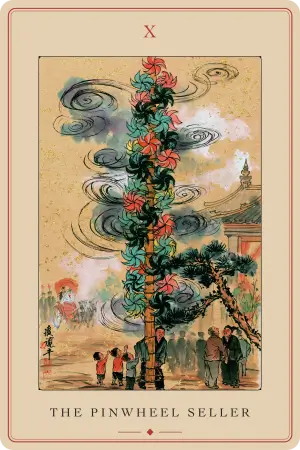
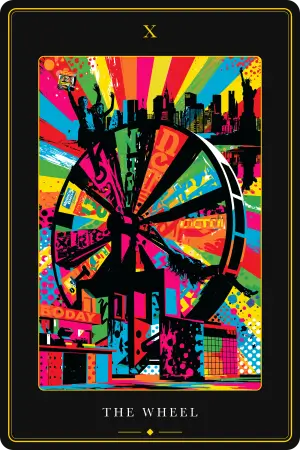
Elk deck herinterpreteert hetzelfde archetype. Vergelijk de kunst en open een deck voor de volledige uitleg.
Symboliek en voorstelling
Het Rad in de Rider-Waite leest minder als een tafereel en meer als een schema van de kosmos in beweging. Een groot gouden rad hangt in een blauwe lucht. De rotatie vormt het eerste symbool op de kaart: de voortdurende stijging en daling die toont dat alles een eigen cyclus kent en dat verandering een natuurlijk onderdeel van het leven is. De gouden kleur verwijst naar gunstige wendingen en transformatie.
In de vier hoeken zitten gevleugelde wezens: een engel, een adelaar, een stier en een leeuw, elk verdiept in een heilig schrift. Zij vormen het vaste kader rond het draaiende rad en bieden stabiliteit terwijl de rest beweegt. Ze komen overeen met de vier elementen (vuur, aarde, lucht en water) en de vier windstreken, waardoor de afbeelding dynamiek en beweging vat binnen een standvastige orde.
Bovenaan het rad zit een sfinks, een figuur van wijsheid en mysterie. Het zwaard in haar handen verbeeldt kracht, gezag en een subtiel inzicht: weten wanneer je moet handelen en wanneer je passief moet blijven. De blauwe kleur van het wezen staat voor waarheid; rustig slaat het de rotatie gade. Aan de zijkant glijdt een slang omlaag als symbool van transformatie en vernieuwing. Door haar oude huid af te werpen verbeeldt zij het voortdurende herstel van het leven. Aan de andere zijde klimt Anubis omhoog, de Egyptische god van de dood, die staat voor loutering en de overgang naar een nieuw niveau van bestaan. Sommige duidingen zien in deze stijgende figuur de Rode Draak of de slang Typhon, waarbij rood verwijst naar passie en gevaar, en het wezen ingrijpende verandering verbeeldt.
Kleinere symbolen maken de mandala compleet. Wolken verwijzen naar de kosmos en de goddelijke orde. De hiërogliefen op de rand verbeelden alchemistische en astrologische principes, een herinnering aan de plaats van de mens in het universum. Rond de rand wisselen de Latijnse letters T, A, R, O zich af met de Hebreeuwse naam van God. Zo vormen ze ROTA, TARO, ORAT, TORA, ATOR: de formule van de Golden Dawn waarin het rad van de Tarot de goddelijke wet verwoordt. Het blauw in de afbeelding staat voor spirituele kennis, goud voor gunstige verandering en geel voor positieve energie en inzicht.
Kernbetekenis
Het Rad van Fortuin is de enige kaart in de Grote Arcana die een kosmische kracht beschrijft in plaats van een menselijk personage. Waar De Kluizenaar of De Keizerin een specifieke menselijke eigenschap verbeelden, staat het Rad voor vergankelijkheid zelf, voor karma en oorzaak en gevolg. Het markeert het keerpunt waarop de ene cyclus sluit en een nieuwe begint. Het rad kent geen vast begin of einde; elk punt gaat vloeiend over in het volgende.
In de lezing van de Rider-Waite is de les helder: noch het hoogtepunt noch het dieptepunt duurt eeuwig. De daden van vandaag vormen de werkelijkheid van morgen. Het aanvaarden van verandering is essentieel voor persoonlijke groei. Onder invloed van Jupiter is de verandering die de kaart brengt op de lange termijn vaak gunstig en verruimend, zelfs als de directe wending onwennig voelt. Doordat de kaart gekoppeld is aan deze langzaam bewegende planeet, duidt zij meestal op een omslag in een langdurig patroon: een scharnierpunt in het leven waar een oud karmisch hoofdstuk sluit.
Rechtopstaande betekenis
Rechtop wijst Het Rad van Fortuin op dynamiek, groei, geluk en een snelle wending in het leven. De kaart kan een onverwachte omwenteling aankondigen of een gelukkig toeval waarna eerdere inspanningen eindelijk vruchten afwerpen. Zij beschrijft mensen die goed omgaan met deze energie: optimistisch, daadkrachtig en flexibel, met vertrouwen in hun kansen. Het advies is helder: tegemoet treden wat komt met een open vizier, vertrouwen op je koers en kansen grijpen zodra ze zich voordoen.
In de liefde. Een bepalende wending of een nieuwe fase, vaak een verbetering. Een relatie beweegt door een belangrijk stadium waarin oude conflicten opgelost kunnen worden, of er ontstaat een onverwachte romance die vraagt om daadkracht. De kaart wijst op nieuwe perspectieven en een verschuiving naar harmonie.
In vriendschap en bredere relaties. Vernieuwing in je sociale kring, met ruimte voor nieuwe ontmoetingen en het herstellen van oude contacten. De wending van het Rad brengt snelle maar positieve verversingen: een gunstige periode voor sociale evenementen en het verdiepen van bestaande banden.
In werk en bedrijf. Een keerpunt dat een nieuwe professionele fase inluidt: het afronden van een project, een promotie of een aantrekkelijk aanbod. Zakelijk markeert het een opwaartse spiraal, uitbreiding of een nieuwe koers, waarbij aanpassen aan veranderde omstandigheden belangrijker is dan vasthouden aan een vastomlijnd plan.
In financiën. Geluk en onverwachte wendingen: een stijging van inkomsten, een afgeloste schuld of nieuwe financiële kansen. Een succesvolle fase treedt in, al maant de kaart ook tot voorzichtigheid: het rad blijft draaien, dus verstandig beheer blijft noodzakelijk.
In gezondheid en het lichaam. Een duidelijk keerpunt naar verbetering: het opschalen van beweging, een gezonder voedingspatroon of een nieuwe leefstijl. De verandering kan plotseling aanvoelen, maar biedt een uitstekende kans om te werken aan fysieke doelen.
Omgekeerde betekenis
Omgekeerd raakt de verruimende energie van Het Rad van Fortuin geblokkeerd of ontregeld. Soms duidt dit op een periode van pech of tegenwind. Vaak gaat het om een wezenlijker probleem: een stagnerende cyclus waarin plannen vertraging oplopen en hetzelfde patroon zich herhaalt omdat het onderliggende inzicht nog ontbreekt. De kaart beschrijft vaak verzet tegen een noodzakelijke verandering of het gevoel de controle over de koers te verliezen. Voor wie zich opstelt als slachtoffer van de omstandigheden, vormt het omgekeerde Rad een dringende oproep om zelf de regie te pakken.
In de liefde. Stagnatie in de relatie: inspanningen leveren weinig op of slepende kwesties blokkeren de vooruitgang. Vaak ligt hier een angst voor verandering aan ten grondslag, waardoor partners in oude patronen blijven steken. Het advies is om stil te staan, de situatie te evalueren en te beslissen of het patroon doorbroken kan worden.
In vriendschap en bredere relaties. Vasthouden aan oude omgangsvormen die geen voldoening meer schenken. Onverwachte wendingen roepen onrust op, de communicatie verloopt moeizaam en waardevolle contacten dreigen te verwateren. Dit is een moment om te accepteren dat vernieuwing nodig is voor de volgende fase.
In werk en bedrijf. Instabiliteit, vertraging en stagnatie: onvoorziene obstakels sturen projecten in de war en plannen lopen anders dan verwacht. Dit vraagt om geduld en een herijking van de doelstellingen, in de wetenschap dat na elke daling weer een stijging volgt.
In financiën. Tijdelijke financiële tegenwind: tegenvallende inkomsten, onverwachte uitgaven of vertraagde betalingen. De omgekeerde kaart adviseert te leren van eerdere fouten en vervolgstappen zorgvuldig te plannen, zodat een huidige tegenslag de basis legt voor later herstel.
In gezondheid en het lichaam. Stagnatie en moeite om gezonde gewoonten vast te houden. Het kan wijzen op verouderde patronen of gebrek aan discipline waardoor vooruitgang uitblijft. Bedenk dat luwe perioden vaak voorafgaan aan een nieuwe dynamiek zodra het rad weer draait.
Historische context
Het rad als symbool is veel ouder dan de Tarot. De klassieke verwoording ervan is de Rota Fortunae uit het 6e-eeuwse werk Over de troost der wijsbegeerte, geschreven door Boëthius in de gevangenis in afwachting van zijn terechtstelling. Vrouwe Wijsbegeerte legt daarin uit dat het rad van Vrouwe Fortuna draait zonder wrok of voorbedachten rade: het tilt armen naar tronen en werpt koningen in het stof. Het rad proberen te stoppen is een dwaze illusie, want een stilstaand rad zou niet langer het rad van het Noodlot zijn. Alleen innerlijke deugd en wijsheid overleefden de wendingen van het lot.
De vroegste tarotkaarten, zoals het Visconti-Sforza-deck van rond 1450 tot 1460, beeldden deze allegorie rechtstreeks af. Een geblinddoekte Vrouwe Fortuna draait aan een rad waarop vier menselijke gestalten staan met Latijnse teksten: Regnabo ('Ik zal heersen') bij de stijgende figuur; Regno ('Ik heers') bovenaan met een kroon; Regnavi ('Ik heb geheerst') bij de vallende figuur wiens kroon afglijdt; en Sum sine regno ('Ik ben zonder heerschappij') bij de figuur onderaan. In de latere Tarot van Marseille veranderden de menselijke heersers in dierlijke wezens met een gekroonde sfinks bovenaan, waarbij het rad vaak op water rustte als verwijzing naar de wisselvallige golven van de Griekse godin Tyche.
In 1909 veranderden Arthur Edward Waite en Pamela Colman Smith het ontwerp grondig door de menselijke figuren volledig weg te laten. Geïnspireerd door Éliphas Lévi en de Hermetische Orde van de Golden Dawn vormden zij het Rad om tot een kosmische mandala. Het werd minder een waarschuwing voor aardse ijdelheid en meer een weergave van de Universele Orde. De sfinks, de slang, Anubis, de vier gevleugelde wezens en de inscripties op de rand maken sindsdien integraal deel uit van deze moderne kaart.
Correspondenties
Getal. X, het getal tien. In de numerologie markeert tien zowel een afronding als een nieuw begin: de 1 staat voor de eerste stap, initiatief en schepping, terwijl de 0 staat voor potentie, cyclus en universele wetmatigheid. Samen vormen ze het getal van voltooiing dat tevens de poort opent naar een volgend niveau. Tien verzamelt de essentie van de getallen één tot en met negen en toont dat elk einde de basis vormt voor een nieuwe fase.
Astrologie. Jupiter, de Grote Weldoener uit de klassieke astrologie, die heerst over expansie, optimisme, groei, geluk en rechtvaardigheid. Als grootste planeet symboliseert Jupiter ruime mogelijkheden; zijn langzame omloopbaan verleent het Rad een perspectief van jaren en langdurige cycli. Jupiter herinnert er ook aan dat niet alles door menselijke wil gestuurd kan worden en dat het soms verstandig is mee te bewegen met het lot.
Element. Het Rad wordt niet door één enkel element beheerst. Het verenigt alle vier de elementen (vuur, aarde, lucht en water) in de hoekfiguren en de alchemistische rand van het rad.
Kabbala. Het eenentwintigste pad op de Levensboom, dat Chesed (Genade) verbindt met Netzach (Overwinning), toegewezen aan de Hebreeuwse letter Kaph (de handpalm). De handpalm is de plek waar lijnen worden gelezen en waar men ontvangt wat het lot brengt. Kabbalisten noemen dit pad het 'Belonende Verstand'.
Elementaire waardigheid. Als antwoord op een ja-of-nee-vraag neigt het Rad rechtop naar 'ja' en omgekeerd naar 'nee', al is het meest zuivere antwoord vaak 'misschien': de situatie is volop in beweging en de uitkomst staat noch niet vast.
Psychologisch perspectief
In de Reis van de Held markeert het Rad het moment waarop de vraag verschuift van 'Wie ben ik?' naar 'Wat is mijn taak?'. Na het opbouwen van zelfinzicht krijgt de held te maken met ingrijpende verandering door krachten buiten de eigen controle. Het accepteren daarvan brengt wendbaarheid en het inzicht dat elke wending in het leven kansen biedt voor persoonlijke groei.
De persoonlijkheid die bij het Rad hoort, past zich snel aan en blijft nieuwsgierig, met het besef dat alles voortkomt uit oorzaak en gevolg. Op zijn best uit zich dit in veerkracht, optimisme en een realistisch aanpassingsvermogen: rust bewaren bij tegenslag en kansen benutten zodra ze zich voordoen. De schaduwzijde treedt op wanneer deze dynamiek doorslaat: wisselvalligheid, gebrek aan langetermijnplanning en inconsistentie. Zonder een stevig fundament van eigen waarden kan iemand passief toekijken hoe het leven verloopt en te veel op geluk rekenen.
Het Rad van Fortuin in verschillende decks
Het Rad in de Rider-Waite dient als het ijkpunt voor de meeste moderne beoefenaars, waardoor andere tradities gelezen worden in vergelijking met dit ontwerp.
Tarot van Marseille. Het rad toont dierlijke gestalten in plaats van een esoterische mandala, met bovenaan een gekroond sfinksachtig wezen met een zwaard. Het rad rust vaak op water, wat herinnert aan de wisselvallige stroom van het lot.
Crowley-Thoth. Geschilderd door Lady Frieda Harris, toont het Thoth-rad een rad met tien spaken in een paarse spiraal, getroffen door bliksem die oude structuren afbreekt en nieuwe kiemen legt. De drie gestalten komen overeen met de hindoeïstische Guna's en de alchemistische principes: Hermanubis stijgt als Sattva en Mercurius, de Sfinks staat in balans als Rajas en Zwavel, en Typhon valt als Tamas en Zout. Voor Crowley is het Rad een kosmische machine waarin meesterschap betekent dat men het stille middelpunt opzoekt.
Moderne decks. Hedendaagse makers interpreteren het Rad op uiteenlopende wijzen. Weefdecks zoals Tarot of the Divine vervangen het rad door een spinnenweb of de draad van de Griekse Moirai om het lot als een verweven geheel te tonen. Maritieme decks zoals de Mermaid Tarot beelden het uit als het stuurwiel van een schip in stormachtig weer. De Mary El Tarot transformeert het mechanische rad tot een schoot, een vruchtbare en biologische scheppingskracht.
In combinaties en context
Het Rad van Fortuin werkt als een spil in een legging. Op de positie van de uitkomst kondigt het een beslissend keerpunt aan dat de omringende kaarten sterk beïnvloedt: het geeft aan dat een situatie in beweging komt, hoe de huidige stand van zaken ook is.
Een bekend voorbeeld uit de praktijk illustreert deze werking. Een vrager die om practical redenen een relatie had beëindigd, trok Gerechtigheid, Het Rad van Fortuin en Staven Vier. Gerechtigheid bevestigde de logica van de breuk en Staven Vier beloofde uiteindelijk geluk, maar Het Rad in het midden maande tot geduld: externe factoren en timing moesten eerst op één lijn komen. Bij kaarten als De Magiër of Bekers Koningin kan Het Rad juist waarschuwen voor een partner die drijft op charmes en geluk, wat leidt tot een wisselvallig verloop.
Als advies raadt Het Rad van Fortuin aan om mee te bewegen met de omstandigheden in plaats van ertegen te vechten. Waar omliggende kaarten duiden op uitputting of vastgelopen inspanningen, geeft het Rad aan dat de cyclus verandert: stop met het forceren van een vastgelopen situatie en richt je aandacht op de volgende kans.
Vragen ter reflectie
- Waar in je leven houd je krampachtig vast aan het hoogtepunt van het rad, en hoe kun je dat succes met meer ontspanning dragen?
- Welke cyclus blijft zich in jouw leven herhalen, en is dit de wending waarin je deze doorbreekt?
- Wanneer het lot een deur sluit die je graag open zag, kun je er dan op vertrouwen dat dit ruimte maakt voor iets nieuws?
De algemene betekenis volgt de Rider–Waite–Smith-duiding — de referentie die binnen Tarot Academy gebruikt wordt. Open een specifiek deck hierboven voor zijn eigen interpretatie.
Veelgestelde vragen
Verken de Tarot
Laatste Berichten
Ontdek de oude wijsheid van tarotkaarten en ontgrendel de mysteries van je spirituele reis. Onze blog is jouw toegangspoort tot het begrijpen van de rijke symboliek, betekenissen en praktische toepassingen van tarot lezen.