
 IT (italiano)



Arcani Maggiori · XXI
Il Mondo
Il cerchio che si chiude, l'interezza conquistata alla fine del lungo viaggio.
Leggi la guida completa: Il Mondo Arcano nei Tarocchi: Una Guida Completa al Suo Simbolismo e Significato
La carta a colpo d'occhio
- Numerologia
- XXI
- Elemento
- Terra
- Astrologia
- Saturno
- Sentiero cabalistico
- Tav (Yesod → Malkuth)
- Tempistica
- Completamento · la chiusura di un lungo ciclo
- Sì / No
- Un sì deciso
Diritto
completamento
realizzazione
traguardo
interezza
integrazione
successo
culmine
ritorno a casa
Capovolto
mancanza di chiusura
incompiutezza
stagnazione
scorciatoie
questioni in sospeso
successo ritardato
Il Mondo in ogni mazzo
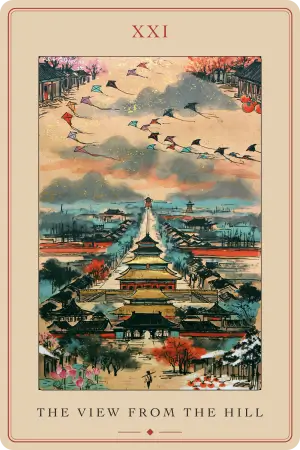
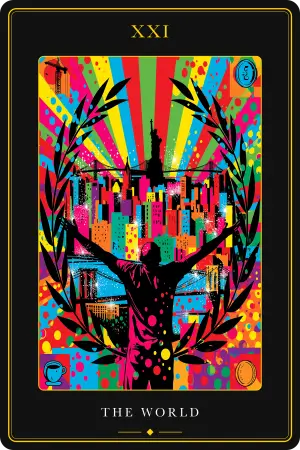
Ogni mazzo reinterpreta lo stesso archetipo. Confronta le illustrazioni, poi apri un mazzo per leggerne l'interpretazione completa.
Iconografia e simbolismo
Una figura danzante è sospesa al centro della carta, cinta da una corona d'alloro verde, con una gamba incrociata dietro l'altra a metà del passo. È un androgino divino, spesso chiamato Ermafrodito, e l'equilibrio che incarna è tutto il punto: maschile e femminile, cosciente e inconscio, cielo e terra riconciliati in un solo corpo. In ciascuna mano regge una bacchetta. Il Mago, all'inizio del viaggio, ne reggeva una sola, levata per attirare il potere in un unico io; due bacchette dicono che alla fine le dualità sono state padroneggiate e pareggiate.
La corona d'alloro è la vittoria e il ciclo sempreverde della natura, ed è legata in alto e in basso da nastri rossi annodati a lemniscata, il segno dell'infinito, così che l'intera carta si legge come un anello chiuso in cui la fine di un ciclo nutre l'inizio del successivo. Alcuni leggono la corona stessa come un Uroboro, il serpente che si morde la coda.
Ai quattro angoli siede il tetramorfo: un uomo, un'aquila, un leone e un toro. Tratti dalle visioni di Ezechiele, qui rappresentano i quattro segni fissi, i quattro elementi e i quattro semi, Acquario e aria, Scorpione e acqua, Leone e fuoco, Toro e terra. Sono la rigida cornice strutturale del mondo materiale, e la danzatrice al centro è la quintessenza, il quinto elemento dello spirito che tiene i quattro in armonia.
Significato centrale
Il Mondo è l'ultimo trionfo numerato e il capolinea del Viaggio del Matto, il punto in cui ogni lezione delle venti carte precedenti si risolve in sintesi. È la grande opera dell'alchimista realizzata, l'oro finalmente estratto dal piombo dell'esperienza, il macrocosmo riflesso alla perfezione nel microcosmo. Quando compare, gli opposti in guerra si sono riconciliati e un ciclo importante di crescita si è davvero chiuso.
Ma la carta è governata da Saturno, e questo tiene onesta la gioia. Questo completamento non è casuale né istantaneo. Saturno è il Signore del Tempo e il grande maestro esigente, e l'interezza che Il Mondo promette si forgia nel crogiolo della disciplina, della restrizione e della maturità che solo il tempo può concedere. Il suo numero porta lo stesso messaggio: ventuno è tre per sette, il completamento materiale moltiplicato per quello spirituale, un'integrazione resa totale.
Significato al dritto
Al dritto, Il Mondo è una delle carte più positive del mazzo, il vertice della realizzazione e la chiusura riuscita di un lungo arco. Waite lo associava alla ricompensa e al viaggio, a un cambiamento di luogo, e porta con sé un inconfondibile senso di arrivo. Il consiglio che contiene è festeggiare la vittoria e riposare, stringendo però l'ultimo nodo perché il cerchio si chiuda in modo pulito.
In amore. Un senso profondo di completezza, unità e ritorno a casa, spesso una compatibilità perfetta o un legame destinato e duraturo che raggiunge la sua forma definitiva, come un matrimonio atteso a lungo. Come esito, però, può essere più sobrio: una relazione che è arrivata fin dove poteva e si completa in modo naturale, oppure la fine di una fase e l'inizio di un'altra, la luna di miele che lascia il posto a una coppia stabile.
Nel lavoro. La vetta dopo anni di lavoro silenzioso, un grande progetto concluso, un percorso completato, un obiettivo economico raggiunto, un debito estinto, vera padronanza e riconoscimento. Ti premia per aver chiuso il cerchio come si deve e sistemato le pratiche rimaste in sospeso prima della prossima ambizione.
Nelle finanze. Un obiettivo a lungo inseguito finalmente raggiunto, un debito estinto, una base solida per ciò che viene dopo.
Nella salute. Corpo e spirito che arrivano all'omeostasi, il culmine riuscito di una lunga guarigione, la cura pienamente integrata.
Significato al rovescio
Al rovescio, Il Mondo è una frustrante mancanza di chiusura. La sua firma è la sindrome dell'ultimo miglio: arrivare proprio alla fine di un ciclo, con il completamento visibile e a portata di mano, e poi fermarsi, sabotarsi o afferrare una scorciatoia a buon mercato che impedisce la vera integrazione. La tentazione di proclamare la vittoria prima di averla meritata è più forte proprio qui.
Sotto la riluttanza c'è la paura. Finire davvero significa affrontare il vuoto di ciò che viene dopo, e se hai passato anni a definirti attraverso una lotta o un obiettivo mancato, raggiungerlo ti spoglia di quell'identità. Così le persone si aggrappano a un capitolo oltre la sua fine naturale, sopportando la stagnazione piuttosto che il disorientamento di diventare qualcuno di nuovo. La carta rovesciata pone una domanda precisa: hai davvero integrato le lezioni, o stai soltanto sopravvivendo all'esperienza rifiutandoti di lasciarla finire?
In amore. Questioni in sospeso e blocchi emotivi, amore trattenuto, o un ciclo tossico di sentimento non corrisposto che il consultante non vuole lasciar andare anche quando il segnale di andare avanti è chiaro.
Nel lavoro. Un plateau, una routine stagnante, energie disperse che non riescono a portare un progetto oltre il traguardo, uno slancio prosciugato in silenzio dalle cose lasciate a metà.
Nelle finanze. Un obiettivo in stallo, un avvertimento a evitare nuovi rischi finché il cerchio attuale non è davvero chiuso.
Nella salute. Tagliare sul riposo, debito di sonno ed esaurimento per aver ignorato il bisogno del corpo di ritmo e di chiusura.
Note storiche
Nei mazzi italiani del Quattrocento come il Visconti-Sforza, Il Mondo era una scena di dominio terreno, una sfera celeste o un globo sorretto da figure angeliche, l'iconografia classica e cristiana dell'umanesimo rinascimentale. La struttura duratura della carta fu fissata più tardi in Francia, dove i Tarocchi di Marsiglia la intitolarono Le Monde e stabilirono la composizione che durò per secoli: una figura seminuda in piedi dentro una corona a forma di mandorla, incorniciata ai quattro angoli dalle quattro bestie dell'Apocalisse.
Quella corona centrale è una mandorla, o Vesica Piscis, la forma che nasce dove due cerchi uguali si sovrappongono, che i pitagorici leggevano come l'incontro di cielo e terra e gli artisti medievali disegnavano intorno al Cristo in gloria. Waite e Pamela Colman Smith affinarono il disegno marsigliese nel 1909, trasformando la figura in una danzatrice dinamica con due bacchette e legando l'alloro con nastri a lemniscata. Crowley andò ancora oltre nel 1944, ribattezzando la carta L'Universo e spostandone il fuoco dal completamento terreno all'intero cosmo.
Corrispondenze
Numero. XXI, il ventuno, che si scompone in tre per sette, il completamento materiale moltiplicato per quello spirituale, così che il numero stesso si legge come un'integrazione perfetta su entrambi i piani.
Astrologia. Saturno, il pianeta visibile più lontano e l'antico «anello invalicabile», il confine del mondo conosciuto. Come Signore del Tempo e maestro esigente del cosmo governa la struttura, il limite e la dura disciplina attraverso cui si conquista la vera interezza, e rimanda a Binah, la Grande Madre, la matrice oscura della forma.
Elemento. Terra, che radica la carta in Malkuth e nel mondo fisico pienamente manifestato, il luogo in cui il progetto spirituale si cristallizza finalmente in qualcosa di solido.
Cabala. La lettera ebraica è Tav, la ventiduesima e ultima lettera dell'alfabeto, sul trentaduesimo sentiero che scende da Yesod (Fondamento) a Malkuth (Regno). È il ponte più basso e più pesante dell'Albero, il condotto attraverso cui le energie astrali e psicologiche precipitano nella realtà concreta.
Tempi e sì/no. La carta segna il completamento e la chiusura di un lungo ciclo più che una stagione. Come sì o no è un sì deciso e senza riserve, il cerchio che si chiude a tuo favore.
Prospettiva psicologica
In termini junghiani Il Mondo è l'individuazione compiuta, il momento in cui la mente cosciente e quella inconscia smettono di combattersi e si uniscono nell'androgino danzante. Sono le nozze alchemiche consumate, la quadratura del cerchio in cui lo spirito si accomoda finalmente nella materia, e si legge come un ritorno a casa, a se stessi. La conoscenza raccolta lungo la strada non è più soltanto ricordata, è vissuta nel corpo, e la persona è davvero diventata ciò che il viaggio ha costruito invece di limitarsi a portarne il racconto.
L'ombra di questa carta è insolitamente precisa e merita un nome. Il suo pericolo è la riluttanza a finire, la sindrome dell'ultimo miglio, e il motivo per cui morde così forte è che il completamento esige una piccola morte. Chiudere un ciclo per davvero significa perdere l'identità costruita al suo interno e affrontare il disorientamento del diventare nuovi. Per questo le persone si bloccano sulla soglia e restano in una situazione ben oltre la sua fine sana, per un terrore silenzioso della chiusura. Il lavoro del Mondo è il coraggio di lasciar morire il vecchio sé perché l'integrazione autentica possa avvenire.
Il Mondo nei diversi mazzi
Tarocchi di Marsiglia. Intitolata Le Monde, la carta pone al centro una figura seminuda dentro una mandorla, la Vesica Piscis letta come grembo cosmico e portale tra cielo e terra, con le quattro bestie apocalittiche ad ancorare gli angoli: la geometria essenziale che ogni mazzo successivo ha ereditato.
Crowley-Thoth. Crowley la ribattezzò L'Universo e Lady Frieda Harris abbandonò l'allegoria piatta per ampie linee di forza cosmica. La carta mette in scena il mito orfico della creazione di Eurinome, la dea che danza sorgendo dal Caos e calpesta il serpente Ofione, con la corona sostituita dal piano dell'eclittica e, alla base, la prima tavola periodica degli elementi, i mattoni grezzi della materia nati dalla danza divina.
Mazzi moderni. Le versioni contemporanee conservano il significato rimodellando la cornice. Il Motherpeace Tarot rende l'intero mazzo in formato circolare per onorare il femminile e il ciclico, e altri mazzi moderni rileggono la danzatrice e la sua corona nei propri linguaggi, ma la funzione regge: culmine assoluto e armonizzazione degli opposti.
In combinazione e nel contesto
L'abbinamento più carico del mazzo è Il Mondo con Il Matto, l'omega che incontra l'alfa. Il Matto è puro potenziale non manifestato che si lancia dalla rupe, e Il Mondo è la padronanza totale di ogni lezione, così insieme consegnano al consultante una chiave maestra: ti sei guadagnato il diritto di ricominciare, stavolta a un livello molto più alto, usando un ciclo compiuto come trampolino per il successivo. Nel lavoro si legge come il pioniere seriale che ha padroneggiato un campo ed entra senza timore in uno nuovo; in amore, come una persona abbastanza intera da restare se stessa mentre rischia di nuovo una vulnerabilità reale. Entrambe al rovescio, la coppia si ribalta in purgatorio: il rifiuto di chiudere un capitolo che deve finire, usato come scusa per schivare il salto successivo.
Rispetto alla Ruota della Fortuna la differenza è istruttiva. La Ruota è il girare esterno del destino, una fortuna passeggera fuori dal tuo controllo, mentre Il Mondo è la padronanza interiorizzata di quegli stessi cicli, una risoluzione conquistata e molto più duratura. Accanto al Carro è la destinazione dopo la corsa, il punto in cui l'armatura si toglie perché la guerra è vinta. Collocato subito dopo Il Giudizio, è l'integrazione finale verso cui il risveglio conduceva fin dall'inizio.
Domande di riflessione
- Quale ciclo della tua vita è davvero completo e aspetta soltanto che tu lo lasci finire?
- Dove ti stai fermando appena prima del traguardo, e cosa temi che il completamento ti costerebbe?
- Se questo capitolo si chiudesse in modo pulito oggi, quale nuovo viaggio saresti libero di cominciare?
Il significato generale segue la lettura Rider–Waite–Smith — il riferimento canonico utilizzato in Tarot Academy. Apri un mazzo specifico qui sopra per la sua interpretazione dedicata.
Domande frequenti
Esplora i Tarocchi
Ultimi Articoli
Esplora il simbolismo, i significati e le applicazioni pratiche della lettura dei tarocchi.




















































