
 UZ (o'zbekcha)



Katta Arkan · 10
Qushini sayr qildirayotgan odam
U yolg'iz emas; u o'z nurini kerak bo'lmaguncha yopiq saqlaydi. Tong saharda kimsasiz ko'cha bo'ylab olib o'tilgan donolik.
Karta haqida qisqacha
- Numerologiya
- IX
- Unsur
- Yer
- Astrologiya
- Sunbula · Merkuriy boshqaradi
- Kabbala yo'li
- Yod (Xesed → Tiferet)
- Vaqt
- Tonggi g'ira-shira payt · Sunbula mavsumi · to'qqiz raqami
- Ha / Yo'q
- Balki / hozircha emas; to'g'ri holatda yumshoq ha, teskari holatda yo'q
To'g'ri holat
yolg'izlik
o'z-o'zini tahlil qilish
sokin marosim
meditatsiya
ichki ovoz
sabr
yopiq nur
o'z yo'lidan yurish
Teskari holat
ajralib qolish
kimsasizlik
chetlashish
turib qolish
qaysarlik
yashiringan donolik
hech qachon ochilmaydigan qafas
qochish
Har bir to'plamda Qushini sayr qildirayotgan odam
Har bir dek ayni bir arxetipni o'zicha qayta talqin qiladi. Rasmlarni solishtiring, so'ng to'liq talqinni o'qish uchun dekni oching.
Tasvirlar va ramziyat
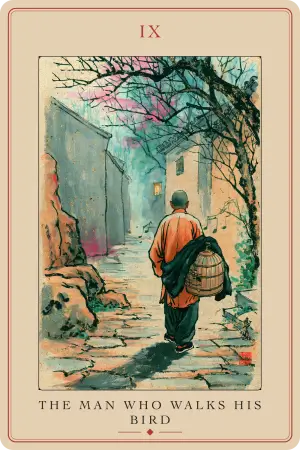
Pekin Tarotida Zohid (Hermit) fonus ko'tarmaydi va toqqa chiqmaydi. U tong otishidan oldin, ko'cha hali g'ira-shira va kimsasiz bo'lgan paytda uyg'onadigan va boshqa zohidlar chiroq ko'tarib yurganidek, o'zining yopiq qush qafasini sayr qildiradigan xutonlik qariyadir. Karta aynan shu marosim sharafiga nomlangan: bu tonggi havodan nafas olishi uchun qafasdagi sayroqi qushini olib chiqadigan 遛鸟人 (qush sayr qildiruvchi odam). U matoni faqat eng sokin joydagina ko'taradi va ko'zga ko'rinmas qush faqat uning o'zi uchun kuylaydi.
Yopiq qafas ushbu dastaning fonusi bo'lib, u biroz ko'tarilgan holda xuddi Rider-Waite Zohidi o'z nurini qo'riqlaganidek ehtiyot qilinadi. Ammo G'arb fonusi tashqariga nur sochini, Pekinniki esa kuylaydi. Bu yerdagi nur ko'rinadigan emas, balki eshitiladigan ovoz. Uning ustidagi mato esa aynan nurning o'ziga ko'chirilgan Zohidning kulrang plashidir: donolik baxillik tufayli emas, balki ba'zi narsalar shovqinda o'z qadrini yo'qotishi sababli yashirib saqlanadi. Ko'zga ko'rinmas qush bu ichki ovoz, butun umr davomida to'plangan ichki nur. U eng avvalo inson va uning o'z ongi o'rtasidagi yashirin suhbat kabi yangraydi.
Boshqa barcha unsurlar arkanani ixcham va insoniy holatga o'tkazadi. Tong oldidan kimsasiz ko'cha qorli cho'qqining o'rnini bosadi, shu tariqa yolg'izlik dunyodan uzoqlashish emas, balki dunyo ichidagi o'ziga xos vaqtga aylanadi. Ko'chaning uzoq qismida yorishib turgan yagona deraza mavjud, bu u rad etmagan va qaytib boradigan boshqa odamlarning issiq dunyosidir. Darz ketgan toshlardagi uning uzun soyasi bosib o'tilgan yo'ldir. Toshlarning o'zi esa yillar, oyoqlar yodlab olgan notekis yo'lakdir. Oddiy paxtalik ko'ylak Zohidning kamtarligini namoyon etadi, xazina insonning o'zida emas, qafasda saqlanmoqda. Birinchi pushti gullar ko'zga tashlanayotgan yalang'och shoxlar bir vaqtning o'zida erta bahor va erta tongni, narsalar ochilishidan oldingi lahzani bildiradi. Burchakda esa dastaning sokin imzosi bo'lmish kichik qizil muhr joylashgan.
Asosiy ma'nosi
Qushini sayr qildirayotgan odam Pekin Tarotining Zohididir va dasta uning ma'nosini bir qatorda ifodalaydi: u o'z nurini kerak bo'lmaguncha yopiq saqlaydi. Karta ongli ravishda tanlangan yolg'izlik, o'z-o'zini tahlil qilish va ichki ovozni sabr bilan parvarish qilish haqida. U bularning barchasini kundalik amaliyot orqali amalga oshiradi. Bu yerdagi donolik tog' cho'qqisidagi ilohiy vahiy emas. U ketma-ket o'n minglab tonglarda qilingan sayrdir.
An'anaviy Zohid sovuqda yolg'iz qolish uchun dunyodan uzoqroqqa ko'tarilgan bo'lsa, bu qariya faqatgina shovqindangina uzoqlashadi. U tushlik paytida gavjum bo'ladigan o'sha ko'chadan ayni uning o'ziga tegishli bo'lgan yagona soatda yurib o'tadi. U taklif qilayotgan yolg'izlik aslida muayyan bir vaqtdir va olomondan oldin uyg'onishga tayyor bo'lgan har qanday odam unga egalik qilishi mumkin. Uning yolg'izligi qaytish chiptasi bilan birga keladi, bu ko'chaning narigi chetidagi yorug' derazadir, shuning uchun karta surgun emas, balki tiklanish sifatida o'qiladi.
Uning intizomi yopiq nur intizomidir. Doimiy ravishda namoyish etiladigan va har bir olomonga isbotlanadigan bilim xuddi sayroqi qush shovqinli bozorda jim bo'lib qolganidek o'z kuchini yo'qotadi. Shunday qilib, qush sayr qildiruvchi odam qadrli narsani yopiq holda saqlaydi, uni sadoqat bilan ko'tarib yuradi va faqat sukunat uning kuylashi uchun yetarli darajada chuqur bo'lgandagina ochadi. Qachonki u oxir-oqibat matoni ko'tarib, qushning ovozini eshitishga ruxsat bersa, bu yuksak ishonch belgisidir.
To'g'ri holatdagi ma'nosi
To'g'ri holatda, karta qush sayr qildiruvchining vaqtiga chorlaydi: kun shovqinidan chekinish, o'z yo'lingizdan o'z tezligingizda yurish va biror qimmatli ichki narsani birovga ko'rsatishdan oldin uni parvarish qilish. U harakatdan ko'ra fikr yuritishni, hammaga e'lon qilishdan ko'ra ehtiyotkorlikni, shoshqaloqlikdan ko'ra sabr-toqatni afzal ko'radi. Sizga kerak bo'lgan javoblar olomon ichidan qichqirmaydi. Ular ko'cha kimsasiz bo'lgan joyda kutib turadi. Shovqindan oldin uyg'oning, ichki yo'lboshchingizga ishoning va qafasni gavjum bozorda ochmang.
Sevgida. Qalb haqida sokin fikr yuritish mavsumi. Yolg'izlar uchun bu munosib xilvat, sizdan taralayotgan qo'shiq samimiy bo'lishidan oldin o'z his-tuyg'ularingizni anglash vaqti bo'lib, sevgi yo'qligini bildirmaydi. Munosabatlarda bo'lganlar uchun karta bir-birining jimjitligi va shaxsiy hududini hurmat qilishga chaqiradi. Bu yerdagi sevgi qush sayr qildiruvchinikiga o'xshaydi: ko'z-ko'z qilinmaydigan, kundalik, ishonchli, balandparvoz so'zlardan ko'ra sadoqatli g'amxo'rlikda namoyon bo'ladigan mehr. Vazmin hamroh sovuqqonlikni emas, balki chuqurlikni yashiradi va ishonch o'z vaqti kelganda matoni ko'taradi.
Karyerada. Ko'zga tashlanishdan ko'ra chuqurlik muhimroq. Bu jimgina o'rganish, ko'nikmalarni xilvatda mukammallashtirish va hunarmandning qo'llari yillar davomida o'rgangani kabi mahoratni shakllantirish davridir. U ko'pincha hamma tayanadigan tajribali hamkasb yoki ustozni anglatadi, yoxud sizning shunday insonga aylanishga tayyor ekanligingizni bildiradi. Chuqur ishlash vaqtlaringizni himoya qiling, tugallanmagan ishlarni tayyor bo'lgunicha yashirin tuting va hatto hech kim qarsak chalmasa ham, o'zingiz parvarish qilayotgan narsaning qadriga ishoning.
Moliyada. Qari xutonlikning moliyasi: kamtarona ehtiyojlar, ko'z-ko'z qilmaslik, barcha qimmatli narsalarni yopiq saqlash va yaxshi parvarish qilish. Byudjetga rioya qiling, jimgina pul jamg'aring va boshqalarning shovqinli fikrlaridan yiroqda reja tuzing. O'z xulosangizni aniq eshitguningizcha, qarorlaringizni avval yolg'izlikda sokinlik bilan ko'rib chiqing. Bu yerda har qanday keskin harakatdan ko'ra, sekin, barqaror, kundalik e'tibor qadrliroqdir.
Sog'liqda. Qadimgi Pekin uslubida tanaga ehtiyotkor, barqaror, kundalik g'amxo'rlik qilish, bunda tonggi sayrning o'zi davo hisoblanadi. U keskin tartiblardan ko'ra sekin amaliyotlarni afzal ko'radi: piyoda yurish, taychi, tsigun, cho'zilish, nafas olish. Tanaga buyruq berish o'rniga uni tinglang, erta yotish va erta turishni odat qiling, yetarlicha uxlashning o'zi shifo bo'lishiga yo'l qo'ying. Hozirgi paytda olomon ichida bo'lishdan ko'ra, harakatning yolg'iz bajariladigan turlari sizni ko'proq tiklaydi.
Teskari holatdagi ma'nosi
Teskari holatda, yolg'izlik kimsasizlikka aylanib ketgan. Mato hech qachon ko'tarilmaydi va sayr o'z-o'zini anglash emas, balki odamlardan qochish usuliga aylanib qolgan. Karta o'ziga qamalib olishni, muloqot qilishni istamaslikni va mazmuni yo'qolganidan keyin ham qaysarlik bilan davom ettirilayotgan marosimni ko'rsatadi. Yolg'izligingiz hali ham sizni oziqlantiryaptimi yoki shunchaki yashiryaptimi, degan savolni o'zingizga halol bering. Qush sayr qildiruvchi o'z sayridan keyin uyga qaytadi, shuning uchun bu dastada yolg'izlik tonggi amaliyot bo'lib, hech qachon doimiy yashash joyi emas. Darvozani yana oching: taklif qilingan choyni, yordamni va suhbatni qabul qiling.
Sevgida. Hamkorlar o'rtasida tobora kuchayib borayotgan masofa, ulardan biri yoki ikkalasi ham qafasni yopib, o'z his-tuyg'ularini baham ko'rishni to'xtatgan. U yerda hissiy sukunat va tobora ortib borayotgan rad etilish hissi bor, har kim qorong'ulikda alohida ko'chadan yurmoqda. Sevgi izlayotganlar uchun bu yangi munosabatlardan qo'rqishni yoki har bir haqiqiy insonni masofada ushlab turadigan o'zini himoya qilishga qaratilgan yolg'izlikni bildirishi mumkin. Matoni kichik qadamlar bilan ko'tarishni boshlang: bitta halol tuyg'uni ovoz chiqarib aytish, yolg'iz emas, balki birgalikda sayr qilish.
Karyerada. Kasbiy muhitda begonalashish: hamkasblardan uzoqlashish, hech kim uni yaxshilashga yordam bera olmaydigan darajada ishingizni juda qattiq qo'riqlash, xato qilishdan qo'rqish tufayli imkoniyatlar qo'ldan boy berilgunicha haddan tashqari tahlil qilish. Shuningdek, qiziqish va istiqbollar jimgina so'nib borayotgan bir paytda odatga ko'ra bir xil kasbiy yo'ldan yurishni anglatishi mumkin. Saboq shundaki, matoni ko'taring: ishingizni ertaroq ko'rsating, fikr so'rang, har qanday yo'nalishda ustozlikni qabul qiling va yangi usullarga ochiq bo'ling.
Moliyada. Ehtiyotkorlikning harakatsizlikka aylanishi. Hamyon xuddi qafas kabi hech qachon ochilmaydi va siz o'zingizdagi bor narsani xayoliy shovqindan himoya qilayotganingizda imkoniyatlar o'tib ketadi. U ikkilanish, nosog'lom tejamkorlikka aylanib ketadigan pul haqidagi sirlilik va qorong'ulikda hamma narsani yolg'iz hal qilishga urinishdan ogohlantiradi. Vaziyatni ochiqlang, ishonchli odam unga yorug'likda qarashiga imkon bering va moliyaviy g'ira-shiralikdan chiqish uchun bitta aniq qadam tashlang.
Sog'liqda. Kundalik tartib orqasida yashiringan tanaga e'tiborsizlik yoki uning aksi, yolg'izlikda xavotir bilan o'ta ko'p nazorat qilish. U sayrning tashlab qo'yilganini va xonaning qorong'u bo'lib qolganini, doimiy o'y-xayollar sababli buzilgan uyquni va tana uzoq vaqt davomida jimgina yuborayotgan signallarni ko'rsatadi. Yopiq doirani buzing: yolg'iz o'zingiz tashxis qo'yishdan ko'ra mutaxassislarga murojaat qiling, hatto ko'chaning oxiriga borib qaytish bo'lsa ham mayin kundalik harakatga qayting va marosimni qadam-baqadam tiklang.
Tarixiy qaydlar
Ueyt va Pamela Kolman Smit to'qqizinchi trumpsning avvalgi noto'g'ri talqinlari deb hisoblagan narsalarni tuzatishga kirishishdi. Antuan Kur de Jabelen bu figurani haqiqat va adolat izlayotgan donishmand darajasiga tushirib qo'ygan edi. Elifas Levi uni okkultik yolg'izlik, shaxsiy magnetizmni dunyoviy olamdan himoya qilish deb talqin qildi. Fransuz Martinizm ordeni bu g'oyani zohidning mantiya ostida tasdiqlanmaganlardan yashiringan Sokin va Noma'lum Falsafa sifatida kengaytirdi. Ueyt bularning barchasini rad etdi. Uning uchun Zohid muvaffaqiyat kartasi edi va asosiy nuqta fonusning plash ostida yashirilmay, yuqorida ushlab turilishida edi. Arxetip nurni yashirmaydi. U, men qayerda bo'lsam, sen ham shu yerda bo'lishing mumkin, deb e'lon qiladi.
Tasvirlar an'analar o'rtasida o'zgarib turgan. Marsel Taroti uni oddiygina L'Ermite deb ataydi va ajin bosgan qariyaga qizil hassa hamda qizil olovli fonus beradi, shuning uchun hayotiylik va faol iroda odamovilik yuzasi ostida yonadi. 1909-yildagi Rider-Waite-Smith kartasi ko'pchilikka ma'lum bo'lgan versiyani belgilab berdi: qorli cho'qqida turgan soqolli qariya, chap qo'lida hassa, o'ng qo'lida ko'tarilgan fonus, uning ichida olti qirrali Sulaymon muhri yonib turibdi. U chap tomonga, o'tmishga va ichki olamga qarab, yashagan hayotidan ma'no chiqarish uchun tsiklning oxiriga yetib kelgan.
Pekin Taroti vazifani saqlab qoladi va uni tashuvchi hamma narsani o'zgartiradi. Tog' yo'q, hassa yo'q, olti qirrali yulduz yo'q. Fonus yopiq qush qafasiga, nur qo'shiqqa, qorli cho'qqi esa tong oldidan kimsasiz ko'chaga aylanadi. Haqiqat izlovchi endi g'orda yashovchi zohid emas, u shahar uyg'onishidan oldin o'zining sokin soatini qadrlaydigan xuton odamidir, sizdan uch eshik narida yashovchi Dono Qariyadir.
Mosliklar
Raqam. IX, to'qqiz, bir xonali raqamlarning oxirgisi va yangilanishdan oldingi tsiklning yakunlanishi. To'qqiz birdan sakkizgacha bo'lgan barcha narsalarning mohiyatini to'playdi, shuning uchun bu kartada u aynan qariyaning o'zida mujassamlashgan, dasta oldin ko'rsatgan barcha narsalar bir qo'lda olib yurish mumkin bo'lgan sokin, ixcham donolikka aylangan. To'qqiz inson homiladorligi oylariga ham to'g'ri kelgani uchun, bu raqam bachadon metaforasini o'zida tashiydi: inson yangi bosqichda qayta tug'ilishidan oldin g'oyalar va qayg'u urug'lanadigan yolg'izlik davri.
Astrologiya. Merkuriy sayyorasi tomonidan boshqariladigan Sunbula burji. Sunbula tahliliy, xizmat ko'rsatishga moyil va kichik narsalarga ehtiyotkorlik bilan e'tibor qaratishga bag'ishlangan. Karta buni vahiy emas, balki intizom sifatida ko'rsatadi: bir xil soat, bir xil yo'l, o'nlab yillar davomida sayqallangan bir xil mehr. Afsonalarda Germes e'tiborsiz holda yer yuzida yurish uchun juldur kiyimli keksa sargardon qiyofasiga kirgan. Shunday qilib, Zohid Merkuriyning yolg'iz, izlanuvchan qiyofasi, u muloqot qiluvchi emas, balki kuzatuvchidir.
Unsur. Yer, Sunbula unsuri, barqaror va sabrli. Karta shuni o'rgatadiki, anglash qandaydir kutilmagan ilhom orqali emas, balki yo'lning qanday qilib silliqlashgani kabi, asta-sekin, sodiq takrorlash orqali to'planadi.
Kabbala. Ibroniycha Yod harfi, qo'l, u orqali boshqa barcha harflar hosil bo'ladigan urug' hisoblanadi, Xeseddan Tiferetga yo'nalgan yo'lda. Tot an'anasida bu urug' tom ma'noda namoyon bo'ladi, Zohid urug'lar unib chiqishi uchun qorong'ilikda ekilishi kerakligini biladigan sehrgar sifatida gavdalanadi.
Unsur darajasi. An'anaviy Zohid Hassalar to'plamiga va Olovga, iroda va hayotiy energiyaga tegishli bo'lgan hassaga tayanadi. Bu uning yolg'izligi Suvning cho'ktiruvchi chekinishi yoki Qilichlarning ruhiy azoblanishidan farqli o'laroq faol va tanlangan ekanligini ko'rsatadi. Bu farq teskari kartada ongli ravishda tanlangan chekinishning patologik kimsasizlikka tushishi mumkinligini bildiradi.
Psixologik nuqtai nazar
Bu Yungning Dono Qariyasi bo'lib, u inson kamolotga yetganida va o'zi aslida kimligi hamda nima uchun kelganini so'ray boshlaganida duch keladigan arxetipdir. Pekin Taroti donishmand boshqa joyda emasligini ta'kidlaydi. U rido kiymaydi va toqqa chiqmaydi, uning zohidligi shahar uyg'onishidan oldingi soatdir. Ichidagi Dono Qariyani eshitish uchun qahramon qush sayr qildiruvchi kabi yo'l tutadi: erta turadi, issiq xonani tark etadi, yolg'iz sayr qiladi va mato ko'tarilgan holda eng sokin joyda kutadi. Oxir-oqibat, donishmand aslida uning o'zining sabrli, erta turadigan qiyofasi ekanligini kashf etadi.
Bu kartani tashuvchi shaxs chinakam, ko'z-ko'z qilinmaydigan donolikka ega. Ular o'zlarining ichki ovozini tinglaydilar va unga ergashadilar. Boshqalar shunchaki odat deb yanglishadigan tartiblarga rioya qiladilar va jamoatchilik fikri ularga deyarli ta'sir qilmaydi. Ular ajoyib tinglovchilardir, shuning uchun odamlar xuddi qushni sokin hovliga olib kelgani kabi og'ir hikoyalarini ularga olib kelishadi. Bu ularni ishonchli maslahatchilar va ustozlarga aylantiradi. Ular sirlarni saqlaydilar, bosim ostida xotirjam qoladilar va yolg'iz qolishdan qo'rqmaydilar.
Buning soya tomoni shundaki, yolg'izlikka bo'lgan muhabbat sekin-asta begonalashishga aylanib ketishi mumkin. Bunday inson qafasdagi matoni juda uzoq vaqt saqlashi, atrofdagilar so'rashni to'xtatguniga qadar o'z mehri va fikrini yashirishi mumkin. O'z-o'zini tahlil qilish o'tmish haqidagi tinimsiz o'y-xayollarga aylanib, aybdorlik yoki norozilik hissini keltirib chiqaradi. Ular o'z tartiblariga nisbatan qattiqqo'l bo'lib qolishlari, har qanday aralashuvdan asabiylashishlari hamda baribir meni hech kim tushunmaydi degan farazga moyil bo'lishlari mumkin. Bu esa, ko'chadagi oddiy ijtimoiy zavqlar ularsiz o'tib ketayotgan bir paytda, o'zini-o'zi cheklaydigan devorga aylanadi.
Qushini sayr qildirayotgan odam turli dastalarda
Rider-Waite-Smith. An'anaviy Zohid qorli cho'qqida turibdi, bir qo'lida hassa, ikkinchisida ko'tarilgan fonus, uning ichida olti qirrali Sulaymon muhri yonib turibdi va u o'tmishga qarab chapga boqmoqda. Qushini sayr qildirayotgan odam ko'tarilgan, ehtiyot qilingan nurni va o'tmishga nazar tashlaydigan donolikni o'zida saqlab qoladi, biroq fonusni yopiq qafasga, cho'qqini xutonga, ko'rinadigan nurni esa eshitiladigan qo'shiqqa almashtiradi.
Tarot de Marseille. Qadimiyroq bo'lgan L'Ermite qizil hassasi va fonusida qizil olovi bor ajin bosgan qariyadir, odamovilik yuzasi ostida hayotiy energiya yonadi. Pekin taroti o'sha yashirin hayotiy energiyani mato ostida tirik bo'lgan va kuylayotgan ko'rinmas qush sifatida, shuningdek, bahorning ilk pushti rangiga burkangan shoxlar sifatida saqlab qoladi.
Crowley-Thoth. Ledi Frida Xarris tomonidan chizilgan Tot Zohidi koinot urug'lanishi uchun inson qiyofasidan voz kechadi: ichida kichik quyosh joylashgan geometrik fonus, ilon o'ralgan Orfik tuxum, ongsizlik darvozasidagi Kerber va Yod harfi bilan bog'langan haqiqat urug'i sifatidagi stilize qilingan spermatozoid. Pekin kartasi qorong'ulikda ekilgan urug' mavzusini baham ko'radi, lekin uni yumshoq va maishiy saqlaydi: u gomeokul emas, balki sokinlikda o'sgan qo'shiqdir.
Zamonaviy talqinlar. Zamonaviy dastalar ko'pincha Zohidni dunyoga qaytishdan oldingi tanlangan chekinish mavsumi sifatida, raqamli zohidlik rejimi ko'rinishida qayta yaratadilar. Pekin Taroti ana shunday talqinga tegishli bo'lib, uning qush sayr qildiruvchisi o'z yolg'izligini kundalik amaliyotga aylantirgan va ko'chaning oxirida yorug' deraza kutib turgan zohiddir.
Kombinatsiya va kontekstda
Qushini sayr qildirayotgan odam tarqatmani o'z-o'zini tahlil qilishga, sabr-toqatga va ichki hayotni parvarish qilishga yo'naltiradi. Uning atrofidagi kartalar bu yolg'izlik oziqlantiruvchimi yoki devorga aylanib qolganmi, shuni ko'rsatadi. Tezkor harakat kartalari yonida u harakat qilishdan oldin to'xtab turishni maslahat beradi. Shovqin va olomon kartalari orasida u xonadan chiqishi kerak bo'lgan yagona shaxsni bildiradi.
Oliy Ruhoniy bilan u yashirin bilim mavzusini ikki baravar oshiradi, garchi ularning ikkalasi qarama-qarshi ishlasa ham: u allaqachon biladi va harakatsizlikda kutadi, u esa faol izlashi, qadam-baqadam yo'l bosib, nurni o'zi kashf qilishi kerak. Ahmoq bilan bu karta o'tkir sintezni tashkil etib, o'tmish tajribasining asosli donoligini o'zida olib yurgan holda yangi narsaga qadam tashlashga chorlaydi. U faqatgina avval yolg'izlanish orqali shifo topish ishlarini bajargandan keyingina aqldan ozgan orzusiga erishish uchun harakat qiladigan tizimli tasavvufchidir. Ahmoq yonida teskari holatda tushganda, ushbu juftlik yolg'izlikka bo'lgan ehtiyojdan har qanday yangi boshlanishdan qochish uchun bahona sifatida foydalanishdan ogohlantiradi.
Dasta, shuningdek, uni ostonaga joylashtiradi. To'qqiz g'ildirakning yangi aylanishidan oldingi oxirgi sokin soat va Pekin Tarotida bu aylanish darhol keyingi kartaning aylanayotgan parraklarida ko'rinadi. Agar qush sayr qildiruvchi qayta-qayta chiqaversa, uni tashqi avtoritetdan ko'ra ko'proq taklif sifatida o'qing: shovqin boshlanishidan oldin o'zingizning g'ira-shira soatingizni talab qiling va kunning yagona haqiqiy tushunchasi xuddi qush ko'cha butunlay tinchlanganidagina kuylaganidek sizga kelishiga imkon bering.
Fikr yuritish uchun savollar
- Sizning ichingizda nima haligacha yopiq holda eshitilishi uchun yetarlicha sokin tongni kutmoqda?
- Hozirgi yolg'izligingiz sizni oziqlantiryaptimi yoki jimgina ko'chadan yashirinish usuliga aylanib qoldimi?
- Siz qaytib borishni niyat qilgan yorug' deraza qayerda va u yergacha bo'lgan yo'lni ochiq qoldiryapsizmi?
Umumiy ma'no Rider-Uayt-Smit talqiniga asoslanadi; Tarot Akademiyasida shu dek etalon sifatida ishlatiladi. Muayyan dekning o'z talqinini ko'rish uchun uni yuqoridan oching.
Tez-tez so'raladigan savollar
Tarotni kashf eting
So'nggi maqolalar
Taro kartalarining qadimiy donishmandligini kashf eting va ma'naviy yo'lingizdagi sirlarni oching. Blogimiz taro o'qishning boy ramziyligi, ma'nolari va amaliy qo'llanilishini tushunishga eltuvchi darvozadir.




















































