Major Arcana · 6

The Calligraphy Master

Tradisyong ipinapasa mula sa isang kamay patungo sa isa: isang matandang guro ang nagpatong ng kanyang kulubot na kamay sa kamay ng bata at ginagabayan ang unang pagguhit.

Kard sa isang sulyap

Numerolohiya
V
Elemento
Earth
Astrolohiya
Taurus · pinamumunuan ni Venus
Landas ng Kabala
Vau (Chokmah → Chesed)
Panahon
Madaling araw · tagsibol · panahon ng Taurus
Oo / Hindi
Oo, sa pamamagitan ng subok na paraan · Kapag nakabaliktad, hindi

Patayo

paggabay pag-aaral buhay na tradisyon pangunahing kaalaman pormal na pag-aaral angkan disiplina bilang pag-aalaga mga rituwal ng paglipat

Baligtad

patay na ritwal dogmatismo mekanikal na pagkopya paghihimagsik laban sa akademya naputol na angkan walang lamang pormalismo pag-aaral nang mag-isa

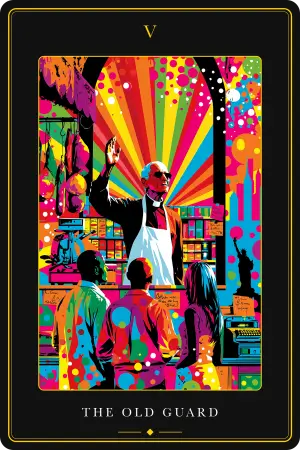
The Calligraphy Master sa bawat deck

Muling inilalarawan ng bawat deck ang parehong arketipo. Ihambing ang sining, pagkatapos ay magbukas ng deck upang basahin ang buong interpretasyon nito.

Imagery and symbolism

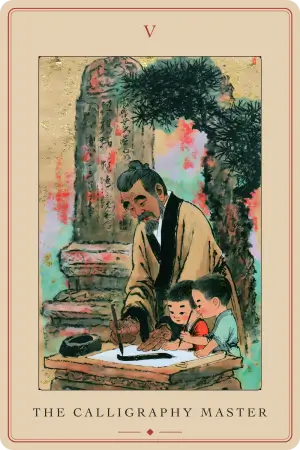
In the Tarot of Beijing the Hierophant is the Calligraphy Master (国子监先生), and the throne between two temple pillars becomes a stone table in the courtyard of the Guozijian, the old Imperial Academy of Beijing. The card is drawn in the deck's Feng Zikai manner: calm brush lines, grey and black washes, accents of vermilion and teal on gold-flecked kraft paper, a small red seal in the upper corner. Everything cosmic here is shown through the small and human.

The master leans over the table and guides two boys through their first brushstrokes, his weathered hand closed over a small one that holds the brush. This replaces the raised hand of blessing in the classical card. Blessing in Beijing is not a gesture made at a distance but a hand placed over yours. The two boys stand where the two tonsured monks kneel in the Rider-Waite image, yet they are not supplicants. They are children, cheeks still round, one in red and one in teal, because tradition here is received at the very beginning of life rather than after any renunciation of it.

Behind the master rises a stone stele carved with the classics, weathered, moss-touched, its characters half-legible with age. The stele is the card's crown and its twin pillars at once, the fixed vertical axis of transmitted knowledge. Yet the master's back is to it. He does not read from the stone; he absorbed it long ago, and now it passes through his hand into fresh ink. The freshly written character on the white paper, wet and black and alive, answers the faded characters on the stone: the same words five hundred years apart, and the whole meaning of the card lies in that gap being crossed by one old hand and one small one.

The pine spreading over the scene is the traditional emblem of constancy and long life, evergreen through every Beijing winter, sheltering the lesson the way lineage shelters a student. The ink stone at the table's edge is the humble vessel of the art: knowledge must be ground patiently, a little at a time, with water and pressure, before a single stroke is possible. The blank paper before the children carries the weight the crossed keys carry at the classical Hierophant's feet. It is the door not yet opened, the sentence not yet written, everything the tradition exists to make possible rather than to prevent.

Core meaning

The Calligraphy Master is Beijing's Hierophant, and the deck states his meaning in one line: tradition here is not a wall but a hand passed from hand to hand. Where the canonical Hierophant dispenses doctrine from a throne between two grey pillars, this old man says nothing and simply closes his hand over the student's. His subject is transmission itself, the warm mechanics of one hand teaching another how to begin.

He is the Mentor of the deck, the Keeper of the Lineage. In this tarot the Hero is the Newcomer of Card 0, who stepped off the train with a paper address in his fist; sooner or later that address leads him to a courtyard where an old man puts a brush in his hand and corrects his grip without a word. The master does not give the Hero power. He gives the Hero form: how to sit, how to begin, how to fail correctly and try again. Through him the Hero learns belonging, to a school and a craft and a chain of hands reaching back past the oldest stele.

Unlike the archetypal priest, the master claims no monopoly on the sacred. His authority ends deliberately, since the whole aim of his teaching is the day the student's hand no longer needs his over it. He is the one figure in the Hero's journey whose success is measured by his own growing unnecessariness. That is why he is not writing his own masterpiece on this card. He is holding a child's hand, and the character taking shape is, in every sense, not his.

Upright meaning

Upright, the Calligraphy Master appears when the situation asks you to learn the way things have long been done before you attempt to do them your own way. This points to structured study, apprenticeship, examinations, joining an established institution, or seeking counsel from someone who carries decades of practice in their hands. Find the person whose hand has made this stroke ten thousand times and let them guide yours. Do not skip the fundamentals; in Beijing no one blows a sugar dragon or pours from a long-spout kettle without years of copying the basics. The forms are not the opposite of freedom. They are its foundation.

In love. The relationship done properly: introductions to the family, tea poured for the elders, intentions stated aloud. It strongly favors formalization, the engagement and the registry office and the banquet, and unions built on shared values and the patient daily practice of care. One partner may be the other's teacher in some domain. This is the pine over the courtyard, evergreen and slow-growing, giving shade for decades.

In career. Structured environments: education, government, established companies, skilled crafts, and the apprenticeship dynamic wherever you already are. Progress runs through learning, a course or certification, a probation served with humility, a senior colleague whose corrections are worth more than praise from anywhere else. If you are experienced, the card assigns you students, and your standing will grow through how you teach. It promises the recognition Beijing respects most, earned so thoroughly that no one disputes it.

In finances. The old, slow, proven road. Income comes from qualification and reputation, the diploma and the license and the name that decades of honest work have made trustworthy. It favors conservative instruments over speculation. Help may arrive through a mentor or an institution, sometimes as an inheritance of method rather than of cash. Money spent on learning fundamentals returns for a lifetime, so keep accounts the way the master keeps the copybook, regularly and legibly.

In health. Discipline as tenderness, the way Beijing's mornings have always known it: the elders at the Temple of Heaven at dawn, the same slow forms every day for forty years. The card favors teacher-led practice, tai chi and qigong, swimming with a coach, the traditional cuisine eaten at traditional hours. It values a mentor for the body whose corrections you actually follow, and regularity over intensity. Beauty here is cumulative, like calligraphy, the health that ten thousand identical mornings quietly deposit.

Reversed meaning

Reversed, the Calligraphy Master shows the hand on top pressing too hard, or the student wrenching free of it. The academy has become a wall instead of a doorway: rules recited without meaning, correction without warmth, a curriculum that no longer answers the questions being asked. It can indicate quitting a course of study, conflict with a mentor, distrust of official advice, or the discovery that the teacher's stroke was never as perfect as it looked. Sometimes it simply means there is no master available and you must copy from the stele alone, by lamplight, forgiving yourself the crooked strokes. Distinguish the tradition from the person currently administering it. Do not burn the copybook because one teacher was cruel.

In love. The copybook has replaced the couple. The relationship may be correct in every visible stroke, approved by the families and proper on every holiday, yet empty on the paper: duty performed, love unwritten. It warns against marrying to satisfy the lane's expectations and against a partner who corrects you like a strict examiner. Alternatively it shows a couple in open rebellion against tradition, writing their own crooked and living script, and asks you to know whether that is freedom or mere reaction.

In career. The workplace has become a dead academy. Rules get recited, not applied; management corrects your grip while the paper stays blank; your ideas are rejected because that is not how it is done here. It can show a toxic mentor who keeps you small to keep you dependent, an exam failed or endlessly postponed, or your own stubborn refusal to learn the fundamentals of a role you consider beneath your talent. If the school is dead, leave it without burning it. If your pride is the problem, pick the brush back up.

In finances. Two opposite failures. The first is calcified conservatism, money kept so safely it quietly shrinks, blind trust in an advisor merely because they are senior. The second is reckless rejection of the rules, dodging taxes and skipping contracts and despising financial discipline as beneath your talent, crooked strokes in the ledger that get read aloud later at the worst moment. It can also mark money lost to institutions themselves, fees and formalities and an expensive course that taught nothing. Reread every document before signing.

In health. Discipline curdled into tyranny or truancy. On one side a regime enforced like a cruel examiner, punishing diets and joyless training, the body treated as a student who is never good enough. On the other, total abandonment of routine, every fundamental skipped. It can also point to bad authority over your health: outdated advice followed out of deference, a clinic trusted for its reputation rather than its results. Reset to fundamentals held kindly, modest consistent practice and guidance you verify.

Historical notes

The card began as a literal churchman. In the earliest luxury decks, such as the Visconti-Sforza tarot of around 1450, the fifth trump was titled Il Papa, the Pope, enthroned in the triple tiara and holding the keys to the kingdom. He sat beside L'Imperatore as one of the two competing powers of the age, church and empire. As the imagery standardized in the Tarot de Marseille he stayed Le Pape, a bearded elder in a red cloak and blue robe, holding a triple cross and blessing two small tonsured acolytes kneeling before him.

The rename to a universal figure came from the French occult revival. In 1781 Antoine Court de Gebelin, seeking to de-Christianize the deck, called the card Le Grand-Pretre, the High Priest. In 1856 Eliphas Levi dubbed him the Grand Hierophant, borrowing the title of the chief priest of the Eleusinian Mysteries, the initiator who displayed the sacred objects to initiates inside the Telesterion. The word itself is Greek, hierophantes, one who shows the holy. The 1909 Rider-Waite-Smith deck fixed the modern image: a figure on a stone throne between two grey pillars, a triple crown, one hand raised in benediction, crossed gold and silver keys at his feet, two acolytes robed in roses and lilies.

The Tarot of Beijing keeps the function and drops the papacy entirely. There is no throne, no tiara, no keys, no doctrine handed down from a height. What remains is the pure act the card was always about: an elder placing his hand over a younger one so that a skill can pass between them. The stele carries the classics the way the stone throne once carried authority, but the master has his back to it, because the point was never the stone. The point is the next hand.

Correspondences

Number. V, and in this deck the number drawn exactly on a hinge: behind the master the carved past, before the children the blank future, between them one living hand. Five sits at the center of the row from one to nine, the crossing point between what has been and what is coming. It is the number of the human being, head and two hands and two feet, and of the five brushstroke elements from which every Chinese character is built. Five brings movement into the stable square of four, which is why the most conservative arcana carries the digit of change: transmission is not preservation in a jar but a living transfer, and every generation the ink must be ground fresh.

Astrology. Taurus, the fixed earth sign ruled by Venus. Nothing is more Taurean than calligraphy taught in the old academy: the same stroke repeated a thousand times, the ink ground by hand, mastery measured in years rather than moments of inspiration. Taurus values what endures, and this card is built of enduring things, the stone stele and the evergreen pine and the old man whose knowledge outlasted the dynasty that certified it. Venus softens the authority, since the traditions the master protects exist to bring harmony and shared values, not obedience for its own sake.

Element. Earth, the patient bodily accumulation of skill. Knowledge here is ground like ink, a little at a time, with water and pressure, and it settles into the hand the way soil settles: slowly, and then permanently.

Kabbalah. His Hebrew letter is Vau, the nail or hook, on the path from Chokmah to Chesed. Just as a nail joins two pieces of wood, Vau joins two things the card holds together, the raw wisdom of the stele and the accessible doctrine the child can actually receive. The master is the nail between five centuries ago and tomorrow morning.

Elemental dignity. As fixed earth the card steadies the fire cards beside it and grounds the airy ones, lending structure and staying power. Its risk beside other earthy or fixed cards is inertia, order hardening into refusal of change.

Sikolohikal na pananaw

Inilalarawan ng Maestro ng Kaligrapiya ang isang isip na nakaayos sa pagpapasa, isang tao na pinakaramdam ang kahulugan ng buhay kapag mayroon siyang naibabahagi. Ang kanilang panloob na mundo ay nakabalangkas at tapat, sa mga gurong matagal nang pumanaw, sa mga pamamaraang subok na ng panahon, at sa mga pamantayang wala nang sumusuri maliban sa kanilang sariling konsensya. Maaga nilang natanggap ang awtoridad at nakipagkasundo dito, kaya ang mga patakaran ay parang maayos na kasuotan kaysa isang kulungan. Motibasyon nila ang pagpapatuloy at tahimik silang natatakot sa pagkasira, at ipinapakita nila ang pag-ibig sa pamamagitan ng pagwawasto at paglaan ng oras kaysa sa mga salita: ang kamay sa ibabaw ng kamay, hindi ang talumpati.

Sa kanilang pinakamabuting kalagayan, nagdadala sila ng pasensya na hihigit pa sa anumang pagkadismaya ng isang mag-aaral, isang katarungang tatanggapin ng dalawang pamilya sa kalye, at ang husay na iparamdam sa isang baguhan na ang mga pangunahing kaalaman ay isang karangalan kaysa isang parusa. Dinadala ng mga tao sa kanila ang kanilang mga hindi pa buong simula, mga unang burador at mga unang trabaho at mga unang anak, alam na sila ay gagabayan at hindi huhusgahan. Sa ilalim ng stress, naninigas ang parehong isip. Ang pagwawasto ay nagiging pagkontrol, ang pamamaraan ay nagiging pagkakakilanlan, at ang anumang paglihis ng isang mag-aaral ay tila personal na pagtataksil. Ipinagkakamali ng hindi malusog na bersyon ang pagiging kinakailangan sa pagiging minamahal, at mahigpit na hinahawakan ang maliit na kamay kaya walang karakter na naisusulat. Naaalala ng malusog na bersyon na ang layunin ay palaging ang maging hindi na kinakailangan pa.

Ang Maestro ng Kaligrapiya sa iba't ibang deck

Rider-Waite-Smith. Ang kanonikal na Hierophant ay nakaupo sa isang batong trono sa pagitan ng dalawang abong haligi, nakasuot ng tatlong patong na korona, ang isang kamay ay nakataas sa pagbabasbas, may nakakrus na ginto at pilak na mga susi sa kanyang paanan, at dalawang nakadamit na sakristan ang nakaluhod sa kanyang harapan. Pinapanatili ng Maestro ng Kaligrapiya ang ugnayan ng pagtuturo at iniiwan ang simbahan. Ang mga nakaluhod na monghe ay nagiging mga nakatayong bata, ang kamay na nagbabasbas ay nagiging kamay na nakapatong sa isang maliit na kamay, at ang mga susi sa paanan ay nagiging blangkong papel sa mesa.

Tarot de Marseille. Ang klasikong Le Pape ay isang balbaserong matanda na nakasuot ng pula at asul, may hawak na tatlong krus at kumukumpas sa dalawang batang nakatalikod. Pinapanatili ng Beijing ang matalik na tagpong iyon ng isang nakatatandang nagtuturo sa dalawang nakababata, ngunit inaalis ang mga damit-papa at inilalagay ito sa bakuran ng akademya sa halip na sa simbahan.

Crowley-Thoth. Ang Hierophant ni Crowley ay labis na nagpapakita ng Taurus, suportado ng isang toro at ng katapat nitong elepante sa India, kasama ang isang babaeng may espadang nakatayo sa kanyang harapan bilang si Venus sa anyong pandigma. Ibinabalangkas niya ang baraha bilang pagsisimula sa isang bagong espirituwal na kapanahunan. Ibinabahagi ng deck ng Beijing ang pagkakakilanlan ng Taurus at ang tema ng pagsisimula, ngunit pinapanatiling pambahay ang tagpo at ordinaryo ang pagsisimula, isang unang pagguhit kaysa isang kosmikong misteryo.

Modernong muling pagbabalangkas. Gumagana ang mga kamakailang independiyenteng deck upang iligtas ang mga tema ng pag-aaral at komunidad mula sa patriyarkal at pansimbahang mga pasanin nito. Ipinapakita ng The Wild Unknown ang isang uwak sa ibabaw ng susi; ibinabalangkas ng Motherpeace ang pigura bilang isang babaeng nakatatanda na nagpapadali ng panghabambuhay na pag-aaral; ipinapakita ng mga queer deck tulad ng Hierophanies Tarot ang isang non-binary na nakatatandang nag-iimbita sa iba sa isang piniling pamilya. Kabilang ang Tarot of Beijing sa kilusang iyon, ang maestro nito ay isang ordinaryong guro na ang awtoridad ay nagmumula sa sampung libong pag-uulit sa halip na mula sa anumang pulpito.

Sa kumbinasyon at konteksto

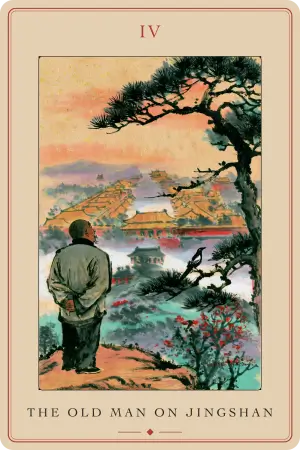
Hinihila ng Maestro ng Kaligrapiya ang anumang spread na kalalagyan nito patungo sa pag-aaral, tradisyon, at pormal na panata, at nagtatanong sa Guozijian tungkol sa mga baraha sa paligid nito: ano ang iyong itinatayo na maaaring manahin ng isang mag-aaral? Sa tabi ng Ang Baguhan, ang Fool ng deck na ito, siya ang bakuran na palaging patutunguhan ng papel, ang naghahanap na nakilala ang gurong nagtuturo sa kanya kung paano magsimula. Kasama ang Ang Matanda sa Jingshan, ang Emperor ng deck na ito, ang makamundong awtoridad ay pumapatong sa tradisyon ng institusyon, isang senyales upang magtrabaho sa loob ng itinatag na istruktura o pormal na pagtuturo.

Pinapatatag ng kanyang nakapirming lupa ang mga mas pabago-bagong kapitbahay. Sa tabi ng mga baraha ng pighati o kakapusan, binabasa siya bilang ang payo na hinahangad at ang kanlungan na inialok, ang therapist o ang nakatatanda o ang institusyon na sumusuporta sa isang tao sa mahirap na daan. Sa mga baraha ng pagkakaisa, itinuturo niya ang isang pormal, dokumentado, at pangmatagalang pakikipagsosyo, ang kasal na pinagpala ng parehong pamilya kaysa sa palihim na pagtatanan. Malapit sa mga baraha ng paghihimagsik o biglaang pagbabago, minarkahan niya ang tensyon na kasabay na ipinanganak ng baraha, lima bilang ang panginginig ng pagbabago na dapat sagutin ng tradisyon, at ang pagbasa ay umiikot kung ang lumang anyo ay binabago o idinedepensa lamang.

Kapag siya ay patuloy na lumalabas sa pagbabasa, ituring siya bilang isang tagubilin kaysa sa isang tao: ngayon, matuto nang maayos o magturo nang maayos, nang walang gitna. Hanapin ang mas matatag na kamay at hayaan itong gabayan ang sa iyo, o ilagay ang sarili mong kamay sa isang taong hindi gaanong karanasan. Alinman dito, pinapaboran ng araw ang klasikong ruta kaysa sa shortcut, ang opisyal na daan, at ang magalang na pagtawag sa nakatatanda. Basahin kung ano ang nakaukit sa batong stele bago ka magsulat ng anumang sarili mo.

Mga tanong para sa pagninilay

  • Kaninong mas matatag na kamay ang maaari mong hayaang gumabay sa iyong unang pagguhit ngayon, at anong pagmamalaki ang pumipigil sa iyo na humingi ng tulong?
  • Saan mo idinedepensa ang isang baluktot na pagguhit bilang istilo, kung ang tapat na gawin ay kopyahin muli ang pangunahing kaalaman?
  • Kung ang obra maestra ng isang guro ay ang susunod na kamay sa halip na isang scroll, sino ang tahimik mong tinuturuan, at niluluwagan mo ba nang sapat ang iyong hawak upang makasulat sila?

Ang pangkalahatang kahulugan ay sumusunod sa pagbasang Rider-Waite-Smith — ang sangguniang ginagamit sa buong Tarot Academy. Magbukas ng partikular na deck sa itaas para sa sarili nitong interpretasyon.

Mga madalas itanong

Pinakabagong Post

Tuklasin ang sinaunang karunungan ng mga tarot card at buksan ang mga misteryo ng iyong espirituwal na paglalakbay. Ang aming blog ang iyong daan tungo sa pag-unawa sa mayamang simbolismo, kahulugan, at praktikal na gamit ng pagbasa ng tarot.