
 JA (日本語)



小アルカナ · カップ (水)
カップの4
スミスは、青々とした木の下で腕と脚を組み、目の前の芝生に3つのカップを置き、決して視線を向けようとしない雲から差し出された4つ目のカップを持つ若者を描いた。
Read the complete guide: カップの4のタロットカード:その象徴と意味の完全ガイド
カードの概要
- 数秘術
- 4
- エレメント
- 水
- 占星術
- 蟹座の第3デカン(7月12日〜21日)、支配星は月
- カバラの小径
- チェセド(慈悲)、4の数札が位置する場所
- 時期
- 蟹座の最後の10日間、内面へと向かう中夏
- YES / NO
- 正位置はいいえ、または待機。逆位置ははい
正位置
無関心
熟考
退屈
不満
離脱
逃した機会
自己満足
再評価
逆位置
覚醒
新しい視点
再関与
受容
意識的な拒絶
現実逃避
頑固さ
無関心の克服
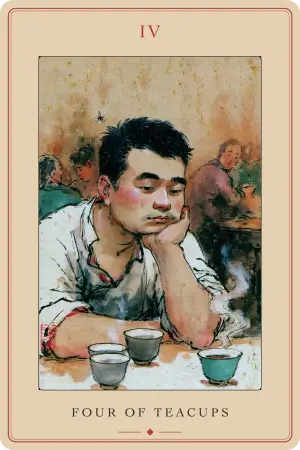
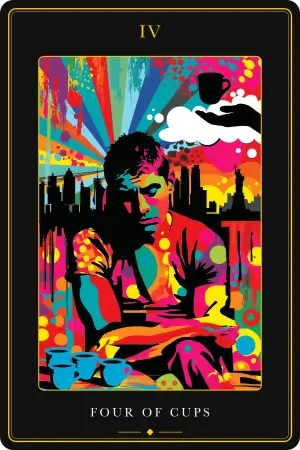
各デッキのカップの4
どのデッキも同じアーキタイプを再解釈しています。アートワークを比較し、デッキを開いて詳細な解説を読みましょう。
象徴性とイメージ
パメラ・コールマン・スミスは、このカードを身体によって表現された拒絶として描いた。一人の若い男性が大きな木の下で胸の前で腕を組み、脚を組んで地面に座っており、本デッキはこの姿勢を、世界が提供するものや自らの状況の変化に対して物理的に背を向け、心を閉ざした姿として読み解く。組まれた腕と脚は閉じられた回路を形成している。何ものも入らず、何ものも出ない。
彼のすぐ前の芝生には3つのカップが立っている。本デッキはそれらを、かつては味わう価値があったものの、今では色あせて意味を失った過去の喜びや快楽と解釈する。それらは奪われたわけではない。手に届く場所に置かれたまま、顧みられることがないだけである。
4つ目のカップは、場面の外側から完全に浮上し、雲から現れた実体のない手によって差し出されている。この手はスミスが各スートのエースやいくつかの数札で繰り返し用いた手法であり、ここでも同様の役割を担う。本デッキは、雲を助けを差し伸べる天や霊的な力、カップを予期せぬ提案や機会と読み解く。しかし若者はそれに何も返さない。自らの内面的な感情にとらわれ、差し出されているものの価値に気づくことも、評価することもできない。
周囲の情景はあらゆる点で彼の態度と対照をなしている。彼のマントの緑色と周囲の木の緑について、本デッキは成長と生命の象徴であり、彼が無視している解決策や幸福への見通しを示していると読み解く。同時にその緑は、自然との結びつき、集中、静けさを表す。したがってマントは、彼が得た平静であると同時に、拒絶している成長でもあるという二重の意味を持つ。頭上の木は頑丈で健全であり、安定と安全をもたらす。青空と晴れ渡った日は、彼が十分に感謝することなく享受している平和と調和を意味する。背景の山だけが困難と障害を表している。
結果として生まれるのは意図的な対比である。本デッキはそれを直接指摘する。色彩豊かな心地よい風景と、その中央に座る人物の内面的な不満との対比である。絵の中で何一つ悪いことは起きていない。それこそが、このカードが描写している問題なのである。
この姿勢は意図的に曖昧に保たれており、伝統的には幅広い解釈がなされてきた。一端では、若者は菩提樹の下のブッダのように、4つ目のカップを受け取っても同じことの繰り返しに過ぎないと考え、浅い感情の捧げ物から離れてより高次な真実に向かう木の下の修行者である。他端では、半分しか入っていないグラスを見ていじける甘やかされた子供であり、習慣に縛られて既に手にあるものに感謝できない姿である。折りたたまれた腕の中には、その両方の読み方が同居している。
核となる意味
本デッキは、このカードを内面的な離脱と感情への集中、すなわち自身の感情状態や人間関係を精査する反省と自己分析の時期として表現する。無関心さと並んで、一般的な解釈が見落としがちな要素、すなわち内省と内なる力、自己浄化と自己分析に向けられたエネルギーを強調する。安定は本物である。そして退屈もまた本物である。
本デッキが繰り返し立ち戻るのは、快適さが傾く瞬間である。満足感が停滞へと変わり、状況を変える動機が失われた状態、内省と充実感がマンネリや不意の内面的な不満と同居している状態を描く。最も鋭い表現によれば、感情的なバランスは安定の代償として引き換えにされたのかもしれない。より大きなものを期待して提案を断った結果、今や何も届かなくなっているのである。
根底にあるエレメントの論理は葛藤を示している。カップは「水」であり、生きて循環するためには動き続けなければならない。そして数字の「4」は安定、境界、固められた構造、すなわち定住した生活の4つの壁と4つの角を表す。水をそこまで厳しく縛り付ければ、水は淀んだ池となる。小アルカナの「4」の中で、立ち止めを苦いものに変えるのはカップだけである。ワンドは祝福し、ソードは休息し、ペンタクルは溜め込み、カップは静止する。本デッキの数秘術も別の角度から同じ警告を発しており、習慣的な枠組みを破って新しい試みをしない限り、数字の4は停滞と不動の象徴になると教える。
本デッキの各カテゴリにおいても、この読み方は一貫している。金運では喜びなき安心感。ビジネスでは未実現の成長を見過ごす満足。仕事ではマンネリに変わった休息。恋愛では単調になった安定。人間関係全般では社交からの意図的な内向きへの転換。身体面ではどう改善すべきか分からない体への不満。6つの異なる部屋で、まったく同じ組まれた腕が描かれているのである。
正位置の意味
正位置において本デッキは、現状への不満、無関心、そして新しい機会を見つめて受け入れることへの乗り気でなさとして読み解く。ここには退屈、さらに先へ進む動機の欠如、そして変化に対する受動的な抵抗が存在する。その下に潜むより深い動きとして、本デッキは自己分析、深い熟考、既に手にしている利益や価値観の再評価、物質的なものへの幻滅、秘教的には精神性の追求を挙げる。4つ目のカップの拒絶は、単なる過ちではなく何かの始まりとなり得る。
添えられた推奨事項は具体的である。現状を受け入れ、今持っているものに感謝すること。現在の環境が実際にもたらし得る喜びを見過ごすことなく、新しい機会に対して心を開いておくこと。価値観や優先順位を再評価し、自分の内面世界に時間を割き、ネガティブな思考をクリアにしてエネルギーを回復させる休息を取ること。本デッキは、一見期待できなさそうな可能性に対しても心を開き、身の回りで起きていることに注意を払うよう促している。
恋愛関係において。 安定と感情的な疲労および退屈の混在。機会が存在しても気づかれず、本デッキは内省の時期においてチャンスが見過ごされがちであることを明確に指摘する。関係は単調になり、刷新を必要としている。その傍らには本格的な停滞がある。無関心や冷淡さ、感情の減退または消滅、変化を恐れて心を閉ざしているかのように新しい可能性を認めようとしない姿勢。その結果、他の見通しが見出されないまま、物事が思うように進まない感覚が残る。
人間関係全般において。 内面的な孤独と自己反省であり、注意が内側に向かうにつれて社交的なつながりは二次的なものとなる。現在の関係やコミュニケーション方法への不満から、個人としての体験に集中するために社交生活から身を引くことがある。本デッキはここで慎重であり、距離を置くことは関係を断ち切ることを意味せず、この中断は繋がりを見直し新たな成長の道を見つける機会であると説明する。また、社交生活に対する本物の疲れである飽和状態を指摘し、そこから離れるべき交流を見極めるという有益な気づきが生まれるとする。
仕事において。 活発な段階の後に訪れる休息と安定の時期であり、達成したことを再評価し経験を吸収するためのものである。また、外からは順調に見える仕事に対する内面的な不満を露わにする。マンネリが定着し、熱意が失われ、本デッキは何かがうまくいっていないという直感が静かにキャリアの進展を阻んでいる状態を描く。どの夢が依然として本物で、どれが現実と合わなくなったのかを整理するために自己反省が必要である。問題は安定ではなく、変化のなさである。
ビジネスにおいて。 現状への満足と、新しいプロジェクトや提案を受け入れることへの消極さ。本デッキは、未実現の機会や検討されていない成長の選択肢が存在するため、より注意深く周囲を見渡すよう促す。満足をもたらさない似たような提案の繰り返しという独特の退屈さを指摘する。日常業務の運営と変化がもたらす可能性の探求とのバランスを取り、この中断を計画や休息に充てることが推奨される。事業がもはや情熱を与えてくれないなら、戦略を再考すべきである。
金運において。 停滞とセットで訪れる安定。計画は物質的な豊かさをもたらしたものの、そこに喜びは伴わず、状況が安定しているにもかかわらず成長の不在がいら立ちを生む。本デッキは、飽和状態、逃した機会、手に入らない何かを求める欲求を読み解く。条件は十分であるが満足のいくものではない。リスクを取ったり実験したりしたいと思いながらも、既存のものだけに自分を制限してしまうのである。
身体面において。 身体的な不満。古い食習慣に飽き、エクササイズが効果を生んでいない状態。変化が必要であると知りながら、明確なアイデアも動機もない。本デッキは、体型への不満にとらわれることこそが、改善のための実際の機会を見過ごさせる原因になると警告する。また、内面世界への深い集中によって身体が無視され、関心が運動から瞑想、リラクゼーション、孤独へと移行する感覚の過剰負荷についても言及する。
逆位置の意味
逆位置になると、閉じ込められていた水が堤防を破る。本デッキは、意識の目覚め、状況への新たな理解、そして停滞の後の新鮮なスタートとして読み解く。すなわち、無関心の克服、新しいものへの恐れの克服、現実への回帰、逃した機会の取り戻しである。人物は顔を上げる。彼は瞑想や深い熟考をあとにし、人生が提供するものを受け入れ、新たな現実を受け入れる決断力を示す。
また本デッキは、逆位置を別の角度からも解釈しており、その両方の意味が有効である。より暗い意味においては、動機の欠如、ポジティブなものを見ようとしない態度、過去への執着、現実とのつながりの喪失、助けを拒むことから生じる無力感や内面的な虚無感を指す。時には、単に手にあるものを評価できない過度に批判的または過敏な性格を表すこともある。推奨されるのは、その感情を認識し、喜びの源を内面に求め、外部の助けが必要であることを認め、新しい刺激を取り入れることである。
より広い伝統的解釈は、覚えておくべき第3の可能性を付け加える。逆位置は、カップが明確に見えた上で意図的に断られたことを意味する場合がある。その人物は提示されたものを見つめ、それが自分向けではないと判断する。それは無関心ではなく洞察力であり、伝統的には高い感情的知性の印とされる。
恋愛関係において。 不満、絶望、無関心、不一致、不誠実、古い感情が薄れ新しい感情がまだ訪れていない状態。本デッキは、高すぎるかもしれない期待を見直し、見過ごされているものに気づき、自分の感情に耳を傾けるよう求める。また、問題があることを否定したり変化への恐れから新しい関係を避けたりする、現実拒否を指すこともある。その一方で、同じ逆位置が新たな関心、過去の過ちの修正、古い絆の再構築をもたらすこともある。
人間関係全般において。 人脈を広げコンフォートゾーンを出る必要性。コミュニケーションにおける激しい変化が途中で対立や誤解を生むこともある。本デッキは周囲の人々とのより深い統合と、慎重で焦らない歩みを求める。その警告は鏡像のようである。快適な世界から出ることを拒むこと、関与への消極さ、他者の視点に耳を傾けられないことによって引き起こされるコミュニケーション障害である。
仕事において。 逃した機会、不満、自己陶酔、専門的な成長のチャンスが活かされない状態。行き詰まりや落ち込み、繰り返される業務への退屈を感じる。本デッキはこれを、前へ踏み出す代わりに不満に固執する現実逃避と呼ぶ。視点が固執しすぎたり新しい提案が無視されたりすると機会が失われ、ネガティブな側面に焦点を当てることがそのまま職業上の停滞につながる。
ビジネスにおいて。 不注意や変化への拒否によって失われた機会。馴染みのあるパターンへの頑固な執着が革新を損なう。単調なアプローチは停滞を生み、本デッキは特に過去の失敗にとらわれて新しい提案を過小評価することに警告を発する。インスピレーションやエネルギーが尽きたことから生じる行き詰まりを戒める。柔軟性と再考された態度こそが、事業を再び成長させるのである。
金運において。 野心の再評価と金銭的展望への新たな関心、単調さや固定観念からの解放。本デッキは、リスクはあるが有望な選択肢や、以前拒絶した重要な決断を指し示す。価値観の再評価によって財政的バランスが回復し、お金に関する古いネガティブな観念が払拭され、視点が変わることで見落としていた機会が見えるようになる。
身体面において。 身体的な再評価、身体への従来のアプローチがもはや役立たないという認識。本デッキは、変化への準備、新しいライフスタイルの模索、古い習慣からの解放を読み解く。食事の調整であれ異なる運動の模索であれ、最初は動機が欠けているかもしれないことを素直に認め、その気乗りのなさを、バランスが戻る前に対処すべき疲労や感情的バーンアウトに由来するものと捉える。
ここにはさらなる影が存在する。このカードは現実逃避と、液体を司る「水」のエレメントに結びついているため、逆位置は物質乱用、現実から完全に逃れるためのアルコールや薬物の使用、酒に溺れて失われた日々を示すことがある。受け入れやすいスプレッドでは、まさにそこからの脱却、禁欲を決意することとして読み解かれる。秘教的には、地に足のついていないサイキックワーク、トランス状態の長引くこと、物理的現実との再接続の必要性への警告でもある。
歴史的解説
スミスが描いた場面は、古い伝統の構図そのままではない。ライダー・ウェイト・スミス版とトート版の両方に先行するマルセイユ版タロットにおいて、カップの4は物語のない厳密な幾何学模様である。中央の柱のような花を囲むように、カードの四隅に様式化された4つのカップが配置されている。それが描くのは「封じ込め」である。カップは感情の核を保護する外周を形成しており、伝統はこのカードを「女王の慈悲」および安全な養育の愛情豊かな土台と読み解く一方で、感情的な身内と部外者を分かつ厳しい境界のカードとも位置づける。人間関係のリーディングにおいて、マルセイユ版の4は、新しいパートナーを拒絶し新参者を警戒の目で見つめるほど強固に結ばれた家族を意味することがある。守りをもたらす快適さは、大人が成長するためには最終的に突破されなければならない。
ウェイトとスミスはこの図形を人物に置き換えた。RWS版は木の下の地面に1人の人物を配置し、抽象概念に顔、姿勢、そして風景を与えることで、感情の封じ込めを他者が目撃できる行為へと変えた。雲から差し出される手は、この議論に対するスミスの付け加えた要素である。マルセイユ版には提案がなされ拒絶される様子を描く手法がなかったが、RWS版はその拒絶そのものを主題としたのである。
クロウリーとレディ・フリーダ・ハリスはトート・タロットにおいて逆方向へ進み、秘教的幾何学を優先して人間的な物語を排除した。彼らはカードに「贅沢」というタイトルをつけ、「腐敗の種子」という暗い副題を与えた。飾られた4つの黄金のカップが、波立つ水色の海、すなわち蟹座の占星術的な水の上に座し、月の銀灰色の雲の下、中央のハスから伸びるパイプ状の根によって満たされている。システムは密閉されている。植物の生命は外の世界から遮断され、自らの構造的完璧さの中に閉じ込められている。これこそがクロウリーがそれを「行き止まり」および「完全な停止」と呼んだ理由である。黄金の輝きの裏には、虚無という灰色の悲哀が横たわっている。関係は快適で完全に当然のものとみなされ、リスクから守られているが、それゆえに水は濁り始めているのである。
マルセイユ版の境界線とトート版の図形の間で、RWS版は「カップの4」を一般的な読者にとってわかりやすいものとした。そのため、カードの名が挙げられた時、今日多くの人々が思い浮かべるのは腕を組んだ若者の姿なのである。
対応関係
数字。 4。本デッキはこれを着実さと安定性、実践性と確固たる基盤として読み解き、この数字を指示として用いる。論理と合理性のレンズを通して感情を見つめること、それが感情に適用された建設性、体系性、秩序性の意味である。4は物質や物理的環境と密接に結びついており、カードを現実に根付かせ、持続可能な成長が必要とする感情的バランスを指し示す。偶数としてバランスと調和、自らの感情を理解し受け入れることから生まれる内面的な平衡を担う。本デッキはその失敗パターンも明快に述べる。既知のものや馴染み深いものだけに集中すると、安定と秩序の数字は停滞と不動の象徴に変わってしまうのである。
占星術。 蟹座の第3デカン(7月12日〜21日頃)、支配星は月。本デッキはこのデカンを、安全と安定を見つけることこそが恐れずに新しい体験へ開かれることを可能にするという原則に基づき、安全、理解、親密さへの求めとして読み解く。月は母性本能、配慮、理解を表し、感情に直接影響を与えながら人生の周期性を担う。より広い伝統はさらに踏み込む。蟹座は月自身のホームグラウンドであるため、これは極めて強力な配置であり、極度の過敏さや蟹の甲羅への引きこもりに陥りやすい。その読みにおいては、無関心さは一時的な気分ではなく、繰り返される失望によって残された平板さ、あるいは鋭すぎる世界への過敏な反応とされる。
エレメント。 水。本デッキはカードを深い感情性、直感、共感能力に根付かせ、正体が常に説明できるとは限らない感情への没頭の可能性を示す。そのつながりを通じて、カードは直感性と感情の再充電を指し示す。水は生きて流れるために循環を必要とするが、それこそが数字の4という壁によって阻まれているものである。
カバラ。 すべての「4」のカードは、母性的な存在や安全な養育の慈愛に関連する愛と構造化の慈悲であるチェセドに属する。カップは水に対応するため、このカードは感情を通じて表現されたチェセドであり、あまりに完璧で何も求めなくなる安全さを意味する。カバラの解説はその影を直接指摘する。快適さに包まれすぎた人物が外の世界との関わりを拒み、個体化に必要な摩擦を避けて永続的な白昼夢にとどまるという発達の停止である。幼年期はその魅惑の円の中に属する。大人はそれが破られて初めて現れる。
エレメントの尊厳。 水のカードであり、「土」とは心地よく馴染み、「火」を鎮めることができる一方で、「風」はその重々しい静けさを乱す傾向がある。
心理学的視点
本デッキが正位置のカードに関連付ける人々は、熟考に身を置いていることが多い。彼らは状況を注意深く分析し、自らを取り巻く外の世界から離脱しているように見えるが、それは多くの場合、自己実現の段階を通過しているからである。目の前に置かれたものに対して無関心で冷淡に見えることもあるが、それはより異なるもの、より意味のあるものを求めているからに他ならない。彼らは深い理解を求め、自らの内面世界に容易に没頭する。本デッキは彼らが陥っている独特の束縛を指摘する。状況を客観的に見つめながらも受動的なままであり、変化を望みつつ不満を抱え、自分が実際に何を望み、何を必要としているのかを定義できないでいる。
逆位置になると、その人物像は解放される。彼らは内面的な目覚めを経験しており、無関心から抜け出して提示されたものに対して積極的になる。以前は無視していた細部に興味を示し、新しい方向性を模索し、自らの居場所を見つける。感情を再評価して積極的な生活へと戻り、かつて見過ごしていたものを評価することで、新たな機会をポジティブな変化へと結びつける。彼らを特徴づけるのは、変化への準備と新しい体験へのオープンさである。
この人物像の下に横たわるのは、離脱の性質に関するカードの本当の問いである。ひとつの種類は「孤立のトランス」であり、自分は孤独であり根本的に理解されていないという、深く感じられながらも誤った確信である。それは自己限定的な観念によって機能する。4つ目のカップは目の前にあるのにもかかわらず、価値がないという感覚や新しい喜びが再び奪われることへの恐れから拒絶される。習慣的に助けを拒んだり求めなかったりすることは、人生から喜びを奪い、それを解決するはずの手段そのものを弾き返す壁を築く。解毒剤が空中に漂ったまま届けられない間、孤立は自己成就的予言となる。
もうひとつの種類は「意識的な撤退」であり、現代の占い師たちはこれを力強く擁護する。ここでは人物が意図的に安定したエネルギーを守っており、足場が固まるまで混乱を持ち込むことを拒んでいる。それには目先の機会に「ノー」と言える成熟が必要である。ある解説者はうまく表現している。退屈は決してネガティブなものではなく、明確な贅沢である。木の下に座って軽度の不満を熟考できる安全性があるということは、生存の欲求がすでに満たされていることを意味する。区切られた容器に注がれた水が静まるように、この中断は明確な思考を妨げる感情の波を鎮めるのである。
このカードが投げかける問いは、あなたがそのどちらを行っているかである。現在築かれている壁は精神を守っているのか、それとも豊かな人生が必要とする経験をゆっくりと干上がらせているのか。
デッキごとの「カップの4」
マルセイユ版タロット。 中央の柱のような花を囲む四隅の4つの様式化されたカップ、場面も人物もない純粋な幾何学的抽象。カードは境界線そのもの、感情の封じ込め、そして保護された核の周囲への境界の確立を主題とする。女王の慈悲と安全な養育を担うと同時に、感情的な身内と部外者を分かつ役割も持つ。人間関係の解釈では、新しい誰かを迎え入れるには固く閉じられすぎた家族を意味することがある。
ライダー・ウェイト・スミス版。 本ページで扱うバージョンは心理学的なものである。スミスは境界線を人物に変え、健やかな木の下で腕と脚を組んで座る若者、芝生の上の3つの色あせた喜び、そして視線を向けることを拒む雲から伸ばされた4つ目のカップを描いた。本デッキはこの場面を、退屈、無関心、失望、不満と並ぶ内省と内なる力として読み解き、安定と感性を自己浄化への集中へと融合させる。スミスはまた、このカードを有名にした対比を構築した。緑のマント、緑の木々、頑丈な樹木、晴れ渡った青空、背後の障害の山、そしてそのどれも評価しない人物。カードの名が呼ばれた時に大半の読者が思い浮かべるもののすべては、ここから来ている。
クロウリー・トート版。 レディ・フリーダ・ハリスによって描かれ、「贅沢」と題され、「腐敗の種子」の副題を持つ。4つの華麗な金色のカップが、月の銀灰色の雲の下、中央のハスから伸びるパイプ状の根によって満たされ、波立つ水色の海(蟹座の水)の上に座す。人間は登場しない。システムは世界から遮断され、自らの完璧さの中に閉じ込められている。快適さの頂点に達しそれを超えた行き止まりであり、静止した水は腐敗し始めている。黄金の輝きの裏にある灰色の空虚。
後世のデッキ。 ほとんどの現代デッキはRWSの場面に従い、その2つの重要な要素である「組まれた腕」と「無視された贈り物」を維持している。この組み合わせこそが一目でカードを解読可能にするからである。3つの伝統を合わせて読むと、同じ警告が3つの角度から描かれていることがわかる。RWSにおける不満、マルセイユにおける封じ込め、アンドトートにおける長く保持されすぎた快適さの静かな腐敗である。
組み合わせとコンテキスト
カップの4は感情的な静止の基準線を設定し、隣接するカードはそれを破るか深めるかのどちらかを行う。カップのエースと並ぶと、エースこそが雲から差し出されている4つ目のカップであるため、比喩は現実のものとなる。質問者は、地面にある3つのカップという安全でやや色あせた境界と、恐ろしくも新しい感情の始まりとの間に立たされている。恋愛のリーディングでは、一方が溢れる心を差し出しているのに対し、もう一方が引きこもって受け入れる準備ができていない状態を示すことが多い。
隠者と組み合わさると、引きこもりは意図的なものへと変わる。隠者の知恵を求める内省は、カップの4の無関心を静かな平和と満足に近いものへと高め、関与の失敗ではなく精神的刷新のための必要な条件としての距離となる。人間関係のリーディングでは、相手が遠くから質問者のことを深く考えており、静かな孤独感と本物の敬意を交えながらも、実際の接触よりもその距離の安全さを好んでいることを示唆する。彼らはその人物の存在そのものよりも、その人物という概念を愛しているのである。
愚者との組み合わせでは、リーディングは指令へと変わる。愚者の信念の跳躍は感情の恒常性を打破する触媒であり、過去の後悔を解き放ってリスクを取るべきだというメッセージとなる。空に浮かぶカップは永遠には待ってくれないという警告を伴う。運命の輪は選択ではなく運命によって同じ役割を果たし、停滞の中断と、伝統的には15日以内に訪れる新たな関心を約束する。正義は離脱を分析の対象とし、公平性を計って関与が妥当かどうかを原則に基づいて判断する。
より暗いカードとの組み合わせは影を一層鋭くする。死神と並ぶと、状況は退屈で死にそうなほど停滞する。無関心が限界に達し、古い感情の構造が維持できなくなり、質問者は本人が望むと望まざるとにかかわらずマンネリから弾き出される。悪魔と並ぶと、現実逃避が束縛へと固化し、白昼夢や飲酒が対処療法から、自らの麻痺の中に人物を捕らえ続ける依存症へと変異する。
位置や質問の種類も、隣接するカードと同じくらい重要である。イエス・ノー占いにおいてこのカードは非常に頑固であり、見解の合致としては「いいえ(視点を変えるまでは)」、あるいはより正確には「待て」である。タイミングが悪く、何かを追加する前にスペースが必要だからである。境界を設定すること、有害な人物との連絡を断つこと、消耗する提案を断ることについて尋ねられた場合、それは力強い「はい」へと一変する。アドバイスとしては、質問者が今どこにいるかによって2通りに読める。人生から隠れていたのなら顔を上げて関与すること、世界に消耗されていたのなら退去して再充電することである。場所のスプレッドでは、静かな公園や孤独な退去のために設計された場所、自分の考えと一人で向き合うために行く場所を指し示す。
内省のための質問
- スミスは若者の前の芝生に3つのカップを置いた。それらは奪われたのではなく、色あせてしまった喜びである。あなたにとって、今も手に届く場所にあって意味を感じなくなっているものはどれだろうか。
- 本デッキは緑のマントを平静と無視されている成長の両方として読み解く。あなたが今守っている静けさは、あなたを回復させているのだろうか、それとも座り込ませたままにしているのだろうか。
- 雲からの手は、人物が一度も見ようとしないものを差し出している。待っていた形ではなかったという理由で、あなたが最近受け取りを拒んだものは何だろうか。
一般的なカードの意味は、Tarot Academy全体で標準として採用されているライダー・ウェイト・スミス版に基づいています。独自の解釈については、上記の各デッキページをご覧ください。
よくある質問
最新の投稿
タロットカードの意味や象徴、実践的な活用法を解説するブログです。日々のリーディングや学習に役立つ知識をお届けします。




















































