
 FR (français)



Arcanes Mineurs · Bâtons (Feu)
Cinq de Bâtons
Cinq jeunes gens vêtus de tuniques dépareillées agitent des bâtons bourgeonnants sur une colline ensoleillée, chacun attaquant sans que personne ne saigne : le simulacre de combat de Waite, un affrontement qui éprouve plutôt qu'il ne blesse.
Read the complete guide: Le Cinq de Bâtons du Tarot : Un Guide Complet de son Symbolisme et de sa Signification
La carte en un coup d'œil
- Numérologie
- Cinq
- Élément
- Feu
- Astrologie
- Saturne en Lion, premier décan (22 juillet–1er août)
- Sentier cabalistique
- Geburah (Rigueur) en Atziluth
- Temporalité
- Fin juillet, premier décan du Lion
- Oui / Non
- À l'endroit un peut-être difficile · À l'envers non
À l'endroit
Conflit
Rivalité
Compétition
Tension
Ambition
Épreuve de force
Lutte créative
À l'envers
Réconciliation
Compromis
Résolution de conflit
Concession
Refus de se battre
Fatigue
Évitement de la rivalité
Cinq de Bâtons dans chaque jeu
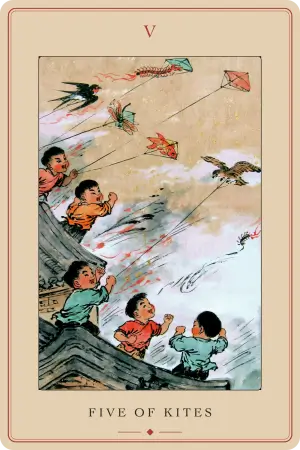
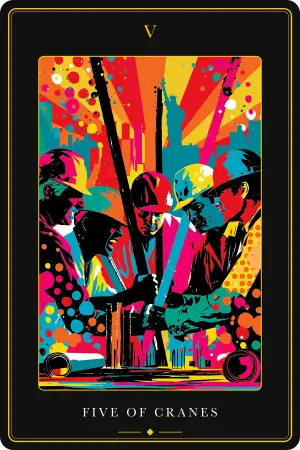
Chaque jeu réinterprète le même archétype. Comparez les illustrations, puis ouvrez un jeu pour découvrir son interprétation complète.
Imagerie et symbolisme
Pamela Colman Smith a situé cette escarmouche sur le sol anglais : les collines verdoyantes qu'elle connaissait à Winchelsea dans l'East Sussex et à Smallhythe dans le Kent, peintes dans des couleurs vives sous un ciel dégagé. Cinq jeunes hommes vêtus de tuniques rouge, jaune, bleue et verte agitent de grands bâtons encore bourgeonnants les uns contre les autres dans une mêlée sans formation ni plan. Waite les décrit dans La Clef Illustrée du Tarot comme une troupe de jeunes agissant « comme pour le jeu ou la lutte », qualifiant la scène de simulacre de combat.
Le jeu interprète cette scène comme une compétition ouverte : cinq hommes cherchant chacun à faire preuve de force et à dominer les autres, un conflit jouant au grand jour. Leurs postures variées comptent : certaines sont agressives, d'autres défensives, chaque position reflétant une stratégie distincte dans le même concours. Tous ignorent leur environnement, concentrés uniquement sur l'adversaire en face d'eux. La carte dresse ainsi le portrait d'un groupe agissant à contre-courant : chacun frappe, personne n'écoute.
Les détails atténuent la gravité de l'affrontement. Les jeunes ne portent pas d'armure, personne ne saigne et aucun bâton ne touche le sol, indiquant qu'il s'agit d'une bataille de surface entre egos et idées plutôt que d'une lutte pour la survie. Les bâtons levés représentent la recherche du succès et les défis qui l'accompagnent ; en tant qu'instruments du Feu, ils véhiculent l'énergie, la passion, l'initiative et la volonté de diriger. Le personnage en vert symbolise la croissance, le renouveau et la régénération au cœur même de la confrontation. Le ciel lumineux et les champs verdoyants rappellent que l'enjeu est réel et que les participants voient clairement leurs objectifs. Malgré la tension, la scène conserve une dimension festive : un concours plutôt qu'une guerre, où la confiance en soi reste accessible à quiconque s'y engage pleinement.
Signification fondamentale
Dans le jeu Rider-Waite, le Cinq de Bâtons incarne la compétition, le conflit et la lutte de pouvoir, plaçant la défense de sa position au centre. La carte montre des relations tendues, des débats, des divergences d'intérêts et des obstacles sur le chemin d'un objectif, tout en insistant sur la croissance personnelle acquise à travers les épreuves. La Golden Dawn titrait cette carte le « Seigneur de la Lutte » ; en 1909, Smith a dépouillé cette lutte de toute malice pour la mettre en scène comme un jeu sportif.
Le chiffre cinq brise le carré stable du Quatre de Bâtons. Après les guirlandes et la célébration, la suite du Feu se heurte au feu des autres. La carte décrit le désordre qui en résulte : un choc d'opinions, une rivalité professionnelle, sportive ou quotidienne, la bataille pour une place au soleil. Personne ne gagne sur l'image, et c'est bien là l'essentiel : la carte s'intéresse à l'engagement dans la mêlée, non à l'issue du combat.
Le conseil du jeu est sans équivoque : battez-vous et défendez votre opinion. Ne craignez pas la compétition et n'abandonnez pas vos convictions. Acceptez le défi, affrontez directement vos adversaires, agissez avec audace et ne reculez pas. Maintenez une énergie compétitive saine tout en cherchant à vivre en harmonie avec les personnes que vous affrontez.
Signification à l'endroit
À l'endroit, cette carte vous place au cœur de la confrontation et de la compétition : un choc d'opinions, des questions en suspens, le besoin de défendre vos intérêts et vos principes. Comme carte du jour, elle apporte un regain d'énergie compétitive et pose une question essentielle : vous battez-vous pour gagner, ou pour être entendu ? Les frictions stimulent ici la croissance, et la confrontation des points de vue vous oblige à affiner votre pensée et à définir ce que vous défendez. Dans un tirage oui ou non, c'est un peut-être difficile : l'objectif est atteignable par l'effort plutôt que par un chemin tout tracé.
En amour. L'ambition et la compétition passent au premier plan : rivalités, répartition inégale du pouvoir, luttes de domination au sein du couple ou tensions venues de l'extérieur. Les désaccords deviennent le point de départ de véritables dialogues, et la passion qui éprouve la résistance du couple peut renforcer le lien. Le jeu indique une voie claire : traverser les épreuves avec une détermination partagée permet à la relation d'en sortir plus solide, fondée sur un respect mutuel accru.
Dans la carrière. Des situations compétitives et une lutte pour le leadership : une période exigeant une préparation minutieuse et une concentration maximale. Mettez en avant vos réussites, appliquez l'ensemble de vos compétences aux tâches complexes et attendez-vous à ce que les divergences de vue engendrent des débats. Ces discussions stimulent la créativité et l'innovation, incitent à une réflexion approfondie et aident à préciser vos objectifs. Dans le monde des affaires, le sujet porte sur la conquête de parts de marché, d'influence ou sur le lancement d'un nouveau produit, avec des négociations délicates demandant méthode et sang-froid.
Dans les finances. Compétition et efforts sur le plan matériel : des défis importants ou des concurrents sérieux, des obstacles sur le chemin de la stabilité. Battez-vous pour vos idées et vos projets afin d'obtenir le financement qu'ils méritent, prenez des mesures actives et engagez-vous dans une saine compétition pour les initiatives rentables. L'effort et la persévérance sont les conditions d'entrée.
Dans la santé. La carte de l'athlète intérieur : épreuves sportives, préparation à un marathon, test intensif de vos capacités ou rivalité esthétique. Elle appelle à l'action, à l'énergie et à l'initiative, suggérant de transformer la rivalité personnelle, y compris envers soi-même, en motivation pour améliorer votre forme.
Signification à l'envers
À l'envers, l'affrontement retombe, et le jeu interprète cet apaisement de deux manières. La lecture favorable annonce la résolution : victoire dans les débats, différends réglés, contradictions levées, réconciliation, compromis et issue trouvée à une situation complexe. La lecture plus lourde pointe l'épuisement : un conflit menant à la fatigue, une lutte ardue sans but précis, la perte de l'étincelle intérieure, la paresse ou la peur de la compétition, voire le refus pur et simple de se battre. Dans un tirage oui ou non, la carte penche vers le non. Le conseil du jeu invite à abandonner les combats inutiles, à privilégier la négociation et à s'éloigner des affrontements qui épuisent l'énergie.
En amour. Évitement des conflits ou fin des hostilités. Lorsque la lutte ouverte cesse, des problèmes plus profonds risquent d'être balayés sous le tapis, la peur des critiques pouvant paralyser la relation ; à l'inverse, la carte peut marquer le moment où l'on laisse derrière soi les querelles épuisantes pour aller vers la réconciliation, l'un des partenaires acceptant la situation ou cédant le pas. L'interprétation dépend du sens accordé à ce silence : véritable paix ou simple ajournement.
Dans la carrière. Des conflits maîtrisables en voie de résolution, ou des confrontations évitées : contourner les affrontements au lieu de s'affirmer pour prendre la direction des événements. Le recul de la compétition peut instaurer une réelle harmonie et un travail d'équipe productif, mais la passivité et le déni des tensions freinent la progression. Dans les affaires, la carte met en garde contre la stagnation déguisée en stabilité, des problèmes ignorés ou une équipe ayant perdu son envie de vaincre.
Dans les finances. Un essoufflement de la lutte : des opportunités et des ressources perdues par inactivité, des efforts insuffisants ou un désintérêt pour la réussite financière. Le remède préconisé par le jeu reste pragmatique : l'organisation, la planification et une avancée méthodique permettent de surmonter la situation.
Dans la santé. Un rapport déséquilibré à l'effort : recherche de performances au détriment de la santé, ou à l'inverse, inertie et refus de s'entraîner. Cela peut aussi signaler l'engagement dans une compétition sans préparation suffisante. Prenez en compte les capacités réelles de votre corps et réorganisez votre routine en conséquence.
Notes historiques
L'histoire de cette carte s'inscrit dans trois traditions bien distinctes. Dans le Tarot Sola Busca de 1491 environ, gravé à Ferrare et premier jeu connu doté de cartes numérales illustrées, le Cinq de Bâtons est personnifié par Caius Lutatius Catulus, le premier plébéien à accéder au consulat romain, représenté sous les traits d'un soldat blessé portant une guirlande et une balance : le conflit vu comme un devoir antique et un équilibre conquis dans l'adversité. Le Tarot de Marseille a ensuite supprimé toute figure humaine, ne conservant que cinq bâtons entrelacés lus par la numérologie, le cinq agissant comme la rupture qui brise la stabilité du quatre.
Smith connaissait le Sola Busca dont le British Museum venait d'acquérir des photographies, et elle s'est inspirée de ses scènes pour composer ses propres illustrations. Cependant, l'atmosphère lui appartient entièrement : des collines anglaises baignées de soleil et des jeunes s'amusant à la guerre remplacent le fatalisme des armures. La Golden Dawn a fourni la trame ésotérique commune à Waite et Crowley : le titre de « Seigneur de la Lutte », le décan de Saturne en Lion et la sphère de Geburah. Le jeu Thoth de Crowley a conservé le titre tout en reconstruisant l'image sous une géométrie rituelle : le Bâton du Grand Adept croisé par les bâtons du Phénix et du Lotus aux fleurs grisâtres, la lutte devenant le feu purificateur de l'initiation. Une curiosité le lie personnellement à cette carte : l'ascendant astrologique de Crowley tombait précisément dans ce décan du Lion.
Correspondances
Numéro. Cinq, le chiffre du changement, de l'instabilité et de la progression : une dynamique active, des conflits, des obstacles et la capacité de les surmonter pour gagner en liberté et aller de l'avant. Dans la numérologie de ce jeu, le cinq associé au Feu met l'accent sur la détermination, l'énergie, la passion et la volonté, vous invitant à canaliser cette énergie et à élaborer une stratégie pour accomplir la transformation requise.
Astrologie. Le premier décan du Lion, du 22 juillet au 1er août, gouverné par Saturne. Le Lion représente le Feu dans toute sa puissance : créativité, affirmation de soi et leadership face au défi sous la pression. Saturne introduit la limitation et la discipline, et le jeu interprète cette influence de manière constructive : structure, ordre, responsabilité et sérieux viennent tempérer l'ardeur du Lion, garantissant que les réussites obtenues soient solides et durables, acquises par la patience et l'endurance. La tradition de la Golden Dawn lisait cette association de façon plus sombre, Saturne amertumant le feu, tandis que ce décan accueille également Régulus, l'étoile royale qui insuffle à la compétition son élan d'orgueil.
Élément. Le Feu, en Atziluth, le monde archétypal de l'émanation pure, présenté ici sous sa forme la plus dense : cinq flammes réunies dans une même arène.
Kabbale. Geburah, la Rigueur ou la Force, la cinquième Sephirah en Atziluth. Geburah est gouvernée par la planète Mars et agit comme la force d'élagage qui élimine le faible pour laisser s'épanouir le fort. La rencontre du Feu d'Atziluth et de cette sphère restrictive produit la friction dont la carte tire son nom. Le cinq associe le premier nombre impair et le premier nombre pair, de sorte que l'opposition est ancrée dans son arithmétique même.
Dignité élémentaire. Une carte de Feu qui se renforce auprès de l'Air et rencontre des tensions avec l'Eau, ce qui signifie que les cartes voisines déterminent si l'affrontement stimule ou épuise.
Perspective psychologique
La personne incarnant l'énergie de cette carte à l'endroit fait preuve d'esprit de compétition et d'ambition : décidée, dynamique, sans peur face aux obstacles, comptant sur ses forces et luttant avec élégance. L'enthousiasme et la détermination prédominent ; elle passe à l'action, s'engage dans de nouveaux projets et affronte la confrontation avec courage. À l'envers, ce même tempérament se dégrade en une tension permanente : des individus entêtés et obstinés qui veulent toujours avoir raison et admettent rarement leurs erreurs, dont le besoin de gagner la moindre querelle s'épuise en stress, jusqu'à ce que chaque conflit devienne une bataille intérieure et que la confiance cède la place à l'indécision.
La dimension psychologique de la carte correspond à ce que le management appelle la phase de tension (« storming ») au sein d'un groupe : des personnalités qui se heurtent aux limites, des egos en compétition pour le leadership, une friction inconfortable mais indispensable. Les équipes qui refusent cette étape n'atteignent jamais la coopération harmonieuse qui la suit. C'est l'enseignement le plus ferme de la carte : éviter l'affrontement ne fait que le différer, et le feu réprimé finit par se changer en agressivité passive et en rancœur.
L'imagerie propose aussi un ton plus léger. Les combattants sont théâtraux, vêtus de couleurs vives et manipulent de grands bâtons sans blesser personne. Beaucoup de conflits quotidiens relèvent de ce registre : un drame sans gravité qui s'évapore comme un orage d'été. L'attitude mûre enseignée par la carte consiste à distinguer les combats qui vous font grandir de ceux qui ne font que distraire la galerie, pour s'investir pleinement et loyalement dans les premiers.
Le Cinq de Bâtons à travers les jeux
Comparée aux autres jeux, la version Rider-Waite se distingue par son caractère ludique : c'est la seule représentation classique qui met en scène le Seigneur de la Lutte sous la forme d'un jeu. Le Sola Busca de 1491 attribue au cinq un unique guerrier blessé, Catulus avec sa guirlande et sa balance, dépeignant le conflit comme un devoir romain fataliste. Le Tarot de Marseille présente cinq bâtons entrelacés sans narration, exprimant la rupture par une pure géométrie. Smith a transformé cet héritage en une bousculade ensoleillée de jeunes gens sans armure, et le sens moderne de la carte a suivi sa vision : la compétition sans malice.
Le jeu Thoth de Crowley a ramené la carte dans le temple. Conservant le titre de « Lutte » donné par la Golden Dawn, il agence cinq bâtons rituels sur un fond jaune épuré : le Bâton du Grand Adept, surmonté d'un globe ailé et de deux serpents, croisé par deux bâtons du Phénix symbole de purification et de résurrection, et deux bâtons du Lotus aux fleurs grisâtres et plombées, où l'anxiété entrave la sagesse prête à s'épanouir. Là où la carte du Rider-Waite vous demande comment vous vous comportez dans une arène animée, la carte de Thoth vous demande ce que la pression consume en vous. Les jeux modernes suivent généralement Smith plutôt que Crowley, conservant la bousculade collective et son énergie sans gravité tout en adaptant les combattants à de nouveaux décors.
En combinaison et en contexte
Les comparisons les plus révélatrices s'effectuent avec les autres cartes de conflit du jeu. Face au Cinq d'Épées, la différence est d'ordre élémentaire : le combat des Bâtons relève du Feu (actif, bruyant, désorganisé et dénué de réelle malice), une mêlée loyale où personne ne saigne. La carte des Épées relève de l'Air (le lendemain glacial d'une victoire à tout prix), un vainqueur suffisant ramassant des armes tandis que les vaincus s'éloignent. Face au Sept de Bâtons, la différence réside dans la configuration : le Cinq est une rivalité ouverte entre égaux cherchant leur place, tandis que le Sept montre une personne défendant une position dominante contre la foule. L'ordre des cartes a également son importance : le Cinq succède aux festivités du Quatre comme la friction nécessaire après le repos ; abordé avec méthode, il débouche sur la victoire publique du Six de Bâtons.
Les combinaisons modifient le climat de la carte. Aux côtés des Amoureux ou du Valet de Coupes, l'antagonisme s'adoucit en taquinerie complice et en poursuite passionnée, une tension qui ressemble davantage à du badinage qu'à de l'hostilité. Dans les questions relatives au travail d'équipe, la carte désigne directement la phase de cadrage et de friction, et le conseil reste fidèle à l'esprit du jeu : utilisez la tactique et la stratégie dans vos échanges pour que le conflit ne vous nuise pas, en vous rappelant que tous les participants ne sont pas des adversaires. Une partie du désordre ambiant provient simplement de personnes qui s'évaluent dans un respect mutuel.
Selon sa position, comme conseil, la carte vous invite à accepter le défi et à tenir bon. Comme obstacle, elle avertit que la rivalité ou l'éparpillement des efforts vous éloigne de votre but. En résultat, elle ne promet pas de vainqueur indiscutable, mais un affrontement qui clarifie vos forces et vous révèle votre exacte position.
Questions de réflexion
- Cinq personnages agitent leurs bâtons sans que personne n'écoute. Dans mon conflit actuel, est-ce que je me bats pour gagner ou pour être entendu, et sais-je ce qui compte le plus pour moi ?
- Aucun des bâtons de la scène de Smith ne touche le sol. Quelle part des frictions qui m'entourent repose sur une réalité concrète, et quelle part relève de joutes d'egos dont je pourrais me détacher ?
- Le personnage en vert continue de grandir au milieu de la bousculade. Qu'est-ce que cet affrontement développe en moi que le calme ne révélerait pas ?
La signification générale s'appuie sur la tradition Rider-Waite-Smith, référence utilisée dans toute la Tarot Academy. Ouvrez un jeu spécifique ci-dessus pour lire son interprétation propre.
Foire aux questions
Explorer le Tarot
Derniers articles
Explorez la symbolique des cartes de tarot, leur signification et leurs applications pratiques pour accompagner vos tirages au quotidien.




















































