
 UZ (o'zbekcha)

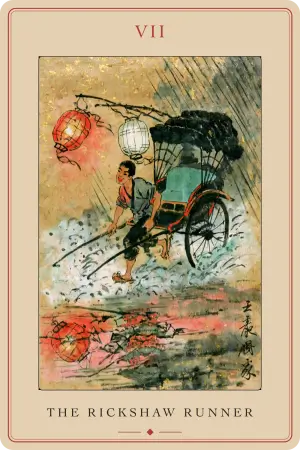



Katta Arkan · VII
Arava
Iroda orqali erishilgan keskin yuksalish, jilovsiz boshqariladigan ikkita qarama-qarshi sfinks.
Karta haqida qisqacha
- Numerologiya
- VII
- Unsur
- Suv
- Astrologiya
- Qisqichbaqa · Oy tomonidan boshqariladi
- Kabbala yo'li
- Xet (Bina → Gevura)
- Vaqt
- Yoz · Qisqichbaqa mavsumi
- Ha / Yo'q
- Ha, agar boshqaruvni o'z qo'lingizga olsangiz
To'g'ri holat
iroda kuchi
g'alaba
o'zini nazorat qilish
qat'iyat
yo'nalish
yetakchilik
jadallik
intizom
Teskari holat
nazoratni yo'qotish
dimlanish
tajovuzkorlik
tarqoq maqsadlar
ehtiyotsizlik
yo'nalish yo'qligi
o'ziga ishonchsizlik
transport muammolari
Har bir to'plamda Arava
Har bir dek ayni bir arxetipni o'zicha qayta talqin qiladi. Rasmlarni solishtiring, so'ng to'liq talqinni o'qish uchun dekni oching.
Tasvirlar va ramziyat
Pamela Kolman Smit Arava kartasini 1909 yilgi Rider deki uchun o'zining toza plakat uslubida chizgan va plastinkadagi har bir rang o'ziga xos ma'noga ega. Transport vositasi eski kartalardagi jangovar yog'ochdan emas, balki qattiq kulrang toshdan yasalgan — bu Imperatorning taxti va Iyerofantning ustunlari kabi neytral kulrang rang. U haydovchini moddiy dunyo bilan bog'laydi va uning pastki yarmini yashiradi, xuddi bizning eng chuqur sabablarimiz ongli nazoratdan tashqarida qolgani kabi. Oltin sochli yosh yigit zirh kiygan holda tik turadi, uning faol irodasi jangga tayyor; o'ng qo'lida Sehrgar va faqat aql orqali voqealarni shakllantirish kuchini eslatuvchi tayoqchani ushlab turadi.
Uning ustidagi olti qirrali yulduzli moviy soyabon og'ir tosh transport vositasini koinot bo'shlig'i va oliy maqsad bilan bog'laydi. Ushbu dekning o'ziga xos talqinida yulduzlar umid, o'lmaslik va cheksiz imkoniyatlarni anglatadi. Boshida ma'naviy uyg'onish va yetakchilik ramzi bo'lgan yulduzli toj bor, u omad orqali emas, balki qattiq mehnat orqali erishilgan o'sishni ko'rsatadi. Uning yelkalarida komediya va fojia niqoblari singari ikkita oltin yarim oy yotadi; bular inson tuyg'ularining o'zgarishi hamda oliy ruhoniyning muqaddas Urim va Tummimlarini ifodalaydi. Shuningdek, ular doimiy o'zgarishlar qurboni bo'lgan haydovchining o'zini ham bildiradi. Aravaning old tomonidagi kvadrat qalqonda faol va passiv kuchlarning birlashuvini anglatuvchi hindu lingam va yoni tasvirlangan, uning tepasida esa qanotli quyosh bor. Qanotlar va qalqon himoya va erkinlikni, taqdirli safarga chorlangan qahramonni ifodalaydi.
Jamoa kartaning mohiyatini belgilaydi. Otlar o'rniga aravaning oldida bitta oq va bitta qora sfinks cho'kkalab o'tirib, qarama-qarshi tomonlarga tortadi. Dekda oq rang ijobiy, faol tomonni, qora rang esa passiv tomonni bildiradi — shunga qaramay, arava oldinga harakat qiladi. Ularni haydovchiga bog'laydigan jilov yo'q; u sfinkslarni faqat o'z aqlining kuchi bilan boshqaradi. Uning oyoqlari ostidagi yashil gilam butun sahnani tirik tabiat qonunlari bilan bog'laydi. Orqada, baland binolardan iborat devor bilan o'ralgan shahar oldidan daryo oqib o'tadi. Shahar allaqachon erishilgan maqsadlar va ulardan qurilgan ijtimoiy tartibni, daryo esa bir tomonda tartib va ikkinchi tomonda noma'lumlik o'rtasidagi haydovchi nazorat qilib turadigan chegarani anglatadi.
Asosiy ma'nosi
Rider-Uayt dekida Arava keskin yuksalish kartasidir: o'z taqdirining boshqaruvini qo'lga olgan va qanday to'siq bo'lishidan qat'i nazar oldinga siljiydigan haydovchining muvaffaqiyati, shuhratparastligi va nazorati. Ushbu dekdagi uning kalit so'zlari g'alaba, o'z-o'zini intizomga solish, yetakchilik, itoatkorlik, hamda faollik va passivlik o'rtasidagi muvozanatdan iborat; bularning barchasi haqiqatni izlashga va bitta aniq maqsadga yo'naltirilgan.
Smit chizgan paradoks kartaning samimiyligini saqlab qoladi. Barcha jangovar zirhlar va oldinga siljish intilishlariga qaramay, aravaning g'ildiraklari suv ustida harakatsiz turibdi va ularni hech narsa ko'zga ko'rinarli tarzda turtmayapti. Haqiqiy g'alaba — bu ichki g'alaba. Haydovchi o'zining ikkita sfinksini, o'zining ichki qarama-qarshi kuchlarini bitta bir xil jabduqda ushlab turmaguncha, tashqi tomondan siljish imkonsiz bo'lib qoladi. U hayvonlarni qamchilamaydi va g'ildiraklarni zorlik bilan aylantirmaydi; u aqlining buzilmas buyrug'i orqali oldinga siljiydi. Karta uni tortib olgan har bir kishidan aynan shuni talab qiladi.
O'ng (To'g'ri) ma'nosi
O'ng holatida Rider-Uayt Aravasi kuchli yashil chiroqni anglatadi: intizomni saqlaydigan va qat'iy chegaralar o'rnatadigan har bir kishi uchun iroda, nazorat va g'alaba. Bu sizga vaziyatning jilovini o'z qo'lingizga olishingizni va taqdir yoki boshqa odamlar birinchi qadamni tashlashini kutishni to'xtatishingizni aytadi. To'g'ridan-to'g'ri o'qilganda, u ko'pincha sayohatni yoki yashash joyini o'zgartirishni bildiradi; kartaning o'tish davri mavzusi amaliyotda o'z ifodasini topadi. Hozirgi qarorlaringiz haqiqiy ahamiyatga ega, shuning uchun ularni qat'iyat bilan qabul qiling.
Sevgida. O'ziga ishonch bilan munosabatlarni oldinga siljitish, majburiyatlarni o'z zimmasiga olish, balki birga yashashni boshlash. Qat'iyat g'alaba qozonadi, erkaklik va ayollik energiyalari bitta umumiy maqsad sari birlashadi. Biroq, ko'lanka tomonga e'tibor bering: bu karta quvishni yaxshi ko'radigan va sovrin qo'lga kiritilgach, qiziqishni tezda yo'qotadigan fotihni ham bildirishi mumkin.
Karyerada. Yo'naltirilgan shuhratparastlik va sezilarli taraqqiyot. Karta to'xtab qolgan rolni yetakchilik foydasiga tark etishni, ayniqsa transport, ommaviy axborot vositalari, savdo yoki loyiha boshqaruvi sohalarida qo'llab-quvvatlaydi. U murakkab loyihani oxiriga yetkazish intizomi bilan aniq maqsad sari qattiq intilishni mukofotlaydi.
Moliyada. Intizomli pul boshqaruvi. Bu faqat iroda kuchi orqali qarzlardan qutulish va hissiyotga berilib pul sarflashdan bosh tortib, jamg'arma maqsadlariga erishish demakdir. Ba'zida daromadning oshishini yoki yirik xaridni muvaffaqiyatli yakunlashni, passiv umid qilish o'rniga faol nazoratni bildiradi.
Sog'liqda. Iroda kuchi g'alaba qozonadigan mashaqqatli kurash. Karta motivatsiya pasaygan paytda ham qat'iy rejimni saqlashni, sport, to'g'ri ovqatlanish va faol tartib orqali o'z tanangizni mustaqil boshqarishni, hamda o'zingizni charchatmasdan davriy o'sishga ishonishni so'raydi.
Teskari ma'nosi
Teskari holatda, Arava o'z jabduqlarini yo'qotadi. Ego rulni chuqurroq irodadan tortib oladi va shuhratparastlik tajovuzkorlikka aylanib, aniq maqsadsiz holda ittifoqchilarni yanchib o'tishga harakat qiladi. Ikkita sfinks haydovchini yengadi, shuning uchun arava yo ichki mojaroda to'xtab qoladi yoki aylanib yuraveradi. Bu dek buni to'g'ridan-to'g'ri dimlanish, ishlarni ortga surish (prokrastinatsiya) va nazoratni yo'qotish deb o'qiydi.
Sevgida. O'yinchi fosh bo'ladi: munosabatlarga g'amxo'rlik qilish kerak bo'lgan sheriklik emas, balki g'alaba qozonish uchun kurash sifatida qaraladi; g'olib tezda zerikadi va keyingi qiyinchilikni qidiradi. U shuningdek, nazorat qilish istagini yoki sheriklarning munosabatlarni to'qnashuvgacha turli yo'nalishlarga tortishini ham ko'rsatishi mumkin.
Karyerada. Yo'nalishsiz harakat. Kuchlar tarqab ketadi, to'siqlar ko'payadi va siz ishongan jadallik haqiqiy reja yo'qligi sababli to'xtab qoladi. Bu hissiy charchash, jamoa bilan yomon muvofiqlashtirish yoki endi mos kelmaydigan ishni bildirishi mumkin.
Moliyada. Nazoratning yo'qolishi, o'ylamasdan pul sarflash, byudjetning unutilishi. O'ng holatdagi kartani ishlaydigan qilgan intizom yo'qoladi va pul barmoqlaringiz orasidan oqib ketayotgandek tuyulishi mumkin.
Sog'liqda. Hayotiy kuchlarning kamayishi va tanangiz endi sizni boshqarayotgani hissi, yoki aksincha, o'zingizni haddan tashqari ko'p majburlash holati. Ko'pgina o'quvchilar teskari Aravani so'zma-so'z, transportdagi muammolar yoki baxtsiz hodisalar haqida ogohlantirish sifatida, va hissiy jihatdan charchagan holda mashina haydamaslik haqidagi maslahat sifatida qabul qilishadi.
Tarixiy eslatmalar
Arava (Jang aravasi) Rim zafaridan, g'olib generalning shahar bo'ylab kunlab davom etgan paradidan, keyin esa ippodromdagi arava poygalaridan kelib chiqqan. Uning adabiy ajdodi Petrarkaning 1374 yildagi "I Trionfi" (Zafarlar) she'ri bo'lib, unda Shon-sharaf aravasi o'liklarni oyoq ostida yanchib o'tadi. Ilk italyan deklari uni dunyoviy ushlab turishgan: Viskonti-Sfortsa kartasida oq otlar tortayotgan, qo'lida scepter va globus xruchiger (xoj bilan bezatilgan shar) ushlab turgan toj kiygan ayol tasvirlangan. Bu aristokratik kuch bo'lib, keyingi okkultiv ramzlardan holi, va g'alati tarzda harakatsiz tasvirlangan.
Ezoterik qatlam fransuz okkultiv uyg'onishi davrida paydo bo'ldi. Kurt de Jebelenning Misr nazariyalariga asoslanib, Elifas Levi otlarni ikkita — biri qora va biri oq bo'lgan, iroda bo'ysundirishi kerak bo'lgan faol va passiv tamoyillarni ifodalovchi sfinksga almashtirdi. U fotihni pentagramma toj, yelkasida yarim oylik Urim va Tummim hamda tepasida qanotli shar bo'lgan kubikli aravaga o'tqazdi. Artur Edvard Uayt Levinining dizaynini oldi va 1909 yilgi Rider deki uchun Pamela Kolman Smitga chizdirdi; aynan uning ishi ko'pchilik o'quvchilar ko'z oldiga keltiradigan tasvirdir. Smit kulrang toshni, yulduzli soyabonni, ikkita sfinksni va suv ustidagi harakatsiz g'ildiraklarni bitta tushunarli plastinkaga joylashtirdi, bu versiya keyinchalik ko'plab ingliz tilidagi deklar uchun qolipga aylandi.
Mosliklar (Korrespondensiyalar)
Raqam. U VII, tugallangan sikllar va haqiqatni izlash raqami, yetti kundan tortib yettita klassik sayyoragacha. Ushbu dekda yetti raqami ichki dunyoga, sezgiga va ma'naviy intilishga tortadi, shuning uchun kartaning portlovchi harakati chuqur mulohaza yuritishning natijasi, birlashtirilgan va oldinga yo'naltirilgan dastlabki oltita darsning samarasi sifatida o'qiladi.
Astrologiya. Uni Qisqichbaqa (Kanser) boshqaradi — Oyning asosiy suv burji, bu o'quvchilarni qisqichbaqani ko'rmaguncha hayron qoldiradi. Yumshoq ichki qism ustidagi qattiq qobiq bu sezgir o'zak ustidagi haydovchining zirhidir. Qisqichbaqa yonma-yon harakatlanadi, bu haqiqiy taraqqiyot ko'pincha to'g'ri chiziqdan ko'ra ko'proq zig-zag shaklida bo'lishini eslatadi.
Element. Suv. Jangovar sirt ostida Qisqichbaqa va Oyning hissiy, intuitiv oqimi yotadi.
Kabbala. U 18-yo'lni, Jar (Abyss) ustidan o'tib, Binadan (Tushunish) Gevuraga (Qat'iylik) o'tadigan yo'lni egallaydi. Uning ibroniycha harfi — Xet, panjara yoki to'siq, u qimmatbaho va o'zgaruvchan narsani ushbu sferalar orasida sayohat qilganda himoya qiladigan chegarani anglatadi.
Elementar qadr-qimmat. Tayoqchalar yonida uning oldinga intilishi kuchayadi; Qadahlar yonida esa kartaning Qisqichbaqaga xos, hissiy yashirin oqimi yuzaga chiqadi.
Psixologik istiqbol
Platon Arava kartasining ichki sahnasini ikki ming yil oldin chizgan. "Fedr" asarida u ruhni arava sifatida tasvirlaydi; uning haydovchisi, ya'ni Aql, olijanob ruhli oq otni va past xohish-istaklarni ifodalovchi qora otni boshqaradi. Agar ularni nazoratsiz tortishga qo'yib bersangiz, ular aravani parchalab tashlaydi yoki uni aylanaga yo'naltiradi. Qiyin dars shundaki, pul, jinsiy aloqa yoki hokimiyatning qora oti tomonidan boshqariladigan istaklarimiz kamdan-kam hollarda o'sishimiz uchun zarur bo'lgan narsadir.
Jung bunga zirhni qo'shadi. Qattiq, qalqonli aravakash — bu Persona, ya'ni biz dunyoga ko'rsatadigan jilolangan niqob, va uning yelkalaridagi Yanus yuzlari bir vaqtning o'zida o'tmishga va kelajakka qaraydi. Shaxsiyat haqidagi o'qishda tushganda, karta ko'pincha soxtakor (imposter) sindromini yuzaga chiqaradi va keskin savol beradi: zirhingiz sizni himoya qilyaptimi yoki u sizni qamal qila boshladimi? Okkultiv o'qish esa hamma narsani o'zgartirib yuboradi. Haydovchining jilovi yo'qligi sababli, eng chuqur g'alaba nazoratni qo'lga olish emas, balki egoni oliy irodaga bo'ysundirish va Ruhlarga yo'lni boshqarishiga ruxsat berishdir.
Arava turli deklarda
Marsel Taroti. Otlar qochmoqchi bo'lgandek orqa oyoqlariga turishadi, lekin ularning tanalari tashqariga qaraydi va g'ildiraklar noto'g'ri tomonga ishora qiladi, shuning uchun butun karta muallaq harakatda osilib turadi, Rider-Uaytning harakatsizligi esa o'sha eski pozaning merosi sifatida o'qiladi.
Krouli-Tot. Krouli o'z aravakashini kehribar bilan zirhlaydi va Qisqichbaqa uchun uning boshiga qisqichbaqa o'rnatadi. Smitning ikkita sfinksi o'rniga turli hayvonlar qismlaridan iborat to'rtta aylanuvchi sfinks keladi, ular Kerublarni, elementlarni va sobit burjlarni ifodalaydi. Haydovchining yagona haqiqiy vazifasi — qo'llarida egilgan va nur taratayotgan Sangraalni, ya'ni Muqaddas Gralni olib yurishdir. Uning orqasidagi devor bilan o'ralgan shahar Xet to'sig'iga javob beradi; xuddi shu devorni Smit o'zining daryosi orqasiga chizgan.
Zamonaviy deklar. Turli an'analar bo'ylab g'ildiraklar g'alati darajada harakatsiz qolib, Smit mashhur qilgan paradoksni saqlab qoladi: harakat ichki tomonda yuz beradi va haqiqiy dvigatel — bu hayvonlarga qamchi bosish emas, balki muvozanatda ushlab turilgan aqldir.
Birgalikda va kontekstda
Arava uning atrofida turgan har qanday narsani iroda va yo'nalish masalasiga aylantiradi. Imperator bilan u his-tuyg'ulardan ko'ra sovuqqon aql bilan qabul qilingan tez, mantiqiy qaror sifatida o'qiladi, bu sobiq hamkorning niyatlarini o'lchashda foydalidir. Pentakllar beshligi bilan u sizni qiyinchilikdan olib chiqadigan yangi rolni, qiyin davrdan qutqaradigan transport vositasini va'da qiladi.
Qayta-qayta ta'qib qiluvchi (stalker) karta sifatida paydo bo'lganida, tarologlar buni hayotingizdagi qarama-qarshi kuchlarni sintez qilish yoki zaharli muhitni jismonan tark etish uchun turtki sifatida qabul qilishadi. Zararli munosabatlar haqidagi savolda teskari tushgan Tayoqchalar paji bilan birlashganda, maslahat oydinlashadi: birinchi navbatda chiqish rejasini tuzing, pul va boshpanani ta'minlang, shundan keyingina jilovni o'z qo'lingizga oling va keting.
To'g'ridan-to'g'ri 'ha' yoki 'yo'q' deb so'ralganda, Arava bitta shart bilan qat'iy 'ha' deydi. Yashil chiroq, agar siz boshqaruvni o'z qo'lingizga olishga va taqdir yoki boshqa birov sizning o'rningizga harakat qilishini kutishni to'xtatishga tayyor ekansizgina, o'z kuchida qoladi.
Fikr yuritish uchun savollar
- Hozirgi vaqtda hayotingizdagi qanday qarama-qarshi intilishlarni bitta jabduqda ushlab turishingiz kerak?
- Zirhingiz sizni himoya qilyaptimi yoki qamal qila boshladimi?
- O'zingizning ichki muvozanatingizni topmasdan oldin harakatni qayerda majburlayapsiz?
Umumiy ma'no Rider-Uayt-Smit talqiniga asoslanadi; Tarot Akademiyasida shu dek etalon sifatida ishlatiladi. Muayyan dekning o'z talqinini ko'rish uchun uni yuqoridan oching.
Ko'p beriladigan savollar
Tarotni kashf eting
So'nggi maqolalar
Taro kartalarining qadimiy donishmandligini kashf eting va ma'naviy yo'lingizdagi sirlarni oching. Blogimiz taro o'qishning boy ramziyligi, ma'nolari va amaliy qo'llanilishini tushunishga eltuvchi darvozadir.




















































