
 UZ (o'zbekcha)


Katta Arkan · 13
Tyanqyao akrobati
Odamlar ko'z o'ngida ixtiyoriy ravishda osilib turish: akrobat boshini pastga qilib osilib turibdi va shaharni birinchi marta to'g'ri holatda ko'rmoqda.
Karta haqida qisqacha
- Numerologiya
- XII
- Unsur
- Suv
- Astrologiya
- Neptun · Baliq
- Kabbala yo'li
- Mem (Geburah → Hod)
- Vaqt
- To'xtalish · majburiy kutish · hali emas
- Ha / Yo'q
- Hali emas · Teskari yo'q
To'g'ri holat
to'xtash
taslim bo'lish
teskari qarash
qurbonlik
sabr
qo'yib yuborish
yangi nuqtai nazar
ongli to'xtalish
Teskari holat
cho'zish
ko'z-ko'z qilish uchun qurbonlik
dimiqish
yerga tushishdan qo'rqish
qochish
behuda kechikish
qotib qolgan nuqtai nazar
sovuq choy
Har bir to'plamda Tyanqyao akrobati
Har bir dek ayni bir arxetipni o'zicha qayta talqin qiladi. Rasmlarni solishtiring, so'ng to'liq talqinni o'qish uchun dekni oching.
Tasvir va ramzlar
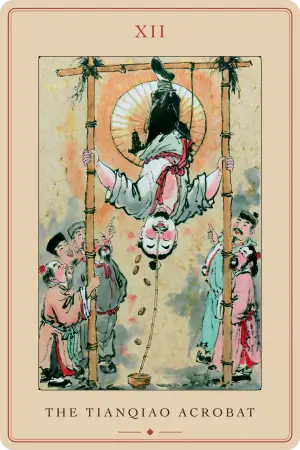
Pekin taroti palubasida Osilgan odam – bu Tyanqyao akrobatidir (天桥艺人). U qadimgi Tyanqyao yarmarkasidagi ko'cha san'atkori bo'lib, o'z chiqishi o'rtasida bambuk ramkadan boshini pastga qilib osilgan holda xotirjam choy ichmoqda. Qadimgi kartalardagi dor daraxti yo'q. Uning o'rnini akrobatning o'zi arqonlar bilan bog'lab yasagan va xohlagan paytida tushishi mumkin bo'lgan yengil sahna egallagan. Uning osilib turishi jazo emas, balki san'atdir. Ushbu bitta o'zgarish butun arkan ma'nosini qayta shakllantiradi. U mahkum etilmagan, balki o'z ishini qilmoqda.
U bir oyog'ini ko'ndalang xodaga ilgan holda, ikkinchisini esa bukib osilib turibdi. Bu Rider-Waite-Smith kartasidagi teskari to'rt raqami ko'rinishining bu palubaga xos talqinidir. Uning orqasida qog'ozli yog'li soyabon yelpig'ich kabi ochilib turibdi va oltin gardish bo'lishi kerak bo'lgan joydan nurlar tarqatmoqda. Soyabon ichida kichkina pagoda yorug'likka qarshi to'g'ri turibdi. Bu butun boshli kartaning bitta detalga jamlangan holati: odam teskari, lekin uning ongidagi muqaddas shahar to'g'ri turibdi. U Baraban minorasini, devorni va osmonni birinchi marta to'g'ri ko'rmoqda.
Uning yuzi xotirjam. Ko'zlari opera niqobi kabi yopilgan, yuzi oqqa bo'yalgan va qoshlari tinch. Uzun bambuk xoda uning iyagidan yerdagi choy piyolasigacha tushib, teskari dunyoni oddiy hayot bilan bog'lab turuvchi yagona nozik ip vazifasini o'tamoqda. Tomoshabinlar otgan mis tangalar yuzining yonidan sekin yomg'irdek tushmoqda, lekin u ularning hech biriga qo'l cho'zmaydi. Pastda kulrang, pushti va feruza rangli kiyimlardagi olti kishi tomosha ko'rsatib, buni oddiy nayrang deb bilishmoqda. Ularning hech biri soyabondagi pagodani ko'rmaydi. Olomon tomosha qilayotgan narsa va akrobat his qilayotgan tuyg'u o'rtasidagi farq kartaning asosiy ta'limotidir. Soyabon atrofidagi issiq kraft qog'ozidagi oltin zarralar ruhiy nur ramzi bo'lsa, kamar va popuklardagi qizil rang sokinlik ichida saqlanib qolgan iroda pallasini ifodalaydi.
Asosiy ma'nosi
Tyanqyao akrobati bu Pekin palubasining Osilgan odam kartasidir. Uning asosiy mohiyati shundan iboratki, atayin qilingan to'xtalish muvaffaqiyatsizlik emas, balki yangi kuzatuv nuqtasidir. Sizning harakatlaringiz qo'qqisdan to'xtadi. Vaziyat sizni to'xtatib qo'ydi, ushbu teskari holatdan hayotingizning tanish manzarasi to'satdan o'z-o'zidan to'g'ri tartibga tushadi. Ixtiyoriy qurbonlik va nuqtai nazarni o'zgartirish orqali keladigan donolik yangi tasvir ostida to'liq saqlanib qolgan. Paluba unga yarmarka muhitini qo'shadi: olomon, otilgan tangalar, kulgi va choy.
Klassik Osilgan odam bo'sh maydonda yolg'iz osilib turadi. Bu karta esa shahardagi eng shovqinli maydon ustida osilgan bo'lib, uning butun ma'nosi shunda yashiringan. Tinchlikni topish uchun unga tog'dagi kimsasiz joy kerak emas. Agar u chindan ham to'xtata olsa, shovqin o'rtasidagi bambuk ramka ham yetarli. Tangalar uning yuzi yonidan o'tib tushadi va u ularning tushishiga indamaydi. Tangalarni tushishga qo'yib berish bu ko'rishning to'lovidir. U qarsaklar, daromad va shiddatni faqat teskari holatdagina erishish mumkin bo'lgan dunyoqarashga almashtiradi. Sokinlikning o'zi bir tomoshadir, undan olingan tushuncha esa uning mukofotidir.
To'g'ri holatdagi ma'nosi
To'g'ri holatda bu karta sizning odatiy shiddatingiz to'xtaganini ko'rsatadi. Bu vaqtda eng to'g'ri qaror jimgina osilib turish va ko'zlaringizni vaziyatga moslashtirishdir. Yer bo'lib ko'ringan narsa osmon bo'lib chiqishi mumkin. Hozir tezda pastga tushib, muammoga zo'rg'a yechim topadigan vaqt emas. Muammoga butunlay qarama-qarshi tomondan qarab, ba'zi imkoniyatlar va kichik yutuqlar bir muddat yoningizdan ushlanmasdan o'tib ketishiga rozi bo'ladigan on. Yopiq savollarga Tyanqyao akrobati kamdan-kam holda aniq javob beradi. U "hali emas" deydi, chunki juda erta harakat qilish hali endi shakllanayotgan imkoniyatlarni yo'q qiladi.
Sevgida. Munosabatlar xuddi tomosha o'rtasida to'xtab qolgandek. Na tugagan, na oldinga siljigan. Buni atrofingizdagilar kuzatib turgandek tuyulishi mumkin. Tomoshabinlar uchun munosabatlarga yechim izlashdan o'zingizni tiying. Bu bosqich sherigingizning sukunati, uzoqlashishi yoki inqiroziga nisbatan chinakam sabrni talab qiladi va muvozanatingizni sinaydi. Teskari burchakdan qaralganda, bu rishta tik turganingizda ko'rmagan shaklni ko'rsatishi mumkin.
Karyerada. Ko'zga ko'rinadigan dimiqish: loyihalar to'xtagan, qarorlar kutilyapti va hamma sizning harakatsiz ekanligingizni ko'rib turibdi. Buni uyatli holat deb emas, balki zaruriy harakat sifatida qabul qiling. Bu to'xtalishdan foydalanib, vaziyatni qarama-qarshi tomondan qayta baholang. Hozir siz intilayotgan lavozim noto'g'ri devorga suyab qo'yilgan narvonning bir pog'onasi bo'lishi mumkin. Hozirgi loyihani chinakam yo'l uchun qoldirish to'g'ri tanlovdir.
Moliyaviy sohada. Daromad yaqin, u xuddi yomg'irdek yog'moqda. Biroq hozir tutib qolish vaqti emas. Yangi sarmoyalar va yirik kelishuvlardan qoching. Tomosha o'rtasida narsalarni ushlamoqchi bo'lgan qo'llar ramkadan tushib ketadi. Uzoq muddatli yirik mavqeni himoya qilish uchun qisqa muddatli naqd puldan voz kechib, ba'zi tangalarning changga qorishib ketishiga qo'yib berishingiz kerak bo'lishi mumkin. Sabrli bo'ling va pulingizni faqat pastga tushganingizdan keyingina sanang.
Sog'liqda. Odatlaringizni qayta baholash uchun to'liq to'xtalish vaqti. Har bir chiroyli va yengil tana ortida yillab qilingan tinch intizom yotadi. Odatdagi yondashuvingizni o'zgartiring: o'zingizni majburlagan joyda dam oling, zo'riqish o'rniga cho'ziling, sanash o'rniga shunchaki nafas oling. Bu davrda sokinlik va muvozanat mashqlari, xususan, tonggi taychi yoki bo'sh ko'chalarda sokin sayr qilish juda mos keladi.
Teskari holatdagi ma'nosi
Teskari holatda akrobat shu qadar uzoq vaqt teskari osilib turdiki, bu holat endi revelation emas, shunchaki odatga aylanib qoldi. U yerga tushishdan qo'rqib bambuk ramkaga yopishib olgan va o'zining harakatsizligini sabr deb ataydi. Holbuki, olomon allaqachon tarqalib ketgan, kosadagi choy esa tushga borib sovib qolgan. Kutish qochishga aylandi. O'zingizga halol savol bering: siz u yerdan qandaydir yangi narsalarni ko'ryapsizmi yoki shunchaki pastga tushishdan bosh tortyapsizmi? Hech narsa o'rgatmaydigan to'xtalish bu shunchaki boy berilgan kunduzgi vaqtdir.
Sevgida. Qurbonlik holati chinakam rishtaning o'rnini egallagan. Sheriklardan biri boshqalarga ko'rsatish uchun o'zini qurbon qilib osilib turibdi, ikkinchisi esa hech narsa bermayapti. To'xtab qolgan holat oxiri yo'q tomoshaga aylanib qoldi. Norozilik xuddi sovuq choy kabi yig'ilib bormoqda. Pastga tushing, o'z ehtiyojlaringizni ochiq ayting va yo butunlay yangi harakatni boshlang yoki bundan voz keching.
Karyerada. Chidamlilik kiyimini kiygan qaysarlik. Pastga tushishni mag'lubiyat deb bilganingiz uchun bir joyda qotib, oylaringizni shunchaki bezakli kutish bilan o'tkazyapsiz. Vaqt noto'g'ri bo'lgani uchun emas, balki taktika o'zgartirishga irodangiz yetishmagani uchun jarayonlar to'xtab qolgan. Oyog'ingizni yeching, yerga tushing va bu to'xtab qolish odati butun rezyumeingizga aylanmasidan oldin yangi yondashuvni boshlang.
Moliyaviy sohada. Moliyaviy haqiqatga yuzlanishdan bosh tortish. Shu bilan birga, haqiqiy imkoniyatlar yuzingiz yonidan tushib, olomon ichiga ketyapti. Harakatsizligingizni qandaydir aniqlikni kutish deb oqlaysiz va haqiqiy ehtiyojlarni shunchaki xohishlardan ajrata olmay qoldingiz. Bu doimiy ravishda kechiktirib kelayotgan ishingiz uchun qarz olishdan ogohlantiradi. Yarmarka inqiroz bilan yopilmasidan oldin, olish mumkin bo'lgan narsalarni oling va xarajatlarni to'xtating.
Sog'liqda. Tanangizning ogohlantiruvchi belgilariga beparvolik bilan qarash. Uyqu, ovqatlanish va harakatlanishni e'tiborsiz qoldirib, tartib bilan to'g'irlash mumkin bo'lgan narsalarni qandaydir tashqi hodisa kelib tuzatishini kutyapsiz. Ramka abadiy ushlab turolmaydi. Hozir bitta kichik tuzatish kiriting: haqiqiy ovqatlaning, to'yib uxlang va ko'chalar to'lmasidan oldin sayr qiling.
Tarixiy eslatmalar
Osilgan odam kartasi dastlab sharmandalik quroli sifatida paydo bo'lgan. 1440-yillardagi Shimoliy Italiya palubalarida bu karta shahar sudidan kelib chiqqan. U Florensiya, Bolonya va Milan kabi davlatlar odil suddan qochib ketgan xoinlar, o'g'rilar va qarzdorlarni sharmanda qilish uchun jamoat devorlariga chizadigan rasmlar (pittura infamante) asosida chizilgan. Odamni bir oyog'idan boshini pastga qilib osish o'z ish beruvchisiga xiyonat qilgan yollanma askarlar uchun standart tasvir edi. O'sha davrdagi har qanday italyan bu arkanni tortganda sharmanda bo'lgan xoinni darhol tanib olar edi. Dastlabki versiyalar Il Traditore (Xoin) deb atalgan bo'lib, o'n beshinchi asrdagi Karl VI kartalarida osilgan odam ikkita pul xaltasini ushlab turadi. Bu tasvir Yahudo va uning o'ttiz kumush tangasini eslatardi.
Vaqt o'tishi bilan bu jinoiy ohang yumshadi. Viskonti-Sfortsa kartasida pul xaltalari yo'qoldi va u xotirjam, qo'llari orqasiga qilingan sariq sochli odamga aylandi. Minchiate palubalari uni ikkita dumaloq narsa ushlab turgan akrobatga aylantirdi. Marsel taroti va keyinchalik 1909-yildagi Rider-Waite-Smith palubasiga kelib uning yuz ifodasi azob-uqubatdan batamom xotirjamlikka o'zgardi. Karta o'zining shahar sudi bilan bog'liq kelib chiqishidan voz kechib, ruhiy asketizmga o'tdi. Waite dor daraxti yaproqli tirik yog'ochdan yasalgan Tau xochini tashkil qilishini va o'lim qurolini Hayot daraxtiga aylantirishini ta'kidladi. Pekin taroti bu teskari holatni yanada oldinga olib chiqadi. Bambuk ramka na dor, na muqaddas daraxt, u shunchaki ish stolidir. Minchiatedagi akrobat ishorasi endi butun kartaga aylandi. Sharmanda qilingan xoin bir vaqtning o'zida pullik tomosha ko'rsatadigan va shaxsiy kashfiyotlar qiladigan ko'cha akrobatiga aylandi.
Mosliklar
Raqam. XII. U uchga (1 + 2) qisqaradi va ijodiy ifoda raqamiga aylanadi. Bu arkanni Imperator ayolga hamda intizom va teskari holat butun yarmarka to'xtab tomosha qiladigan narsaga aylanadigan pallaga bog'laydi. Bu palubada 1 raqami o'z ramkasida yolg'iz turgan akrobat, muvozanatdagi bambuk xodaning yagona vertikal chizig'idir. 2 raqami esa u qocha olmaydigan juftlik: ijrochi va olomon, teskari dunyo va to'g'ri dunyo, pastga tushayotganda aylanayotgan tanganing ikki tomoni.
Astrologiya. Neptun, orzular, illyuziyalar va ruhiy taslim bo'lishni boshqaradi. U an'anaviy ravishda Baliq suv belgisi hamda uning sirlar va ongsizlik bilan bog'liq o'n ikkinchi uyiga bog'langan. Tyanqyao yarmarkasi o'z mohiyatiga ko'ra o'ziga xos Neptun makoni bo'lib, nayrang va haqiqat o'rtasidagi chegara yo'qolgan, qilich yutuvchilar va ertakchilar yig'ilgan joy edi. Neptun qattiq qirralarni yumshatadi. Akrobatning teskari holati dunyoning qotib qolgan tasvirini shu qadar eritib yuboradiki, tik turgan hamma narsani noto'g'ri ko'rayotgan paytda ichki sezgi unga shaharni to'g'ri ko'rsatadi.
Element. Suv: o'z-o'zini anglash, his-tuyg'ular va ongsizlik elementi. U harakat olovi yonida saqlanmoqda. U tomosha o'rtasida choy ichadi, xotirjamlik suvi va iroda olovi bitta harakatda namoyon bo'lib, Mo'tadil karta bilan yaqin aloqani ko'rsatadi.
Kabbala. Uning Oltin Tong tizimidagi ibroniy harfi Mem bo'lib, suv degan ma'noni anglatadi. U eskirgan namunalarni buzuvchi qat'iylik sferasi Gebura va aql-idrok sferasi Hod o'rtasidagi yo'lda joylashgan. Elifas Levi davridan keyingi qadimgi fransuz maktabi unga buning o'rniga intizom harfi bo'lgan Lamedni tayinlagan edi, ammo aksariyat zamonaviy o'quvchilar Memni va uning suvini saqlab qolishadi.
Psixologik nuqtai nazar
Bu arkanga xos bo'lgan shaxs o'z tomoshasi o'rtasida to'xtab, chuqur o'ylashga qodir. Odamlar ko'z o'ngidagi har bir qulay fursat ortida yillab qilingan yashirin intizom yotadi. Ular yuqoriroq kuzatuv nuqtasi uchun tezkor quvonchlardan, qo'l yetadigan joydagi tangalardan, olomon maqtovidan ongli ravishda voz kechadilar. Noodatiy burchakdan ishlash ular uchun nayrang emas, ehtiyojdir. Ular haqiqatan ham teskari holatda yaxshiroq fikr yuritishadi va ularning sabr-toqati atrofidagilarni asabiylashtirishi mumkin.
Jung bu to'xtash holatini biror narsa qo'shish orqali emas, balki voz kechish orqali yetilish deb ta'riflagan. Ong tajriba orttirish orqali emas, soxta ishonch va himoya niqoblarini olib tashlash orqali chuqurlashadi. Zamonaviy dunyo qadr-qimmatni harakat bilan o'lchab, harakatsizlikni zaiflik deb bilganligi uchun ego bunday qulashga qarshi kurashadi. Akrobatning soya tomoni xuddi shu boy berilgan kurashdir. O'zining yomon holatlarida bunday odamlar mulohaza yuritish holatini uning mohiyati bilan adashtiradilar va harakat qilish o'rniga noma'lum muddatga osilib qolishadi. Qurbonlikka bo'lgan ishtiyoqi auditoriya uchun qilinayotgan azobli tomoshaga aylanib ketadi. Haqiqiy nuqtai nazarga qattiq bog'lanib qolgan holda, ular yerni umuman yo'qotishi, hatto eng zo'r tomosha ham qachondir tugashi kerakligini va akrobat ham pastga tushib ovqatlanishi lozimligini unutib qo'yishlari mumkin.
Tyanqyao akrobati boshqa palubalarda
Rider-Waite-Smith. Klassik Osilgan odam yaproqli tirik yog'ochdan yasalgan Tau xochiga osilgan, uning xotirjam boshi ortida oltin nur, oyoqlari esa teskari to'rt shaklida chalishtirilgan. Tyanqyao akrobati bu xotirjamlik va teskari to'rtni o'zida saqlab qoladi, lekin muqaddas daraxtni bambukdan yasalgan tomosha ramkasiga, oltin nurni esa ichida to'g'ri turgan pagoda tasvirlangan qog'oz soyabonga almashtiradi.
Marsel taroti. Qadimgi fransuz kartasi o'z dor daraxtida alkimyoviy detallarni yashiradi: okkultistlar zodiakka bog'laydigan kesilgan qizil shoxlar, ba'zan qoshiq shaklida bo'ladigan arqon, karta to'g'ri qilinganda paydo bo'ladigan quyosh va oy do'ngliklari. Pekin kartasi bu yashirin geometriyani olib tashlaydi va xuddi shu g'oyani ochiq-oydin bayon qiladi: odam teskari tursa-da, ongidagi muqaddas shahar to'g'ri holatda qoladi.
Krouli-Tot va Oltin Tong. Bu an'ana kartaning elementini ibroniycha Mem harfi orqali Suv deb belgiladi. Undagi insonni yaratilish suvlarida eriydigan ego deb talqin qildi. Pekin kartasi bu suv bilan choy piyolasida va uning Neptun mosligida uchrashadi. Odam jim turganda uning ongsizligi ochila boshlaydi.
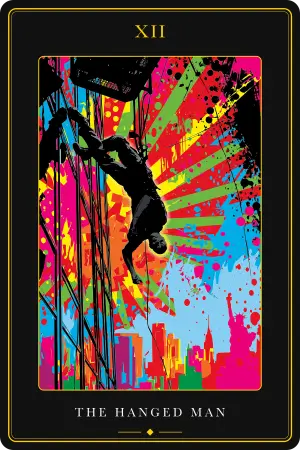
Zamonaviy qayta ko'rib chiqishlar. So'nggi palubalar kartadan eski gender tushunchasini olib tashlab, uni Osilgan Shaxs deb qayta nomlamoqda. Next World Tarot esa bu tasvirni xoda raqqosasi (pole dancer) sifatida qayta tasavvur qilib, ixtiyoriy osilishni jismoniy mustaqillik va ongli kuch deb ko'rsatmoqda. Pekin taroti ham xuddi shu oqimga mansub. Uning akrobati osilib turishni san'at sifatida o'zi tanlaydi va xohlagan paytida pastga tushishi mumkin. Bu passiv qurbon bo'lishni ijrochining ixtiyoriy intizomiga aylantiradi.
Birgalikda va kontekstda
Tyanqyao akrobati qanday yoyilmaga tushmasin, jarayonni sekinlashtiradi va uni to'xtalish, qurbonlik hamda teskari nuqtai nazar tomon tortadi. U Katta Arkandagi hikoyada Kuch va O'lim o'rtasida joylashgan. Bu O'lim kartasi olib keladigan to'liq tozalanishdan oldin sodir bo'lishi kerak bo'lgan ongli taslim bo'lishdir. Shuning uchun yakunlarni ko'rsatuvchi qo'shni kartalar ko'pincha uni haqiqiy o'zgarishdan oldingi zaruriy sokinlik sifatida belgilaydi.
Uning ma'nosi atrofidagi kartalar sur'atiga qarab o'zgaradi. Faqat tezkor javoblar va harakatlardan iborat Sakkiz Hassa kabi tezkor karta yonida, u qasddan bosilgan tormozdek ko'rinadi. Yoki karyera, oila tufayli bog'lanib qolgan, sadoqati bor, lekin hozircha harakatlanishga erkinligi yo'q odamni ifodalaydi. Moddiy jihatdan tortib olish kartalari bilan birga kelganda, u uzib olishdan ogohlantiradi va o'tib ketishiga qo'yib berish kerak bo'lgan tangalarni ifodalaydi. Sevgi yoyilmalarida uning qo'shnilari bu kutishning foydali ekanligini yoki shunchaki to'xtab qolganligini ko'rsatadi. Yangilanish kartalari bilan kelganda bu to'xtash oydinlashtiruvchi bo'ladi, charchoq kartalari bilan esa ikki kishilik auditoriya uchun osilib turgan teskari shahidlikka aylanib ketadi.
Agar bu karta o'qishlaringizda qayta-qayta chiqaversa, unga hukm sifatida emas, balki ko'rsatma sifatida qarang. Vazifangizning o'rtasida to'xtang, masalaga qarama-qarshi tomondan qarab ko'ring. Tezkordek tuyulgan ba'zi tangalarni o'tkazib yuboring va xuddi soyabondagi pagoda kabi, eng muhim narsa to'g'ri holatda tik turguniga qadar jimgina choyingizni iching.
Fikr yuritish uchun savollar
- O'zingizni qaysi harakatning o'rtasida to'xtatib qoldingiz, teskari tomondan qaraganingizda hayotingiz endi qanday ko'rinyapti?
- Tashvish tangalari, xabarlar, muddatlar va kichik yutuqlar yuzingiz yonidan o'tib ketyaptimi va ularning qaysilarini o'tkazib yuborganingiz ma'qul?
- Hali ham u yerdan qandaydir yangi narsalarni ko'ryapsizmi yoki yerga tushishdan qo'rqib, ramkaga yopishib olishni boshladingizmi?
Umumiy ma'no Rider-Uayt-Smit talqiniga asoslanadi; Tarot Akademiyasida shu dek etalon sifatida ishlatiladi. Muayyan dekning o'z talqinini ko'rish uchun uni yuqoridan oching.
Tez-tez so'raladigan savollar
Tarotni kashf eting
So'nggi maqolalar
Taro kartalarining qadimiy donishmandligini kashf eting va ma'naviy yo'lingizdagi sirlarni oching. Blogimiz taro o'qishning boy ramziyligi, ma'nolari va amaliy qo'llanilishini tushunishga eltuvchi darvozadir.




















































