
 UZ (o'zbekcha)



Kichik Arkan · Qadahlar (Suv)
Qadahlar yettiligi
Smit bulutdan ko'tarilayotgan, har birida turli ko'rinish bo'lgan yettita qadah oldiga qora siluetni chizgan va uni tuhfani tuzoqdan ajrata olmaydigan qilib qo'ygan.
Karta haqida qisqacha
- Numerologiya
- 7
- Unsur
- Suv
- Astrologiya
- Chayonning uchinchi dekani (13-22 noyabr), Venera boshqaruvida
- Kabbala yo'li
- Netsax (G'alaba), yettiliklar joylashgan joy
- Vaqt
- Chayonning so'nggi o'n kuni, kech kuz
- Ha / Yo'q
- To'g'ri holatda yo'q, teskari holatda ha
To'g'ri holat
Tanlovlar
Fantaziya
Illuziya
Xomxayol
Orzu qilish
Variantlar
Proektsiya
Vasvasa
Teskari holat
Aniqlik
Qaror
Diqqat
Haqiqat tekshiruvi
Qat'iyat
Uyg'onish
Asoslash
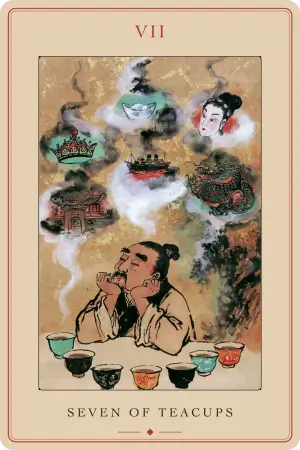
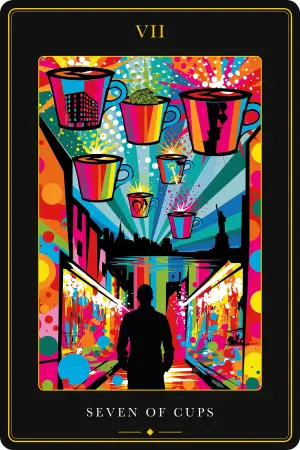
Har bir to'plamda Qadahlar yettiligi
Har bir dek ayni bir arxetipni o'zicha qayta talqin qiladi. Rasmlarni solishtiring, so'ng to'liq talqinni o'qish uchun dekni oching.
Tasvirlar va ramzlar
Pamela Kolman Smit bu kartani o'z tasavvurlari oldida to'xtab qolgan odam sifatida chizgan...
Asosiy ma'nosi
Bu paluba Rider-Waite yettita kubogini shubha, tanlov va imkoniyatlarning falaj qiluvchi qatori sifatida o'qiydi...
To'g'ri holat ma'nosi
Upright, this deck reads an abundance of choices and imaginative potential, a period of high emotional excitement in which competing ideas, plans and ambitions all surface at once. The chief warning is the paralysis of choice: so many glittering options that the querent commits to none and scatters their energy across half-started ideas. The card also cautions against wishful thinking and the pull to live in an imagined future rather than do the demanding work of the present. Some of these appealing openings are simply distractions.
Sevgida. The board floods with choices, a charged period of shifting desires and competing scenarios, perhaps a choice between several potential partners or between different ways to structure an existing bond. This deck warns that you are looking at your love life through pure imagination rather than at the person actually in front of you, chasing an impossible ideal and ignoring the flaws in any real partnership. Strip away the fantasy and work out what you genuinely need.
Kengroq ma'noda munosabatlarda. An endless menu of connections, much of it illusion, with idealized traits projected onto people you have only just met. This deck reads it as a fertile but ungrounded time: your circle expands and offers of help arrive, yet your expectations outpace reality. Enjoy the creative buzz, keep your feet on the ground, and do not lean on new connections for concrete support until they prove themselves through action.
Ishda. A sudden rush of possibilities, a crowded field of projects, tasks and career paths of which very few are actually achievable. This deck asks you to separate the viable, grounded options from pure fantasy, since too much choice tends to trigger stagnation. Analyse the hard requirements of each path, commit to a single strategy, and let the rest go.
Biznesda. An overwhelming array of alternatives, many of them viable and creatively stimulating, but not every tempting offer will work. This deck reads a crowded field of directions for growth that forces a critical choice. You have built a world of bold visions and proven you can do more than grind, yet none of it has left the drawing board until you pick one and follow it with sustained, concrete action.
Pulda. A flood of opportunities and dreams of stability, numerous creative ways to generate income shadowed by a severe unreality. This deck warns that brilliant scenarios of wealth dominate your thoughts while lacking any concrete plan, and that you may simply be craving an easy life. Come down to earth and exercise deep caution over where you put your time or money, because current judgment is heavily coloured by wishful thinking.
Jismoniy sohada. An intense drive toward physical perfection, with the imagination feeding ambitious plans to overhaul appearance, diet or health. This deck reads an overwhelming menu of options and the urge to try everything at once, which keeps things exciting but prevents any real progress. Choose one clear protocol and stay with it, since only consistency will shift the body.
Teskari holat ma'nosi
Reversed, this deck reads the waking from illusion. The clouds thin, the fog burns off, and a strong desire to return to reality takes over, often driven by the disappointment of unmet expectations. It is the shift from passive dreaming to active discernment, the moment a person stops sleepwalking, identifies the one cup that has real weight, and commits. Waite read the reversal as desire, will and determination. In its harder form the same turn can flip into apathy and deep indecision, a lingering refusal to face the facts, so the surrounding cards decide whether this is a clear awakening or a further retreat.
Sevgida. A harsh awakening that strips away the beguiling dreams and forces you back to earth. This deck reads expectations that were heavily idealized and never mapped onto reality, an infatuation built on fantasies that were never going to materialize. You can no longer hide behind an unwillingness to choose. Drop the fantasy and make the concrete decisions the relationship actually needs.
Kengroq ma'noda munosabatlarda. A severe lack of clarity, with unfounded expectations sabotaging communication and disputes born of someone's distorted view of the facts. This deck warns that people may approach you with grand proposals detached from reality. Separate the real value of a relationship from the fantasy around it, weigh verifiable behaviour over words, and you protect yourself from both external deception and your own.
Ishda. Professional disappointment caused by a poor choice, an unrealistic project chased at the cost of real time and budget. This deck reads a hard landing back into reality that demands a rigorous, systematic approach. Creative burnout from building impossible plans is likely, so cut the illusions, stop conceptualizing, and start delivering on a single attainable objective.
Biznesda. Severe decision paralysis, the volume of ideas curdled into chaos. This deck asks you to filter your prospects without mercy and discard the alternatives that have no basis in reality. It exposes a reluctance to look at hard metrics in favour of what you wish were true, and warns that scattered effort wastes resources. Build one specific plan, or the unfulfilled aspirations will overwhelm the business itself.
Pulda. A demand to convert dreams into immediate action before they dissipate. This deck pushes for realism and responsibility, discarding unrealistic plans and aiming only at attainable goals. It often flags risky investments and choices built on false expectation. Reassess your exact standing, look at your real income, accept the arithmetic, and focus on practical milestones.
Jismoniy sohada. A scattered approach that has diluted your focus to nothing, jumping between programmes and diets without giving any of them time to work. This deck reads results that fail to arrive because effort leans on aesthetic dreams rather than discipline. Strip away the complex regimens, settle on one or two sustainable habits, accept your body's current reality, and track measurable, practical metrics.
Tarixiy qaydlar
Dastlabki yettita kubog dramatik emas edi...
Muvofiqliklar
Raqam. Seven, the number this deck ties to secrets, spirituality and inner wisdom, the search for truth and the workings of the soul. Here it grounds a world of dreams and raw possibility, the point where emotional life splinters into too many competing desires and clear planning gives way to fog.
Astrologiya. The card is the third decan of Scorpio, roughly November 13–22, under Venus. Venus seeks harmony, love and beauty, and set in Scorpio's intensity and secrecy that appetite becomes idealized and unbalanced, a hunger for emotional depth that blurs into fantasy. Because ideals rarely survive contact with the real world, the placement often ends in sharp disappointment.
Element. Water, the element of emotion, intuition and the subconscious, here at its most fog-bound and dreamlike, pushing you to sink into feeling and map the hidden currents beneath it.
Qabbala. On the Tree of Life the Sevens belong to Netzach, Victory, the sphere of Venus, desire and imagination. In the water world of Briah this produces the seductive, unstable visions the card is known for.
Elementar qadr. A Water card, it can drown clear thought and is best answered by the Air of a Sword card, whose sharpness cuts the illusion and forces a single decision.
Ruhiy istiqbol
Psixologik jihatdan, Yettita kubog - bu o'zining cheksiz salohiyatiga tushib qolgan aql...
Boshqa palubalarda "Qadahlar yettiligi"
Kartaning tarixi yalang'och mo'llikdan psixologik ogohlantirishgacha boradi...
Kombinatsiya va kontekstda
Yettita kubog uning egizaklari, Yettita qilichning yonida eng yaxshi o'qiladi...
Fikr yuritish uchun savollar
- Smit bulutdan ko'tarilayotgan holda chizgan yettita qadahning qaysi biri orzu qilishni to'xtatib unga ochiq ko'z bilan qaraganingizda hamon o'z qadrini yo'qotmaydi?
- Parda yopingan, nurli figura idealist xohishdir. Siz haqiqatda ro'parangizda turgan insonga oshiqmisiz yoki unga o'zingiz kiygizgan mukammal sherik qiyofasigami?
- Ilon va niqob qasr hamda javohirlar bilan bir qatorda turibdi. Qayerda faqat tashqi ko'rinishga qarab tanlov qilyapsiz va u qadahdan ichishdan oldin taklifni sinab ko'rish sizga qanchaga tushishi mumkin?
Umumiy ma'no Rider-Uayt-Smit talqiniga asoslanadi; Tarot Akademiyasida shu dek etalon sifatida ishlatiladi. Muayyan dekning o'z talqinini ko'rish uchun uni yuqoridan oching.
Tez-tez beriladigan savollar
Tarotni kashf eting
So'nggi maqolalar
Taro kartalarining qadimiy donishmandligini kashf eting va ma'naviy yo'lingizdagi sirlarni oching. Blogimiz taro o'qishning boy ramziyligi, ma'nolari va amaliy qo'llanilishini tushunishga eltuvchi darvozadir.




















































