
 SV (svenska)



Lilla arkana · Bägare (Vatten)
Nio i bägare
Önskekortet: ett ögonblick av full känslomässig tillfredsställelse, förtjänad och njuten i ensamhet.
Läs den kompletta guiden: Nio i bägare i tarot: En fullständig guide till dess symbolik och betydelse
Kortet i korthet
- Numerologi
- Nio
- Element
- Vatten
- Astrologi
- Jupiter i Fiskarna (andra dekanen)
- Kabbalistisk stig
- Yesod (Grundval)
- Tidsram
- Fiskarnas tid · sen vinter
- Ja / Nej
- Ett starkt ja, med ett förbehåll
Rättvänd
uppfylld önskan
tillfredsställelse
förnöjsamhet
tacksamhet
känslomässig självständighet
självkärlek
överflöd
Omvänd
ihålig seger
överdrift
självbelåtenhet
mallighet
omåttlighet
känslomässig slutenhet
missnöje
Nio i bägare i varje kortlek
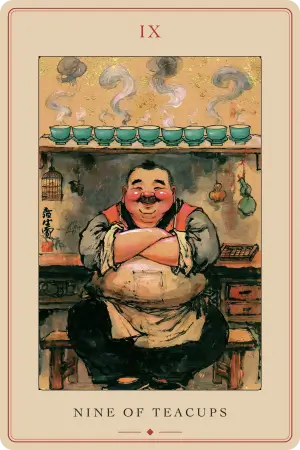
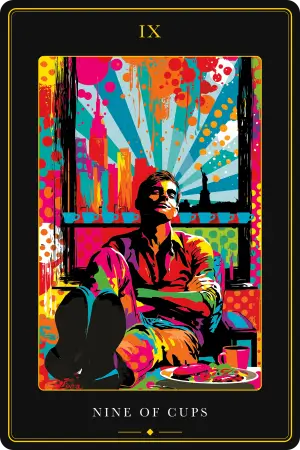
Varje kortlek omtolkar samma arketyp. Jämför bildkonsten och öppna sedan en kortlek för att läsa hela dess tolkning.
Bildspråk och symbolik
Rider-Waite-Smith-lekens Nio i bägare visar en välnärd man i medelåldern på en enkel bänk utan ryggstöd, med armarna i kors över bröstet och en min av belåtenhet. Han bär vit tunika, röd hatt och röda strumpor. Bakom honom står nio gyllene bägare i en prydlig båge på en upphöjd disk klädd i tungt blått tyg. Waite beskrev honom som "en ansenlig person [som] har festat efter sitt hjärtas lust, och rikligt med vin står på den välvda disken bakom honom, vilket tycks visa att också framtiden är tryggad".
Färgerna kodar stämningen. Den vita tunikan läses som renhet och renat begär, så glädjen är inte illvillig. Den röda hatten och strumporna markerar jordisk lidelse och livskraft, och hatten över hans sinne antyder att tankarna stannar vid världsliga nöjen. De korslagda armarna är kortets mest omdiskuterade gest. De kan betyda att han vaktar sitt hjärta och skyddar en hårt vunnen frid, eller att känslolivet står stilla, en vägran att öppna sig och dela med sig.
Möblerna och bakgrunden bär sina egna vinkar. Bänken utan ryggstöd är inte byggd för varaktig bekvämlighet, vilket gör förnöjsamheten till en rastplats snarare än en permanent sittplats. De nio bägarna är utställda som troféer, dyrbara upplevelser att visa upp. Den blå draperingen bakom dem står för det undermedvetna och Fiskarnas vattendjup, och som en slöja döljer den också de djupen, så gestalten kan mycket väl njuta av ytan på sin lycka medan de djupare vattnen förblir outforskade.
Kärnbetydelse
Modern praktik kallar det här önskekortet, och Golden Dawn gav det titeln Herre över materiell lycka. Det är tarotens tydligaste bild av känslomässig uppfyllelse och personlig triumf, frågeställarens djupaste önskningar i samklang med verkligheten. I kabbalan är det Yesod i Briah, känslovärlden som speglar sig i sig själv och kristalliserar ett tillstånd av förnöjsamhet innan det stiger ner i tians fysiska värld. Yesod är den astrala plats där önskningar formas, vilket är den esoteriska roten till kortets koppling till drömmar som slår in.
Talet nio är kulmen på ett kretslopp, den sista ensiffriga innan ett nytt paradigm börjar. Nior är självrannsakande och ensamma, och i Stora Arkana hör nian till Eremiten, vilket är skälet till att den här lyckan är en enda människas privata bedrift snarare än ett gemensamt firande. Genom sviterna lyser niorna upp kärnan i sitt element, och här är den kärnan ren känslomässig tillfredsställelse och frid.
Upprätt betydelse
I upprätt position är Nio i bägare ett av lekens mest positiva kort, ett tillstånd att njuta av sitt arbetes frukter utan skuld. Det markerar självförverkligande, ett läge där du känner dig buren av dina omständigheter och av dina egna inre resurser. Det bekräftar manifestationen och visar att en djupt hållen önskan har rört sig från avsikt till verklighet, och det kallar till aktiv tacksamhet: stanna upp, se över ditt liv och namnge det du har fått. I läkningsarbete läses det ofta som hjärtat som repar sig efter sorgen i Fem i bägare och uppbrottet i Åtta i bägare, och kommer ut helt och känslomässigt självständigt.
I kärlek. En period av känslomässig tillfredsställelse och egenvärde. Ofta pekar det på radikal självkärlek som grund för ett partnerskap, att först bli hel i sig själv. Som utfall kan det utlova verklig gemensam lycka, men ibland betyder det att du finner din djupaste förnöjsamhet på egna villkor.
I karriären. Ett mål nås, erkännandet kommer och ett viktigt projekt landar. Kortet talar för att njuta av segern i stället för att genast jaga nästa.
I ekonomin. Bekvämlighet och ett mått av överflöd, tillräckligt för att du ska kunna lägga en del av det på ren glädje utan oro.
I hälsan. Ett tecken på välbefinnande. Det gynnar vila, god sömn och att njuta av kroppen med måtta i stället för att bara sköta om den.
Omvänd betydelse
I omvänd position blottar kortet gapet mellan yttre framgång och inre uppfyllelse.
I kärlek. Gestaltens malliga, slutna sida träder fram: någon som är känslomässigt otillgänglig eller så mån om sitt oberoende att hon inte vill riskera det sårbara, ömsesidiga utbyte ett verkligt partnerskap kräver. Bägarna glänser medan hjärtat förblir stängt.
I karriären. En ihålig seger. Du kan ha fått precis det du ville ha, befordran eller titeln, bara för att upptäcka att det inte mättar. Det tvingar fram den ärliga frågan om målet var din egen längtan på själsnivå eller en produkt av ego och andras förväntningar.
I ekonomin. Omåttlighet och överdrift. Att spendera eller konsumera för att tvinga fram en känsla av lycka som hela tiden glider undan, en jakt på njutning för att fylla en tomhet den inte når.
I hälsan. En varning för frosseri och tvångsmässigt tröstsökande i mat, dryck eller substanser. Den gamla regeln "intet till övermått" är motgiftet. Kortet ber dig skala bort de ytliga nöjena och se på roten till missnöjet under dem.
Historisk bakgrund
De äldsta lekarna håller kortet abstrakt. I Tarot de Marseille är Nio i bägare en geometrisk uppställning av nio kärl, oftast ett 3x3-mönster eller ett blomstermönster, och betydelsen vilar på nians numerologi: klarhet om välbefinnandet och en känsla av djup frid, utan något av den psykologiska skärpa senare tolkare finner i gestalten.
Den hermetiska orden Golden Dawn lade fast den esoteriska ställningen, kallade kortet Herre över materiell lycka och beskrev dekanens bild som "en allvarlig man som pekar mot himlen", en påminnelse om att uppfyllelsen kommer från en högre källa. År 1909 gav Pamela Colman Smith, under A. E. Waite, kortet dess bestående mänskliga scen. Aleister Crowley kallade senare sin version helt enkelt Lycka, samtidigt som han varnade för att den glädjen surnar till fåfänga om den inte hålls i rörelse.
Korrespondenser
Tal. Nio är slutet på ett kretslopp och tröskeln strax före fullbordan. Det är självrannsakande och ensamt, i Stora Arkana knutet till Eremiten, vilket ger kortet dess underton av privat, självbärande lycka. Niorna lyser upp sina sviter, och den här lyser upp den känslomässiga tillfredsställelsen.
Astrologi. Jupiter i Fiskarna, i tecknets andra dekan. Jupiter är den stora välgöraren, planeten för expansion, tur och överflöd, och i Fiskarna härskar den i sitt eget hus och verkar med full styrka. Dess skugga är Fiskarnas dragning mot verklighetsflykt och Jupiters benägenhet för överdrift, vilket är skälet till att kortet bär tysta varningar för omåttlighet.
Element. Vatten, svitens element för känsla, intuition och det undermedvetna.
Kabbala. Yesod, Grundvalen, den nionde sfären, härskad av Månen och satt i Briahs vattenvärld. Det är återspeglingens och fantasins sfär, där drömmarna samlas innan de blir verkliga.
Elementär värdighet. Som ja eller nej är det ett av lekens starkaste ja-kort. Förbehållet är att en nia närmar sig slutet på ett kretslopp utan att fullborda det, så jaet kan komma i formen "var försiktig med vad du önskar dig".
Psykologiskt perspektiv
Nio i bägare är en exakt spegel för en människas förhållande till begär, tillfredsställelse och egenvärde. Väl läst är det känslomässig självständighet: människan har dragit tillbaka sitt beroende av omvärlden och funnit tillfredsställelsen inom sig. Den självständigheten vilar på en knivsegg. På ena sidan finns äkta förnöjsamhet och radikal självkärlek, på den andra den malliga köpman som lever i tarotkretsarnas berättelser, människan vars korslagda armar säger "jag har allt jag behöver och jag är inte öppen för att ta emot eller ge mer".
Vilken läsning som gäller beror på frågeställaren. För någon som håller på att repa sig efter en destruktiv relation är den skyddande hållningen sund självbevarelse, en frid värd att värna. För någon som gömmer sig från närhet är samma hållning känslomässig slutenhet utklädd till oberoende. I kärlekstolkningar fungerar kortet ofta som ett förstadium till Tio i bägare: du blir först känslomässigt självförsörjande, så att partnerskapet blir ett val och inte en räddning. Kortets arbete är att njuta av festen, sedan resa sig från bänken och dela de överflödande bägarna i stället för att samla på dem.
Nio i bägare i olika lekar
Tarot de Marseille. Nio bägare i ett formellt geometriskt mönster, ett 3x3-rutnät eller ett blomstermönster, utan gestalt. Betydelsen bärs helt av tal och uppställning: välbefinnande, harmoni och frid.
Golden Dawn. Den hermetiska traditionen avbildar dekanen som en allvarlig man som pekar mot himlen, och knyter kortets materiella lycka till en gudomlig källa samtidigt som den varnar för att förväxla överflöd med andlig fullbordan.
Crowley-Thoth. Omdöpt till Lycka släpper den här versionen gestalten och visar nio bägare i fullkomlig symmetri, överflödande av Briahs vatten ur lotusblommor. Eftersom kortet är Yesod, Månen, i vattnets svit läste Crowley det som en nästan fulländad känslomässig jämvikt. Han misstrodde det också och varnade för att vattnen stelnar i självbelåtenhet och omåttlighet om de slutar flöda vidare mot Tio i bägare.
I kombination och kontext
Nio i bägare förstärker njutningskorten omkring sig. Bredvid Kejsarinnan fördjupas det till sinnlig och jordisk njutning, bredvid De älskande höjer det den harmoniska kontakten, och bredvid Två i bägare smälter det samman den privata tillfredsställelsen med ett ömsesidigt band.
Det krockar med det inåtvända och stränga. Översteprästinnan drar mot ett tyst, intuitivt tillbakadragande, som nians utåtriktade njutning gör motstånd mot. Eremiten, dess syskon bland niorna, söker andlig stränghet där Nio i bägare söker sinnlig tillfredsställelse, så de två ensamheterna pekar åt var sitt håll. Mot Fyra i bägare är kontrasten som skarpast: nians tacksamma mottagande av glädjen står mitt emot fyrans håglöshet och vägran att dricka det som räcks fram.
I en läggning läses nian ofta som den känslomässiga utdelningen av den resa sviten har gjort, återhämtningen efter femman och uppbrottet i åttan. Dess varning är att hålla lyckan i rörelse. Lämnad för länge på träbänken glider tillfredsställelsen mot den mallighet och den stiltje som både omvändningen och Crowley pekar ut.
Reflektionsfrågor
- Vilken önskan har faktiskt slagit in för dig, och har du låtit dig själv stanna upp och känna det?
- Skyddar dina korslagda armar en hårt vunnen frid, eller håller de människor borta från ett hjärta du är rädd för att öppna?
- Om du fick precis det du bad om, skulle det ge näring åt din själ eller bara åt ditt ego?
Den generella betydelsen följer tolkningen för Rider-Waite-Smith — referensmodellen som används i hela Tarot Academy. Öppna en specifik kortlek ovan för dess egen tolkning.
Vanliga frågor
Utforska tarot
Senaste Inlägg
Upptäck den uråldriga visdomen hos tarotkort och lås upp mysterierna i din andliga resa. Vår blogg är din portal till att förstå den rika symboliken, betydelserna och praktiska tillämpningarna av tarotläsning.




















































