
 UZ (o'zbekcha)


Kichik Arkan · Pentakllar (Yer)
Tangalar ustasi
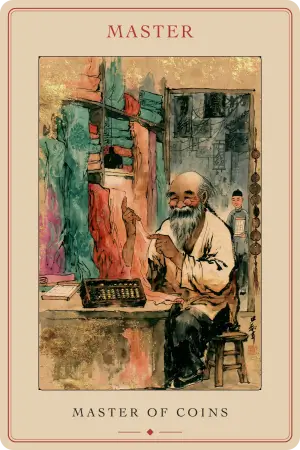
Teginish orqali anglanadigan qadr-qimmat: o'nlab yillar davomidagi halol hisob-kitoblar tufayli cho'ti tillaga aylangan qari Dashilan ipak savdogari.
Karta haqida qisqacha
- Numerologiya
- Tangalar ustasi
- Unsur
- Yer
- Astrologiya
- Buzoq · Hamaldan Buzoqqa o'tadigan uchinchi dekan
- Kabbala yo'li
- Assiahdagi Chokmah (Donolik)
- Vaqt
- Buzoq mavsumi · bahor oxiri
- Ha / Yo'q
- Ha
To'g'ri holat
moddiy yetuklik
peshona teri bilan topilgan boylik
ishonchlilik
sabr
ta'minlash
amaliy donolik
boshqaruv
narxdan ustun qadr
Teskari holat
ochko'zlik
xasislik
qotib qolganlik
moddiyatga berilish
tanazzul
qaysarlik
ekspluatatsiya
mavqe borasidagi xavotir
Har bir to'plamda Tangalar ustasi
Har bir dek ayni bir arxetipni o'zicha qayta talqin qiladi. Rasmlarni solishtiring, so'ng to'liq talqinni o'qish uchun dekni oching.
Tasvirlar va ramzlar
Pekin Tarotida Tangalar qiroli qo'lida tanga tutmaydi va o'yib ishlangan taxtda o'tirmaydi. U Dashilan ipak uyining keksa xo'jayini bo'lib, peshtaxta oldidagi oddiy yog'och kursida, ya'ni tovarlar va xaridorlar joylashgan ish balandligida o'tiradi. Uning atrofidagi boylik yorqin nur sochib turgan bir paytda (shiftgacha taxlangan havorang, qirmizi va pushti kimxob o'ramlari), libosi oddiy va och rangda. Mo'l-ko'lchilikning asl egasi uni kiyib yurishiga ehtiyoj sezmaydi.
Uning ikki barmog'i ipak o'ramida yotibdi. Ushbu ishora kartaning markazi bo'lib, Rider-Waite qirolining qo'lidagi pentakl o'rnini bosadi. Bu yerda boylik ko'z-ko'z qilinadigan timsol emas, balki teginish orqali tasdiqlanadigan sifatdir. U ipakni ikki barmog'i bilan, insonlarni esa ikkita savol orqali sinovdan o'tkazadi; hukm chiqarishning o'zi ham bir san'atdir.
Peshtaxtadagi cho't dastaning toji hisoblanadi. Uning toshlari zarrin bezaklar bilan emas, o'nlab yillar davomidagi halol hisob-kitoblar tufayli tilla kabi porlaydi. Bu kartaning sokin falsafasi: halol mehnatga sarflangan vaqt yog'ochni tillaga aylantiradi. Uning yonida ochiq daftar yotibdi, chunki bu do'konda hech narsa yashirilmaydi. Eshik tepasida bir tizim mis tangalar osilgan bo'lib, u to'plam timsolining me'morchilikka aylanganini bildiradi; farovonlik uy va ko'cha o'rtasidagi devor emas, balki parda vazifasini bajaradi.
Eshikdan tashqarida do'kon peshlavhalari osilgan kulrang ko'cha ko'rinib turibdi, bu ipak uyi ko'plab do'konlardan biri ekanligini eslatadi. Ustaning orqasida daftarni ko'tarib kelayotgan yosh shogird ko'rinadi, vorislik allaqachon boshlangan. Issiq kraft qog'ozidagi tillarang zarralar aynan uning atrofida zichlashgan. Bu dastaning oddiy peshtaxta muqaddas joy ekanligiga ishorasidir. U ko'zoynagi ortidan jilmayib turibdi va bu tabassum so'nggi ramzdir: to'liq o'zlashtirilgan moddiy dunyo xavotir emas, balki zavq manbaiga aylanadi.
Asosiy ma'no
Tangalar ustasi Pekinning Tangalar qiroli bo'lib, dasta uning barcha fazilatlarini bitta ishorada ifodalaydi: u qadr-qimmatni bevosita, teginish orqali, vaqt va sinov yordamida aniqlaydi. An'anaviy Qirol bog'lar va qasr ustidagi taxtda o'tirsa, bu qari savdogar peshtaxta oldida o'tiradi va narxni qadr bilan aslo adashtirmaydi. Cho'tning tillaga aylanishiga qadar do'konning uzoq yashashi ham aynan shuning natijasidir.
U Tangalar to'plamining omad yoki ko'z-ko'z qilish bilan emas, balki mahorat, obro' va kundalik e'tibor orqali asta-sekin yetilgan cho'qqisi. Uning boyligi meros bo'lib qolmagan, uni o'zi barpo etgan va endi u o'zini isbotlashga muhtoj emas. U moddiy xavfsizlikka erishgan insondek barqaror ta'minlaydi: adolatli narx, shov-shuvsiz berilgan qarz, umidli shogird uchun topilgan joy, kuzdayoq sotib olingan qishki ko'mir. Muloyimlik ostida granit yashiringan. U har qanday bo'ronni yengib o'tishi va har qanday raqobatchidan uzoqroq yashashi mumkin; buning uchun do'konni har kuni ertalab ochishda davom etishi kifoya. Bu yerdagi iliqlik ortiqcha his-tuyg'ularga asoslanmagan, u tarkibiy qismdir. Siz uning g'amxo'rlik qilishini atrofidagi barcha narsa to'g'ri ishlayotganidan bilasiz.
To'g'ri ma'nosi
To'g'ri holatda karta mustahkam, sabr bilan qurilgan poydevorga asoslangan vaziyatni anglatadi. Siz so'rayotgan narsa haqiqiy, moliyalashtirilgan va bardoshlidir; agar ushbu savdogarning xarakteri bilan yondashilsa, u shunday bo'lishi mumkin. Ipak uyi qanday ishlasa, shunday ishlang: sotib olish, sotish yoki majburiyat olishdan oldin sifatni o'z barmoqlaringiz bilan tekshiring va qaror qabul qilishni boshqalarga topshirmang. Narsaning narxiga emas, uning qadriga etibor bering, tovarlarda ham, takliflarda ham, insonlarda ham. O'n yildan keyin qaytib keladigan xaridor uchun poydevor quring. Karta ko'pincha yordami ko'ringanidan ham qimmatliroq bo'lgan tajribali shaxsni anglatadi, chunki uning yordami donolik bilan birga keladi.
Sevgida. O'yinlar yoshidan o'tgan, o'zini ta'minlash orqali ko'rsatadigan va barqarorlik orqali sadoqatini ifodalaydigan badavlat hamkor. Bunday sevgi shovqinli bo'lmaydi va karta uni arzon baholashdan ogohlantiradi: bo'yalgan paxtaga to'la ko'chada bu haqiqiy ipakdir. Mavjud munosabatlar uchun u moddiy jihatdan xavfsiz va o'zaro ishonchli ipak uyi bosqichini bildiradi, nikoh, umumiy uy va birlashtirilgan moliyaviy holatni qo'llab-quvvatlaydi.
Karyerada. O'nlab yillar davomida namoyish etilgan malaka orqali halol erishilgan kasbiy hayotning cho'qqisi, staj. Bu sizni kelishmovchiliklarni hal qiladigan tan olingan mutaxassis, yoki o'rganishga arziydigan adolatli va talabchan rahbar sifatida ko'rsatishi mumkin. Karta barqaror tashkilotlar, malakali hunarmandchilik, moliya va sifatga qaratilgan kasblarni qo'llab-quvvatlaydi hamda yangilik izlab sakrashdan ko'ra, bir joyda qolish va chuqurlashishni taqdirlaydi.
Moliyada. Dastadagi barqaror farovonlikning eng kuchli kartasi: haqiqiy, ishlab topilgan va barqaror boylik. Daromad muntazam, zaxiralar mavjud va sizning holatingiz yomon mavsumga bardosh bera oladi. U konservativ, sabrli strategiya, uzoq muddatli sarmoya, ko'chmas mulk va soxta narsani uch marta sotib olgandan ko'ra, haqiqiy ipakni bir marta sotib olishni afzal ko'radi. Karta puli o'zidan ham qimmatli maslahat beradigan to'lov qobiliyatli homiyni ko'rsatishi mumkin.
Sog'likda. Savdogarning falsafasi tanaga tatbiq etilgan: o'nlab yillar davomida har kuni tasdiqlangan sifat. U keskin amaliyotlardan ko'ra bardoshlilarini, muntazam uyquni, qadog'iga qarab emas, tarkibiga ko'ra tanlangan haqiqiy oziq-ovqatni, ko'chalarda shoshilmay yurishni va kasallik alomati paydo bo'lmasdan oldin bron qilingan tibbiy ko'rikni afzal ko'radi. Tanangiz siz sota olmaydigan yagona do'kon, shuning uchun uni uzoq vaqt ochiq saqlashni niyat qilgan uydek boshqaring.
Teskari ma'nosi
Teskari holatda ipak uyi qorong'ilashadi. Ustaning ikkita savoli so'roqqa, sinchkov ko'zi shubhaga aylanadi va do'kon eshigi qulflangan paytda cho't kechasi bilan ishlaydi. Karta noto'g'ri moddiy qarorni bildiradi: ochko'zlik, xasislik, qalloblik yoki tajriba tajribasizlarga qarshi ishlatiladigan kelishuv. Yoki bo'lmasa eski ishonchning yo'qolishi, pasayib borayotgan savdo va yemirilib borayotgan obro', noto'g'ri boshqaruv tufayli sizib chiqib ketayotgan resurslar, yo xaridorlar talab qilayotgan tovarlarni saqlashdan qaysarlik bilan bosh tortishni ko'rsatadi. Oxir-oqibat narx va qadr-qimmat adashtirilgan bo'ladi va bu xato qimmatga tushadi.
Sevgida. Ipak uyi hisobxona yoki muzeyga aylanadi. Hisobxona sifatida pul tuyg'ulardan ustun turadi: ehtiyojlarni ta'minlash orqali nazorat qiladigan, har bir sovg'aning hisobini yuritadigan, sizni shaxs sifatida sevish o'rniga mulk sifatida baholaydigan hamkor. Muzey sifatida, saqlanib qolgan, ammo endi tirik bo'lmagan, qulay va hissiy jihatdan yopiq uzoq muddatli rishta. Asl hisobni ochiq ayting va mehr-muhabbat pullanadigan har qanday kelishuvni rad eting.
Karyerada. Aynigan mahorat yoki vakolatni suiiste'mol qilish: bilim va e'tirofni o'zlashtirib oladigan, tajribali xodimlarni arzon ushlab turish uchun ularning lavozimga ko'tarilishiga to'sqinlik qiladigan va xodimlarga cho'tining toshlaridek qaraydigan rahbar. Bu sizning shaxsiy xavfingizni ham aks ettirishi mumkin: soha oldinga siljiyotganda eski tajribaga tayanib, stajni qadr-qimmat bilan adashtirish. Ipaklaringizni qayta sinovdan o'tkazing va ko'cha sizsiz o'z didini yangilamasidan oldin, o'z mahoratingizni yangilang.
Moliyada. Birovga qarshi, ehtimol sizga qarshi ishlatilgan tajriba. Sizdan ancha tajribali bo'lgan tomonlar bilan tuziladigan kelishuvlardan va mayda harflar bilan yozilgan joylarida bo'yalgan paxtani ipak narxida sotadigan shartnomalardan ehtiyot bo'ling. Ehtimol o'zingizning mulohazangiz pand berayotgandir, ochko'zlik sizni o'zingiz tushunmaydigan mulkka jalb qilyapti yoki xasislik zarur xarajatlarni qisqartiryapti. Boshqa mustaqil mutaxassisdan baho oling va agar raqamlar eski strategiya ishlamayotganini ko'rsatsa, xotiralarga emas, raqamlarga ishoning.
Sog'likda. Savdogarning illatlari tanada yoziladi, ko'pincha bandlik tufayli e'tiborsizlik orqali: peshtaxta ortida o'tkazilgan harakatsiz o'n yilliklar, shunchaki yoqilg'i sifatida qabul qilingan ovqat, hisob-kitoblar qurboniga aylangan uyqu. Bu qulaylik natijasida vazn to'plash, bo'g'imlar qotishi va chidamlilikning pasayishiga yoki tashqi ko'rinishni mavqe daftari kabi yuritishning teskari buzilishiga olib kelishi mumkin. Kechiktirilgan tibbiy ko'rikni belgilang, hisob-kitob qilish o'rniga piyoda yuring va qadoqqa emas, tarkibga pul sarflang.
Tarixiy qaydlar
1909-yilda Artur Edvard Ueyt rahbarligida Pamela Kolman Smit tomonidan chizilgan Rider-Waite-Smith Tangalar qiroli Buzoq burjiga ishora qiluvchi ho'kizlar o'yib ishlangan og'ir taxtda o'tiradi. Uning libosi uzoq yillik mehnat orqali topilgan boylik timsoli bo'lgan uzum novdalari bilan bezatilgan. Hashamatli libos ostidan bitta po'lat zirh bo'lagi ko'rinib turibdi, bu qirol hatto dam olayotganda ham o'zi barpo etgan narsalarni himoya qilishga tayyor ekanligidan dalolat beradi. Oltin Tong ordeni Qirollarni Donolik sferasi bo'lgan Chokmahga, Pentakllar to'plamini esa moddiy dunyo hisoblangan Assiahga biriktirgan. Bu esa ushbu siymoni zich moddiy dunyoga tatbiq etilgan Donolikka, uning elementar qadr-qimmatini Yerning Oloviga aylantiradi.
Thoth dastasida Alister Krouli va xonim Frida Xarris Qirollarni Ritsarlar deb o'zgartirib, ularni otga mindirdilar. Shunday qilib, unga mos keladigan karta Disklar ritsari, yovvoyi va unumdor yerning Egasi, serg'ayrat hosil qirolidir. Krouli bu qirol zerikarli va hissiy jihatdan sovuq materializmga aylanib ketishi mumkinligidan ogohlantirgan.
Pekin Taroti vazifani saqlab qoladi va taxtni o'zgartiradi. U yetuklikni taxtga o'tqazish o'rniga ish stoli oldiga joylashtiradi, qo'ldagi pentaklni ipakdagi ikkita barmoq bilan almashtiradi va qirol ortidagi qasrni kulrang Dashilan ko'chasidagi ko'plab do'konlardan biriga aylantiradi. Yashirin zirh savdogar ishonishdan oldin beradigan ikkita savol kabi sezilmas hushyorlikka aylanadi. Dasta uning elementini ham qayta ko'rib chiqib, Ustani Yer ustidagi Havo sifatida talqin qiladi; bu an'anaviy Yerning Olovi emas, balki aniq narsalarga xizmat qiladigan aql, nafaqat sohaning kuchi, balki uning aql-zakovati demakdir.
Mosliklar
Raqam. Saroy kartasi sifatida u pip ketma-ketligidan tashqarida, Chopar, Qo'riqchi va Bekadan keyin Tangalar to'plamining yakuni bo'lib turadi. Eski hisobda Qirollar Tetragrammatonning to'rt raqamiga va Chokmahning raqami bo'lgan ikkiga javob beradi, bu esa to'plam boshidagi faol erkak kuchini belgilaydi.
Astrologiya. Buzoq, sobit yer burji, Hamalning uchinchi dekanidan Buzoqning markazigacha boshqaradi. Bu tashkilotga asos soladigan energiyadan uni ellik yil ochiq saqlaydigan barqarorlikka o'tishni bildiradi. Natal xaritada uning maydoni egalik va qadriyatlarning ikkinchi uyidir; bu uy nafaqat nimaga ega ekanligingizni, balki nimani qadrlashingizni ham so'raydi. Dashilan xo'jayini dastadagi ushbu savollarni hech qachon adashtirib yubormagan yagona siymodir.
Element. Ushbu dastada Yer ustidagi Havo: aniq narsalarga xizmat qiladigan intellekt, ipak uyining shunchaki tovarlarga emas, o'z falsafasiga ega bo'lishining sababi. An'anaviy Oltin Tong tizimida Tangalar qiroli Yerning Olovi bo'lib, tartib-intizomli maqsadni, temirchining o'chog'i yoki g'isht xumdoni kabi asta yoziladigan issiqlikni bildiradi.
Kabbala. Chokmah, Donolikning ikkinchi sferasi, to'rtta dunyoning eng pasti va eng jismoniysi bo'lgan Assiahda ifodalangan. Qirol yaratilishning tashqariga intiladigan uchquni bo'lib, to resurslar, asbob-uskunalar va savdogacha olib kelingan.
Elementar qadr-qimmat. Eski tizimda Olovning Yer bilan to'qnashuvi, maqsadning yerdagi zichlik orqali barqarorlashishi va sekinlashishi, uni uchuvchan emas, balki bardoshli qilishidir; bu asoschisidan ham uzoqroq yashashi kutilgan imperiya demak.
Psixologik rakurs
Ushbu arkanadagi inson o'nlab yillar davomidagi malakali mehnatini endi qiyin bo'lmay qolgan obro'-e'tiborga aylantirgan. Ular biznes, oila, hunar, ism qurdilar va bu tarixni keksa savdogarning kimxoblar orasida kiyib yurgan oddiy libosidek yengil ko'tarib yuritadilar. Ular sifatni va inson xarakterini juda yaxshi baholaydilar, buning uchun faqat ipakga tegish va ikkita savol berish kifoya. Ular kamdan-kam ovozlarini ko'taradilar, chunki ularning so'zlari shunchalik uzoq vaqt davomida qadrli bo'lganki, valyuta kabi ishlaydi.
Eng yaxshi holatda ular o'n yilliklar nuqtai nazaridan fikrlaydilar, shov-shuvlarga ishonmaydilar, va'dalari va hisob-kitoblariga sodiq qoladilar hamda boshqalarga o'z ishlarini kuzatishlariga imkon berish orqali o'rgatadilar. Soyasi: nima uchun hisob-kitob qilayotganini unutgan savdogar: xasis, injiq, o'zidan kamroq narsa qurganlarni mensimaydigan, yuksak tajribasidan yo'l ko'rsatish uchun emas, siqish uchun foydalanadigan inson. Ikkinchi soya korrupsiya emas, balki tanazzuldir: qobiliyati so'nib borayotgan, ammo o'ziga bo'lgan bahosi pasaymagan, eskirgan usullarga yopishib olgan, butun umrlik obro'si mag'rurligi sababli sizib chiqib ketayotgan bir paytda vorisini tayinlashdan bosh tortadigan usta. Har ikki holatda ham belgi bir xil: uning ongida qadr va narx o'rin almashib qolgan.
Tangalar ustasi turli dastalarda
Rider-Waite-Smith. Tangalar qiroli uzum novdalari va ho'kizlar tasvirlangan taxtda o'tiradi, tizzasida bitta tilla tanga bor. Uning orqasida mustahkamlangan qasr ko'rinadi va libosi ostida po'lat zirhi yashiringan. U barqaror va sokin hushyor turgan obro'li rahbar.
Marsel Taroti. Qadimgi Tangalar qiroli qo'lida bitta tanga ushlab turgan oddiyroq savdogar qiyofasida bo'lib, butun o'rnashgan moddiy hokimiyat arxetipi shundan kelib chiqqan.
Krouli-Tot. Disklar ritsari deb qayta nomlangan va otga mindirilgan. U yovvoyi va unumdor yerning Egasi, o'ta kuchli jismoniy ta'minotchidir. Krouli uning soyasi zerikarli va hissiy jihatdan sovuq materializm bo'lishi mumkinligidan ogohlantirgan.
Zamonaviy talqinlar. Kim Kransning Yovvoyi nom'alumi uni Pentakllar Otasiga aylantiradi: kamalak rang shoxli kiyik, uning energiyasi amaliy yechimlar tomon nurlanadi. Yoshi Yoshitanining Ilohiy Taroti bu unvonni yerni o'z yelkasida ko'tarib yuradigan, sokin va cheksiz ishonchli dunyo toshbaqasi Xa-Nu-Naga beradi. Pekin Taroti bu harakatga qo'shilib, arxetipni haqiqiy savdo sohasiga yo'naltiradi, uning Ustasini boylik taxtda ko'z-ko'z qilinmaydigan, teginish orqali tasdiqlanadigan Dashilan peshtaxtasiga o'tqazadi.
Kombinatsiya va kontekstda
Tangalar ustasi tarqalishni barqarorlik, sabr va tasdiqlangan qadr-qimmat tomonga tortadi. Shaxs sifatida u ko'pincha ish beruvchi, sarmoyador, oqsoqol yoki murabbiy bo'lib, uning yordami donolik bilan birga keladi, shuning uchun bu yordam erkin yoki ma'lum bir narx evaziga taklif etilayotganini bilish uchun qo'shni kartalarni o'qing. Tangalar bekasi (ushbu dastaning Pentakllar qirolichasi) yonida u uyni to'ldiradi, ayni shu yerning ichki qo'riqchisi yonidagi tashqi quruvchi.
O'nta tanga bilan u yillar o'tib binoning o'ziga aylanadigan darajada ulg'aygan boylik, oila ta'minoti va uzoq muddatli merosga ishora qiladi. Sakkizta va To'qqizta tanga bilan birga u o'z dekanlarini boshqaradi, ya'ni takroriy harakatlar orqali mustaqil qulaylikka aylanadigan yetuklik. Ierofant yonida u an'anani savdoga birlashtiradi, daftari bilan kelgan shogird singari qo'ldan-qo'lga o'tadigan uzatish jarayoni.
Teskari tushgan qo'shni kartalar uning soyasini o'tkirlashtiradi. To'plash yoki yakkalanish kartalari bilan birga u hissan yopiq ta'minotchi kabi o'qiladi, tanasi bilan mavjud-u, mehri yo'q inson. Qachonki u doimo folga qayta-qayta tushaveraversa, buni sotib olish o'rniga peshtaxta oldiga o'tirib baholashga chaqiriq deb qabul qiling: o'z ko'nikmalaringizni, jamg'armalaringizni va atrofingizdagi insonlarni halol ro'yxatdan o'tkazing, hamda ulardan qaysi biri haqiqiy ipak ekanligini, qaysi biri esa ipak narxida sotilayotgan bo'yalgan paxta ekanini bilib oling.
Fikr yuritish uchun savollar
- Hayotingizda nima haqiqiy ipak va nimani ipak narxida baholayotgan bo'yalgan paxta deb hisoblaysiz?
- Qayerda biron narsani yoki biron kimsani qadriga qarab emas, narxiga qarab baholamoqdasiz?
- Ho'kiz aravasi tezligida sekin nimani quryapsiz va eshikdan uni davom ettirish uchun kim kirib kelyapti?
Umumiy ma'no Rider-Uayt-Smit talqiniga asoslanadi; Tarot Akademiyasida shu dek etalon sifatida ishlatiladi. Muayyan dekning o'z talqinini ko'rish uchun uni yuqoridan oching.
Ko'p beriladigan savollar
Tarotni kashf eting
So'nggi maqolalar
Taro kartalarining qadimiy donishmandligini kashf eting va ma'naviy yo'lingizdagi sirlarni oching. Blogimiz taro o'qishning boy ramziyligi, ma'nolari va amaliy qo'llanilishini tushunishga eltuvchi darvozadir.




















































