
 PT (português)

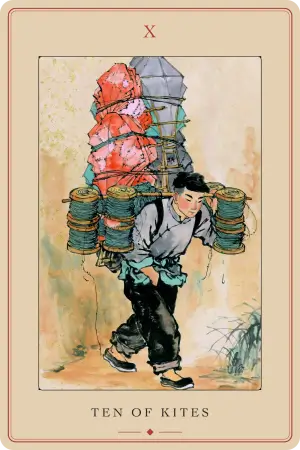
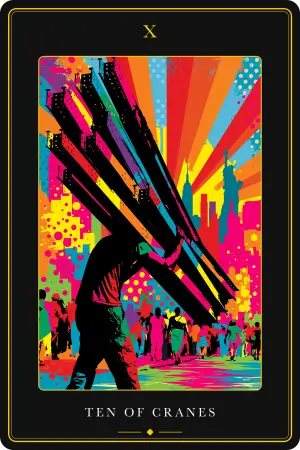

Arcanos Menores · Paus (Fogo)
Dez de Paus
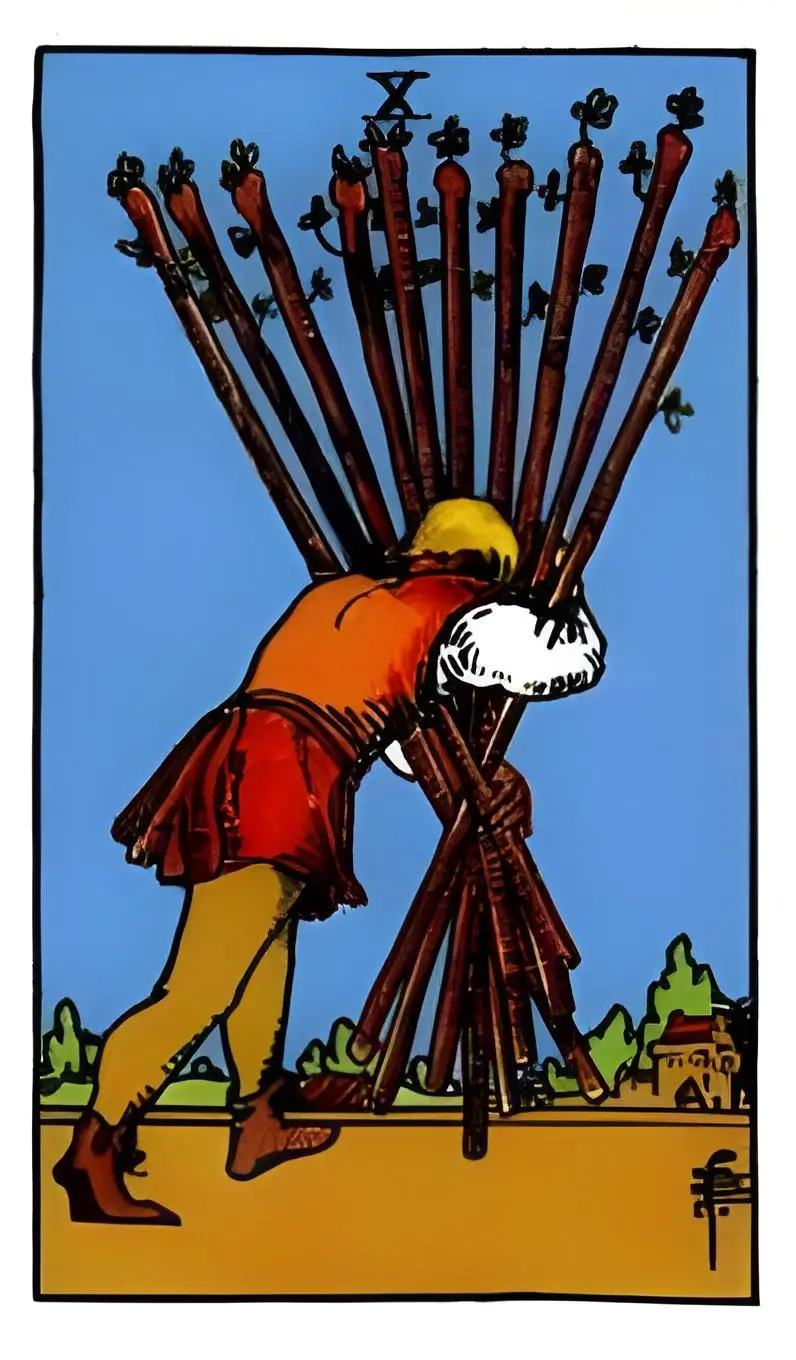
Um homem carrega todos os dez bastões de uma só vez, agarrados ao peito e espalhados diante do seu próprio rosto, de tal modo que não consegue ver a cidade que o espera a uma curta caminhada de distância.
Read the complete guide: Carta Dez de Paus no Tarot: Um Guia Completo de Simbolismo e Significado
A carta num relance
- Numerologia
- Dez
- Elemento
- Fogo
- Astrologia
- Saturno em Sagitário, terceiro decanato (aproximadamente 13–21 de dezembro)
- Caminho cabalístico
- Malkuth (Reino) em Atziluth
- Tempo
- O fim de um longo ciclo, o terceiro decanato de Sagitário a avançar para o solstício de inverno
- Sim / Não
- Posição normal não, ou sim a um custo ainda não calculado · Invertido maioritariamente não, a energia está esgotada
Vertical
Fardo
Sobrecarga
Responsabilidade
Esgotamento
Resistência
A reta final
Recusa em largar a carga
Invertida
Libertação
Delegação
Alívio
Colapso
Esquiva
Descarte de obrigações
Culpa ao largar a carga
Dez de Paus em cada baralho
Cada baralho reinterpreta o mesmo arquétipo. Compare a arte e abra um baralho para ler a sua interpretação completa.
Imagens e simbolismo
Pamela Colman Smith desenhou a carta para Waite em 1909 e tomou uma decisão que veio a governar todas as leituras desde então: voltou a figura de costas. Ele afasta-se do observador, curvado quase em dois, com um feixe de dez bastões pesados agarrado ao peito. O seu rosto nunca é visto, porque as próprias varas estão no caminho.
A essência da carta revela-se de um só golpe. Os bastões abrem-se em leque diretamente diante dos seus olhos, impedindo-o de ver o chão que pisa ou a estrada à sua frente. Quem carrega peso em excesso perde a visão ampla e acaba consumido pelas exigências táticas da carga, ficando cego para o panorama estratégico. Smith não precisou de escrever essa lição: colocou simplesmente o fardo entre o homem e a sua própria visão.
A postura reflete o esforço. As suas costas curvam-se, a sua cabeça inclina-se, e este baralho mostra com precisão o significado desse gesto: o peso esmagador da carga, o foco reduzido à tarefa imediata e a perda de visão geral. No entanto, isto não significa derrota. Ele continua a marchar, e este baralho interpreta essa atitude como persistência interior, um impulso para cumprir o seu destino e a recusa em render-se. O cansaço e a teimosia fundem-se num único gesto.
Os bastões mudaram de função. Mais atrás no naipe, eram ferramentas de criação e abrigo, estacas para construir e delimitar terreno. Aqui representam trabalho, obrigações, projetos e ideias que se tornaram pesados pelo seu número e escala. A colheita chegou, mas a dimensão do rendimento está agora a esmagar quem colhe. Por trás da imagem repousa a supressão dos desejos pessoais em prol do cumprimento dos deveres.
O solo em que caminha é sólido, o que este baralho interpreta como estabilidade. Ele permanece firme sobre os pés apesar do peso, revelando força interior e determinação para não recuar perante a dificuldade. A carga ainda não o colocou de joelhos.
A casa ao fundo é o pormenor que a maioria dos leitores ignora e no qual este baralho insiste. Uma grande construção ergue-se à sua frente: o destino que pretende alcançar, a esperança e a recompensa pelo trabalho árduo. Ele está perto, quase a chegar. O alívio de estar quase a terminar é estragado pelo facto de continuar a carregar tudo sozinho, e por manter a cabeça baixa sem ver quão perto já se encontra. É por isso que o Dez de Paus de Rider-Waite representa a reta final desgastante de uma maratona, e não uma condenação de Sísifo.
O vestuário e a luz criam a fricção que dá singularidade a esta carta. Alguns comentadores descrevem a paisagem como desolada para sublinhar a solidão de carregar um fardo sem apoio. Contudo, a arte original é soalheira, e este baralho interpreta as roupas da figura como simples e práticas, mais um sinal de trabalho árduo e de elevada responsabilidade. A nota do próprio Waite aponta na direção oposta, referindo que a carta mostra fortuna e ganhos que trazem a sua própria opressão. Lendo em conjunto: o dia está radioso, o destino está à vista e o homem no centro da cena está a passar por um momento terrível.
Significado central
Neste baralho, o Dez de Paus representa responsabilidade, sobrecarga e o transporte de um fardo pesado. É o ponto terminal do naipe de Paus, onde a ambição de fogo se cristaliza em peso material. A Aurora Dourada deu-lhe o título de Senhor da Opressão, e o tratamento de Rider-Waite traduziu esse título de uma afirmação metafísica para algo que qualquer pessoa reconhece na sua própria semana.
O que torna a versão de Smith singular é a forma como localizou a opressão. O Livro T descrevia uma força cruel e opressiva aplicada a fins materiais e egoístas, uma congestão abstrata de energia. Smith desenhou um homem numa estrada soalheira que assumiu mais do que consegue carregar e se recusa a parar. Este baralho interpreta a carta como dirigindo-se ao lado subconsciente e emocional da natureza humana, especificamente em relação à realização de tarefas, ideais e metas. A opressão não é algo vindo de fora: é a própria forma que a sua ambição assumiu.
O número Dez fornece o mecanismo. Na numerologia deste baralho, o dez representa a ciclicidade, a conclusão de uma etapa e o início de outra, um ciclo completo que funciona como encerramento e novo começo. Trata-se de uma forma avançada do Um, e porque 1+0=1, conserva a liderança, os inícios, a criatividade e a individualidade. É por essa razão que novos projetos se tornam possíveis assim que a carga atual for libertada. A sua sombra revela responsabilidade excessiva, demasiadas iniciativas começadas e assuntos inacabados. Quando o Fogo encontra essa conclusão, surge um paradoxo: Copas e Ouros chegam aos seus dez realizados, enquanto o naipe de Fogo se rebela contra o peso material, fazendo com que a sua conclusão se leia como um fardo e não como uma recompensa.
Significado na posição normal
Na posição normal, esta carta indica sobrecarga ou um fardo insustentável. O trabalho exige um esforço elevado, um passatempo tornou-se trabalhoso e obrigações pesadas caíram sobre os teus ombros. Podes sentir que estás a carregar uma montanha. Muito depende do teu empenho e dos teus sacrifícios neste momento, mas este estado não pode continuar indefinidamente sem o risco de esgotamento. A orientação deste baralho é direta: reconhece que o peso pode levar à exaustão total, reavalia a situação, repensa as tuas prioridades, pede ajuda ou distribui a carga de trabalho de forma a manteres o equilíbrio entre vida pessoal e profissional.
No amor. Um período de trabalho árduo e resistência, e um momento de assumir a responsabilidade pela relação, o que se revela exigente. A ligação pode parecer exaustiva, mas o crescimento real costuma surgir precisamente através destas provações. Isto relaciona-se frequentemente com a passagem para outro nível: morar juntos, casamento ou compromissos de longo prazo. Aprende a dizer não, estabelece limites pessoais e evita acumular problemas sobre ti. Sob o peso existe algo valioso: o fardo também simboliza o sucesso alcançado, o compromisso profundo, a prontidão para lutar por objetivos comuns e o orgulho no que construíram juntos. Mantém o equilíbrio entre a relação e o teu bem-estar pessoal para evitares a exaustão.
No trabalho. O fardo pesado de tarefas e deveres, obrigações que sobrecarregam pelo seu volume. Esforço intenso, busca constante pelo sucesso, horas extraordinárias, sobrecarga extrema e ocasionalmente fricção com colegas. Este nível de carga de trabalho pode ser estratégico, e a recompensa final será significativa se tudo for concluído com qualidade e dentro do prazo, razão pela qual a carta não é um simples alerta para desistir. Se os compromissos ultrapassaram a tua capacidade, a solução passa por discutir a delegação com a equipa. Nos negócios, representa projetos relevantes que exigem força real, com a maioria das dificuldades já ultrapassada e risco elevado de sobrecarga, pedindo uma pausa para reavaliar metas e distribuir a energia com critério. Assinala o sucesso alcançado ao custo de um grande esforço.
Nas finanças. Responsabilidade significativa e obrigações pesadas: gestão de quantias elevadas, acumulação de tarefas financeiras e um período de trabalho intenso e stresse focado em garantir estabilidade. O trabalho diligente e o planeamento são essenciais nesta fase, existindo uma oportunidade real de sucesso financeiro. O aviso centra-se em não permitir que a responsabilidade se transforme em sobrecarga física e moral, pois a carta alerta claramente para o esgotamento sob um peso excessivo.
Na saúde. Desafios físicos que parecem insuperáveis e uma exaustão que transforma rotinas simples, como fazer exercício ou comer bem, em mais uma obrigação. Pode também indicar preocupação excessiva com a aparência, peso ou forma física: cansaço de treinos constantes, uma rotina alimentar desequilibrada, uma dieta rígida seguida sem satisfação e múltiplos treinos num ritmo que custou o equilíbrio. O corpo exige descanso. Adota uma atitude mais consciente contigo próprio e prioriza a recuperação.
Significado na posição invertida
Na posição invertida, os bastões inclinam-se para o chão e a carga desce com eles. Este baralho comporta duas interpretações simultâneas. A perspetiva construtiva é a capacidade de delegar responsabilidades ou libertar o que já não serve, trazendo alívio acompanhado de culpa ou medo sobre esse desapego. A outra perspetiva reflete a negligência de deveres ou a recusa de fardos que eram legitimamente teus. A gestão do tempo e dos recursos está no centro de ambas. O conselho abrange os dois lados: aceita que não podes fazer tudo sozinho, encara a delegação como sabedoria e não fraqueza, tira férias ou simplesmente descansa para regressares com entusiasmo e, se a culpa ou o medo surgirem, analisa-os com franqueza.
No amor. Alívio, libertação ou incapacidade de lidar com a pressão. Pode significar deixar ir sentimentos, compromissos ou uma relação que se tornou pesada e desgastante, culminando por vezes na decisão de cortar laços. Lida de forma positiva, é a oportunidade de recomeçar sem o peso do passado. Aponta também para a exaustão provocada pelo excesso de compromissos na relação, o que cria um ambiente opressivo por teres assumido mais do que a tua capacidade permitia. Num cenário estagnado ou tóxico, a carta é um sinal claro para te libertares. O autocuidado e os limites pessoais ganham uma relevância acrescida.
No trabalho. Alívio das responsabilidades de trabalho e reavaliação de prioridades, surgindo o momento em que dizer não a compromissos excessivos se torna necessário. Afastar-se de atividades exaustivas pode abrir oportunidades antes invisíveis, existindo um potencial alívio da pressão laboral e do stresse desnecessário vindo da gestão. Pode também significar que já conseguiste libertar-te de algumas tarefas com sucesso. A leitura de sombra revela relutância em assumir qualquer responsabilidade, gerando conflitos com colegas. Nos negócios, sinaliza que os processos correm de forma mais fluida e o projeto avança sem a tua presença constante, acompanhado por um aviso: problemas ignorados regressarão maiores, devendo ser resolvidos de imediato.
Nas finanças. Remoção de fardos e alívio após um período de trabalho intenso, sinalizando uma crise ultrapassada. Toma cuidado com a imprudência e decisões pouco sensatas tomadas no entusiasmo dessa liberdade, pois a gestão financeira continua a exigir uma abordagem ponderada. A inversão também revela exaustão por obrigações financeiras excessivas, gestão ineficaz de recursos, energia gasta em projetos infrutíferos e possíveis perdas. Reconhece a tua capacidade real, reavalia as tuas prioridades e reduz as expetativas autoimpostas. Resultados adiados e obstáculos persistentes são frequentes nesta posição.
Na saúde. Fadiga e sobrecarga combinadas com a prontidão para te libertares delas. O corpo começa a recuperar após uma rotina ou dieta rigorosa, devendo o foco manter-se na busca por um equilíbrio saudável entre atividade e descanso, com maior flexibilidade e objetividade. Um estilo de vida mais sustentável pode estar a formar-se. É também o momento em que estereótipos obsessivos sobre beleza e saúde se desfazem: aceitares-te e apreciares a tua aparência natural é onde a harmonia física começa.
Notas históricas
Smith e Waite herdaram uma carta cujo significado fora debatido durante décadas, e o seu baralho de 1909 definiu a questão ao apresentar uma imagem impossível de interpretar mal. Em 1888, Mathers atribuiu ao Dez de Paus uma leitura vertical bastante positiva (confiança, segurança, honra e boa-fé), reservando a traição, os subterfúgios e a duplicidade para a posição invertida. Conforme o sistema da Aurora Dourada amadureceu e os seus ensinamentos foram codificados no Livro T, a carta ficou estabelecida como o Senhor da Opressão: uma força cruel e avassaladora aplicada a fins materiais e egoístas, um fracasso num assunto em que as forças opostas são demasiado fortes para controlar, frequentemente com origem no egoísmo do início do projeto. A esfera ficou associada à crueldade, malícia, vingança e injustiça. Mal dignificada, trazia calúnia, inveja, obstinação e rapidez no engano; bem dignificada, esse mesmo esforço imenso podia gerar generosidade, auto-sacrifício e sucesso na lei, religião ou filosofia.
Waite manteve o aviso sobre o engano quando fixou a imagem moderna em The Pictorial Key to the Tarot (1910). Escreveu que a carta pode indicar fortuna e ganhos ao mesmo tempo que traz inevitavelmente a opressão esmagadora dessas mesmas conquistas, classificando-a sob aparências falsas, disfarces e falta de confiança, e acrescentou uma previsão muito específica: numa questão judicial, sinaliza perda certa. O carregador de costas curvadas de Smith e o texto de Waite puxam em direções ligeiramente diferentes, e a tensão entre o trabalhador honesto da imagem e a falsidade descrita no livro ajuda a explicar o vasto comentário em torno desta carta.
A.E. Thierens tentou reconciliar as duas perspetivas em 1930. Rompeu com a atribuição de Paus ao Fogo, defendeu o Ar no seu lugar e ligou o Dez à décima casa de Capricórnio, a casa da posição pública, dever oficial e burocracia. Os carateres fortes, afirmava ele, aceitam essa pressão como karma e gerem-na. Os mais fracos não conseguem suportar o fardo oficial e recorrem à duplicidade para escapar, o que fornece uma explicação psicológica que vai do excesso de trabalho à desonestidade. Paul Foster Case, fundador dos Construtores do Adytum, leu mais tarde a carta como a plenitude do poder e a abertura de fontes ocultas de força, com o aviso de que degenera facilmente em ostentação e orgulho dogmático.
Correspondências
Número. Dez: ciclicidade, a conclusão de uma etapa e o início de outra, o ciclo completo que funciona como encerramento e novo começo. Trata-se de uma forma avançada do Um, e porque 1+0=1, conserva a liderança, os inícios, a criatividade e a individualidade, permitindo novos projetos assim que as dificuldades anteriores forem superadas. Algumas leituras associam o dez ao zero para assinalar o ponto zero: um período de calma e purificação antes do ciclo seguinte. A sua sombra revela responsabilidade excessiva, sobrecarga e tarefas iniciadas sem conclusão.
Astrologia. Saturno no terceiro decanato de Sagitário, aproximadamente de 13 a 21 de dezembro, a culminar no solstício de inverno e na transição para Capricórnio, signo regido por Saturno. Sagitário é o fogo mutável sob Júpiter: entusiasmo, filosofia, visão ampla e apetite pelo horizonte aberto. Saturno é o mestre rigoroso, frio e limitador, o regente dos limites, do tempo e da disciplina. Juntos produzem a sensação de desejar a liberdade enquanto se está preso por obrigações pesadas. Este baralho interpreta a combinação de forma mais generosa do que a maioria: Saturno surge como professor e sábio, colocando obstáculos no caminho da verdade e recompensando com dignidade quem os supera, enquanto o decanato simboliza a liberdade intelectual, grande responsabilidade e um Sagitário que aprofunda o conhecimento. A mesma fricção atravessa o mito da Fénix associado a este decanato, onde a ave recém-nascida deve carregar o seu próprio ninho pesado da Índia até Heliópolis para o colocar nos degraus do templo ao solstício. Uma provação exaustiva que precede o renascimento.
Elemento. Fogo na sua manifestação extrema, o lado destrutivo e transformador do elemento e não a centelha criativa. O Fogo sobe por natureza; quando é forçado a descer à matéria, perde a leveza e transforma-se num peso esmagador. Alcançar um sonho continua a exigir a paixão do Fogo, requerendo agora também a paciência e a resistência de Saturno.
Cabala. Malkuth, o Reino, a décima e mais densa esfera, situada aqui em Atziluth, o mundo arquetípico do Fogo. O fogo volátil de Atziluth, ao ser derramado nesse recipiente terreno, solidifica e azeda: ambição que cresceu com poder material e perdeu a leveza espiritual, a visão apaixonada que se transforma num pesadelo burocrático e a alegria da criação substituída pela tirania da manutenção. O nome divino da esfera é Adonai Malekh, o Poder da Terra como Rei. Como cada Árvore dá origem a Kether do mundo inferior, esta energia opressiva precisa de se desintegrar para alimentar o Ás de Copas, passando do Querubim Metatron a Sandalphon, da opressão de fogo para a renovação de água.
Dignidade elemental. Fogo sobrecarregado que arrasta as cartas vizinhas. Pesa sobre cartas de Paus mais leves e figuras de Fogo, e ao lado de Espadas ou Ouros costuma ler-se como peso bruto em vez de calor.
Perspetiva psicológica
A pessoa descrita por esta carta na posição normal sobrecarrega-se devido a compromissos excessivos ou a uma carga de trabalho massiva. Demonstra prontidão para assumir responsabilidade, necessitando com urgência de gestão de tempo e priorização. Parecem trabalhadores incansáveis que assumem demasiado, o que frequentemente leva ao esgotamento. A sua fiabilidade e dedicação são reais e constituem também a armadilha: provar ambas no trabalho é precisamente o que torna o fardo tão pesado. Este baralho destaca a sua elevada independência, resistência ao stresse, força de vontade e teimosia, juntamente com a persistência para ir até ao fim mesmo em circunstâncias desfavoráveis e o hábito de lidar com qualquer tarefa que lhe seja atribuída.
A leitura moderna pegou na imagem de Smith e transformou-a num diagnóstico. Onde os textos antigos descreviam opressão cósmica ou burocrática, a prática contemporânea trata a carta como uma ferida auto-infligida. O argumento assenta num detalhe da ilustração: ele não está apenas a carregar demasiado, está a carregar mal, espalhando os bastões diante do rosto em vez de os atar num feixe, o que torna a carga muito mais pesada do que precisava de ser. A transição desde o Nove explica o resto: começou com uma vara, uma única ideia ou compromisso, e acumulou dez, acreditando que cada uma era gerível no momento em que a recolheu.
Por baixo dessa atitude repousa a suposição de que, para algo ser bem feito, é preciso fazê-lo sozinho. A pessoa assume deveres que não lhe pertencem, movida pela dificuldade em confiar ou delegar e pela ilusão de que o mundo ruiu se deixar cair um único bastão. Os leitores chamam a isto martírio: sofrer por realizações que o próprio esgotamento acaba por arruinar. Corresponde diretamente à hiperindependência (reconhecida na psicologia como uma resposta a traumas em que alguém recusa ajuda e exige autossuficiência total para evitar a vulnerabilidade) e ao papel da filha mais velha que absorve silenciosamente o peso familiar. Essa pessoa regozija-se com a sua autonomia e paga o preço carregando o mundo sozinha, bloqueando a colaboração por parecer demasiado autossuficiente para precisar dela. A saída é a maturidade da Rainha de Paus, cuja independência inclui a capacidade de confiar nos outros.
O Dez de Paus noutros baralhos
O Tarot de Marselha e a tradição mais antiga apresentam a carta como geometria: dez bastões num entrelaçado denso sem figura a trabalhar e sem narrativa. O carregador curvado é uma invenção de Rider-Waite.
A Aurora Dourada trabalhou a partir de outro diagrama. O Livro T, escrito por MacGregor Mathers e Harriet Felkin, descreve quatro mãos a segurar oito bastões cruzados enquanto uma quinta mão segura mais dois na vertical através da junção, com chamas a brotar do ponto congestionado. É um engarrafamento metafísico: tanta energia de fogo forçada através de um único cruzamento que acaba por se incendiar.
O Tarot de Thoth de Crowley e Lady Frieda Harris desenvolve esse esquema e dá à carta o título direto de Opressão. Crowley escreveu que os fogos dos bastões cumpriram o seu papel tão completamente que restam apenas cinzas. Para assinalar Malkuth, o reino material que rege todos os dez, o desenho incorpora o Ouroboros sob a forma de uma fita de Möbius. Responde à lemniscata sobre o Mago no baralho Rider-Waite: enquanto essa promete potencial infinito, esta representa um ciclo inescapável de responsabilidade material do qual o espírito não consegue sair. Colocando os dois baralhos lado a lado, a diferença é o ser humano: Smith apresenta um homem que poderia largar os bastões e não o faz; Harris mostra um sistema fechado sem ninguém dentro.
Baralhos modernos debatem maioritariamente com a figura de Smith em vez de a substituir. Alguns retratam o fardo como visivelmente escolhido e não imposto; outros desenham o momento de o pousar que a carta Rider-Waite omite. A cultura pop fez o seu próprio mapeamento: discussões online associam a carta ao arquétipo da filha mais velha e à canção tolerate it de Taylor Swift (trabalho emocional realizado por quem apenas o tolera), enquanto jogadores de Persona 5 a ligam a Yusuke ao carregar a carga de trabalho fraudulenta de Madarame, um legado delegado injustamente sobre o último discípulo.
Em combinação e contexto
Analisa-a em relação ao Nove de Paus em primeiro lugar, pois foi de lá que a figura veio. O Nove é o sentinela com cicatrizes, ainda capaz, consciente do que lhe resta e a gerir ativamente as suas defesas. O Dez representa o que acontece quando esse sentinela se recusa a descansar ou reavaliar, transformando a resistência em teimosia. Juntos traçam a fronteira ténue entre a resistência heroica e a sobrecarga tóxica: o Nove segura a linha, o Dez fica soterrado por ela.
Em relação ao Dez de Espadas, o contraste é entre Fogo e Ar. O Dez de Espadas (intitulado Ruína) é agudo, intelectual e definitivo, assinalando o fim da luta onde já só resta subir. Esta carta representa a agonia física e contínua da permanência. Ele não está no chão: permanece de pé a forçar os seus próprios limites, como as últimas repetições dolorosas de uma série pesada. O Dez de Espadas oferece pelo menos o alívio de um fim; o Dez de Paus oferece a realidade prolongada de uma responsabilidade em curso.
Entre os dez, o padrão é igualmente claro. O Dez de Copas é o sucesso pleno e a harmonia familiar; o Dez de Ouros é a riqueza e a segurança geracional, porque a Água e a Terra assentam confortavelmente em Malkuth. O Fogo rebela-se contra essa densidade, pelo que o seu dez se deteriora em obrigação e cinza em vez de alcançar a realização.
As cartas ao redor alteram a leitura de forma considerável. Quando surge com O Enforcado em questões sobre desenvolvimento espiritual, o conselho comum é direto: para de ser mártir, fala com o teu supervisor, pede ajuda e toma a atitude receada. Numa leitura de carreira ao lado de A Estrela invertida, os leitores interpretam a combinação como um lembrete firme para manter o equilíbrio entre trabalho e vida pessoal, assinalando que o consulente está no caminho errado ao desperdiçar talento no controlo de todos os detalhes do cargo atual. Invertido ao lado da Rainha de Ouros invertida e do Oito de Espadas numa tiragem sobre sentimentos, a leitura habitual indica um parceiro desgastado pela dinâmica que espera aliviar a carga ao afastar-se. Ao lado de cartas de planeamento como O Hierofante invertido ou o Dois de Paus invertido, a inversão torna-se construtiva: recua, analisa com racionalidade, encontra um caminho menos dispendioso e lembra-te de que podes reescrever os termos acordados.
Perguntas para reflexão
- Smith colocou os bastões entre o homem e os seus próprios olhos. Quais das tuas responsabilidades estão atualmente a bloquear a visão de para onde estás realmente a ir?
- Este baralho refere que a casa ao fundo significa que o objetivo está próximo. Se erguesses a cabeça agora mesmo, quanto do caminho já teria ficado para trás?
- Ele espalha os bastões em leque em vez de os atar num feixe. Onde estás a tornar a carga mais pesada pela forma como insistes em carregá-la?
O significado geral segue a leitura Rider–Waite–Smith — a referência utilizada em toda a Tarot Academy. Abra um baralho específico acima para consultar a sua própria interpretação.
Perguntas frequentes
Explorar o Tarot
Últimas Postagens
Explore o simbolismo, os significados das cartas e as aplicações práticas da leitura de tarô. Nosso blog traz artigos e guias para aprofundar seu conhecimento.




















































