 DE (Deutsch)

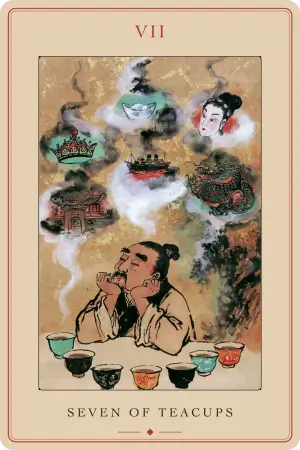
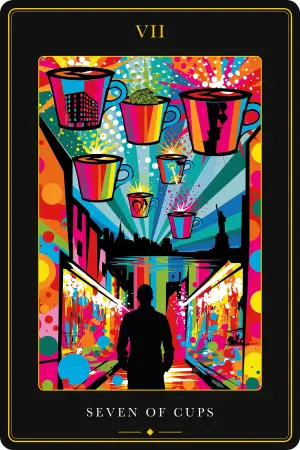


Kleine Arkana · Kelche (Wasser)
Sieben der Kelche
Sieben Kelche, in Wolken treibend: blendende Wahlmöglichkeiten, Fantasie und die Gefahr der Selbsttäuschung.
Read the complete guide: Die Tarotkarte Sieben der Kelche: Ein vollständiger Leitfaden zu ihrer Symbolik und Bedeutung
Die Karte auf einen Blick
- Numerologie
- Sieben
- Element
- Wasser
- Astrologie
- Venus im Skorpion (dritte Dekade)
- Kabbalistischer Pfad
- Netzach (Sieg)
- Zeitrahmen
- Spätherbst, die dritte Dekade des Skorpions
- Ja / Nein
- Aufrecht Nein · Umgekehrt Ja
Aufrecht
Wahlmöglichkeiten
Fantasie
Illusion
Wunschdenken
Tagträumerei
Optionen
Projektion
Versuchung
Umgekehrt
Klarheit
Entscheidung
Fokus
Realitätscheck
Entschlossenheit
Erwachen
Erdung
Sieben der Kelche in jedem Deck
Jedes Deck interpretiert denselben Archetyp neu. Vergleichen Sie die Kunstwerke und öffnen Sie ein Deck für die vollständige Deutung.
Bildsprache und Symbolik
Im Bild des Rider-Waite-Smith steht eine verhüllte Gestalt als schwarze Silhouette mit dem Rücken zu uns, die Arme halb erhoben, in einer Mischung aus Staunen und Zögern. Die Anonymität ist beabsichtigt: Die Gestalt ist ein Jedermann, der Betrachter, der von dem überwältigt ist, was vor ihm schwebt. Sieben Kelche hängen schwebend in einer großen Wolke, dem Unterbewusstsein, und weil die Kelche auf Nebel statt auf Boden ruhen, ist alles, was geboten wird, ungeerdetes Potenzial und nichts Festes.
Jeder Kelch birgt eine Vision, und jede schneidet nach zwei Seiten. Ein menschlicher Kopf ist Intellekt und der idealisierte Partner oder Eitelkeit und Selbstbezogenheit. Eine verschleierte Gestalt ist geistige Offenbarung oder die Fantasie von einem Retter. Eine Schlange ist Weisheit und Erneuerung oder Versuchung und verborgene Gefahr. Eine Burg ist Sicherheit und Erfolg oder Luftschlösser. Ein Haufen Juwelen ist Reichtum oder die Gier nach dem glänzenden Gegenstand. Ein Lorbeerkranz, der einen Totenschädel krönt, ist Ruhm, überschattet von der Sterblichkeit. Ein Drache ist schöpferische Kraft oder lähmende Furcht. Geblendet von der schieren Fülle kann der Träumende Geschenke noch nicht von Warnungen unterscheiden.
Kernbedeutung
Die Sieben der Kelche wendet den Blick nach innen, in das Labyrinth der Vorstellungskraft. Sie ist die Karte der vielen Wahlmöglichkeiten und der verführerischen Macht der Fantasie, der Punkt, an dem visionäres Potenzial in Selbsttäuschung übergeht. Der Golden Dawn nannte sie den „Herrn des trügerischen Erfolgs“, den Moment, in dem heftiges Verlangen das Urteil überwältigt und einen Menschen in ein Labyrinth aus eigener Hand führt.
Innerhalb der Farbe ist sie der Schmelztiegel. Nach der unschuldigen Nostalgie der Sechs begegnet die fragende Person der vollen, widersprüchlichen Vielschichtigkeit des erwachsenen Verlangens und der harten Wahrheit, dass sich nicht jeder Wunsch auf einmal erfüllen lässt. Ihre Bilder sind blendend, doch keines hat Gewicht, bis tatsächlich eine Wahl getroffen wird. Die ganze Spannung der Karte liegt zwischen dem Reichtum dessen, was sein könnte, und der Forderung, eine Option in der Wirklichkeit zu verankern.
Bedeutung in aufrechter Position
In aufrechter Position ist die Sieben der Kelche eine Fülle glitzernder Optionen, und diese Fülle ist ein zweischneidiges Ding. Ihre wichtigste Warnung ist die Lähmung durch Wahlfreiheit: so viele glänzende Möglichkeiten, dass sich die fragende Person auf keine festlegt und ihre Energie auf halb begonnene Ideen verstreut, in dem, was moderne Coaches das Shiny-Object-Syndrom nennen. Sie mahnt auch vor Wunschdenken, das die makellose vorgestellte Zukunft der anspruchsvollen Arbeit der Gegenwart vorzieht.
In der Liebe. Die Idealisierung eines Partners und der Sog, sich in die Idee eines Menschen zu verlieben statt in den wirklichen. Sie warnt davor, Red Flags zu ignorieren, um eine Fantasie zu schützen, und fragt, welchen Menschen Sie lieben, wenn keiner von Ihnen eine Rolle spielt.
Im Beruf. Eine Flut von Wegen und spekulativen Versprechen leichten Erfolgs. Der Rat lautet, die glänzenden Kelche zu senken, oberflächlichen Kennzahlen zu misstrauen und sich auf einen geerdeten, tragfähigen Weg festzulegen.
Bei den Finanzen. Eine Versuchung zu Spekulation und Schnellreich-Plänen. Sie rät zu Urteilsvermögen gegenüber dem Glitzern schnellen Geldes, dem das Fundament fehlt.
Bei der Gesundheit. Geistiger Nebel und ein chronisch ungeerdetes Gefühl, oft mit Flucht aus der Wirklichkeit verbunden, sei es Alkohol, endlose Bildschirme oder ein anderer Weg, das Wirkliche zu betäuben. Sie weist darauf hin, im Kopf statt im Körper zu leben.
Bedeutung in umgekehrter Position
Umgekehrt brennt der Nebel ab, und die Wolken lichten sich. Die Karte markiert den Wechsel vom passiven Träumen zum aktiven Unterscheiden, den Moment, in dem ein Mensch aufhört, schlafzuwandeln, den einen Kelch mit wirklichem Gewicht erkennt und sich festlegt. Waite las die Umkehrung als Verlangen, Willen und Entschlossenheit, und moderne Deutende behandeln sie als Erwachen: Die vielen Optionen fallen zusammen, und die innere Weisheit übernimmt.
In der Liebe. Die schützende Illusion zerbricht, und die fragende Person sieht einen Partner endlich klar, was eine ehrliche Entscheidung erzwingt, sich ganz zu binden oder zu gehen.
Im Beruf. Den Lärm zu durchschneiden und die Mühe der Umsetzung zu beginnen, ein Weg gewählt und verfolgt.
Bei den Finanzen. Neue Klarheit bei Budget und Struktur, der spekulative Dunst weicht einem Plan.
Bei der Gesundheit. Ein körperlich spürbarer Weckruf, aus dem Kopf in den Körper zu kommen, durch Bewegung und stetige, praktische Routinen. Ungünstig gestellt kann die Umkehrung auch in die andere Richtung kippen, in eine tiefere Weigerung, der Wirklichkeit ins Auge zu sehen, oder in ein Gefühl, bis zur Abschaltung überwältigt zu sein, daher entscheiden die umgebenden Karten, ob es Klarheit ist oder ein weiterer Rückzug.
Historischer Hintergrund
Die früheste Sieben der Kelche war undramatisch. Das Visconti-Sforza-Deck des 15. Jahrhunderts zeigte sieben prunkvolle Kelche für höfische Fülle, und der Tarot de Marseille behielt die szenenlose Tradition bei und ordnete die Kelche in einem sauberen geometrischen Muster an, das die Psychologie dem Leser überließ, durch die Numerologie zu ergänzen. Die Zahl Sieben trug ihr eigenes Gewicht, lange mit geistiger Ganzheit verbunden und in älteren Traditionen mit Illusion und verhüllter Wahrheit.
Der Golden Dawn gab der Karte ihre moderne Ladung, ordnete sie Netzach unter der Venus im Skorpion zu und nannte sie den „Herrn des trügerischen Erfolgs“. 1909 machte Pamela Colman Smith unter A. E. Waite, angeregt vom Sola-Busca-Deck, das ein Jahr zuvor im Britischen Museum gezeigt worden war, aus dieser Idee die schwebenden Kelche der Vision. Waite nannte sie „seltsame Kelche der Vision“ ohne wesentliche Wirklichkeit. Crowley und Lady Frieda Harris gingen noch dunkler vor, betitelten die Karte „Debauch“ und malten verwesende Lotusblüten, die in missgestaltete Kelche sickern, ein Bild von Ausschweifung, Sucht und der Verderbnis des Wasserelements.
Entsprechungen
Zahl. Sieben: die Zahl, die lange mit Illusion, verhüllter Wahrheit und Innenschau verbunden ist, hier der Punkt, an dem das Gefühlsleben in zu viele konkurrierende Wünsche zersplittert.
Astrologie. Die Karte ist die dritte Dekade des Skorpions, unter der Venus. Die Venus sucht Harmonie und Genuss, und in Intensität und Heimlichkeit des Skorpions gestellt, wird sie zu unausgewogenem Verlangen, der Verlockung eines oberflächlichen Siegs ohne wirkliche Substanz.
Element. Wasser, das Element von Gefühl, Intuition und dem Unterbewussten, hier in seiner nebelverhangensten und traumhaftesten Form.
Kabbala. Am Lebensbaum gehören die Siebener zu Netzach, dem Sieg, der Sphäre von Venus, Verlangen und Vorstellungskraft. In der Wasserwelt Briah ergibt das die verführerischen, unbeständigen Visionen, für die die Karte bekannt ist.
Elementare Würde. Als Wasserkarte kann sie klares Denken ertränken und wird am besten von der Luft einer Schwerterkarte beantwortet, deren Schärfe die Illusion durchschneidet und eine Entscheidung erzwingt.
Psychologische Perspektive
Psychologisch ist die Sieben der Kelche der Geist, der in seinem eigenen grenzenlosen Potenzial gefangen ist. Die Silhouette ist eine leere Leinwand, auf die das Verlangen projiziert wird, und die Visionen in den Kelchen sind die widersprüchlichen Wünsche des menschlichen Herzens, alle auf einmal erblickt und nicht auseinanderzuhalten. Ihre bestimmende Falle ist das maladaptive Tagträumen: das endlose Büfett dessen, was sein könnte, dem Unbehagen vorzuziehen, sich auf das festzulegen, was ist. Fachleute verbinden sie oft mit dem Enthusiasten des Enneagramms, der gegenwärtigem Schmerz entflieht, indem er in aufregenden künftigen Möglichkeiten lebt.
Der Ausweg ist Unterscheidungsvermögen statt mehr Träumen. Gemeinschaften, die diese Karte lesen, verordnen eine Art kognitive Neubewertung, die Furcht oder die Fantasie vor Gericht zu stellen und zu fragen, ob es dafür irgendeinen wirklichen Beleg gibt oder ob es eine Traumareaktion im Kostüm des Verlangens ist. Schlichten Verstand auf die grenzenlose Vorstellungskraft anzuwenden, löst den Nebel auf. Die Lehre der Karte ist der Mut, in den Nebel zu greifen, einen Kelch zu wählen und aus ihm zu trinken.
Die Sieben der Kelche in verschiedenen Decks
Die Geschichte der Karte reicht von bloßer Fülle bis zur psychologischen Warnung. In den Traditionen des Visconti-Sforza und des Tarot de Marseille sind es schlicht sieben Kelche in geordneter Anordnung, ihre Bedeutung entsteht aus Zahl und Symmetrie. Im Rider-Waite-Smith-Deck gab Pamela Colman Smith ihr die schwebenden Kelche der Vision und die überwältigte Silhouette, die Fassung, der diese Seite folgt.
Das Thoth-Deck von Crowley und Lady Frieda Harris nennt sie „Debauch“ und neigt sich mit verrottenden Lotusblüten und stehendem Schleim der zerstörerischen Kante der Venus im Skorpion zu. Moderne Decks schärfen diese dunklere Lesart weiter. Manche rahmen die Karte als eine, die viele Masken trägt und sich aus Angst, an einen Weg gebunden zu sein, weigert, einen zu wählen. Andere lassen unter einem Kelch eine Schlange hervorschlüpfen, um zu warnen, dass die Optionen nicht bloß verwirrend, sondern aktiv trügerisch sind, ein wachsendes Gespür in der Gemeinschaft, dass dies selten eine harmlose Karte ist, sondern eine Prüfung des Unterscheidungsvermögens.
In Kombination und Kontext
Die Sieben der Kelche versteht man am besten neben ihrem Zwilling, der Sieben der Schwerter. Beide handeln von Unwirklichkeit, doch die Kelche sind innere Täuschung, der Geist, der sich selbst narrt, während die Schwerter äußere Täuschung sind, der Geist, der andere narrt. Zusammen gezogen warnen sie vor einer verheerenden Schleife, in der die fragende Person getäuscht wird und durch willentliche Blindheit dabei mitwirkt. Innerhalb ihrer eigenen Farbe ist die Karte die Verwirrung zwischen der Nostalgie der Sechs der Kelche und dem entschiedenen Aufbruch der Acht der Kelche, in der die Gestalt sich endlich von den trügerischen Kelchen abwendet, um einen echten Weg zu gehen.
Benachbarte Große Arkana geben den Ausschlag. Der Mond vergrößert die Illusion zu Paranoia und visionärer Überlastung, während der Wagen, der Herrscher oder das Ass der Schwerter den Nebel mit Willenskraft, Struktur oder schierer Klarheit durchschneiden. Auch die Position zählt: Als Rat sagt sie, mit dem Träumen aufzuhören und sich auf eine geerdete Wahl festzulegen; als Ergebnis warnt sie, dass noch nichts entschieden ist und dass die glitzernden Optionen gewichtslos bleiben, bis die fragende Person eine wählt und handelt.
Fragen zur Reflexion
- Welcher der vielen Kelche, die vor mir schweben, hat noch Gewicht, wenn ich aufhöre zu träumen und schlicht hinschaue?
- Liebe ich den Menschen, der wirklich da ist, oder das Potenzial, das ich mir in Gedanken aufgebaut habe?
- Wo ziehe ich die makellose vorgestellte Zukunft der anspruchsvollen Arbeit der Gegenwart vor?
Die allgemeine Bedeutung folgt der Rider-Waite-Smith-Tradition — der kanonischen Referenz in der Tarot Academy. Öffnen Sie oben ein spezifisches Deck für dessen eigene Interpretation.
Häufig gestellte Fragen
Das Tarot erkunden
Neueste Beiträge
Erfahren Sie mehr über die Symbolik und Bedeutung der Tarotkarten. Unser Blog bietet praktische Anleitungen und Einblicke in das Tarot-Legen.