
 TE (తెలుగు)

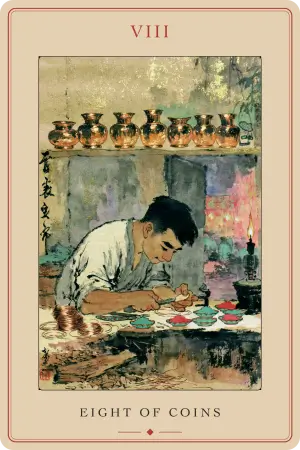
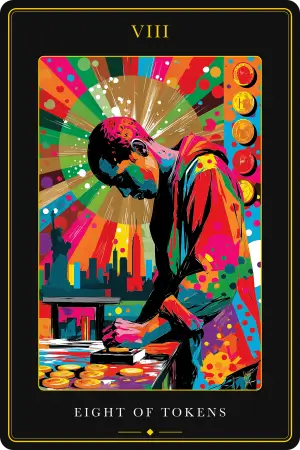


మైనర్ ఆర్కానా · పెంటకిల్స్ (భూమి)
ఎయిట్ ఆఫ్ పెంటకిల్స్
రైడర్-వైట్ హస్తకళాకారుడు తన బెంచ్ వద్ద, నైపుణ్యాన్ని సాధించే దిశగా పెంటకిల్స్ను ఒక్కొక్కటిగా చెక్కుతున్నాడు.
కార్డు ఒక చూపులో
- సంఖ్యాశాస్త్రం
- ఎనిమిది
- మూలకం
- భూమి
- జ్యోతిష్యం
- కన్య రాశిలో సూర్యుడు (మొదటి డెకాన్)
- కబాలిస్టిక్ మార్గం
- హోడ్ (తేజస్సు)
- సమయం
- వేసవి చివర, కన్య రాశి కాలం
- అవును / కాదు
- నిటారుగా ఉన్నప్పుడు అవును, ప్రయత్నంపై ఆధారపడి ఉంటుంది · తలక్రిందులుగా ఉన్నప్పుడు కాదు
నిలువు
అప్రెంటిస్షిప్
నైపుణ్యాభివృద్ధి
పాండిత్యం
శ్రద్ధ
ఏకాగ్రత
హస్తకళ
అంకితభావం
పునరావృతం
తిరగబడిన
పరిపూర్ణత కోసం తపన
బర్న్అవుట్
షార్ట్కట్లు వెతకడం
ఆశయం లేకపోవడం
అజాగ్రత్త పని
ఏకధాటి
వృధా అయిన పెట్టుబడి
ప్రతి డెక్లో ఎయిట్ ఆఫ్ పెంటకిల్స్
ప్రతి డెక్ ఒకే మూలరూపాన్ని పునర్నిర్మిస్తుంది. కళను సరిపోల్చండి, ఆపై దాని పూర్తి వివరణను చదవడానికి డెక్ను తెరవండి.
చిత్రాలు మరియు ప్రతీకవాదం
రైడర్-వైట్-స్మిత్ చిత్రం ఈ కార్డుకు దాని సుపరిచితమైన దృశ్యాన్ని ఇస్తుంది: సాదా చెక్క బెంచ్పై ఉన్న ఒక యువ హస్తకళాకారుడు సుత్తి మరియు చిన్న ఉలితో బంగారు నాణెంపై వంగి, దాని ముఖంపై ఐదు కోణాల నక్షత్రాన్ని చెక్కుతున్నాడు. అతని ట్యూనిక్ ఎరుపు మరియు నీలం రంగులలో ఉంటుంది, వీటిని రహస్య పాఠకులు మక్కువ అనే అగ్ని మరియు భావోద్వేగం అనే నీటితో కలిపినట్లుగా భావిస్తారు, ఈ రెండూ సూట్ యొక్క స్థిరమైన భూమిని తయారు చేయడానికి ఒకచోట చేర్చబడ్డాయి.
అతని చుట్టూ ఉన్న నాణేలు కాల గమనాన్ని సూచిస్తాయి. ఆరు పూర్తయిన పెంటకిల్స్ అతని పక్కన ఉన్న చెక్క స్తంభంపై వేలాడుతున్నాయి, ఇవి ఇప్పటికే చేసిన పని మరియు ఆరాధించడానికి తగినవి. ఒక నాణెం ప్రస్తుత పనిగా అతని ఉలి కింద ఉంటుంది మరియు మరొకటి అతని పాదాల వద్ద భవిష్యత్తులో చేయవలసిన ముడి పదార్థంగా వేచి ఉంది. ఒక నాణెం పూర్తయిన తర్వాత అతను తదుపరి దానిని ప్రారంభిస్తాడు, కాబట్టి ఈ చిత్రం ఒకే ముగింపు రేఖ కంటే నిరంతర అభివృద్ధిగా చదవబడుతుంది.
ఈ డెక్ ఆధారపడిన రెండు వివరాలు ఒంటరితనం యొక్క సాధారణ పఠనాన్ని మృదువుగా చేస్తాయి. నిరంతర కృషితో సాధించిన వృద్ధి కోసం సమీపంలో ఒక చెట్టు మొండెము నిలుస్తుంది మరియు కొంచెం దూరంలో ఉన్న ఆకుపచ్చ మొక్కలు జీవం మరియు పునరుద్ధరణను కలిగి ఉంటాయి. నేపథ్యంలో ఉన్న పట్టణం అతను విడిచిపెట్టిన పరధ్యానం మాత్రమే కాదు; అది అతని పని సేవలందించే సంఘం. అతని ఏకాంతం మరియు పూర్తి లీనత అంతర్గత సమతుల్యత మరియు పరధ్యానం నుండి స్వేచ్ఛగా చదవబడతాయి మరియు మొత్తం దృశ్యం యొక్క స్పష్టమైన గీతలు మరియు ఘన రూపాలు నిర్మించడానికి స్థిరమైన పునాదిని సూచిస్తాయి.
ప్రధాన అర్థం
ఎయిట్ ఆఫ్ పెంటకిల్స్ అనేది అప్రెంటిస్ మరియు శిక్షణలో ఉన్న మాస్టర్ యొక్క కార్డు. ఈ డెక్లో నిరంతర శుద్ధీకరణపై బరువు పడుతుంది: హస్తకళాకారుడు తన స్వంత నైపుణ్యంపై మాత్రమే ఆధారపడతాడు, మరియు పూర్తయిన ప్రతి పెంటకిల్ తదుపరి దాని కోసం అతనిని తిరిగి బెంచ్కు పంపుతుంది. ఇక్కడ పాండిత్యం అనేది ఒక విషయం యొక్క మొదటి కఠినమైన అవగాహన నుండి లోతైన, పనిచేసిన జ్ఞానానికి మారడం, మరియు బహుమతి వేతనం లేదా పూర్తయిన వస్తువులో ఎంత ఉందో ప్రక్రియలో కూడా అంతే ఉంటుంది.
ట్రీ ఆఫ్ లైఫ్లో ఎనిమిదవ సంఖ్య మేధస్సు, తర్కం మరియు నిర్మాణాత్మక ఆలోచనల గోళమైన హోడ్కు చెందినది. పెంటకిల్స్ యొక్క భూమి సూట్లో ఆ మానసిక శక్తి భౌతిక పదార్థంలో పాతుకుపోయింది, కాబట్టి ఈ కార్డ్ భౌతిక నైపుణ్యానికి వర్తించే మనస్సుగా చదవబడుతుంది, ఒక పెద్ద లక్ష్యాన్ని చిన్న పనులుగా విభజించి వాటిని జాగ్రత్తగా పనిచేస్తుంది. మేజర్ ఆర్కానా ఆకస్మిక మార్పుతో వ్యవహరించే చోట, ఈ కార్డ్ ఓపికైన చేరిక వేగంతో కదులుతుంది.
నిటారుగా ఉన్న అర్థం
నిటారుగా, ఎయిట్ ఆఫ్ పెంటకిల్స్ నైపుణ్యాభివృద్ధి, అప్రెంటిస్షిప్ మరియు శ్రద్ధగల కృషಿಯನ್ನು సూచిస్తుంది. ఇది తిరిగి అధ్యయనం చేయడం, మళ్లీ శిక్షణ పొందడం లేదా రోజువారీ క్రమశిక్షణకు కట్టుబడి ఉండటాన్ని సమర్థిస్తుంది మరియు మీరు చేసిన పనికి తగిన భద్రత మరియు స్థాయిని వాగ్దానం చేస్తుంది. ఇది అదృష్టం తెచ్చే కార్డు కాదు; కళలో పాండిత్యం జీతంగా మారుతుంది. ఇది చిన్న వివరాల పట్ల గర్వపడాలని మరియు షార్ట్కట్లను తిరస్కరించాలని మిమ్మల్ని కోరుతుంది.
ప్రేమలో. ఈ డెక్ దీనిని చురుకైన నిర్మాణ దశగా చదువుతుంది: కలిసి జీవించడానికి ప్లాన్ చేయడం, కుటుంబాన్ని ప్రారంభించడం లేదా పటిష్టమైన పునాదిపై భాగస్వామ్య జీవితాన్ని నిర్వహించడం. ఇద్దరు భాగస్వాములు చిన్న రోజువారీ విషయాల వరకు సహనం మరియు శ్రద్ధను పెట్టుబడిగా పెట్టడానికి మరియు క్షణికమైన అభిరుచి కంటే దీర్ఘకాలిక నమ్మకానికి విలువ ఇవ్వడానికి ఇష్టపడతారు.
కెరీర్లో. వ్యాపారం నేర్చుకునే లేదా తమకు ఇప్పటికే ఉన్నదానిని మరింత లోతుగా చేసుకునే ఎవరికైనా ఇది బలమైన సంకేతం. మాస్టర్ క్రాఫ్ట్స్మ్యాన్ కార్డుగా ఇది వృత్తిపరమైన వృద్ధిగా మారుతున్న క్రమశిక్షణను చూపుతుంది మరియు మీ నైపుణ్యాన్ని సహోద్యోగులు మరియు సూపర్వైజర్లు గమనించారని మరియు విలువనిచ్చారని ఇది నిర్ధారిస్తుంది. ఉన్నత ప్రమాణాలు మరియు స్థిరమైన దృష్టి శాశ్వత కీర్తిని నిర్మిస్తాయి.
ఆర్థిక విషయాలలో. అదృష్టం కంటే స్థిరమైన కృషి మరియు జాగ్రత్తగా నిర్వహణ ద్వారా డబ్బు పెరుగుతుంది. మీరు ఇప్పటికే మీ పనిలో పెట్టిన శక్తి ఫలించబోతోంది, అయినప్పటికీ మిమ్మల్ని ఇక్కడికి తీసుకువచ్చిన శ్రద్ధ కొనసాగాలి. ఇది క్రమబద్ధంగా ఉండటం, వివరాలను గమనించడం మరియు మీ సామర్థ్యాన్ని పెంచే శిక్షణలో పెట్టుబడి పెట్టడం ద్వారా ప్రతిఫలాన్నిస్తుంది.
ఆరోగ్యంలో. కార్డ్ దినచర్య మరియు స్థిరమైన స్వీయ-సంరక్షణకు మద్దతు ఇస్తుంది: స్థిరమైన కార్యాచరణ, పోషణ పట్ల క్రమశిక్షణతో కూడిన విధానం మరియు సుపరిచితమైన శరీర దినచర్యలలో సౌలభ్యం. జాగ్రత్తగా ట్రాక్ చేయడం మరియు చిన్న రోజువారీ ఎంపికలు కాలక్రమేణా నిజమైన ఫలితాలను తెస్తాయి మరియు ఇది నాటకీయ మార్పు కంటే మీ స్వంత శారీరక స్థితిపై నైపుణ్యంగా చదవబడుతుంది.
తలక్రిందులుగా ఉన్న అర్థం
తలక్రిందులుగా, ఎయిట్ ఆఫ్ పెంటకిల్స్ రెండు దిశలలో ఒకదాని వైపు తిరుగుతుంది. మృదువైన నీడ ఉదాసీనత: అజాగ్రత్త పనితనం, కట్ చేసిన మూలలు, తక్కువ ఆశయం లేదా మీ ప్రస్తుత నైపుణ్యానికి మించి తీసుకున్న ప్రాజెక్ట్. ఇది చదవని విద్యార్థి మరియు పనిలో శ్రద్ధ పెట్టని ఉద్యోగి.
కఠినమైన నీడ అనేది ఆధునికమైనది, బర్న్అవుట్ మరియు విషపూరిత ఉత్పాదకత. హస్తకళాకారుడు పెంటకిల్స్ చెక్కడంపై ఎంతగా స్థిరపడతాడంటే, అతను పట్టణాన్ని, తన ఆరోగ్యాన్ని మరియు తన చుట్టూ ఉన్న వ్యక్తులను కోల్పోతాడు. పని ఆకర్షణీయమైన అన్వేషణగా ఆగిపోతుంది మరియు సరిపోదనే భావనకు వ్యతిరేకంగా కవచంగా మారుతుంది. తలక్రిందులుగా ఉన్న కార్డ్ ఒక సూటి ప్రశ్న అడుగుతుంది: మీరు ఎదగడానికి పని చేస్తున్నారా లేదా మీరు జీవించడానికి అర్హులని నిరూపించుకోవడానికి పని చేస్తున్నారా? ఇది పక్షవాతానికి గురిచేసే పరిపూర్ణత గురించి కూడా హెచ్చరిస్తుంది, ఇక్కడ భారీ కృషి జరుగుతుంది అయినప్పటికీ ఏదీ సరిపోదు.
ప్రేమలో. ఏకధాటి, నిర్లిప్తత లేదా పెట్టిన కృషికి ప్రతిఫలం లభించడం లేదనే భావన. ఒక భాగస్వామి పనిలో కూరుకుపోయి అందుబాటులో లేకపోవచ్చు లేదా బాధ్యత తీసుకోవడానికి భయపడవచ్చు, సమస్యలను పరిష్కరించకుండా వదిలేయవచ్చు.
కెరీర్లో. అభ్యాసంలో నిలిచిపోవడం, ఒక నైపుణ్య స్థాయిలో చిక్కుకుపోయిన భావన లేదా ముందుకు సాగే అవకాశాన్ని దెబ్బతీసే చిన్న వివరాలపై వ్యామోహం. ఇది ఇతరుల గుర్తింపుపై చాలా కష్టపడటం లేదా పట్టుదల బర్న్అవుట్కి దారితీసే వరకు గ్రైండింగ్ చేయడం అని కూడా అర్థం కావచ్చు.
ఆర్థిక విషయాలలో. కోల్పోయిన ఏకాగ్రత మరియు సన్నని క్రమశిక్షణ, తప్పు దిశలో పెట్టిన కృషి మరియు లోపలికి వెళ్లే శ్రమతో సరిపోలని రాబడి. మీరు కోరుకున్న ఫలితం లేకుండా వనరులను హరించే వాయిదా వేయడం, నిర్లక్ష్యం చేయబడిన అధ్యయనం మరియు బిజీవర్క్ కోసం చూడండి.
ఆరోగ్యంలో. ఒకవైపు అసమతుల్యత మరియు ఆహారం లేదా వ్యాయామంపై నియంత్రణ కోల్పోవడం, మరోవైపు సాదా స్తబ్దత మరియు నిర్లక్ష్యం చేయబడిన దినచర్యలు. ఏది ఏమైనప్పటికీ మీ స్వీయ-సంరక్షణను తిరిగి అంచనా వేయడానికి మరియు మీ శారీరక స్థితికి బాధ్యత వహించడానికి ఇది ఒక పిలుపు.
చారిత్రక గమనికలు
17వ మరియు 18వ శతాబ్దపు ఫ్రాన్స్ యొక్క పాత టారో డి మార్సెయిల్స్ సంప్రదాయంలో, పిప్ కార్డులు ఎలాంటి దృశ్యాన్ని కలిగి ఉండవు. ఎయిట్ ఆఫ్ డెనియర్స్ పూల మూలాంశాలతో అల్లిన ఎనిమిది నాణేల రెండు నిలువు వరుసలను చూపించింది మరియు పాఠకులు చిత్రం కంటే సంఖ్య నుండి దాని అర్థాన్ని పొందారు. వారు ఎనిమిదిని జస్టిస్ (VIII) మరియు ది మూన్ (XVIII) ట్రంప్లతో అనుసంధానించారు, రెండూ కొలత మరియు వివేకం యొక్క కార్డులు, కాబట్టి కార్డ్ మూల్యాంకనం మరియు జాబితా గురించి మాట్లాడింది: మీరు సేకరించిన వాటిని అంచనా వేయడం మరియు ఉపయోగకరమైన వాటిని క్రమబద్ధీకరించడం.
ఆర్థర్ ఎడ్వర్డ్ వైట్ ఆధ్వర్యంలో పమేలా కోల్మన్ స్మిత్ గీసిన రైడర్-వైట్-స్మిత్ డెక్తో చాలా మందికి తెలిసిన కథన చిత్రం వచ్చింది. స్మిత్ నైరూప్య నాణేలకు మానవ కథను, తన బెంచ్ వద్ద ఒంటరి హస్తకళాకారుడిని ఇచ్చింది మరియు పెరుగుతున్న పాండిత్యం మరియు అంకితభావం వైపు ఉద్ఘాటన చేసింది. గోల్డెన్ డాన్ ఇప్పటికే ఎసోటెరిక్ పరంజాను సెట్ చేసింది, కార్డ్కు లార్డ్ ఆఫ్ ప్రూడెన్స్ అని పేరు పెట్టింది మరియు దానిని కన్య రాశిలో ఉన్న సూర్యుడికి కట్టింది.
అనుగుణ్యతలు
సంఖ్య. ఎనిమిది, దీనిని సంఖ్యాశాస్త్రం సమతుల్యత, క్రమం మరియు క్రమశిక్షణగా చదువుతుంది మరియు కర్మకు కలుపుతుంది, ప్రయత్నం చివరికి దాని మూలానికి తిరిగి వస్తుందనే ఆలోచన. ట్రీ ఆఫ్ లైఫ్లో ఇది హోడ్, తేజస్సు యొక్క గోళం, ఇక్కడ మేధస్సు మరియు నిర్మాణాత్మక ఆలోచన భౌతిక ప్రపంచంలో పాతుకుపోయింది.
జ్యోతిష్యం. కన్య రాశి మొదటి డెకాన్లో సూర్యుడు (సుమారు 0 నుండి 9 డిగ్రీలు, ఆగస్టు చివరి నుండి సెప్టెంబర్ ప్రారంభం వరకు). సూర్యుని ప్రధాన శక్తి కన్య రాశి యొక్క క్రమబద్ధమైన, సేవ-ఆధారిత స్వభావాన్ని కలుస్తుంది, కాబట్టి అహం ఓపికైన, ఖచ్చితమైన హస్తకళలో దాని సంతృప్తిని పొందుతుంది. గోల్డెన్ డాన్ ఈ కార్డును లార్డ్ ఆఫ్ ప్రూడెన్స్ అని పిలిచింది.
మూలకం. భూమి, పెంటకిల్స్ సూట్ ద్వారా: పని, శరీరం, డబ్బు మరియు స్పష్టమైన ఫలితాల రాజ్యం.
కబాలాహ్. చెట్టుపై బుధుడిచే పరిపాలించబడే సెఫిరా హోడ్, ఇది కార్డుకు వివరాల పట్ల దాని సన్నిహిత శ్రద్ధను మరియు పనిని పునరావృతమయ్యే, విశ్లేషించదగిన దశలుగా విభజించే అలవాటును ఇస్తుంది.
ఎలిమెంటల్ డిగ్నిటీ. ఇది భూమి కార్డు కావడంతో, జల కార్డుల పక్కన సౌకర్యవంతంగా ఉంటుంది మరియు విశ్రాంతి లేని అగ్ని కార్డులను స్థిరీకరిస్తుంది. మరోవైపు, ఇతర భూమి కార్డుల సాంగత్యంలో, దీని ఓపిక బరువెక్కి కేవలం శ్రమించే పనిగా మారుతుంది.
మానసిక దృక్పథం
మానసికంగా, ఎయిట్ ఆఫ్ పెంటకిల్స్ ఫ్లో స్టేట్ను, పునరావృతమయ్యే పని దుర్భరమైనదిగా ఆగిపోయి మనోహరంగా మారే లీనతను వివరిస్తుంది. టారో రచయిత్రి సుసాన్ చాంగ్ దీనిని ఉత్పాదక మయోపియా అని పిలుస్తారు, అహం పనిలో కరిగిపోయేంత పూర్తి జెన్ లాంటి ఏకాగ్రత. బయటి నుండి ఎంత నిస్తేజంగా ఉన్నప్పటికీ, మనస్సు ఎంత దగ్గరగా పనిచేస్తుందో చూసిన తర్వాత ఏదైనా పని ఆసక్తికరంగా మారుతుంది.
అదే లీనత నీడను కూడా తీసుకువెళుతుంది. కన్య రాశి యొక్క పరిపూర్ణత కోసం తపనలో, ఇది చిన్న లోపాలపై అతి-విమర్శ మరియు ఆందోళనగా మారుతుంది. ఆధునిక పాఠకులు సూక్ష్మమైన ప్రమాదాన్ని కూడా ఫ్లాగ్ చేస్తారు: స్వీయ-మెరుగుదల అనేది దాక్కునే ప్రదేశంగా ఉపయోగించబడుతుంది. నిరంతర అధ్యయనం మరియు పని మానవ సంబంధాల యొక్క గజిబిజి, అనూహ్య వ్యాపారాన్ని నివారించడానికి సామాజికంగా ఆమోదయోగ్యమైన మార్గంగా మారుతుంది. శ్రద్ధ నిజమైన హస్తకళా లేదా దాచడానికి ఉత్పాదక స్థలమా అని కార్డ్ అడుగుతుంది.
డెక్ల అంతటా ఎయిట్ ఆఫ్ పెంటకిల్స్
పునాది డెక్లు ఒక్కొక్కటి కార్డును భిన్నంగా రూపొందిస్తాయి మరియు వాటిని రైడర్-వైట్-స్మిత్ హస్తకళాకారుడి పక్కన ఉంచడం వల్ల ఈ డెక్ ఏమి చేస్తుందో స్పష్టమవుతుంది. టారో డి మార్సెయిల్స్ లో ఎయిట్ ఆఫ్ డెనియర్స్ అనేది నాణేల నైరూప్య రేఖాగణిత అమరిక, ఇది శ్రమ దృశ్యం కంటే మూల్యాంకనం మరియు వనరుల జాగ్రత్తగా ఆడిటింగ్గా చదవబడుతుంది.
క్రౌలీ మరియు హారిస్ యొక్క థోత్ డెక్ మానవ రూపాన్ని వదిలివేస్తుంది మరియు కార్డ్కు ప్రూడెన్స్ అని పేరు పెడుతుంది, ఎనిమిది డిస్క్-కేంద్రీకృత పువ్వులు ఉన్న మొక్కను చూపుతుంది. చిత్రం యాంత్రిక పని నుండి సేంద్రీయ వృద్ధికి మారుతుంది: ఒక పంటను బలవంతం చేయలేము, పెంపొందించబడాలి మరియు కలుపు మొక్కలను వదిలివేస్తే పంట గొంతు నులమబడుతుంది. ఆధునిక డెక్లలో, కిమ్ క్రాన్స్ యొక్క వైల్డ్ అన్నోన్ క్లిష్టమైన వెబ్ మధ్యలో ఒక సాలీడును ఏర్పాటు చేస్తుంది, సహనం మరియు ఖచ్చితత్వం అవసరమయ్యే నిర్మాణాన్ని నేయగల వాస్తుశిల్పి, అఖండమైన పనులను జీర్ణమయ్యే భాగాలుగా విచ్ఛిన్నం చేయాలని గుర్తు చేస్తుంది. క్రిస్-అన్నే యొక్క లైట్ సీర్స్ టారో ఆనందకరమైన, శక్తివంతమైన సమృద్ధి మరియు దైవిక సమయంపై ఆధారపడుతుంది, ఫలితాలను గట్టిగా పట్టుకోవద్దని హెచ్చరిస్తుంది. లిసా స్టెర్లే యొక్క మోడ్రన్ విచ్ టారో రైడర్-వైట్ అంకితభావాన్ని ఉంచుతుంది కానీ దానిని విభిన్నమైన, సమకాలీన చేతుల్లో ఉంచుతుంది, ఒకరి స్వంత హస్తకళ మరియు ఆర్థిక విధిపై నియంత్రణను నొక్కి చెబుతుంది.
కలయిక మరియు సందర్భంలో
రెండూ పని మరియు నైపుణ్యంతో వ్యవహరిస్తాయి కాబట్టి ఎయిట్ ఆఫ్ పెంటకిల్స్ తరచుగా త్రీ ఆఫ్ పెంటకిల్స్తో పోల్చబడుతుంది. త్రీ అనేది సహకార, ప్రణాళిక దశ, హస్తకళాకారుడు ఇతరులను సంప్రదించి ఆమోదం పొందుతాడు. ఎయిట్ పూర్తి కావడానికి దగ్గరగా ఉంటుంది మరియు స్వతంత్ర అమలు వలె చదవబడుతుంది: బ్లూప్రింట్ లేదు, పర్యవేక్షకుడు లేరు, ప్రవాహ స్థితిలో స్వావలంబన నిర్మాత మాత్రమే. మరొక కన్య రాశి కార్డ్ అయిన ది హెర్మిట్ పక్కన, ఇది ఒంటరి, లోపలి పనిలో రెట్టింపు అవుతుంది మరియు పాఠకులు రెండు బొమ్మలు తరచుగా స్ప్రెడ్ యొక్క మిగిలిన భాగం నుండి దూరంగా ఉంటారని గమనిస్తారు.
స్థానం కూడా దీనిని మారుస్తుంది. గతం స్లాట్లో ఇది వర్తమానాన్ని నిర్మించిన శిక్షణ లేదా అప్రెంటిస్షిప్ను సూచిస్తుంది. సలహాగా, ఇది రోజువారీ క్రమశిక్షణకు కట్టుబడి ఉండాలని మరియు షార్ట్కట్ల కోసం వెతకడం మానేయాలని చెబుతుంది. ఫలితంగా ఇది అదృష్టం కంటే సంపాదించిన, స్థిరమైన ఫలితాలను వాగ్దానం చేస్తుంది. అవును లేదా కాదు రీడింగ్లో ఇది షరతులతో కూడిన అవును, మీరు పనిలో పెడితే సాధ్యమవుతుంది, మరియు తలక్రిందులుగా ఉన్నప్పుడు గట్టి కాదు, ముందుకు సాగడానికి ముందు మీ నైపుణ్యాలను పదును పెట్టడానికి సంకేతం.
ఆలోచన కోసం ప్రశ్నలు
- ఒక్కోసారి ఒక్కో పనిని పునరావృతం చేస్తూ, నేను ఏ హస్తకళ లేదా నైపుణ్యానికి కట్టుబడి ఉండాలని అడగబడుతున్నాను?
- నా కృషి పాండిత్యం యొక్క నిజమైన అన్వేషణా, లేక దేనినుంచైనా దాక్కోవడానికి ఉత్పాదక స్థలమా?
- హస్తకళాకారుని పని అతని వెనుక ఉన్న పట్టణానికి ఉపయోగపడుతుంది. నా ప్రస్తుత శ్రమ అంతిమంగా ఎవరికి ఉపయోగపడుతుంది?
సాధారణ అర్థం రైడర్-వైట్-స్మిత్ రీడింగ్ను అనుసరిస్తుంది; టారో అకాడమీ అంతటా ఉపయోగించే సూచన ఇదే. దాని స్వంత వివరణ కోసం పైన ఉన్న నిర్దిష్ట డెక్ను తెరవండి.
తరచుగా అడిగే ప్రశ్నలు
టారోను అన్వేషించండి
తాజా పోస్ట్లు
టారో కార్డుల ప్రాచీన జ్ఞానాన్ని కనుగొనండి, మీ ఆధ్యాత్మిక ప్రయాణంలోని రహస్యాలను ఆవిష్కరించండి. టారో రీడింగ్లోని గొప్ప ప్రతీకవాదం, అర్థాలు, ఆచరణాత్మక ఉపయోగాలను అర్థం చేసుకోవడానికి మా బ్లాగ్ మీ ప్రవేశద్వారం.




















































