
 SV (svenska)

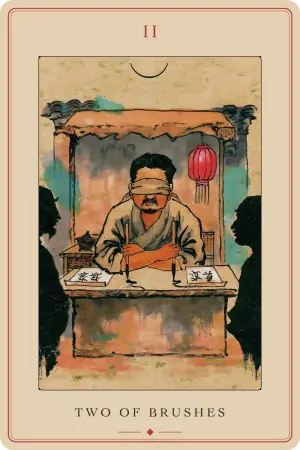
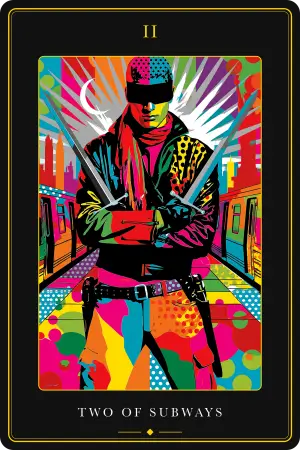


Lilla arkana · Svärd (Luft)
Två i svärd
En vapenvila med förbundna ögon: två alternativ hållna i skör balans medan valet skjuts upp.
Läs den kompletta guiden: Två av Svärd Tarotkort: En Komplett Guide till Symbolik och Betydelse
Kortet i korthet
- Numerologi
- Två
- Element
- Luft
- Astrologi
- Månen i Vågen
- Kabbalistisk stig
- Chokmah (Visdom)
- Tidsram
- Höst, Vågens säsong och dagjämningen
- Ja / Nej
- Upprätt inte ännu, omvänd nej
Rättvänd
Dödläge
Svårt val
Obeslutsamhet
Vapenvila
Balans
Undvikande
Eftertanke
Neutralitet
Omvänd
Bristningsgräns
Bindeln av
Förhastat beslut
Val utan vinnare
Överbelastning
Utlöst spänning
Påtvingad klarhet
Två i svärd i varje kortlek
Varje kortlek omtolkar samma arketyp. Jämför bildkonsten och öppna sedan en kortlek för att läsa hela dess tolkning.
Bildspråk och symbolik
I Rider-Waite-Smith-bilden sitter en kvinna med förbundna ögon på en grå stenbänk vid landets kant, med ett klippigt och oroligt hav bakom sig. Hon håller två tunga, identiska svärd korsade över bröstet, och en tilltagande månskära hänger på en skymningshimmel. Hela scenen står på trösklar: grått mellan svart och vitt, skymning mellan dag och natt.
Bindeln är kortets mest omtvistade symbol. Den kan betyda att stänga ute bruset från andras åsikter för att höra en inre röst, och hennes hår delar sig och blottar det tredje ögats plats, som om hon såg med intuition i stället för med synen. Den kan också betyda medveten blindhet, förnekelse och en vägran att se hårda fakta, och ekar bindeln hos gestalten i Rättvisan. De korsade svärden gör dubbel tjänst: de väger två likvärdiga alternativ, och de bildar en barriär över hjärtat, en försvarshållning som håller ny information ute. Bakom henne är vattnet känslans och det undermedvetnas skiftande värld, och dess klippiga skär är de dolda hindren under ytan. Månskäran knyter kortet till intuitionen och till Översteprästinnan. Intellektet, i de stela svärden, försöker hålla en fulländad balans medan känslans tidvatten fortsätter röra sig därunder.
Kärnbetydelse
Två i svärd är dödläget. Där Ess i svärd var ett enda klart intellektuellt hugg delar tvåan det fokuset i en dubbelhet: två alternativ, två krafter, två sanningar som väger till synes lika, frusna mot varandra. Det är den tröskelpaus där en människa väger alternativ och ännu inte kan röra sig, ett porträtt av avsiktlig neutralitet som håller emot under press.
Balansen är verklig men skör. Sinnet stänger ute bruset och håller nere de känslor som skulle tippa vågskålarna, och köper en tillfällig frid som svärdet, till sin natur ett aktivt vapen, alltid hotar att bryta. När kortet är som bäst ber det om äkta eftertanke, ett inre rum vitt nog att rymma motsatta ståndpunkter innan man reagerar. När det är som sämst är det förnekelse utklädd till tålamod, ett sätt att inte välja som stillsamt lämnar valet till någon annan.
Upprätt betydelse
I upprätt position markerar Två i svärd en paus och ett vägskäl. Frågeställaren är fångad mellan två likvärdiga alternativ, och det medvetna sinnet, överväldigat eller rädd för att välja fel, drar sig tillbaka till en försvarshållning: bindeln på, känslorna nertryckta, en skör ytbalans hållen på plats. Kortets bättre uppdrag är att väga ärligt snarare än att frysa fast. Det ber om en stund av enskild eftertanke och om att huvudet och hjärtat rådfrågas tillsammans innan något drag görs. Vägen är ännu inte klar, och förhastad handling skulle kosta.
I kärlek. Blockerade känslor och ett hjärta som sitter på staketet. En partner eller förälskelse kan vara äkta dragen till någon men kämpa emot, och undvika ett svårt samtal för att bevara lugnet, så tolkningen frågar om verklig kontakt hålls undan.
I karriären. Delade lojaliteter eller två jämnstarka vägar. Kortet visar ofta någon som fastnat mellan kollegor som tar parti, eller står i vänteläge i väntan på någon annans beslut. Sval distans kan här faktiskt hjälpa fram ett rättvist avgörande.
I ekonomin. Förnekelse inför siffrorna. Kortet varnar för att strunta i skulder eller skjuta upp svåra pengabeslut av ren överväldigning. Rådet är enkelt: ta av bindeln, se på kontona och agera innan det glider iväg.
I hälsan. Förträngd känsla som tar ut sin rätt kroppsligt. Instängda känslor och ångest hopar sig och tar sig uttryck i kroppen, och kortet pekar mot samtalsterapi och ärligt uttryck för att bryta motståndet och börja läka.
Omvänd betydelse
I omvänd position brister det upprätta kortets pressade balans. En lång tid av obeslutsamhet når sin gräns, bindeln faller, och frågeställaren ser äntligen situationen som den är. Den plötsliga klarheten framtvingar ofta rörelse, men eftersom valet sköts upp så länge kan handlingen bli förhastad, driven av ångest snarare än av avvägt omdöme. Kortet kan också betyda att vara klämd mellan hammaren och städet, ett verkligt läge utan vinnare där varje alternativ har ett pris och den minst dåliga vägen måste tas och dess skada accepteras. Det varnar för den mentala kostnaden av utdragen förnekelse och av rent informationsöverflöd.
I kärlek. En sanning som inte längre låter sig döljas. Undvikandet tar slut, känslorna kommer upp och ett beslut om relationen fattas, ibland tvärt och under påfrestning.
I karriären. Ett framtvingat beslut efter för mycket dröjsmål. Väntan är över och läget är klart, men draget kan komma i en rusning i stället för efter en genomtänkt plan.
I ekonomin. Verkligheten som bryter igenom förnekelsen. Överväldigandet ger vika för att se pengarnas verkliga läge, ofta först när situationen redan hunnit försämras.
I hälsan. Överbelastning som når bristningsgränsen. Undertryckt stress och ångest kokar över, vilket kan vara den kris som till sist för en människa mot hjälp.
Historisk bakgrund
I den äldre Tarot de Marseille-traditionen är Två i svärd (Deux d'Epees) ett icke-scenskt nummerkort: två krökta, sabelliknande blad som omsluter ett blommotiv, som i lekar av typen Jean Noblet från omkring 1650. Marseille-läsare tog det rakt av, som andrum och lättnad, en bokstavlig paus i striden snarare än en djup psykologisk knut, och i vissa franska traditioner som strukturell motsägelse eller inledningen på ett självdestruktivt kretslopp när det låg omvänt.
Den scenbild de flesta känner kom 1909, när Pamela Colman Smith tecknade kvinnan med bindeln under A.E. Waites ledning. Hennes Lilla Arkana lånade tanken på helt illustrerade nummerkort från den italienska Sola-Busca-leken från 1400-talet och lade på Golden Dawns astrologiska och kabbalistiska schema. Den orden gav kortet titeln 'Herre över den återställda friden'. Aleister Crowley invände: eftersom kortet är rotat i Chokmah, kraftens allra första utflöde, hade ingenting ännu störts som kunde återställas, så han döpte om det till enbart 'Frid', men påpekade att ett svärd gör även den friden spänd och tillfällig.
Korrespondenser
Tal. Två, dubbelhetens, polaritetens och partnerskapets tal. Det delar essets enda fokus i ett par krafter som måste balanseras eller försonas.
Astrologi. Månen i Vågen, och närmare bestämt Vågens första dekan, 0 till 9 grader. Solens inträde i den dekanen markerar höstdagjämningen, dagen med exakt lika mycket ljus och mörker, en passande bild för kortet.
Element. Luft, sviten för intellekt, logik och kommunikation. Luften är aktiv och flyktig, vilket är skälet till att dess 'frid' aldrig riktigt vilar.
Kabbala. Kortet sitter i Chokmah, visdomen, den andra sfären, i Yetzirah, luftens och sinnets formande värld. Så högt placerat på trädet neutraliseras svitens vanliga strid till en balans före konflikten.
Elementär värdighet. Som luftkort håller det två krafter i spänning i stället för att lösa upp dem, och det tenderar att bromsa farten hos korten omkring sig tills ett val är gjort.
Psykologiskt perspektiv
Två i svärd är dödlägets psykologi. Det är den fastlåsta känslan av att försöka hålla allt i balans genom att vägra ta itu med det svåra, och att till varje pris bevara den frid det tidigare esset gav genom förnekelse. Rachel Pollack formulerade det precis så i Seventy-Eight Degrees of Wisdom. Fällan är finstämd: att skjuta upp ett val känns som en neutral, harmlös handling, när det i själva verket är ett val i sig att inte välja, och oftast ett dåligt.
Faran har ett namn, analysparalys. En första paus för att samla fakta är klok, men att vänta för länge bygger tröghet, och om gestalten sitter kvar på stranden i evighet stiger tidvattnet och sveper bort henne, och låter yttre krafter avgöra saken på sina villkor. Kortet dyker ibland upp där det inte finns några goda alternativ alls, ett val mellan två onda ting, och där är svärden en påminnelse om handlingsutrymme och ansvar: använd sinnet till att skilja det falska från det sanna, gör det mindre dåliga valet och stå för det med svalt huvud.
Två i svärd i olika lekar
De tre traditionerna ramar in samma spänning på olika sätt. I Tarot de Marseille är kortet ett enkelt nummerkort, två krökta svärd kring ett blommotiv i mitten, läst som andrum och en paus i konflikten snarare än ett inre dödläge.
Rider-Waite-Smith-versionen är den scenbild den här sidan följer: kvinnan med bindeln, de korsade svärden över hjärtat, månskäran och det oroliga vattnet, en studie i försvarsjämvikt och förnekelse. I Thoth-leken skalar Crowley och Harris bort människogestalten till förmån för helig geometri: två svärd korsas i mitten av en blå ros med fem kronblad, med Månen balanserad på en dolk ovanför och Vågen på en dolk nedanför. De fem kronbladen står för den hebreiska bokstaven He och det gudomligt kvinnliga och mjukar upp den kärva sviten, medan svaga vindsnurror bakom lugnet varnar för att sinnet aldrig riktigt stannar. Moderna lekar fortsätter att arbeta om det: Light Seer's Tarot sätter en gestalt vid ett bokstavligt vägskäl med Odens två korpar, tanken och minnet, dragande åt var sitt håll.
I kombination och kontext
Den statiska energin i Två i svärd böjer sig lätt efter grannarna. Med Världen pekar det på en relation vid en stor vändpunkt där ett djupt åtagande är möjligt men en eller båda håller igen, förlamade vid sista steget. Med Tre i mynt visar det ett samarbete som fungerar på ytan medan en dold blockering eller ett ogjort val hindrar verklig framfart. Tillsammans med Åtta i svärd förstärker de varandra: en människa känner sig fullständigt fångad, oförmögen att välja sig ut, ofta ur en missriktad känsla av plikt.
Vissa grannar bryter dödläget. Med Solen kommer sanningen fram hur hårt bindeln än hålls på plats, och tiden av förnekelse kan inte bestå. I tidsfrågor lutar kortet mot hösten och Vågens säsong. I en ja-eller-nej-tolkning ger det sällan ett rent svar; det vanliga utslaget är 'inte ännu', en uppmaning att ta ett steg tillbaka och samla in det som saknas innan du bestämmer dig, utan att låta väntan bli ett permanent undvikande.
Reflektionsfrågor
- Vilket val kallar jag tålamod när det egentligen är undvikande, och vem hinner bestämma åt mig medan jag väntar?
- Om jag tog av bindeln just nu, vad skulle jag tvingas se om den här situationen?
- Vilket av de två alternativen väger jag bara med huvudet, och vad vet mitt hjärta redan?
Den generella betydelsen följer tolkningen för Rider-Waite-Smith — referensmodellen som används i hela Tarot Academy. Öppna en specifik kortlek ovan för dess egen tolkning.
Vanliga frågor
Utforska tarot
Senaste Inlägg
Upptäck den uråldriga visdomen hos tarotkort och lås upp mysterierna i din andliga resa. Vår blogg är din portal till att förstå den rika symboliken, betydelserna och praktiska tillämpningarna av tarotläsning.




















































