
 NL (Nederlands)

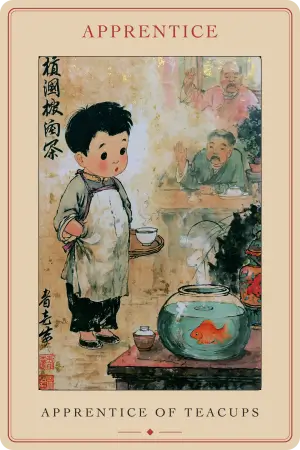
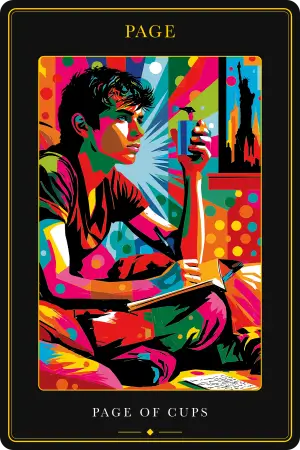


Kleine Arcana · Bekers (Water)
Page van Bekers
Smith plaatste een vis in de beker en een blik van verwondering op het gezicht erboven, en zette de hele scène op een kustlijn onder een neutrale grijze lucht.
Read the complete guide: Page van Bekers in Tarot: Een Complete Gids voor Symboliek en Betekenis
De kaart in één oogopslag
- Numerologie
- Page
- Element
- Water
- Astrologie
- Personificatie van Water: Kreeft, Schorpioen en Vissen (Golden Dawn: Weegschaal tot Boogschutter)
- Kabbalistisch pad
- Aarde van Water, Malkuth, troon van de Aas van Bekers
- Tijdsframe
- De drempel tussen jeugd en volwassenheid, wanneer gevoelens voor het eerst diepgang krijgen
- Ja / Nee
- Rechtop ja met open ogen, omgekeerd nee
Rechtop
Openheid
Gevoeligheid
Intuïtie
Ontluikende liefde
Creatieve zelfexpressie
Innerlijke stem
Kinderlijke verwondering
Aangenaam nieuws
Omgekeerd
Emotionele instabiliteit
Afgesloten van gevoelens
Kinderlijke grillen
Overgevoeligheid
Verlies van realiteitszin
Blinde illusie
Onpraktischheid
Terugtrekking
Page van Bekers in elk deck
Elk deck herinterpreteert hetzelfde archetype. Vergelijk de kunst en open een deck voor de volledige uitleg.
Symboliek en afbeeldingen
Pamela Colman Smith gaf de andere drie Pages iets levenloos in handen: een zwaard, een staf, een pentakel. Deze Page houdt een gouden beker vast waar een levende vis uit naar buiten leunt. De twee kijken elkaar aan. Die ontmoeting vormt het hart van de kaart. Het deck interpreteert de gelaatsuitdrukking van de jongeman als zuivere verwondering, een natuurlijke nieuwsgierigheid en een openheid voor wat het leven hem brengt. De vis verbeeldt de diepten van het onderbewuste die naar de oppervlakte doorbreken: een plotseling inzicht, een creatief idee of een intuïtieve boodschap die ongevraagd verschijnt. Waar de salamander als vuurwezen deze rol vervult bij de Staven, doet de vis dat hier bij de reeks van Bekers.
De beker staat voor verbeelding en liefde. De figuur die hem vasthoudt bevindt zich op de drempel tussen jeugd en volwassenheid, het moment waarop emoties echte diepgang krijgen. Achter hem golft de zee, wat hem verbindt met onderbewuste instincten en de gestage stroom van intuïtie, de volle omvang van ongefilterd gevoel.
Smith kleedde hem met zorg. Het gewaad is versierd met waterlelies, een verwijzing naar de schoonheid van emotie en een visuele knik naar de Aas van Bekers waarmee de reeks begint. Waterlelies groeien op uit modderige, stilstaande bodems, waardoor schoonheid en creatieve inspiratie hier voortkomen uit onverwachte plekken. De kleuren verdelen hun taken: lichtblauw staat voor diepte en loyaliteit, rood voor passie en activiteit. Samen verbinden ze het verstand met het gevoel. De oversized baret en de lange sjaal voegen een bohémien, licht excentrieke noot toe van iemand die de logica van het hart verkiest boven het verstand.
Boven het tafereel doet de lichtgrijze lucht iets rustigers dan de zee. Het deck leest hierin onpartijdigheid, het vermogen om de dingen te zien zoals ze werkelijk zijn. Dat voorkomt dat de compositie doorslaat in een pure droom. Het totale beeld blijft zacht en harmonieus, een natuurlijke samensmelting van energieën zonder harde inmenging.
Kernbetekenis
Dit deck presenteert de kaart als een open hart en een intuïtieve gevoeligheid op een overgangsmoment. Een emotionele of spirituele reis neemt een aanvang: openheid, nieuwe ideeën en het begin van een relatie of een verse emotionele fase, vaak verbonden met jeugdige spontaniteit. Er spreekt een bereidheid tot intimiteit en romantische verbinding uit, evenals het loslaten van oude vooroordelen.
Onder die lezing ligt de esoterische laag. Als Aarde van Water vormt de Page het punt waar fluïde, chaotisch gevoel voor het eerst een vaste vorm aanneemt, zoals water dat bevriest tot ijs. Pages overbrengen boodschappen, en in de reeks van Bekers is die boodschap emotioneel van aard. Daarom komen antwoorden onder deze kaart eerder tot uiting via dromen of intuïtieve signalen dan via verstandelijke argumenten. Verbeeldingskracht en intuïtie zijn sterk aanwezig, waaruit weer nieuwe creatieve gewaarwordingen voortvloeien.
Rechtopstaande betekenis
Rechtop vraagt de kaart je open te stellen voor nieuwe emotionele ervaringen en intuïtie en creativiteit te laten leiden in wat zich aandient. Luister naar je innerlijke stem. Ga vooruit met een open hart en geef je eigen gevoelens de tijd om te rijpen.
In de liefde. Een ontluikende romantische interesse dient zich aan: een eerste verliefdheid, tedere gevoelens of het prille begin van een romance die verbeelding en onschuld in je relaties brengt. Bij vaste stellen verdiept een nieuwe bron van inspiratie de band via wederzijds begrip, vergezeld van hernieuwde genegenheid en emotioneel comfort. De kaart staat voor zuivere emotie en oprechte openheid, een bereidheid om liefde te geven en te ontvangen, en bevestigt dat de intenties oprecht zijn.
In werk en carrière. Er ontstaan nieuwe kansen: een uitnodiging voor een project, een samenwerkingsaanbod, onverwachte steun of de start van een stage- of leertraject waarin je nieuwe vaardigheden opdoet. Toenemende creativiteit brengt vindingrijke ideeën in je dagelijkse werk, wat de deur opent naar verdere groei. In het bedrijfsleven leidt dezelfde energie tot een onconventionele strategie die echte vooruitgang brengt, samen met partners of medewerkers die een frisse blik meenemen. Je instinct is op professioneel vlak momenteel een betrouwbare gids.
Financieel. Het begin van boeiende, positieve financiële ideeën. Een veelbelovend zakelijk voorstel of een klein materieel geschenk, gecombineerd met onverwachte aanbiedingen die kunnen leiden tot strategische groei. Dit maakt het een gunstige tijd voor investeringen of een nieuwe onderneming. Projecten met een creatieve of emotionele inslag passen goed bij dit moment, zoals initiatieven rond kunst, voeding of water. De kaart draagt echter ook een zekere naïviteit in zich, dus houd je verwachtingen realistisch. Hij biedt oprechte voldoening en een stroom van verse ideeën in plaats van snelle winst, waarbij geduld en grondig onderzoek noodzakelijk blijven.
In gezondheid. Zelfzorg geleid door intuïtie en een creatieve benadering van het lichaam: een nieuw dieet, een ander trainingsschema of een verandering in persoonlijke stijl. Dit markeert een doorbraak in het begrijpen van je fysieke behoeften en een groeiende eigenliefde. Het is de start van een nieuw pad richting lichamelijk welzijn en een oprechte bereidheid om veranderingen door te voeren die zowel het lichaam als de vitaliteit versterken.
Omgekeerde betekenis
Omgekeerd wijst de kaart op emotionele onvolwassenheid en verkeerd gebruikte intuïtie: een afkeer van de realiteit, het vermijden van problemen en een aarzeling om obstakels aan te pakken. Beslissingen worden impulsief genomen of vanuit emotionele instabiliteit, terwijl een vertekend beeld leidt tot terugtrekking. Het werk bestaat erin je emotionele gehechtheden en angsten recht in de ogen te kijken en verbeelding in balans te brengen met de dagelijkse werkelijkheid.
In de liefde. Emotioneel onbegrip en teleurstelling, evenals de onwil om gevoelens te delen. Er ontstaan onrealistische verwachtingen, gevolgd door een kater wanneer een geïdealiseerde partner er niet aan voldoet. Een van beiden kan zich terugtrekken en weigeren zich open te stellen, of het geven komt geheel van één kant terwijl de ander alleen neemt. Gebroken beloftes, een gebrek aan ernst en ontbrekende wederkerigheid kenmerken deze stand. Dit kan het vertrouwen in je eigen vermogen om lief te hebben aantasten.
In werk en carrière. Luchtigheid slaat door in oppervlakkigheid: projecten worden gestart maar nooit afgemaakt, interesse vervliegt en de aanpak wordt slordig. De communicatie met collega's verloopt moeizamer en taken blijven liggen. In het bedrijfsleven uit dit zich in meeslepende plannen die in de praktijk onhaalbaar zijn, gecombineerd met een verloren emotionele binding met het project. Fantasie vertroebelt het zicht op de feiten, wat zonder grondige analyse tot ernstige tegenvallers leidt.
Financieel. Impulsieve acties, misleiding en financiële teleurstelling. Mislukte investeringen of verliezen rond creatieve projecten komen voor, net als aanbiedingen die op het eerste gezicht aantrekkelijk lijken maar misleidend of nauwelijks winstgevend blijken. De kaart waarschuwt specifiek voor mensen die misbruik maken van je goedgelovigheid. Controleer details voordat je iemand op zijn woord gelooft en houd emotionele beslissingen gescheiden van geldzaken.
In gezondheid. Het lichaam wordt verwaarloosd en er wordt niet geluisterd naar wat het nodig heeft. Emotionele overbelasting en innerlijke spanning worden zichtbaar in uiterlijk en welzijn. De angst om toe te geven wat je werkelijk wilt brengt schade toe aan je gezondheid. Enthousiasme voor zelfverbetering eb weg, ontevredenheid over het uiterlijk volgt, en nieuwe gewoontes zijn moeilijk vast te houden wanneer het zelfvertrouwen ontbreekt.
Historische context
De oudere Tarot van Marseille beeldt deze kaart af als de Valet de Coupes, een voorstelling die in niets lijkt op het tafereel aan de kust. Er is in het geheel geen zee te bekennen. De figuur staat in een geabstraheerde ruimte en draagt een bloemenkrans in plaats van een baret, wat een parallel trekt naar de vrouwelijke figuur in De Geliefden en naar de thema's van verbinding en keuze die bij die kaart horen.
Het doorslaggevende verschil zit in de beker. De Marseille-Page houdt een open beker in de ene hand en het deksel in de andere. Hij kijkt van de een naar de ander, onzeker over zijn volgende stap. Alejandro Jodorowsky, die de Tarot van Marseille benadert als een psychologisch instrument en een mandala van de ziel, leest die twijfel als een diepe emotionele blokkade: een gereserveerd persoon die aarzelt om opnieuw lief te hebben en het deksel vasthoudt uit angst het hart bloot te stellen aan pijn.
Waite en Smith publiceerden hun versie in 1909. Het was het eerste moderne deck dat de Kleine Arcana van volledig geïllustreerde scènes voorzag, wat de hele reeks verschoof van abstracte geometrie naar een intuïtieve psychologische lezing. Waite noemde de jongeman in zijn eigen beschrijving "enigszins effeminatief". De Hermetische Orde van de Golden Dawn gaf de kaart daarentegen de titel Prinses van Bekers, of Prinses van Water, en duidde haar aan met vrouwelijke voornaamwoorden. Door de combinatie van Waite's bewoordingen en de hercodering van de Golden Dawn is de androgynie die moderne lezers in deze kaart zien vanaf het begin aanwezig geweest.
Correspondenties
Getal. Page, de jongste rang onder de hofkaarten. Pages dragen een nieuw begin, kiemen en boodschappen in zich. In het systeem van de Golden Dawn vormen zij de aardse, materiële manifestatie van hun reeks.
Astrologie. Dit deck beschouwt de Page als de personificatie van het element Water zelf en bedeelt hem alle drie de watertekens toe in plaats van één enkel decanaat. Kreeft brengt de wisselvallige stemmingen, de tederheid, de hechte banden en de drang om te verzorgen. Schorpioen brengt wat naar boven komt bij inspiratie: diepe toewijding en een drang naar transformatie. Vissen brengt de subtiele intuïtie en een empathie die het logische verstand te boven gaat, waarbij de echte en de illusoire wereld onder leiding van dromen worden verbonden. Samen levert Kreeft de zuiverheid van het hart, Schorpioen emotionele kracht en Vissen intuïtieve waarneming. De Golden Dawn kent aan de Prinses van Bekers een ander bereik toe, van nul graden Weegschaal tot dertig graden Boogschutter, wat haar verbindt met Gerechtigheid, De Dood en Gematigdheid.
Element. Water, in de gegronde vorm van Aarde van Water. Bewegelijkheid, puur gevoel en intuïtie die structuur en begrenzing ontmoeten.
Kabbala. De Prinses bevindt zich in Malkuth als de troon van de Aas van Bekers, gekroond door de laatste Heh van het Tetragrammaton, waar goddelijke emotionele energie zich volledig concretiseert. Zij vertegenwoordigt het eerste bewuste gewaarwording van dat element zodra het het menselijk lichaam ontmoet.
Elementaire waardigheid. Het contrast is het scherpst ten opzichte van de Page van Staven. Beide zijn nieuwsgierige beginners verwant aan De Dwaas, maar Water is passief, ontvankelijk en naar binnen gericht, terwijl Vuur actief en naar buiten gericht is. Tarotlezers vatten het eenvoudig samen: de Page van Bekers maakt een tekening voor zijn eigen plezier, de Page van Staven maakt een tekening om hem te publiceren.
Psychologisch perspectief
Sinds Jung's archetypen en Jodorowsky's tarologie het deck veranderden in een psychologisch instrument, heeft deze kaart de rol aangenomen van het innerlijke kind: het onbedorven deel van de psyche dat zijn vermogen tot verwondering behoudt. Tarotlezers zetten de kaart in voor werk met het innerlijke kind, het herstructureren van de innerlijke dialoog en het behandelen van diepgeworteld cynisme.
De mensen die dit deck onder de rechtopstaande kaart beschrijft bezitten een gevoelige, verfijnde aard en een serene rust. Ze zijn inzichtelijk en creatief, hebben een rijke binnenwereld, oprechte empathie en een talent om emoties om te zetten in kunst. Ze zijn dromerig, vriendelijk en ontvankelijk, gewapend met een levendige verbeelding en een sterke aantrekkingskracht tot het onderbewuste. Omdat ze aanvoelen wat anderen ervaren, communiceren ze gemakkelijk. Ze volgen hun intuïtie, maken ruimte voor hun eigen gevoelens en bieden bedding aan die van anderen.
Omgekeerd slaat hetzelfde temperament om. Naïviteit en emotionele onvolwassenheid steken de kop op, samen met moeite om gevoelens te begrijpen of te uiten, wat weer leidt tot impulsiviteit. Emoties voelen onbeheersbaar en het gedrag wordt onvoorspelbaar. Empathie kan volledig verdwijnen en overmatige dromerigheid leidt tot herhaalde teleurstelling. In relaties ontstaan problemen door het onvermogen om oprecht te spreken, waarbij men zich kan terugtrekken of simpelweg het vermogen tot zelfanalyse mist.
Onder dat alles ligt de ontwikkelingsgerichte gedachte van de kaart. Voordat iemand zijn gevoelens meester wordt zoals de Koningin of Koning van Bekers dat doet, moeten die gevoelens eerst worden geëerd met de acceptatie van een kind. De gouden beker dient hierbij als veilige plek voor wat ooit werd beschaamd of onderdrukt. De kaart nodigt uit tot spel en expressie zonder perfectionisme, zoals een kind een paasei schildert of een hand omtrekt en plezier beleeft aan het maken zelf. Door de creatieve geest bezig te houden met vreugdevol werk, krijgt de verbeelding geen kans om monsters in de kast te bedenken.
De Page van Bekers in verschillende decks
Rider-Waite-Smith. De versie die op deze pagina wordt beschreven en de versie die de moderne norm heeft gezet. De bepalende keuzes zijn de levende vis, de golvende zee, het gewaad met waterlelies en de grijze lucht. Emotionele ontvankelijkheid en onverwachte inspiratie vormen de kern van de compositie.
Tarot van Marseille. De Valet de Coupes, geplaatst in een lege ruimte, gekroond met bloemen, met de beker en het deksel los van elkaar vastgehouden. De lezing draait om twijfel en verdediging in plaats van ontvankelijkheid, terwijl de bloemenkrans de figuur verbindt met De Geliefden in plaats van met de zee.
Crowley-Thoth en de Golden Dawn. De Prinses van Bekers, de Aarde van Water, waar emotie een vaste vorm aanneemt zoals water verandert in ijs. Deze traditie dicht haar het vermogen toe om patronen in de chaos te zien, zoals vormen in wolken of bladeren, en die te vertalen naar zichtbare communicatie. Het is hetzelfde vermogen dat ten grondslag ligt aan rotstekeningen, hiërogliefen en het maken van tarotkaarten. Golden Dawn-literatuur vergelijkt haar met Margaret Trelawney uit Bram Stoker's The Jewel of Seven Stars: lief, vriendelijk en teder, een eeuwige romanticus die droomt van vervoering, ogenschijnlijk afstandelijk maar stilzwijgend bekwaam en onverwacht moedig. Dezelfde literatuur wijst on het risico: dit type is gevoelig voor mediumschap, obsessie en het zichzelf verliezen in emotionele of spirituele sferen.
Moderne decks en lezingen. Waite's "enigszins effeminatieve" jongeman en de Prinses van de Golden Dawn stonden beide al los van het victoriaanse genderbinair model, iets wat de hedendaagse cartomantie heeft opgepakt. De kaart wordt veelvuldig gelezen voor non-binaire, genderqueer en genderfluïde identiteiten, voor iemand wier uiterlijke presentatie en innerlijke kern in verschillende richtingen wijzen, en voor de verkennende fase van het omarmen van een fluïde bestaan.
In combinaties en context
Moderne tarotgemeenschappen noemen dit ook wel de "excuseskaart". Pages brengen boodschappen en Bekers dragen emotie, waardoor de kaart vaak iemand aanduidt die voorzichtig contact zoekt om het goed te maken en de vis als een vredesgebaar aanbiedt. Bekijk de omringende kaarten om te zien of de excuses inhoud hebben. Zonder de verantwoordelijkheid van een Koning of Koningin kunnen excuses oprecht maar toch halfbakken zijn: een olijftak zonder plan voor veranderd gedrag, soms meer gedreven door de wens om van schuldgevoel af te zijn dan door inzicht in de aangerichte schade.
Bij vragen over een ex-partner is de kaart omstreden. Hij kan wijzen op iemand die emotioneel onvolwassen of onbeschikbaar is en terugkeert uit een behoefte aan bevestiging in plaats van toewijding, of op iemand met het Peter Pan-syndroom die ouderlijke zorg zoekt in plaats van een gelijkwaardig partnerschap. Naast de Vijf van Staven duiden lezers dit vaak als een midlifecrisis, waarbij de chaotische energie van de Page wordt gebruikt om een dieper conflict thuis te ontwijken.
Bij vragen over vruchtbaarheid en familie vervult de kaart een specifieke rol. Naast De Keizerin, De Zon of de Aas van Bekers wijst hij sterk op een conceptie en een gewenst, zachtaardig kind. Naast de Zeven van Bekers is voorzichtigheid geboden: die combinatie weerspiegelt eerder de diepte van de kinderwens dan een fysiek feit, en tarot is geen middel voor medische diagnoses.
In alledaagse relatieleggingen zet de kaart intuïtie en innerlijke emotionele stromingen vooraan, wat uitnodigt tot een open reactie op wat zich aandient. Wederzijds begrip wordt daardoor eenvoudiger. De gevoeligheid voor wat anderen doormaken groeit, de sociale kring breidt zich uit en de communicatie leunt op vriendelijkheid en tolerantie. Het kan wijzen op de komst van een nieuw, emotioneel beschikbaar persoon die steun biedt. Omgekeerd in dezelfde positie kun je rekenen op een overdaad aan emoties of juist een totaal gebrek aan empathie: het verkeerd inschatten van wat anderen voelen, weigeren te luisteren, mensen op afstand houden en een angst voor openheid die interacties oppervlakkig houdt.
Vragen ter reflectie
- De vis komt naar de oppervlakte zonder dat erom gevraagd is. Wanneer een idee of gevoel ongevraagd en een tikkeltje absurd in je leven verschijnt, ontvang je het dan met de verwondering van de Page of praat je het weg?
- Smith gaf deze figuur een neutrale grijze lucht boven een zee van gevoel. Vanuit welke van de twee lees jij op dit moment?
- De Marseille-versie van deze kaart houdt het deksel in de andere hand. Waar in je leven sta jij met de beker open en het deksel nog in je greep?
De algemene betekenis volgt de Rider–Waite–Smith-duiding — de referentie die binnen Tarot Academy gebruikt wordt. Open een specifiek deck hierboven voor zijn eigen interpretatie.
Veelgestelde vragen
Verken de Tarot
Laatste Berichten
Ontdek de oude wijsheid van tarotkaarten en ontgrendel de mysteries van je spirituele reis. Onze blog is jouw toegangspoort tot het begrijpen van de rijke symboliek, betekenissen en praktische toepassingen van tarot lezen.




















































