
 EN (English)








Combinations · Rider–Waite–Smith Tarot
Ten of Wands combinations
Ten staves pressed against one man's chest hide the house he is walking toward, and the card beside him shows who could take some of the weight. Each partner in the deck is read here with the Ten in both orientations.
Card meaning: Ten of WandsCombinations are common patterns, not rules
The readings here describe how a pair most often reads. Check each one against two things before you apply it. The first is the question: the same pair says one thing about a relationship and another about a job offer, and the question decides which side of the pair matters. The second is the background, meaning what the querent already knows about the situation, the position each card holds in the spread, and the cards around the pair. When the question or the background points another way, go with them over the general reading. Each pair page lists the exceptions that come up most often.
Pair the Ten of Wands with anything and the reading turns to weight: how much the querent is carrying, who else could hold some of it, and whether the goal is still worth the walk. Smith drew the man from behind, bent nearly double on solid ground, with ten staves hugged to his chest and fanned across his eyes. A house stands a short way ahead on a bright day, and he cannot see it. Most partners speak to that blindness. Some show the querent how close the end is; others hand him one more duty.
Cards of help and pacing ease the strain. The Four of Swords calls a deliberate rest before the final push, the Three of Cups brings friends to share the last stretch, and the King of Cups keeps a cool head under the pressure. Cards of pressure make it worse. The Devil names the fear or obligation that will not let the bundle drop, Justice shows the work unevenly divided, and the Five of Swords turns every contest into another stave. With the Hanged Man the question becomes whether the load is a chosen sacrifice or martyrdom.
Reversed, the Ten sets the staves down, and the partner shows how. Beside the World, the Sun or the King of Pentacles the release is well handled: duties are passed on and rest follows. Beside the Seven of Cups or the Devil it slides into avoidance, with duties dropped and nothing better put in their place.
Ten of Wands beside other cards in a spread
Beside Major Arcana cards
The trumps show what the load is for and what lets it drop. Death and The World mark a cycle that is ending, so the staves can be set down, and Temperance makes them bearable through sharing and pacing. The Wheel of Fortune adds responsibility along with good fortune, and The Sun puts a bright finish in view that costs overload to reach. The Devil holds the bundle in place through fear or habit, The Tower forces something to be dropped, and The Moon leaves the purpose of all that effort unclear.
Beside Wands
Every Wands partner adds Fire to Fire, which multiplies drive and leaves little room for rest, and the suit reads like the Ten's own back story. The Nine is the guard who picks up the full load, the Seven adds a challenge for each one he fends off, and the Five a contest for position. The Ace and the Two bring ideas and plans that need the bundle redistributed first. The Four's celebration waits until the staves come down, and the Six brings recognition with a bigger workload attached.
Beside Cups
Cups belong to the opposing element, and the Ten's overload tends to shut feeling out. The Ace of Cups offers love or inspiration to someone too burdened to take it in, and the Four shows help held out and refused. The Two is a strong partnership in which the querent still carries most of the weight. The Three brings friends to share the final stretch, the King of Cups steady leadership, and the Eight a decision to leave a role that has lost its meaning.
Beside Swords
Swords are friendly to Fire, and their thinking can either sort the load or add to the strain. The Ace and the King help the querent see what the bundle holds and decide what stays, and the Four calls a planned pause. The Two keeps a decision about the load on hold, the Eight makes overwork feel like a cage whose bonds are looser than they seem, and the Nine carries the day's duties into sleepless nights. Beside the Ten of Swords, a draining effort comes to a painful stop.
Beside Pentacles
Earth is neutral toward Fire, and the coins name what the labour is buying. The Nine and the King of Pentacles place comfort and solid standing in view at the end of the effort, and the Six offers support or a fair reward to a querent willing to accept it. The Three asks the querent to let a team carry part of the job. The Two's juggling has been outgrown by the sheer amount, the Seven calls for a pause to assess the return, and beside the Five help goes unclaimed in a lean time.
Beside court cards
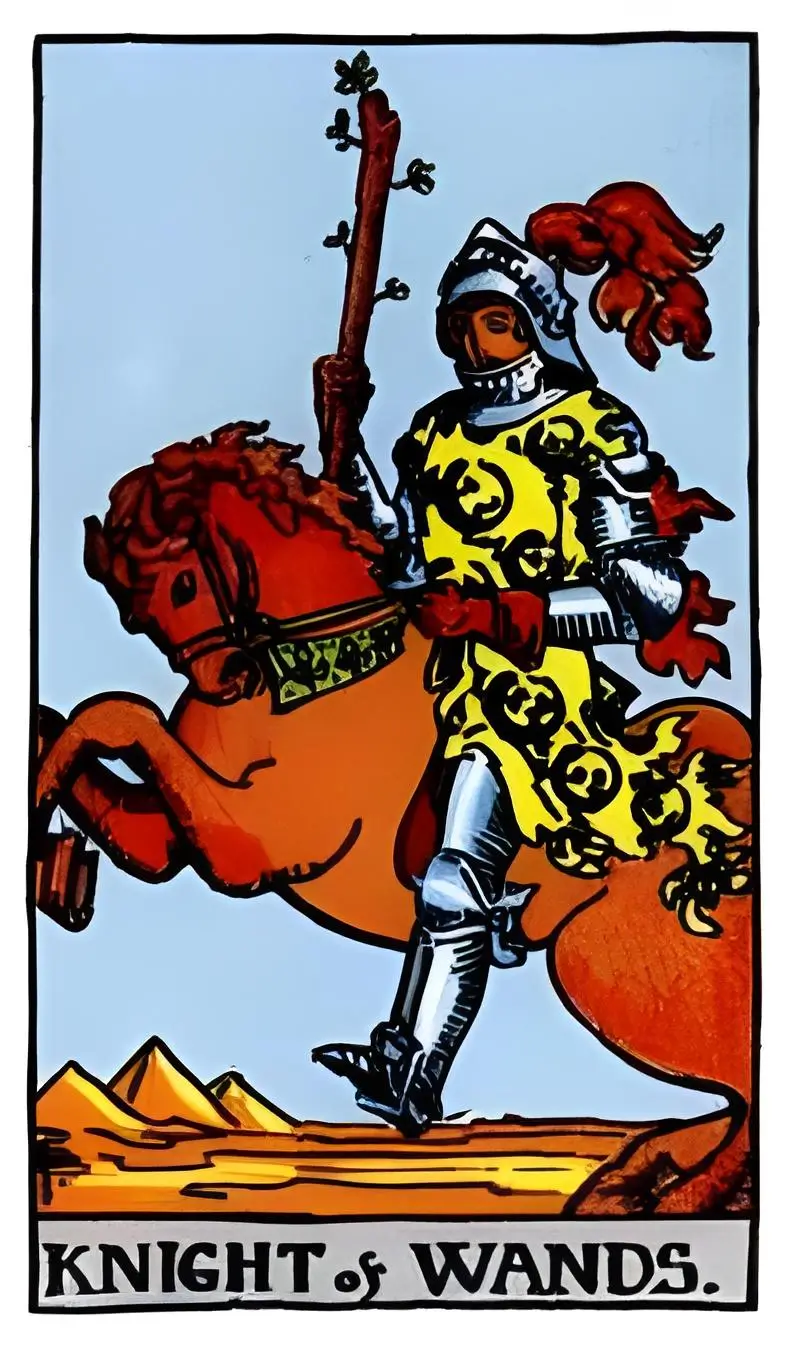
The court cards are mostly people around the querent at work or at home. The Queen and King of Wands keep a large load moving and pay for it in energy. The King of Cups and the Knight of Pentacles set a pace that can last, and the Queen of Pentacles keeps a home and a job running on one pair of shoulders. The Knight of Wands adds speed to the final stretch, which helps only while the carrier holds up. The Page of Wands is a newcomer or idea arriving when the arms are already full.
Beside a card of the same number
Every Ten closes its suit on Malkuth, and Fire sits there less comfortably than Water or Earth. The Ten of Cups shows the home and family the Ten of Wands' labour is meant to support, and the Ten of Pentacles the lasting security it holds up, often with the querent carrying most of it. The Ten of Swords is an ending already reached, set against this card's grinding continuation. Each of these pairs sums to twenty, which gives Judgment, card XX, as the quintessence: a reckoning with what the long cycle has built.
Beside reversed cards
With the Ten upright, a reversed partner usually removes the help the querent needed. A reversed Three of Pentacles leaves the whole job on the querent, a reversed King of Wands brings micromanagement or a hostile boss, and a reversed Star drains hope from the effort. The exceptions are heavy cards whose reversal means recovery. Beside the reversed Three, Eight or Nine of Swords, or the reversed Five of Cups or Five of Pentacles, the duties stay while the pain or fear behind them begins to ease.
Ten of Wands with every card
Each row gives the outlook in all four states, read from Ten of Wands's side: Ten of Wands first, then its partner.
Harmonious
Mixed
Challenging
↑ ↑
↑ ↓
↓ ↑
↓ ↓
 Two of Cups
A strong partnership exists, but the querent still carries most of the weight inside it.
Two of Cups
A strong partnership exists, but the querent still carries most of the weight inside it.
Frequently asked questions
Latest Posts
Discover the ancient wisdom of tarot cards and unlock the mysteries of your spiritual journey. Our blog is your gateway to understanding the rich symbolism, meanings, and practical applications of tarot reading.




















































