
 EN (English)

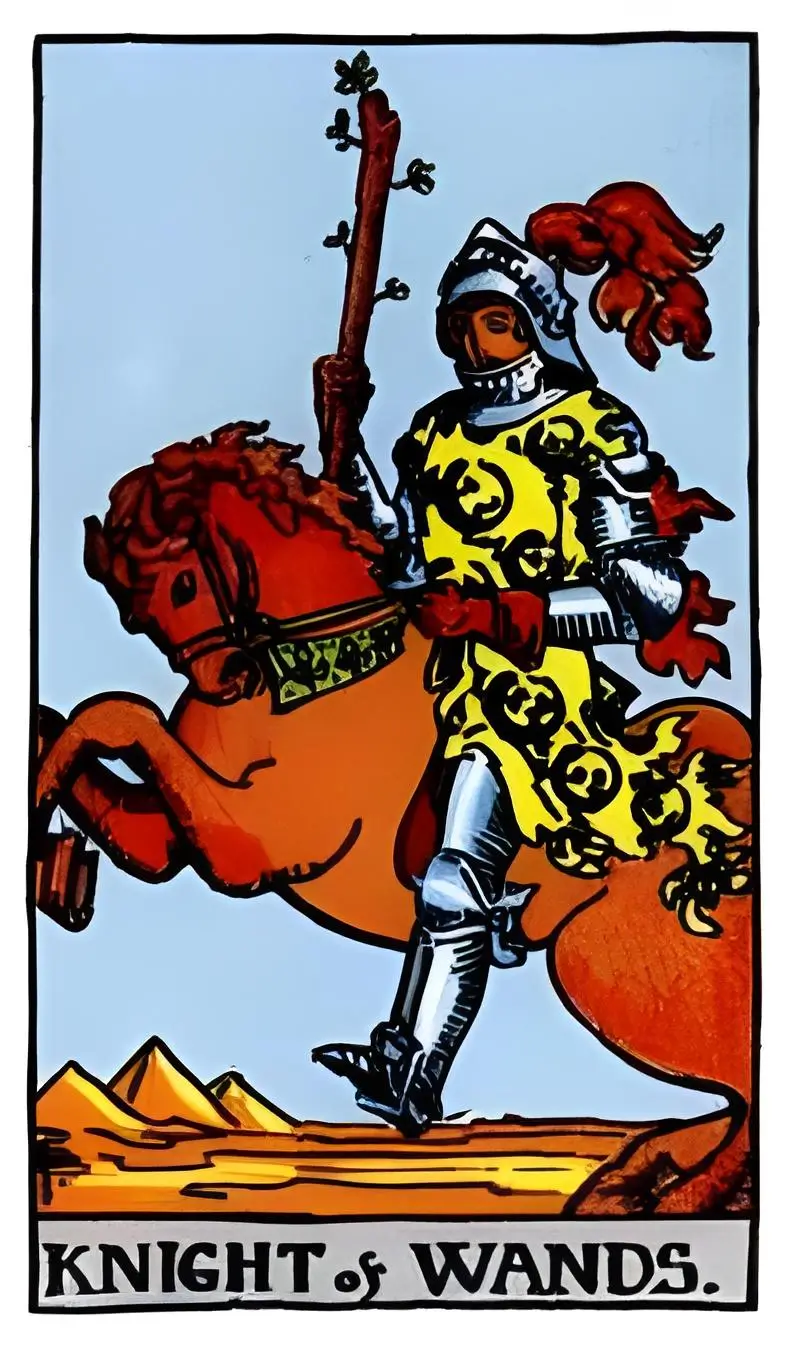
The Tower and the Knight of Wands
A rider on a rearing stallion charges forward while a tower breaks apart under lightning. The pair is about who acts first when everything changes, and whether the speed helps or harms.
How the two cards meet
Smith drew the Knight of Wands' chestnut stallion with both front hooves off the ground. The rider wears yellow and orange armour, red plumes stream back from his helmet, and he holds a leafing wand forward like a lance. The Tower is also caught at the moment of impact, a lightning bolt striking its centre and the golden crown knocked from its summit. The Tower supplies the upheaval; the Knight is the person or the drive that charges into it, or sets it off.
The two Fire cards feed each other, and the tempo is as fast as this pair can get: the Knight's timing is immediate and the Tower's comes without warning. As a court card the Knight can be someone bold and restless in the querent's life, or the querent's own urge to act first and think later.
Combinations are common patterns, not rules
The readings here describe how a pair most often reads. Check each one against two things before you apply it. The first is the question: the same pair says one thing about a relationship and another about a job offer, and the question decides which side of the pair matters. The second is the background, meaning what the querent already knows about the situation, the position each card holds in the spread, and the cards around the pair. When the question or the background points another way, go with them over the general reading. Each pair page lists the exceptions that come up most often.
Four ways the pair can fall
Both upright
Outlook: Mixed Yes or no: Not yetChange hits and someone moves at once: courage carries the querent out of the wreckage fast.
The ground shifts and the rider is already in motion. Quick reactions, courage and readiness for rapid changes come from the upright Knight, which suits a Tower upheaval: while others freeze, he acts. A sudden job loss can turn within weeks into a new venture, a move or a trip, because the Knight's love of travel and new projects gives the crisis an exit. The risk is speed without a plan, since the rearing horse already has momentum ahead of prudence. Romantically, the pair can describe a passionate new romance that begins in the middle of turmoil, or the explosive discovery of an affair as the Tower brings hidden issues to the surface; the question and the surrounding cards decide which. In money, bold action after a setback can open new streams of income, provided the querent checks real capabilities and does not run on optimism alone.
Advice
Act on the change within days, and set one checkpoint a month from now to review whether the new direction holds.
The Tower upright, Knight of Wands reversed
Outlook: Challenging Yes or no: NoRecklessness meets upheaval: an impulsive act sets off or worsens a sudden collapse.
Reversed, the Knight is recklessness, aggression and loss of control, and the upright Tower is the abrupt crash that such behaviour tends to provoke. Sometimes the Knight causes the crisis: a hasty decision, a quarrel that escalates, a risk taken without counting the cost. Sometimes the crisis comes first and the Knight's reaction makes it worse. Passion that flared quickly ends just as suddenly, and broken promises or a shallow connection come to light. At work, a project pushed forward without the necessary resources collapses, or conflict with colleagues erupts into something larger. Impulsive investments meet a sharp drop. The Tower still clears the ground, and the reversed Knight's own counsel is concrete: stop rushing, look at past mistakes, and seek a peaceful resolution to the conflict.
Advice
Make no reply, purchase or resignation for forty-eight hours after the shock, then decide with someone calm beside you.
The Tower reversed, Knight of Wands upright
Outlook: Mixed Yes or no: Not yetA bold push meets a querent who wants to avoid change, and the momentum is hard to resist.
The reversed Tower would rather keep things as they are, avoiding the decisions and the conflict that growth requires. The upright Knight arrives with energy, initiative and an appetite for risk, whether as a person who stirs things up or as the querent's own restlessness, and he makes avoidance hard to sustain. In the useful version, the Knight's courage gets the querent through the dreaded change faster than expected. In the less useful one, his taste for travel and adventure turns into escapism, a trip or a new project that lets the real problem wait. A relationship kept up for appearances may be shaken by a passionate newcomer, or by the querent's own urge for something more alive, and a choice about honesty follows. At work, an energetic colleague or a new project exposes the outdated practices the querent has been defending. The reversed Tower's warning stands: delay only makes the eventual change harder.
Advice
Use the next burst of energy on the change you have been avoiding before you spend it on anything new.
Both reversed
Outlook: Challenging Yes or no: NoPlans stall in indecision and avoidance, and the frustration leaks out as irritability.
Energy without direction, and change without consent. The reversed Knight brings postponed plans, self-doubt and loss of direction, sometimes with flashes of temper, while the reversed Tower refuses the change that would give that energy somewhere to go. The result is a restless kind of stagnation. A couple may quarrel over small things while avoiding the large one, and passion fades without anyone saying so. Someone single may rush into short connections and leave just as fast, which the reversed Tower would call escapism. Projects are started and abandoned, responsibility is avoided, and burnout comes from moving in circles. Money goes on impulse. Changes in the reversed Tower arrive gradually, so there is still time, and realistic planning, the reversed Knight's own remedy, is where it starts.
Advice
Pick one stalled plan, give it a realistic deadline and a budget, and drop the others until it is done.
When this reading may not apply
If the Knight stands for another person, the pair describes how that person acts (fast, restless, impulsive) and what the Tower brings to the surface, not what they intend. In a question about trust, the Knight beside the Tower can mean an affair discovered suddenly; read it that way only when the question is about fidelity, and otherwise as an energetic, sudden upheaval. For a question about moving or travel, the pair can describe a sudden relocation. As significator, the Knight puts the querent in the saddle, charging into the upheaval or away from it.
Frequently asked questions
Latest Posts
Discover the ancient wisdom of tarot cards and unlock the mysteries of your spiritual journey. Our blog is your gateway to understanding the rich symbolism, meanings, and practical applications of tarot reading.




















































