
 EN (English)

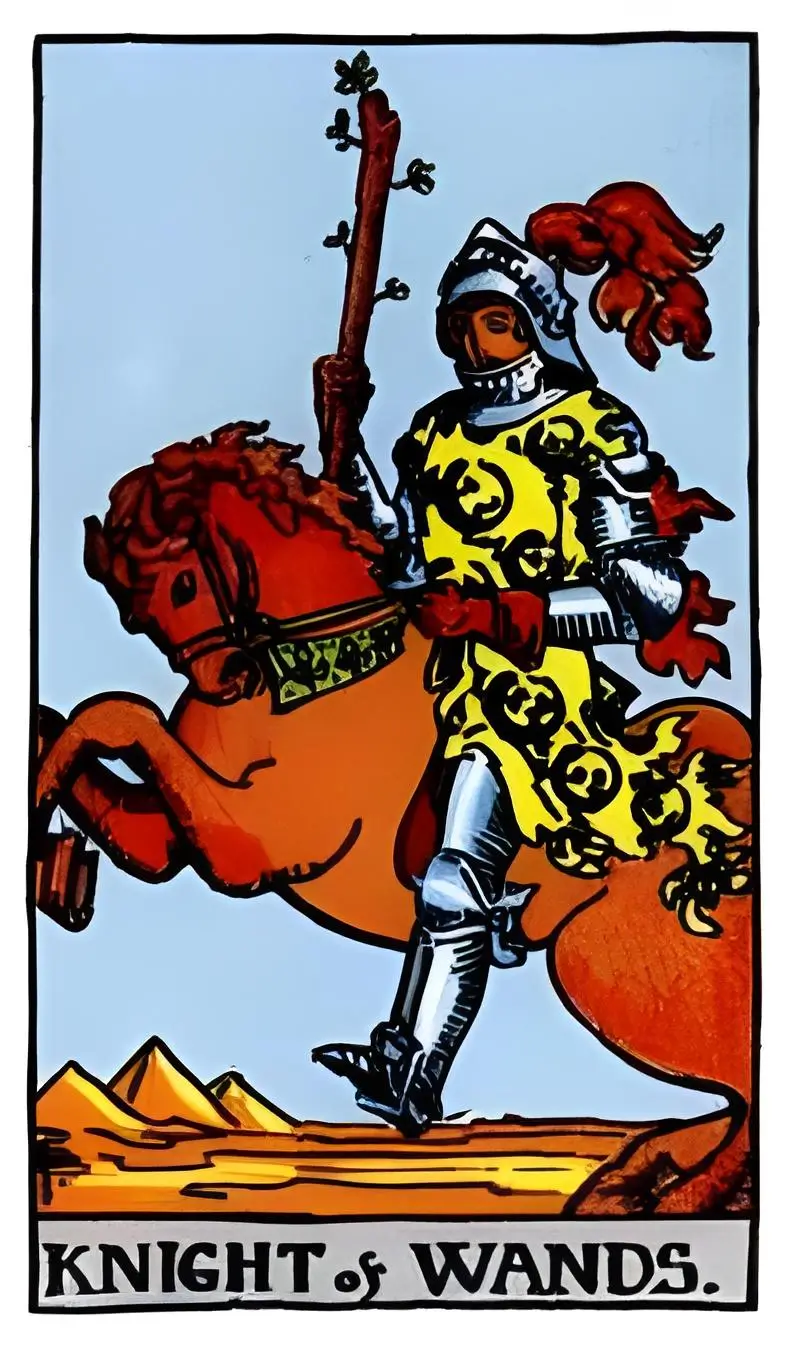
The Ten of Wands and the Knight of Wands
The Knight's horse is drawn in mid-leap while the Ten's walker inches forward under his bundle. Speed is the open question: whether it helps the querent finish the load or wears them out.
How the two cards meet
Two tempos meet. The Knight's chestnut horse is airborne on its hind legs, and its rider wears yellow and orange armour with red plumes flaring backward from helmet and arm joints. He points a leafing wand forward at an aggressive angle, and he has set out in two different shoes. Bare brown desert recedes behind him toward three far pyramids. The Ten moves at walking pace: a stooped figure, head down, the bundle held so tightly that the staves screen his eyes, and a large house not far ahead that stays invisible to him. The Knight is momentum, initiative and the start of a fast new phase of work. The Ten is the volume of work that phase tends to leave behind.
The two share Fire, so the pair runs hot and quick. That helps a final push and harms anyone already close to exhaustion, which is why the orientation of the Ten decides most of the reading.
Combinations are common patterns, not rules
The readings here describe how a pair most often reads. Check each one against two things before you apply it. The first is the question: the same pair says one thing about a relationship and another about a job offer, and the question decides which side of the pair matters. The second is the background, meaning what the querent already knows about the situation, the position each card holds in the spread, and the cards around the pair. When the question or the background points another way, go with them over the general reading. Each pair page lists the exceptions that come up most often.
Four ways the pair can fall
Both upright
Outlook: Mixed Yes or no: Not yetA burst of speed hits the final stretch, enough to finish the job or to break the person carrying it.
Momentum arrives in the middle of overload. The upright Knight marks a rapid new phase of a project, with a surge of energy and, by his own reading at work, an increased workload; the upright Ten already describes overtime and duties carried alone. Quick decisions and bold action can bring a long effort home, and the Knight's enthusiasm tends to ignite dedication in colleagues, which gives the Ten a way to share the work. Without that sharing, the extra pace stacks more staves. A fast-moving romance or a sudden decision to share a home can arrive while the querent is stretched thin, and the Ten's reminder that saying no is allowed applies to pace as much as to tasks. Financial movement is quick, with calculated risks that still need an honest check of capacity, because the Ten warns of burnout under heavy obligations.
Advice
Use the Knight's pace on the one task that finishes the project and recruit a colleague for the rest.
Ten of Wands upright, Knight of Wands reversed
Outlook: Challenging Yes or no: NoOverload driven by a reckless push: the querent moves too fast with too much and starts to burn out.
This is the Knight's warning made concrete. Reversed, he describes an uncontrollable urge to push ideas forward without evaluating resources, hasty decisions that create more problems than they solve, and a person overloaded with tasks and moving too quickly. Beside the upright Ten, that pattern has already filled the querent's arms. Energy is spent without direction, plans are postponed, and irritability can spill into quarrels. A passionate connection may flare and fade, or promises made in a rush go unkept because there is nothing left to give. At work the drop in momentum leaves projects unfinished even though the hours keep rising, and communication with colleagues suffers. Money is at risk from impulsive spending and poorly considered investments. The reversed Knight's counsel to pause and redistribute effort meets the Ten's call to rethink priorities, and both have to happen before fatigue derails the whole plan.
Advice
Halt any new initiative, list your commitments, and cancel or reassign whatever you took on in a rush.
Ten of Wands reversed, Knight of Wands upright
Outlook: Harmonious Yes or no: Leans yesWith old obligations shed, the querent has the freedom and nerve to move on something new.
With the old duties off the querent's back, there is finally room to move. The reversed Ten favours release from binding obligations, a desire for freedom and a change of goals, and the upright Knight turns that freedom into motion: travel, a new important project, bold initiative and a readiness for rapid change. Stepping away from exhausting work can uncover new openings, and the Knight is the one who rides out to meet them. Someone recovering from a heavy relationship may meet a person who brings bold optimism, perhaps while travelling, and the spark can develop quickly. Professionally, the pair suits a career change or a business linked to travel, launched from rested ground. The reversed Ten's caution about a false sense of relief still holds with money, and the Knight's own advice is to evaluate real capabilities before trusting optimism.
Advice
Plan the trip or the new venture you have postponed, and set a spending limit before the first step.
Both reversed
Outlook: Challenging Yes or no: Leans noDrive collapses and duties are abandoned, leaving delays, friction and no clear direction.
The fire has gone out of both cards. Reversed, the Knight describes exhaustion, delays, loss of direction and no follow-through, and the reversed Ten here shows its harder face: neglecting duties, refusing necessary burdens and pressure the querent can no longer handle. Projects stall, and refusing responsibility can bring conflicts with colleagues or dissatisfaction among people who were relying on the querent. Relationships may feel unstable, with interest that vanished as fast as it appeared and a wish to withdraw from communication altogether. Financial delays follow from earlier impulsive moves. Pausing is still the right instinct: the reversed Knight advises it, the reversed Ten recommends rest, and a genuine break can reset the querent's direction. The test is whether the pause is chosen and planned or a collapse that leaves unfinished duties behind.
Advice
Tell the people affected which duties you are stepping back from, then take the rest you need.
When this reading may not apply
Where the Knight is a colleague pushing a fast timeline, read the pair for the effect of that pace on the querent's workload; his motives stay outside the reading. For a trip or a relocation, the reversed Ten with an upright Knight is encouraging, while an upright Ten with the reversed Knight warns against a hasty move made to escape pressure. Drawn as the obstacle, both upright cards name speed itself as the problem. For a question about physical training, the Ten warns of overexertion, the Knight's tempo sharpens that warning, and rest belongs in the plan.
Frequently asked questions
Latest Posts
Discover the ancient wisdom of tarot cards and unlock the mysteries of your spiritual journey. Our blog is your gateway to understanding the rich symbolism, meanings, and practical applications of tarot reading.




















































