
 EN (English)

Synastry ♀ ☍ ♂ · Venus opposite Mars
Venus Opposite Mars in Synastry
With one person's Venus across the chart from the other's Mars, attraction comes with a sense of facing each other. The Venus person is drawn to the Mars person's drive, and the Mars person to the Venus person's ease, which can be magnetic. The risk is a seesaw where one always pursues and the other always weighs; balance comes when each takes back a little of the role they handed over.
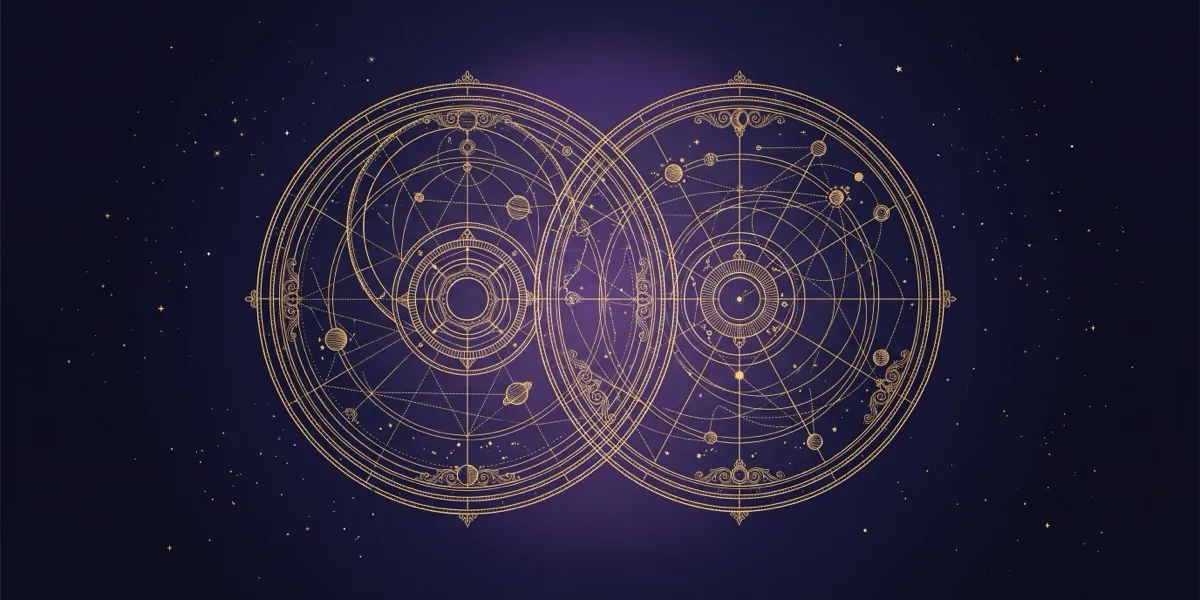
Desire and receptivity facing each other across the zodiac, each holding the pole the other gave away.
Gifts
- a magnetic, face-to-face attraction
- clear contrast between two styles
- deals closed by diplomacy plus force
- each person learning the other's skill
- a relationship that stays awake
- honest feedback from across the axis
Shadow
- a fixed seesaw of pursuer and chooser
- approval treated as a prize
- one person never acting on their own wishes
- pressure dressed up as passion
- rivalry over who sets the terms
Attraction across the chart
One person's Venus sits opposite the other person's Mars, 180° or six signs apart, within 6°. Opposite signs share a mode and form one axis, Aries–Libra, Taurus–Scorpio, Leo–Aquarius and so on, so the two planets are looking at the same question from either end. Venus, the lesser benefic, stands for attraction, receptivity and taste. Mars, the lesser malefic, stands for drive, assertion and pursuit. Both are night-sect planets and natural partners in the tradition. In an opposition they face each other.
The axis gives the contact its tone. A Libra Venus opposite an Aries Mars sets grace against directness, the classic pairing of the diplomat and the fighter. A Taurus Venus opposite a Scorpio Mars sets comfort against intensity. An Aquarius Venus opposite a Leo Mars sets cool friendship against warm pursuit. Astrologers class the opposition as challenging, a polarity that seeks balance. The tarot's Empress and Tower face each other here: ease and force, each fascinated by what the other has. The roles have nothing to do with gender; anyone can carry either planet.
The one who chooses and the one who strives
The Venus person watches the Mars person compete, push and decide, and is drawn to it. Part of the draw is that it lets the Venus person stay in a comfortable role: the one who is approached, who weighs and chooses. The Mars person's boldness can feel like an answer to a question the Venus person never quite asked aloud.
The Mars person is drawn to the Venus person's ease, charm and sense of what is pleasing. They feel motivated in the Venus person's presence, and over time they can come to feel that winning the Venus person's approval is the main goal. That gives their effort focus, and it can also tie their sense of worth to a single person's reaction.
The opposition makes each of them more visible to the other than to themselves. When the contact runs both ways, with each person's Venus opposite the other's Mars, the roles flip back and forth and the polarity feels more like a dance than a fixed arrangement.
Magnetism and the seesaw
As a romantic contact the opposition is often magnetic. Astrologers read it among the stronger signatures of attraction, with a face-to-face quality: the two notice each other across a room and feel the pull of difference. The chemistry depends on contrast, and contrast keeps it lively.
The same contrast can settle into a seesaw. One person always pursues and the other always weighs, and any attempt to change the balance feels like losing footing. The pursuer may tire of always making the effort; the chooser may tire of always being asked, or feel they never get to want something first.
Couples who do well with this contact usually let the roles move. The Venus person sometimes makes the first move, and the Mars person sometimes waits and receives. Moon, Saturn and Venus–Venus links elsewhere in the charts say much about whether the pair also share emotional comfort and long-term values, and the opposition should be read with them.
Diplomat and closer
In friendship the contact often looks like two very different temperaments who enjoy each other. One is the smooth one and the other the blunt one, and they cover for each other socially: the Venus person calms the room the Mars person stirred up, and the Mars person says what the Venus person was too polite to say.
In families it can show as a parent and child or siblings who argue often and admire each other privately. At work the opposition is useful. Two styles, diplomatic and forceful, often need each other to close a deal, run a negotiation or launch a product. One builds the relationship and the other pushes for the result.
The strain at work arrives when each starts to see the other's style as the obstacle. A clear agreement about who handles which part, and respect for the other's half, keeps the pairing productive.
When approval becomes the prize
The opposition goes wrong when the polarity freezes. The Venus person stops acting on their own wishes and only reacts to offers; the Mars person stops enjoying anything for itself and lives for the next sign of approval. Each has handed half of themselves to the other, and both feel the loss.
There is also a risk of pressure. A Mars person who treats the Venus person's approval as something to win may push past hesitation, and a Venus person who enjoys being pursued may send mixed signals to keep the chase going. Both patterns blur consent. If either person feels pushed, or feels that a no will be treated as a challenge, the contact has moved from attraction into pressure.
The polarity can also turn into rivalry over who sets the terms of the relationship. In that case the magnetism remains, but it pulls the two apart as often as together.
Tight polarity, loose polarity
This chart counts the opposition within 6°. Within about 2° the polarity is strong from the start, and the roles of pursuer and chooser tend to set quickly unless both work to move them. Near 6° it is a looser contrast: the pull is there, but each person has more room to play either part. When the planets fall in opposite signs but too far by degree, the axis still colours the attraction, though the chart does not count an aspect.
Other contacts change how the polarity plays out. A Venus–Mars trine or sextile in the other direction can give the pair an easier channel alongside the opposition. Moon contacts add tenderness and safety. Mars–Mars squares or Mars–Pluto contacts between the charts can push the face-to-face quality toward competition. A Saturn contact to either planet may freeze the roles further, or give the relationship patience.
Taking back half of what you handed over
Balance comes when each person reclaims a little of the pole they gave away. The Venus person acts on a wish without waiting to be asked: plans the trip, makes the move, starts the conversation. The Mars person makes room for pleasure, rest and receiving, without turning it into another task.
Talk about the seesaw openly. Notice who usually pursues and who usually weighs, and agree to swap from time to time. Say yes and no clearly, so that neither person has to read the other's hesitation.
Use the contrast where it helps. In shared projects, let the diplomat and the closer each do what they do best. The opposition can teach both people the skill they lacked, and that learning tends to outlast the first rush of attraction.
Questions to reflect on
- In this relationship, am I usually the one who pursues or the one who weighs?
- When did I last act on a wish of my own here?
- Does my sense of worth depend on their approval?
- Are my yes and no clear enough that they never have to guess?
Frequently asked questions
What does Venus opposite Mars mean in synastry?
It means one person's Venus sits about 180° from the other's Mars, within 6° in this chart. Attraction works through polarity: the Venus person is drawn to the Mars person's drive and the Mars person to the Venus person's ease. It can be magnetic, and it can set into fixed roles.
Is Venus opposite Mars good in synastry?
Astrologers read it as a strong contact of attraction with a challenging edge. It tends to bring magnetism and lively contrast, along with a risk of a seesaw between pursuer and chooser. It works best when the roles move and both people speak plainly.
Does Venus opposite Mars mean strong attraction?
It is often read as one of the stronger Venus–Mars signatures of attraction, with a face-to-face quality. The pull comes from contrast. Whether and how two people act on it is their choice.
What is the difference between Venus opposite Mars and Venus conjunct Mars?
The conjunction fuses the two planets in one sign, so desire and taste act as one. The opposition sets them across the chart, so attraction works through contrast and polarity. The conjunction risks fixed roles through sameness, the opposition through a seesaw.
Is Venus opposite Mars good for business partnerships?
It can be. One person tends to bring diplomacy and the other force, and together they can close deals neither would close alone. Clear roles keep each from seeing the other as the obstacle.
What orb is used for Venus opposite Mars?
This chart counts it within 6°. Within about 2° the polarity is strong and the roles set quickly; near 6° the contrast is looser.
Latest Posts
Discover the ancient wisdom of tarot cards and unlock the mysteries of your spiritual journey. Our blog is your gateway to understanding the rich symbolism, meanings, and practical applications of tarot reading.

















