
 EN (English)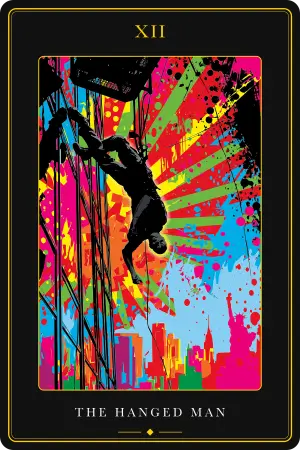


Major Arcana · 14
Death
The block goes dark and the paper goes over the windows; an ending that clears the lot for whatever the city builds next.
Card at a glance
- Numerology
- XIII
- Element
- Water
- Astrology
- Scorpio
- Kabbalistic path
- Nun (Tiphereth → Netzach)
- Timing
- Scorpio season · around 30 days
- Yes / No
- Upright yes · reversed no
Upright
transformation
turning of the block
endings
letting go
rebirth
clearing the lot
renewal
conscious farewell
Reversed
holdout
stagnation
clinging
fear of change
denial
haunting the old block
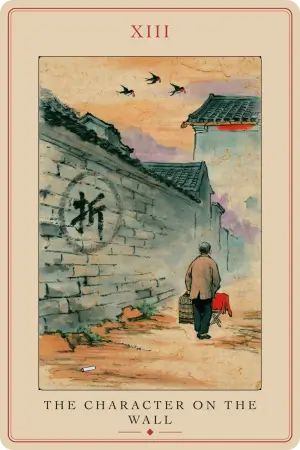
Death in each deck
Every deck reimagines the same archetype. Compare the art, then open a deck to read its full interpretation.
Imagery and symbolism
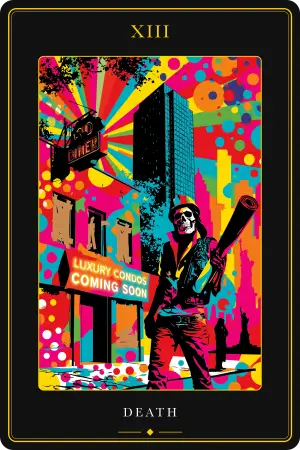
In the Tarot of New York City the card shows a beloved diner gone dark. Its windows are boarded and taped over, the neon DINER sign is switched off against the sky, and a bright banner across the awning reads LUXURY CONDOS COMING SOON. This is the death of a block, not the death of a body, the corner changing whether you signed off on it or not.
Death itself stands on the sidewalk as a skeleton in a construction worker's hard hat and work clothes, a roll of blueprints over its shoulder. The classic Rider-Waite Death rides a white horse and carries a black banner; the New York Death walks and carries plans. The forward motion is the same, but the instrument of change here is a set of drawings rather than a scythe. The skeleton is the framework that new life gets built on, and in this city the blueprint is the skeleton of the next building. Change arrives already holding the design for what replaces the old thing.
Behind the shuttered diner rises a dark glass tower whose blank curtain wall reflects nothing of the old street, the new era not bothering to ask the old one's permission. Sunburst rays break across the sky behind the dead neon, carrying the meaning of the rising sun in the classic card: every conclusion opens onto a dawn. Halftone dots scatter across the scene like confetti or falling debris, holding both readings at once, since in New York a celebration and a demolition are often the same event. In the distance stand the small black silhouettes of the Statue of Liberty and a lone watching figure. Like the king, child, priest, and fainting woman trampled under the horse in the classic Death, they mark how everyone stands equal before change. Neither liberty nor the ordinary person on the sidewalk can stop the block from turning, and both will outlast this version of it. The taped X marks on the windows are the closed eyes of the old building, while a tree branch reaching into the top of the frame insists that something organic survives every demolition.
Core meaning
Death is the diner that fed the block for forty years going dark. Paper goes over the windows, then a sign promising luxury condos, and an era of your life has closed with it: a relationship, a job, a version of yourself, a place that felt permanent. The whole block mourns the patty melt, and the mourning is real and right. But the ending has already happened. The question is no longer whether the old thing survives; it is what you build on the cleared lot. This is transformation with no negotiation, the way a lease simply is not renewed.
Waite drew a careful line between this card and The Hanged Man before it. The Hanged Man is a voluntary inner death, a surrender you choose. Death is the involuntary dissolution of the state you are in, consent or not. What it asks is the release of an outworn identity so the ground can be used again. In this deck that truth sits on the corner rather than in some distant metaphysics: the city stays itself only by never staying the same, and it teaches the hardest lesson of the Newcomer's journey, that the place which made you will not wait for you.
Upright meaning
Upright, Death means the block is turning and asks for a clean break rather than a slow bleed. Stop petitioning the landlord of the past. Hold the memorial for the diner, tell the stories, take the last photo of the neon sign, then turn and face the empty lot as space rather than absence. What is being demolished was standing on a foundation that could no longer hold the weight, and clearing it is the only way the old becomes foundation instead of rubble.
In love. An era in the heart is turning over. Sometimes it is the end of a relationship whose lease has genuinely expired, the connection that fed you for years going dark. Just as often it is the end of a phase inside a bond that continues, the honeymoon block demolished so the partnership can rise in its place. Either way the change is not optional, and the couples who let the old dynamic die and be reborn are the brownstones that survive every cycle of the city.
In career. The job, the role, or the professional era is ending. The department restructures, the industry turns over, or you realize the ladder you have been climbing leans against a building slated for demolition. Read the signage early, take your skills across to the block being built, and let the abrupt ending clear ground for work you would never have dared choose while the old role still existed.
In finances. A financial era is over, and in this city that is also a development opportunity. It can mean old debts closing out, an income stream that had become dead weight ending, or a bad arrangement collapsing. Accept the ending quickly, salvage what is load-bearing, and put the cleared money to work on the next building rather than a shrine to the last one.
In health. Almost never literal. It is the renovation notice: quitting the habit that has quietly run the show for years, the overhaul of diet, sleep, or movement that retires the old body's routines. Aging is the one development project no one can halt, so demolish what harms you while you still hold the permit.
Reversed meaning
Reversed, Death is the holdout, the person still eating breakfast in a diner that closed six months ago, at least in their own mind. The eviction has happened and the era is over, but you are still paying emotional rent on an address that no longer exists. Usually the fear underneath is not love of the old thing but terror of being a Newcomer again. Identify which lease in your life expired long ago, name the fear honestly, and start letting go one box at a time.
In love. The relationship as a boarded-up diner, over in every meaningful sense yet never officially closed. It is staying because leaving means grieving, or clinging to who you both were and keeping old grievances on life support. The card calls for the difficult step: close the door with dignity or genuinely rebuild, but stop haunting the doorway.
In career. Staying past the closing, remaining in a role that has ended in every way except your departure. Progress is blocked by refusal, not circumstance. The fear of losing the title outweighs the daily cost of haunting the old position, and the longer you guard its boarded windows, the less say you have in what gets built on the lot.
In finances. Financial holdout behavior, paying to maintain the boarded-up building: the storage unit of a former life, the subscription to an ended era, the money pit kept alive because letting it go admits the chapter is over. The transformation will occur regardless. The only choice is whether you convert the old assets deliberately or wait for the market to do the demolition at a worse price.
In health. Resistance to the body's inevitable changes, white-knuckled attachment to a former physical self, or the opposite fear that any change of routine will only mean loss. Refusing the renovation does not preserve the old building; it guarantees the demolition happens without a plan.
Historical notes
The card grew out of catastrophe. The Black Plague reached Europe in 1347 and killed somewhere between a third and half the population, and Western art turned obsessively to the macabre. Early Italian decks like the Visconti di Modrone of about 1441 painted Death with grey skin stretched over the bones, visceral and literal. The Visconti-Sforza is the only historical deck to arm its skeletal Death with a bow and arrow, the weapon long tied to the plague's swift and random strike. Other early decks, drawing on the Book of Revelation, showed Death as a reaper on a pale horse trampling every rank from emperor to commoner.
By the seventeenth century the Tarot de Marseille had settled on a walking reaper with a scythe and famously left the thirteenth card unnamed, the Arcane sans nom, since to speak Death's name aloud was thought to summon it. Its harvest imagery carried the turning point in meaning: the scythe mows down a crowned head and a commoner's, but severed hands and heads sprout from the soil like new wheat, casting Death as the fertilizer of the next generation rather than a final wall. French occultists including Lévi, Christian, and Wirth hardened that reading into doctrine. Waite and Pamela Colman Smith then returned in 1909 to the older mounted rider and layered it with Rosicrucian symbolism to set the modern standard. The Tarot of New York City keeps that lineage of endings and renewal but relocates it to the block, trading the scythe for a set of blueprints and the reaper's horse for a hard hat.
Correspondences
Number. XIII, the number the city itself is superstitious about. Many New York buildings skip the thirteenth floor, jumping from 12 to 14 in the elevator panel, which is a perfect commentary on the card: the transformation everyone rides past with their eyes on the numbers, yet the floor is fully built and holds up every floor above it. The Golden Dawn titled the card the Child of the Great Transformers, the Lord of the Gates of Death, framing it as an ongoing process rather than a final stop. Numerologically 13 resolves to 4 (1 + 3), the finished structure standing where the old one stood.
Astrology. Scorpio, the most New York of signs: intense, secretive, transformative, and possessed of a will to survive that works underground. Scorpio governs what happens beneath the surface, the deals signed in back rooms and the slow subterranean shift of a neighborhood that becomes visible only on the day the paper goes up. Its rulers are both present in the image. Mars is the hard hat and the raw force that takes structures down; Pluto is the blueprints, the hidden long-term plan and the wealth moving invisibly through real estate.
Element. Water, the medium of the emotions and the unconscious depths the card asks you to pass through.
Kabbalah. The Hebrew letter is Nun, which as a noun means 'fish' and as a verb means 'to grow' or 'to sprout,' encoding the promise of new life directly into the letter. Its path is the twenty-fourth, running from Tiphereth (Beauty) down to Netzach (Victory), the descent of ordered consciousness into raw instinctual nature.
Timing. The card leans toward Scorpio season and Samhain, when the veil is thin, and often points to lasting change within about thirty days. As a yes or no it answers yes upright, no reversed.
Psychological perspective
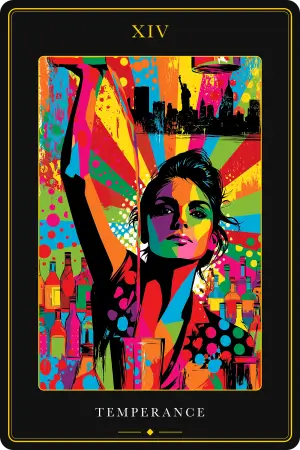
Rachel Pollack, whose Seventy-Eight Degrees of Wisdom reshaped modern reading, treats Death as the exact moment a person gives up their old masks so real transformation can happen. It follows The Hanged Man for a reason. The Hanged Man's surrender triggers a specific terror: if I abandon these behaviors and this identity, there will be nothing left, I will die. Death is the confrontation with that fear, the ego death that has to precede the harmony of Temperance, the card that follows.
The most useful corrective in modern practice is against light-washing, the habit of soothing a nervous querent by insisting the card only means change and butterflies. Death is not the butterfly, it is the caterpillar in the cocoon, which digests itself into a chaotic soup before it can reform. Transformation of that order involves genuine loss, and skipping the grief only stunts the growth.
In this deck the same psychology has two failure modes on either side of the ideal. Push the readiness for change too far and it hardens into premature demolition, a person who ends things at the first crack in the plaster because leaving feels safer than staying, quitting jobs and people the moment they need maintenance rather than transformation. Invert it and you get the holdout, someone so wounded by one ending that they barricade against all others, becoming the ghost tenant of their own past. Between the serial demolisher and the haunted holdout sits the card's whole point: the person who can tell a building that needs repair from one that needs to come down.
Death across decks
Early Italian decks. The oldest versions are the most graphic, grey flesh clinging to the skeleton, and in the Visconti-Sforza a bowman firing arrows into the crowd, images shaped by the raw memory of the plague.
Tarot de Marseille. The card goes unnamed as the Arcane sans nom, a walking skeleton swinging a scythe across a field, cutting down a crowned king's head and a commoner's alike while hands and heads sprout back out of the soil, the harvest reading that turned Death into a cycle of renewal.
Rider-Waite-Smith. Waite rejected the walking reaper and went back to the medieval rider on the white horse, then layered it with the Mystic Rose banner and the sunrise between the towers, keeping the terror of the image while wiring in the promise of resurrection underneath it.
Tarot of New York City. This deck takes the RWS meaning and moves it to the sidewalk. The rider becomes a skeleton in a hard hat, the black banner becomes a roll of blueprints, and the trampled king and commoner become the Statue of Liberty and a lone witness watching a diner go dark under a LUXURY CONDOS COMING SOON banner. Same relentless forward motion, same promise of a dawn behind the dead sign, told as the death and rebuilding of a block.
In combination and context
Death is most often set against The Tower, and the difference is worth keeping straight. Death is organic and largely foreseeable, the natural end of a cycle like autumn tipping into winter, the paper going up over the diner after months of quiet deals underground. It usually gives the querent room to engage the change willingly. The Tower is sudden and non-negotiable, the lightning bolt that drops a whole structure without warning, and it tends to arrive precisely when the quieter warnings of Death have been ignored. One reader put the link well: if you will not join Death quickly enough, the Tower may step in and change things for you.
Surrounding cards sharpen the reading. Pulled repeatedly beside Swords, Death points to a mind stuck over-analyzing a situation that is already over, still eating breakfast in a diner that closed. As a single card for a yes or no it reads yes to an ending or major change, often within about a month, and reversed it reads no, a holding pattern locked in place by the querent's own fear of the unknown city on the other side of the move. In an outcome position it predicts a conclusion you cannot avoid but can still meet on your own terms, keeping a say in what gets built on the lot.
Questions for reflection
- What has already gone dark in your life that you are still paying emotional rent on?
- Which lease expired long ago, and what makes it so hard to hand back the keys?
- If you cleared this lot yourself, with some grace, what would you spare a Tower from demolishing by force?
The general meaning follows the Rider-Waite-Smith reading — the reference used across Tarot Academy. Open a specific deck above for its own interpretation.
Frequently asked questions
Explore the Tarot
Latest Posts
Discover the ancient wisdom of tarot cards and unlock the mysteries of your spiritual journey. Our blog is your gateway to understanding the rich symbolism, meanings, and practical applications of tarot reading.




















































