
 DA (dansk)


Lille Arkana · Sværd (Luft)
Ti i Sværd
Bunden er nået med matematisk vished: det værste er overstået, og daggryet bryder allerede frem i horisonten.
Read the complete guide: Ti af Sværd i Tarot: En Komplet Guide til Symbolik og Betydning
Kortet i korte træk
- Numerologi
- Ti
- Element
- Luft
- Astrologi
- Solen i Tvillingerne (tredje dekan)
- Kabbalistisk sti
- Malkuth (Riget)
- Tid
- Sen Tvillingernes sæson, 9. til 20. juni
- Ja / Nej
- Opretstående nej, omvendt hældende mod ja
Retvendt
smertefuld afslutning
bunden nået
forræderi
sammenbrud
endegyldighed
udmattelse
egodød
overgivelse
Omvendt
genrejsning
overlevelse
langsom heling
genfødsel
modstand mod afslutning
at klamre sig til fortiden
langvarig smerte
Ti i Sværd i hvert kortsæt
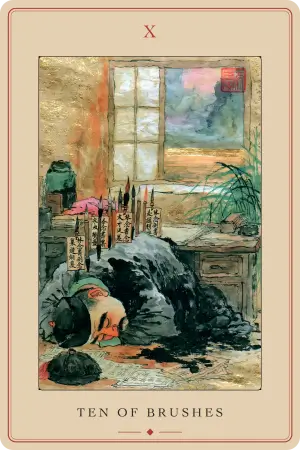
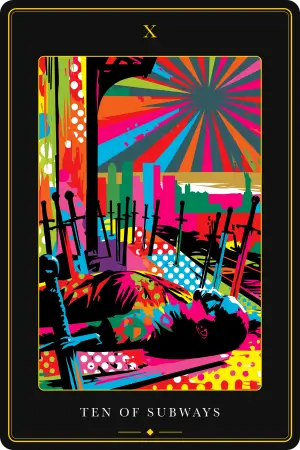
Hvert kortsæt genfortolker den samme arketype. Sammenlign kunsten, og åbn derefter et kortsæt for at læse dets fulde fortolkning.
Billedsprog og symbolik
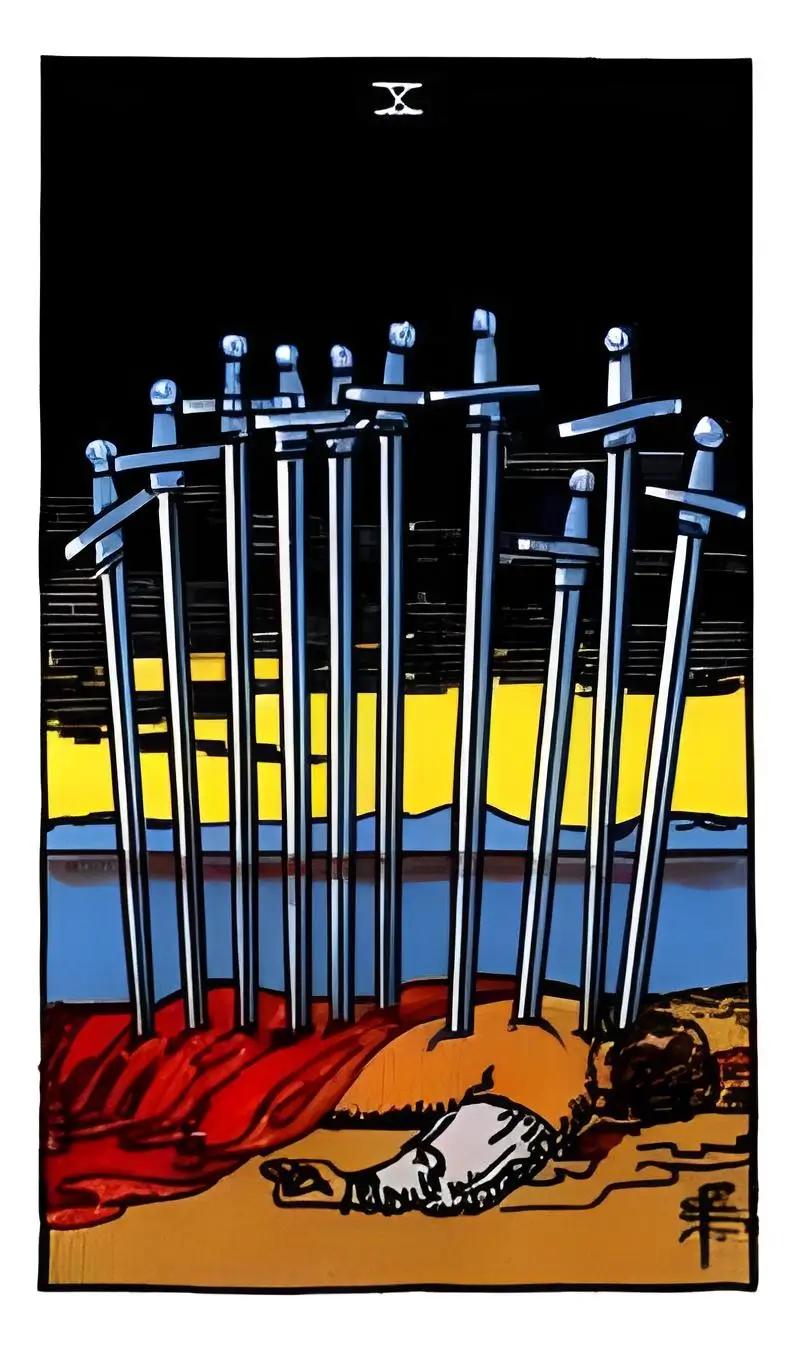
I Rider-Waite-Smith-kortet ses en skikkelse liggende på maven på en øde strandbred, svøbt i en rød kappe, med ti sværd boret ned i en snorlige række langs rygsøjlen fra baghovedet til lænden. Billedet fremstår øjeblikkeligt som et katastrofalt nederlag, men kompositionen rummer et løfte om fornyelse midt i rædslen.
Overdrivelsen med ti sværd. En enkelt klinge kan bringe et liv til ophør, så ti er en bevidst teatralsk overdrivelse. Da Sværd tilhører Luft og sindets domæne, er den fysiske død en metafor for forstanden, der har plaget sig selv til total udmattelse, og egoets endegyldige død.
Den røde kappe. Det røde stof over underkroppen repræsenterer lidenskaberne og den fysiske livskraft, nu overgivet eller bragt til ro. Rød bærer også mod, hvilket giver den faldne skikkelse en vis værdighed: et tegn på, at en reel kamp blev udkæmpet før faldet.
Det blikstille vand. I de tidligere sværdkort var vandet uroligt af vedvarende bølger. Her er havet fuldstændig fladt og spejler kroppens ubevægelighed og den dybe stilhed, der indfinder sig, når en langvarig kamp er forbi.
Daggryet i horisonten. Himlen foroven er en tung sort masse, sjælens mørke nat, men en lysende gylden stribe bryder frem langs horisonten. Dette er kortets afgørende formildende symbol: Det værste har toppet, og solen står op, så afslutningen bærer visheden om en ny begyndelse i sig.
Hånden. Den faldne persons højre hånd hviler i en gestus, som mange læser som pavens velsignelse fra Ypperstepræsten, en nådestilstand i dødsøjeblikket, mens andre ser en østlig mudra for frygtløshed. Selve debatten viser, hvordan kortet fungerer som et spejl for fysisk smerte og åndelig overgivelse.
Kernebetydning
Ti i Sværd er Golden Dawns Herre over ruin: det absolutte lavpunkt i en cyklus. Det er det punkt af maksimal mætning, hvorfra den eneste mulige bevægelse rent matematisk går opad. Kortet markerer en definitiv og uomgængelig afslutning: Den nuværende tilstand kan ikke reddes, og ethvert forsøg på at genoplive den forlænger blot smerten.
Det er værd at adskille kortet fra Døden. Døden (Store Arkana XIII) er en naturlig, uundgåelig og altomfattende ydre forvandling. Ti i Sværd er et lokalt, ofte selvforskyldt mentalt sammenbrud: forstanden der nægter at overgive sig, indtil den knækker under sin egen vægt. Ved at tvinge dig helt i knæ skræller det egoet og den lammende ængstelse af, der gik forud for faldet. Der findes intet ellevte sværd. Smertens grænse er nået, og genopbygningen begynder her.
Opretstående betydning
Opretstående viser kortet en cyklus, der har udtjent sin rolle til fulde uden mulighed for redning i dens nuværende form. Det er udmattende og overvældende, og dets råd er overgivelse: acceptér afslutningen, gennemlev sorgen, og hold op med at kæmpe en kamp, der for længst er tabt. Waite beskrev skikkelsen som udstrakt og gennemboret af alle kortets sværd i en tilstand af total underkastelse.
I kærlighed. Et smerteligt brud, utroskab eller et skænderi, der overskrider en grænse og umuliggør enhver genforening. Forholdets dynamik er helt død, og forsøg på kunstigt åndedræt forlænger blot lidelsen. Kortet anerkender afslutningen som en nødvendig oprydning for sandheden.
I karriere. En opsigelse, en konkurs, et forlist projekt eller et offer for nådesløs kontorpolitik. Det markerer et fagligt lavpunkt, hvor du må tage tabet og erkende, at en fuldstændig genopbygning fra bunden er påkrævet.
I økonomi. Et økonomisk bundniveau, hvor et tab eller en gældsbyrde har nået sin grænse. Lettelsen er, at det ikke kan blive værre herfra, så opgaven består i at standse blødningen og begynde forfra.
I helbred. Total udbrændthed, kronisk udmattelse eller fysisk sygdom udløst af langvarigt mentalt pres. Det er en kontant biologisk advarsel om, at kroppen lukker ned, fordi sindet nægtede at holde hvil.
Omvendt betydning
Omvendt flyttes fokus fra selve slaget til det langstrakte efterspil, og tolkningen deler sig i to retninger. I sin helende betydning overlever du krisen, trækker langsomt sværdene ud af ryggen og opdager, at du kom igennem en prøvelse, du troede ville udslette dig. Det er modstandskraft og håbet, der langsomt vender tilbage.
I sin advarende betydning klamrer du dig til en død situation, påtager dig en martyrrolle eller afviser en uundgåelig afslutning af frygt for det ukendte. Denne modstand forvandler en ren afslutning til en langtrukken og opslidende tilstand af fortsat smerte. Det omvendte kort stiller spørgsmålet, om du rent faktisk er i gang med at hele, eller om du blot nægter at lade sværdene falde ud.
I kærlighed. At sørge over et forhold, der reelt er forbi, og langsomt komme til kræfter igen, eller at fastholde en relation der er død, og derved rive såret op på ny.
I karriere. At rejse sig efter et professionelt nederlag og genvinde fodfæstet, eller at dyrke en bitterhed og offerrolle længe efter, at sagen er afsluttet.
I økonomi. Støt og rolig genopretning efter et lavpunkt, eller at trække gamle tab i langdrag i stedet for at slå en streg i sandet og begynde på ny.
I helbred. Langsom genvinding af energi efter udbrændthed, eller en advarsel mod at overhøre kroppens signaler, så udmattelsen fordybes.
Historiske noter
Det visuelle nybrud for Lille Arkana har sine rødder i Sola-Busca-tarotkortene fra omkring 1491 i Ferrara eller Venedig, det tidligste komplette sæt på 78 kort og det første med fuldt illustrerede talkort. Waite og Pamela Colman Smith nærstuderede sort-hvide fotografier af dette sæt på British Museum, doneret af familien Busca-Serbelloni i 1907, under udformningen af Rider-Waite-Smith-sættet.
Colman Smith lånte selektivt. Hun overtog motivet til Tre i Sværd direkte, men Sola-Buscas Ti i Sværd viste en skikkelse, der skedede sværd, en kropsholdning hun i stedet genbrugte til Ti i Stokke. Den gennemborede mand på den øde strand var en helt ny scene skabt til at opfylde Golden Dawns astrologiske rammer og titlen Herre over ruin. Mary K. Greer forbandt siden motiverne med de grals- og frimurermysterier, der prægede Waite, herunder den myrdede mesterbygger og sværdet der splintredes, samt Waites egne notater om en streng tugtelse, der udkrystalliserer en renere åndelig kerne.
Korrespondancer
Tal. Ti, afslutningen på en cyklus og kulørens absolutte endemål. På Livets Træ hører alle tiere til Malkuth, den tiende sfære.
Astrologi. Tredje dekan af Tvillingerne, omtrent fra 9. til 20. juni, styret af Solen. Når Solens ubønhørlige lys rammer Tvillingernes spredte sidste grader, opstår total intellektuel udbrændthed: et skarpt projektørlys der udstiller nytteløsheden i endeløse spekulationer og tvinger sindet til at lukke ned.
Element. Luft, intellektet, her overbelastet i en sådan grad, at det knuser tænkeren.
Kabbala. Malkuth, Riget, den tætteste materielle sfære, inden for Yetzirah, forstandens formende verden. Dette er Malkuth i Yetzirah: luftigt, formløst intellekt presset ned i den faste materie, hvor det splintres under trykket. Da Malkuth samtidig er Træets rod, bliver ødelæggelsen afsættet for springet tilbage til Esset i Sværd og en ny cyklus.
Elementær værdighed. Et sværd blandt sværd, dobbelt Luft, sindet uden noget andet element tilbage til at skabe balance.
Timing samt ja/nej. Det peger mod sen Tvillingernes sæson og tidlig sommer. Som ja eller nej er det opretstående et nej, en cyklus der kollapser, og det blødes op mod et ja omvendt, når genrejsningen begynder.
Psykologisk perspektiv
Crowley kaldte dette kort for fornuften løbet løbsk: nedbrydningen af stabil energi, der opstår, når intellektet opererer uden kontakt til hjertet eller sjælen. Endeløs analyse fører til tabet af håb og tillid, og sindet lammer sig selv med eksistentiel angst. Mary K. Greers undersøgelser af emotionelle reaktioner på kortsættet viste, at Ti i Sværd konsekvent fremkaldte ord som håbløs, overvældet og fortvivlelse, hvilket cementerer dets position som et af de mest ubehagelige kort.
Moderne tolkere diskuterer kortet åbent. Visse læsere betragter det som katastrofetanker: en mild påmindelse om, at du gør et stort drama ud af noget mindre og skaber en selvopfyldende profeti. Traumeinformerede læsere afviser dette og pointerer, at det at affærdige smerte som overdrevent drama underkender ægte lidelser. Begge tolkninger mødes i den samme forløsning: Dette er den frygtede katastrofe fra Ni i Sværd, der endelig har ramt, angsten gjort virkelig, og du overlevede. Kortet anerkender, at situationen er hård, men forsikrer om, at smerten ikke kan stige herfra: Egoet gennemlever sin nødvendige død, så genopbygningen kan starte.
Ti i Sværd på tværs af kortsæt
Tarot de Marseille. Et talkort uden sceneri, hvor otte svungne klinger danner en oval med to lige sværd krydset i midten. Paul Marteau tolkede det som kræfter holdt i fast ligevægt, gæringens alkymistiske fase, hvor gamle psykiske mønstre dør, så en højere bevidsthed kan fødes, idet klingerne dæmmer op for kaos snarere end gennemskærer.
Crowley-Thoth. Malet af Lady Frieda Harris udelader kortet menneskeskikkelsen til fordel for aggressiv geometri: Ni sværd borer sig indad for at splintre en central klinge mod en brudt baggrund. Crowley gav det titlen Ruin, det totale sammenbrud af harmonisk kraft. Alligevel knejser et solsymbol øverst som et tegn på, at Esset i Sværds rene gnist vil genopstå af denne ødelæggelse.
Moderne og kulturelle ekkoer. Ithell Colquhoun genfortolkede kortet i 1977 i abstrakte emaljefarver, hvor lilla skærer igennem gult for at udtrykke psykisk sammenbrud uden blodige detaljer. Kortet er blevet en kulturel reference for ruin og afslutninger, fra tv-serien Halt and Catch Fire der opkaldte sin finale efter det, til rockbands der låner dets energi, altid med fokus på udtømningen af ressourcer efterfulgt af et dæmrende håb.
I kombination og kontekst
Ti i Sværd afslutter det forløb, der begyndte med otterem og nieren. Otteren er handlingslammelsen og følelsen af at være fanget af ydre omstændigheder. Nieren er den søvnløse frygt for katastrofen. Tieren er katastrofen, der indtræffer, og tolkere møder det ofte med lettelse, fordi ventetiden endelig er forbi, og spændingen udløses i stilhed.
Konteksten forfiner udtrykket. Sammen med faste strukturelle kort som Kejseren eller Ypperstepræsten kan det markere den smertelige, men nødvendige afslutning på en tid med hemmeligheder eller pligter, bunden der må nås, før man kan leve autentisk. I et oplæg om, hvordan andre ser dig, viser det, at omverdenen opfatter dig som én, der har været hårdt prøvet, eller det markerer det endelige punktum for et forhold med brudt kontakt. I et ja-eller-nej-oplæg er det opretstående et nej, en afsluttet cyklus, mens daggryet i horisonten fastholder, at den næste begyndelse allerede er på vej.
Spørgsmål til refleksion
- Hvilken afslutning kæmper du stadig imod, som i virkeligheden allerede har fundet sted?
- Hvis du accepterede, at denne cyklus er uigenkaldeligt forbi, hvad ville du så endelig have frihed til at give slip på?
- Hvor kan du ane det gyldne lys i din egen horisont, selv fra bunden?
Den generelle betydning følger Rider-Waite-Smith-læsningen — referencen, der bruges i hele Tarot Academy. Åbn et specifikt kortsæt ovenfor for dets egen fortolkning.
Ofte stillede spørgsmål
Udforsk tarot
Seneste Indlæg
Opdag den gamle visdom fra tarotkort og lås op for mysterierne i din spirituelle rejse. Vores blog er din indgang til at forstå den rige symbolik, betydninger og praktiske anvendelser af tarotlæsning.




















































