
 UK (українська)



Молодші Аркани · Пентаклі (Земля)
Шістка Пентаклів
Купець зважує монети на терезах для двох жебраків на колінах: кругообіг віддачі та отримання, і питання про те, у кого в руках реальна влада.
Read the complete guide: Шістка Пентаклів в Таро: Повний посібник із символіки та значення
Коротко про карту
- Нумерологія
- 6
- Стихія
- Земля
- Астрологія
- Місяць у Тельці (10°–19°)
- Кабалістичний шлях
- Тіферет (Краса)
- Період
- Початок травня, або етап взаємообміну та відновлення балансу
- Так / Ні
- Пряме положення так, перевернуте ні
Пряме положення
щедрість
благодійність
взаємообмін
баланс
підтримка
взаємність
меценатство
справедливість
Перевернуте положення
дисбаланс
приховані умови
одностороння віддача
борги
маніпуляція владою
експлуатація
невміння приймати
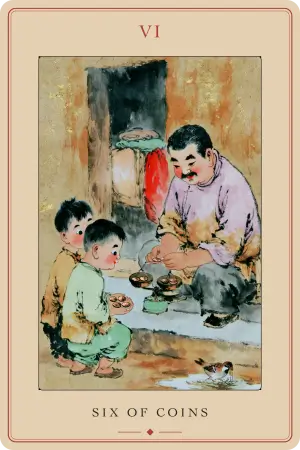
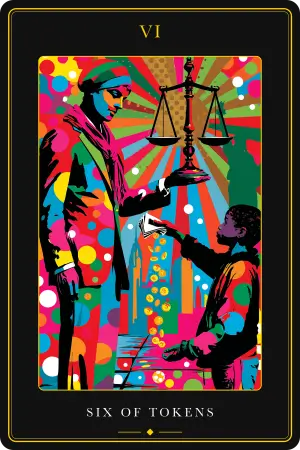
Шістка Пентаклів у кожній колоді
Кожна колода по-своєму переосмислює один і той самий архетип. Порівняйте ілюстрації та відкрийте колоду для повного тлумачення.
Образи та символіка
Памела Колман Сміт зобразила сцену суспільного перерозподілу ресурсів: заможний благородний чоловік у червоній мантії стоїть у центрі міської площі. Правою рукою він щедро відсипає золоті монети в долоні жебрака, що стоїть на колінах у нього під ногами, тоді як другий бідняк терпляче чекає своєї черги.
У лівій руці купець тримає терези: символ правосуддя, зваженості та міри. Він не просто роздає гроші під впливом хвилинного імпульсу, а ретельно зважує, скільки та кому належить виділити за справедливістю. Проте чаші терезів трохи перекошені, а шість пентаклів висять у повітрі нерівномірно: тонкий натяк на те, що повна рівність у матеріальному світі є недосяжною і той, хто роздає, завжди утримує контроль у своїх руках.
Замість снігової завірюхи П'ятірки Пентаклів тут світить ясне небо, зеленіють дерева та височіють міські споруди: символ відновлення стабільності, соціального захисту та безпеки. З кишені жебрака в синьому одязі визирає маленький червоний квиток (театральний квиток або таро-карта): грайлива деталь Сміт, яка нагадує, що соціальні ролі благодійника та прохача в житті можуть легко мінятися місцями.
Основне значення
У колоді Райдера-Вейта Шістка Пентаклів символізує щедрість, благодійність, меценатство, отримання допомоги, справедливий розподіл ресурсів, повернення боргів і відновлення балансу. Орден Золотої Зорі називав цю карту «Володарем Матеріального Успіху».
Це закон гармонійного обміну енергією: щоб отримувати, потрібно вміти віддавати, а щоб віддавати, потрібно мати що дати. Карта показує як позицію того, хто надає підтримку (інвестора, мецената, наставника), так і того, хто її з вдячністю приймає.
Карта закликає ділитися своїми ресурсами з тими, хто цього потребує, справедливо оцінювати чужу працю, не соромитися приймати допомогу та пам'ятати про важливість взаємності.
Значення у прямому положенні
У прямому положенні карта віщує отримання кредиту на вигідних умовах, премії, стипендії, гранту, повернення старого боргу, матеріальну підтримку від спонсорів або можливість проявити щедрість. У розкладах на «так чи ні» це однозначне «так».
У коханні. Гармонійні стосунки, засновані на взаємній турботі та підтримці. Партнери щиро вкладаються одне в одного як емоційно, так і матеріально. Справедливий розподіл бюджету та відсутність докорів.
У кар'єрі. Отримання заслуженої премії, підвищення зарплати, схвалення бюджету на проєкт, щедре фінансування від інвесторів або допомога досвідченого наставника.
У фінансах. Фінансова стабільність, повернення боргу, виплата дивідендів, благодійність, подарунки долі та можливість допомогти родичам чи друзям.
У здоров'ї. Збалансований підхід до здоров'я, оплата якісного лікування, допомога кваліфікованих лікарів і гармонійний режим праці та відпочинку.
Значення у перевернутому положенні
У перевернутому положенні баланс взаємообміну порушується: благодійність із прихованими корисливими намірами, маніпуляція фінансовою залежністю, неповернені борги або жадібність.
З іншого боку, перевернутий аркан може вказувати на нерівні стосунки («гра в одні ворота»), зловживання чужою добротою, шахрайство під виглядом допомоги або невміння приймати подарунки. У розкладах на «так чи ні» це «ні».
У коханні. Односторонні стосунки, де один партнер віддає все, а інший лише користується. Фінансовий шантаж у сім'ї, нерівність у правах або приниження через залежність.
У кар'єрі. Несправедливий розподіл прибутку, заниження оплати праці, експлуатація праці стажистів, невиконання обіцянок керівництвом або відмова у фінансуванні.
У фінансах. Неповернення позичених грошей, невигідні кредити з грабіжницькими відсотками, шахрайські збори коштів і нерозумні марнотратні витрати.
У здоров'ї. Недотримання балансу навантажень, емоційне вигорання через постійну турботу про інших на шкоду власному тілу, неефективні дорогі ліки.
Історичні нотатки
У Марсельському Таро Шістка Монет складалася з шести симетрично розташованих монет із рослинними пагонами без людських фігур.
Вейт і Сміт у 1909 році створили відому алегорію мецената з терезами, натхненну темою соціальної справедливості та благодійності. У Таро Тота Кроулі назвав її «Успіх» (Success), зобразивши шість золотих дисків, що утворюють гексаграму в сонячному колі гармонії під знаком Місяця в Тельці.
Езотеричні відповідності
Число. Шістка: краса, гармонія, відновлення рівноваги після кризи п'ятірки, соціальний обов'язок і взаємність.
Астрологія. Місяць у Тельці (другий декан Тельця, 10°–19°, 1-10 травня). Місяць перебуває в екзальтації в Тельці: емоційна стабільність і матеріальний комфорт знаходять природний вихід у щедрості та турботі про ближніх.
Стихія. Земля: матеріальні блага, грошові ресурси, подарунки та відчутна допомога.
Кабала. Сефіра Тіферет (Краса/Гармонія) у світі Асія (матеріальний світ): сонячне серце Дерева Життя, що щедро випромінює достаток на фізичний світ (титул Золотої Зорі: «Володар Матеріального Успіху»).
Стихійна гідність. Прекрасно взаємодіє з картами Води (Кубки) та Землі (Пентаклі), створюючи гармонійний потік достатку.
Психологічний вимір
Особистість Шістки Пентаклів: щедрий меценат, справедливий благодійник, надійний спонсор або людина, яка вміє з вдячністю приймати підтримку без почуття меншовартості.
У психології аркан відображає концепцію здорового балансу «брати - давати». Тіньовий аспект: комплекс рятівника (бажання самоствердитися за рахунок бідних, ставлячи їх у принизливу залежність) або синдром жертви, що чекає на подачки.
Шістка Пентаклів в інших колодах
Марсельське Таро. Шість золотих дисків, розділених квітучими гілками.
Таро Тота Кроулі. Карта «Успіх» (Success): геометрична гексаграма з планетними символами в центрі.
The Wild Unknown. Квітуча біла гілка дерева, з якої звисають шість сяючих пентаклів, немов стиглі плоди.
Shadowscapes Tarot. Чарівне лісове божество, що роздає сяючі зерна надії лісовим звірятам.
У поєднанні та контексті
Шістка Пентаклів показує благополучне вирішення матеріальних проблем завдяки зовнішній підтримці.
Поруч із Імператором може вказувати на державну допомогу, гранти чи дотації, або на строгий контроль за ресурсами. З Справедливістю віщує чесний розподіл майна при спадкуванні чи розлученні. З Тузом Пентаклів обіцяє великий прибуток і процвітання бізнесу. У позиції поради закликає бути щедрими до інших і чесно виконувати свої фінансові зобов'язання.
Запитання для роздумів
- У важливих для вас зараз взаєминах: чи тримаєте ви терези контролю, чи стоїте на колінах, сподіваючись на крихти, чи перебуваєте у справжній рівноправності?
- Коли ви допомагаєте іншим: чи робите ви це від щирого серця, чи потай прагнете почуватися потрібними, благородними або утримувати контроль?
- Що вам дається важче: щиро віддавати чи з вдячністю і без сорому приймати допомогу?
Загальне значення наведено за системою Райдера–Вейта–Сміт — канонічною основою в Академії Таро. Відкрийте конкретну колоду вище для її власного тлумачення.
Часті запитання
Дослідити Таро
Останні публікації
Відкрийте для себе давню мудрість карт Таро та розкрийте таємниці вашої духовної подорожі. Наш блог — це ваш шлях до розуміння багатого символізму, значень і практичного застосування читання карт Таро.




















































