
 EN (English)



Minor Arcana · Swords (Air)
Knight of Swords
Smith's storm-rider: the intellect at full gallop, thought detonating into immediate, unstoppable action.
Card at a glance
- Numerology
- Knight
- Element
- Air (Fire of Air)
- Astrology
- Third decan of Taurus and first two decans of Gemini · third house
- Kabbalistic path
- Tiphereth (Beauty) in Yetzirah
- Timing
- Late spring · swift and immediate
- Yes / No
- Upright a fast yes · reversed no
Upright
fast action
decisiveness
ambition
directness
clear thinking
conviction
strategy
initiative
Reversed
impulsiveness
recklessness
aggression
no follow-through
harsh words
scattered momentum
burnout
Knight of Swords in each deck
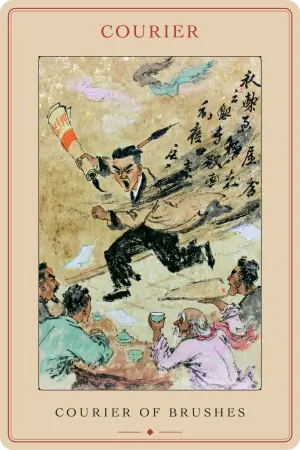
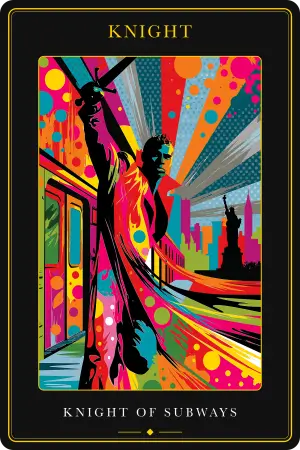
Every deck reimagines the same archetype. Compare the art, then open a deck to read its full interpretation.
Imagery and symbolism
Pamela Colman Smith drew the Rider-Waite-Smith card in 1909 to Arthur Edward Waite's direction, and it is arguably the fastest-moving image in the whole deck. A knight in full plate armor charges across a barren landscape on a white horse at full gallop, the horse's eyes wide with the adrenaline of the run. Every element of the scene pushes one way, so the card reads as pure forward momentum caught mid-charge.
The white horse. White stands for purity, justice, and nobility. It says the knight's courage comes from conviction rather than malice, and that his mind stays open to new knowledge even at speed. The horse gallops flat out, a picture of swift decisions and immediate response.
The raised sword and red attire. The blade is thrust high into the upper air, a sign of readiness for battle, intellectual sharpness, and a willingness to take risks. Red runs through the knight's cloak and the plumes of his winged helmet, the color of passion, drive, and aggressive ambition that answers to the Fire in his nature. His visor is raised and his face is set forward, so even under difficult conditions he confronts his target directly.
The harness of butterflies and birds. Smith set small butterflies and birds into the horse's harness and bridle. The butterflies stand for life cycles and transformation, the knight's capacity to pass through difficulty and come out changed. The birds carry associations of spirituality and freedom, pointing to his deep drive to reach the truth.
The wind, clouds, and trees. Dark clouds gather overhead and warn of conflict ahead. The wind whips the knight's clothing and bends the sparse trees hard in the exact direction of his charge, so he moves with the elements rather than against them, a localized force of Air made visible. Swords answer to Air in the Tarot, the element of mind, thought, and communication, and here the whole atmosphere is that element in motion. A few birds fly the opposite way in the background, perhaps messengers of what is coming, perhaps information the knight ignores in his rush to act. His armor reads as discipline, order, and the resolve to defend his position.
Core meaning
In the Rider-Waite reading the Knight of Swords stands for quick thinking and analytical skill, the drive to act with energy and decisiveness. He is the vanguard of the Air element, the velocity of the intellect once it sheds emotional hesitation and material caution. Among the court cards the Knights are the agents of change, and this one carries abstract ideas and sharp words straight into action with the force of a battering ram.
Elementally he is the Fire of Air, a combustible pairing. Air is a room full of oxygenated ideas and Fire is the spark that sets it alight. The archetype holds a real duality: the heroic figure who cuts through deception to reach the truth, and the destructive one whose dogmatism leaves damage behind. When he appears, the time for deliberation has ended and decisive action begins now.
Upright meaning
Upright, the Knight of Swords is an influx of rapid, focused mental energy fused with fierce ambition and confidence. The person carrying this energy believes deeply in where they are going, armed with a razor intellect and a fondness for argument and debate. The mandate is plain: stop circling the problem and move.
In love. An electric, fast-moving connection that prizes clarity and blunt honesty over soft sentiment. This is not the poetic romance of Cups. Intimacy is forged through rapid conversation and vigorous debate. The counsel is to communicate directly, deliver the confession or the definite request, and refuse to soften it into a comfortable maybe.
In career. A demanding but auspicious sign. A fast push on a project, an aggressive pitch, or a hardline negotiation lands if you commit fully. The energy cuts through pretense and red tape, closing deals and shipping work while others sit deliberating in committee.
In finances. Bold moves with real payoff potential. The card supports calculated risks once the math has been run and the logic holds, favoring the swift and assertive over the cautious. It reads well for successful negotiations, good contracts, and a steady flow of orders.
In health. A state running high on adrenaline. The intense physical energy wants channeling through hard exercise, competitive activity, or focused mental work, burning off the nervous charge before real rest is possible. As a yes or no answer it is a fast, unsubtle yes.
Reversed meaning
Reversed, the velocity stays intact but the steering breaks. The decisive charge becomes a chaotic stampede, and the analytical mind races furiously in several wrong directions at once. This is speed for its own sake and confidence with no factual backing.
In love. Destructive and volatile. The sharp intellect is weaponized, the sword cutting for the sake of cutting rather than for clarity. Arguments escalate faster than the emotional foundation can hold, and one or both partners fixate on being right, prizing intellectual supremacy over empathy. It warns of sharp ultimatums and words that trample the boundaries of others.
In career. Severe recklessness and self-sabotage: the rushed launch of a flawed product, an impulsive angry resignation, a risky move made from impatience rather than research. Advancement that comes too fast and too thoughtless breeds conflict and lost control. If a deal feels overly urgent, that urgency is itself the red flag.
In finances. Impulsive, poorly planned decisions and a loss of control over money. It warns of hasty choices, sudden unwelcome expenses, ill-conceived investments, and in extreme cases fraud or real material loss. The remedy is wiser resource management and more patience.
In health. A flashing warning of burnout. Prolonged overexertion and a hypervigilance that blocks rest lead to insomnia and stress-related ailments. The body cannot keep pace with the frantic demands of the mind, and it needs the rest the mind refuses to grant.
Historical notes
Modern understanding of the card owes most to the Hermetic Order of the Golden Dawn, founded in 1888, which set out to unify Western occultism into one system linking the seventy-eight cards to the Hebrew letters, the zodiac, the planets, and the Tree of Life. Earlier readings came from the French tradition of Court de Gebelin, Etteilla, and Eliphas Levi, whose letter correspondences the order reworked with astrology as its key.
Samuel Liddell MacGregor Mathers formulated the dense Book T, which fixed the astro-alpha-numeric correspondences for the court cards and turned the Knight of Swords into a precise energetic coordinate. Before all of this the Tarot de Marseille offered a plainer Cavalier d'Epee, a straightforward cavalry figure of raw martial energy, read pragmatically as defending a cause and striking a decisive blow, the moment thought collapses into swift action. In 1909 Waite and Pamela Colman Smith broke from that plainer horseman and gave the card its atmospheric storm-rider image, the version most readers now picture.
Correspondences
Rank. The Knight, the crusader of the court who carries his suit's energy out into the world as momentum and extreme action.
Astrology. In this deck's system the Knight of Swords rules the third decan of Taurus and the first two decans of Gemini, and his primary sphere is the third house, the house of neighborhood and communication. Through his link to Gemini and Air he stands for quick thought and fearlessness, with a taste for stylish, witty exchange, a restless figure forever seeking new horizons and new people to engage.
Element. The Fire of Air. Knights are the fiery adventurers of the deck, each blending Fire with the element of its suit, so here Fire's swift energy meets the instability of Air.
Kabbalah. As the Air aspect of the court he ties to the letter Vau and the formative world of Yetzirah, the realm of ideas, strategy, and the imposition of will on the environment. The Knights rest at Tiphereth, the sphere of Beauty and harmony, so beneath the chaotic speed the underlying aim is truth and alignment, even when the method runs harsh.
Timing and yes/no. The energy is swift and immediate, leaning to the late spring of Taurus into Gemini. As a yes or no it answers a fast, definitive yes upright, turning to no reversed when the momentum has lost its target.
Psychological perspective
The Knight of Swords is a meditation on the power and the peril of the unanchored mind. His lesson is alignment: the blade must be aimed before it is swung, because velocity without wisdom is a runaway train headed for derailment. Directed and balanced, that same fierce energy becomes one of the most effective forces for breaking through barriers into clear thinking.
Modern practice reads his shadow through familiar anxieties. In the position of someone's feelings he often signals emotional repression and hyper-intellectualization, a person who slices up their own feelings and lies awake at 3 a.m. trying to out-think their heart instead of feeling it. Pushed, a Swords personality will spew verbal lava rather than admit hurt. Online communities also cast the words-based version of the card as a modern type, razor-sharp and engaging in conversation yet flighty and emotionally unavailable, delivering intense stimulation then leaving when real emotional demands arrive. When he appears he can be a green light to stop intellectualizing and simply execute, or a warning that an emotionally distant force is about to force a conflict.
The Knight of Swords across decks
Tarot de Marseille. The Cavalier d'Epee, a plain military horseman with none of Smith's atmospheric wind and cloud or the geometry of later decks. It reads as raw energy defending a cause and striking a decisive blow, the abrupt end of a period of waiting.
Crowley-Thoth. Aleister Crowley and Lady Frieda Harris renamed this energy the Prince of Swords and titled him the Air of Air, the intellect isolated inside its own element. Rather than Smith's single biological horse he rides a chariot drawn by capricious winged children who leap wherever they please, un-reined, so the vehicle moves with ease but almost never in a settled direction. He holds a sword in one hand and a sickle in the other, the sickle evoking the dual creation and destruction of Saturn and the monkey mind that cuts down ideas as fast as it makes them. A yellow Rosy Cross at the center and a circle inscribed within a square encode his mission: dissect the structures of reality to find the eternal truth hidden inside.
Modern decks and readings. Contemporary readers keep Smith's storm-rider force while stressing its interpersonal cost. The card becomes a mirror for anxieties about productivity and assertiveness, inspiring and infuriating by turns, the overly logical figure who drags a querent into a conflict they would rather avoid.
In combination and context
The Knight of Swords is pure velocity, so the cards around him become the track he runs on, the wall he hits, or the destination he seeks. With The Tower he is highly volatile: upright, a sudden intellectual breakthrough that shatters an old paradigm and reaches the goal with startling speed; reversed beside The Tower or a reversed Chariot, a dire warning of a catastrophic crash from moving too fast. With Death he signals a swift, clinical ending, the intellect judging a situation finished and severing the ties without lingering. With The Devil he points to a headlong rush into a toxic situation, blinded by intellectual arrogance and ignoring obvious red flags, and he calls for brutal self-evaluation.
Case readings show his range. Asked about a partner's feelings on moving abroad, the card read as intense, positive determination, a full commitment to charge forward despite natural nerves. Asked whether to send an emotional message to an ex, the knight's leftward, backward-facing charge read as a warning against rushing to communicate reactively about the past. In a straight yes or no spread the upright card is a strong yes.
Questions for reflection
- Where are you being called to stop deliberating and finally act, and is your aim clear before you swing?
- When do you reach for sharp, cutting words to win an argument instead of to reach the truth?
- Is your current momentum carrying you toward a real goal, or is it speed for its own sake?
The general meaning follows the Rider-Waite-Smith reading — the reference used across Tarot Academy. Open a specific deck above for its own interpretation.
Frequently asked questions
Explore the Tarot
Latest Posts
Discover the ancient wisdom of tarot cards and unlock the mysteries of your spiritual journey. Our blog is your gateway to understanding the rich symbolism, meanings, and practical applications of tarot reading.




















































