
 EN (English)

The Knight of Wands and the Six of Pentacles
A merchant weighing what he gives, and a rider with no one beside him. The pair asks whether support and energy can meet on fair terms.
How the two cards meet
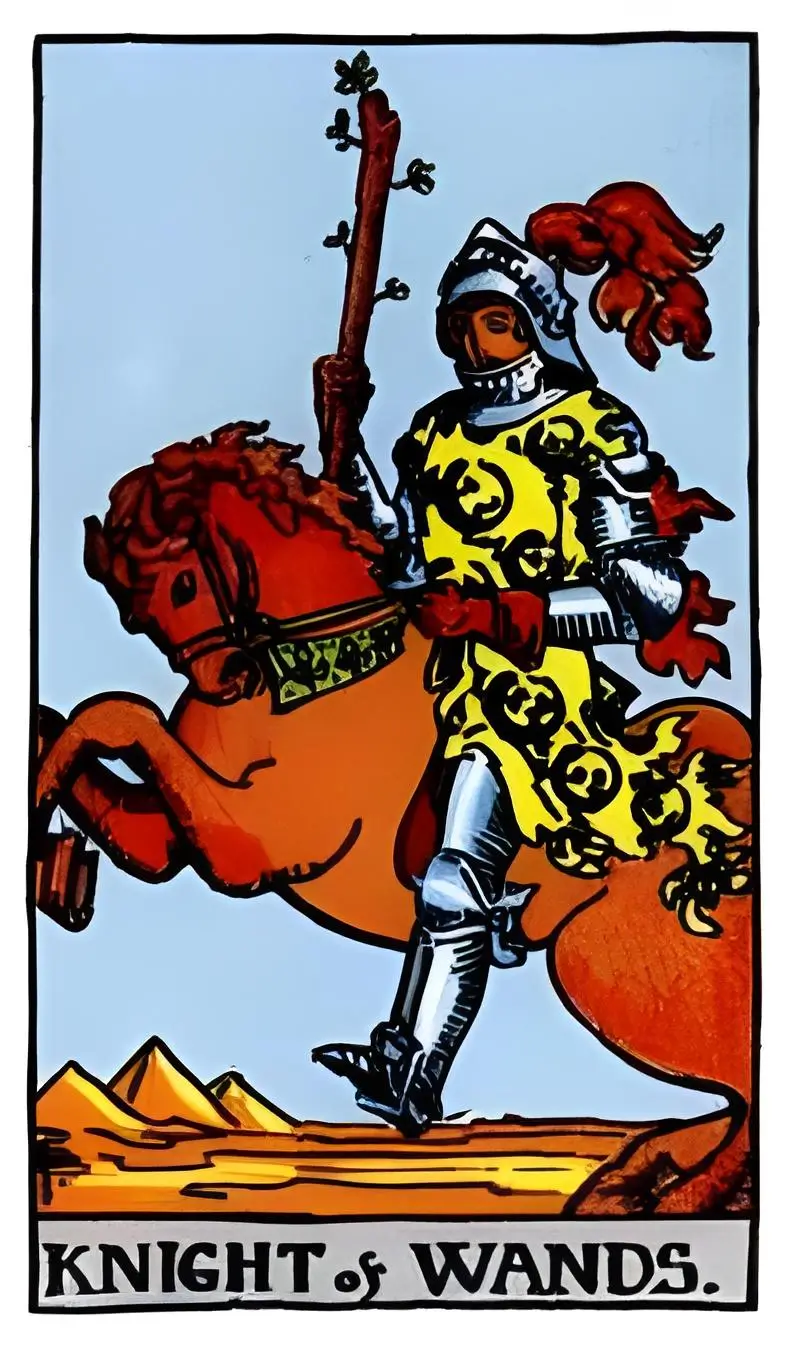
In the Six of Pentacles a well-dressed merchant stands over two kneeling figures, dropping coins from his right hand into their open palms and holding a pair of scales in the other. The sky is clear, town buildings stand behind them, and green trees grow nearby. The Knight of Wands has no one to give to or take from. He is alone on his rearing horse, red plumes flaring behind him, his leafing wand pointed ahead.
The Six describes an exchange, help given or received, and the Knight describes the energy the querent brings into it. Upright, the Knight's knack for useful connections suits the Six's fair trade, and support can flow toward a bold new project. Reversed, the exchange goes lopsided or the energy is wasted. Fire and Earth are neutral to each other, so the pair rests on whether the scales stay even. Smith hints they may not: the merchant's scales hang slightly uneven, and the measuring is his alone.
Combinations are common patterns, not rules
The readings here describe how a pair most often reads. Check each one against two things before you apply it. The first is the question: the same pair says one thing about a relationship and another about a job offer, and the question decides which side of the pair matters. The second is the background, meaning what the querent already knows about the situation, the position each card holds in the spread, and the cards around the pair. When the question or the background points another way, go with them over the general reading. Each pair page lists the exceptions that come up most often.
Four ways the pair can fall
Both upright
Outlook: Harmonious Yes or no: YesSupport flows toward a bold plan: funding, mentorship or a fair exchange speeds the start.
Help arrives for someone already in motion. The upright Six describes generosity, fair exchange and support given or received, and the Knight brings initiative, a wide social circle and the ability to make useful connections. A grant, an investment, a mentor or a senior colleague's backing can help the querent's venture move quickly, and the querent may equally be the one giving. For couples the pair favours warmth, generosity and passion balanced by real reciprocity, and someone single may meet a person who sweeps them off their feet, with the Six adding goodwill and equal footing. At work, recognition and reward for energetic effort are favoured, perhaps a bonus or a new opportunity. Money invested earlier can come back, and sharing resources tends to open further doors. Gratitude keeps the exchange healthy.
Advice
Ask the one person best placed to back your plan for specific support, and say what you can give in return.
Knight of Wands upright, Six of Pentacles reversed
Outlook: Challenging Yes or no: Not yetEnergy goes into a lopsided deal: effort unrewarded and help with strings attached.
The querent arrives ready to give, and the exchange is already uneven. Reversed, the Six describes unequal exchange, hidden motives, debts and help that is not fully sincere, while the upright Knight is quick to act, generous with energy and willing to take risks. That combination makes over-commitment easy: the querent puts in time, money or enthusiasm that is not matched or repaid. Partnerships and investments deserve a hard look at the terms before anything is signed at the Knight's speed. In a relationship, passion and initiative on the querent's side can sit beside a sense of being undervalued or of giving far more than comes back. At work the querent may carry a disproportionate workload without fair pay or recognition. The reversed Six's advice to learn to say no, and to ask whether offered help is sincere, is the guard here.
Advice
Before you commit more time or money, set out what you expect back and see whether the other side agrees.
Knight of Wands reversed, Six of Pentacles upright
Outlook: Mixed Yes or no: Not yetFair help is on offer, but haste or inconsistency risks wasting it.
The merchant's hand is open, and the question is what the querent does with what it offers. The upright Six describes real support, fair terms and mutual aid, and the reversed Knight describes impulsiveness, broken commitments and energy that scatters. A loan, a gift or a mentor's help can be spent too fast, or left unused because plans keep slipping. In relationships, the warmth and reciprocity the Six favours can be strained by the querent's inconsistency or hot-and-cold interest. At work, knowledge and resources are available to the querent, and follow-through is the gap. Money can arrive and leave quickly. The Six's reminder to accept help gracefully and use resources wisely meets the reversed Knight's call for realistic planning, and both ask for a slower, more careful pace.
Advice
Spend any help you have received on one specific goal, and report back to whoever gave it.
Both reversed
Outlook: Challenging Yes or no: NoReckless spending and one-sided deals: debts grow and resentment follows.
Money and goodwill drain away together. The reversed Six brings debts, expenses exceeding income, selfishness and exploitation. From the reversed Knight come hasty investments, an overestimation of one's own importance and quarrels. Loans may be taken on impulse, or the querent may feel used in an arrangement that has lost all balance. Couples can fall into a pattern of demands and grievances, with passion fading and the querent feeling undervalued. At work, unequal reward and tactless clashes over credit sour the team. Losses from unbalanced dealings are a real risk, especially with partners whose terms are unclear. Restoring fairness comes first: settling what is owed, saying no to new obligations, and making peace where conflicts have flared.
Advice
List what you owe and what is owed to you, settle the smallest item first, and take on no new obligations until the list is shorter.
When this reading may not apply
In a question about a loan, a grant or a salary negotiation, the Six describes the terms and the Knight the querent's approach to them. When the querent is the giver, read the reversed Six as a warning about giving beyond their means. If the Knight stands for someone offering the querent help, judge the arrangement by its effect on the querent: whether they end up stronger or more dependent. In a position about what to let go of, the pair can mean ending a one-sided arrangement that drains the querent's energy.
Frequently asked questions
Latest Posts
Discover the ancient wisdom of tarot cards and unlock the mysteries of your spiritual journey. Our blog is your gateway to understanding the rich symbolism, meanings, and practical applications of tarot reading.




















































