
 EN (English)
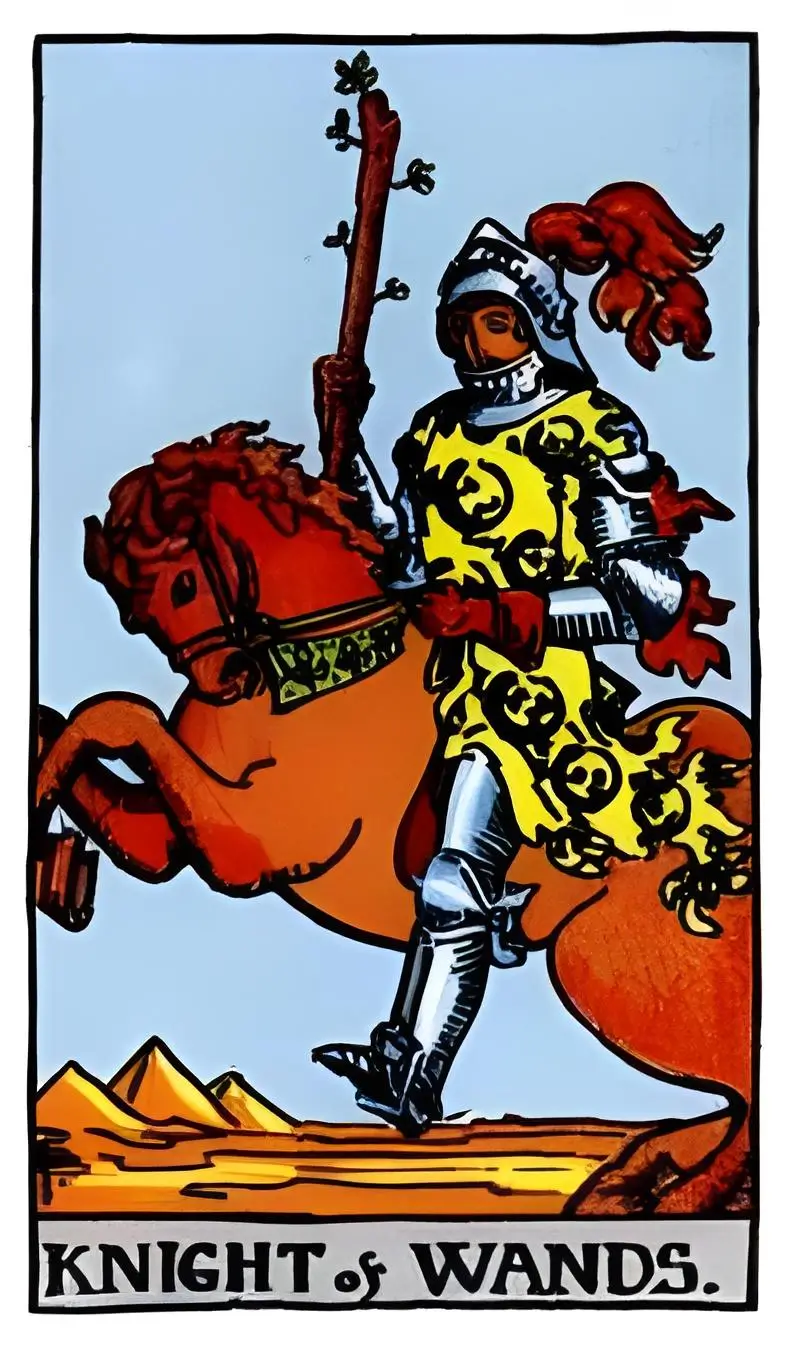

The Knight of Wands and the King of Swords
A rider in mid-leap and a judge on a stone throne. The pair asks whether a fast start can survive a hard, honest look at the facts.
How the two cards meet
Pamela Colman Smith gave these two courts opposite postures. The Knight of Wands is caught mid-leap: his chestnut stallion rears with both front hooves off the ground, red plumes stream back from his helmet and arm joints, and the leafing wand in his hand is angled like a lance over a bare brown desert. The King of Swords does not move at all. He faces the viewer from his stone throne with a level, critical gaze, a two-edged blade held upright in his right hand, while birds cross a sky of high, slow clouds behind him.
The Knight supplies the drive and the King decides where it goes. Fire and Air are friendly elements, so the King's reasoning feeds the Knight's flame instead of smothering it, and the usual result is momentum with a strategy behind it. The King tends to lead, because his judgment sets the terms the Knight rides out on. Reversed, the same alliance turns into haste without analysis, or into a cold authority that leaves the querent's enthusiasm with nowhere to go.
Combinations are common patterns, not rules
The readings here describe how a pair most often reads. Check each one against two things before you apply it. The first is the question: the same pair says one thing about a relationship and another about a job offer, and the question decides which side of the pair matters. The second is the background, meaning what the querent already knows about the situation, the position each card holds in the spread, and the cards around the pair. When the question or the background points another way, go with them over the general reading. Each pair page lists the exceptions that come up most often.
Four ways the pair can fall
Both upright
Outlook: Harmonious Yes or no: YesBold action backed by clear thinking: a fast start that holds up under scrutiny.
Initiative gets a strategist. The Knight of Wands brings quick decisions, courage and the launch of an important project, and the King of Swords adds the logic, objectivity and sound planning that keep the charge from running loose. The pair favours acting decisively on a plan that has already been checked against the facts. If one of these courts stands for someone in the querent's life, the querent may find conversations with that person lively and shared plans quick to take shape. A romance here can mix the Knight's passion with the King's honest, witty give-and-take, though the King's caution that too much analysis can strip away feeling still applies. At work, a surge of energy and new ideas meets a leader, or a side of the querent, that demands facts and order, a good fit for legal, educational or government projects. Money questions favour calculated risks: bold steps whose numbers the King has already run.
Advice
Put your plan in front of the most critical person you know, fix what they find, then move without further delay.
Knight of Wands upright, King of Swords reversed
Outlook: Mixed Yes or no: Not yetDrive is high but judgment is missing, or a rigid authority leaves enthusiasm nowhere to go.
The energy is real, and the thinking around it has gone wrong. The upright Knight still supplies courage, optimism and readiness for rapid change, while the reversed King of Swords describes a mind that is either too cold or not used at all: rigid rules, excessive criticism, decisions made without enough thought. Two shapes are common. In one, the querent charges ahead with no strategy, and a calculated risk becomes a rash one. In the other, the querent's initiative runs into an authority they experience as harsh, inflexible or unfair, at work or at home. Romantically, warmth and passion on the querent's side can sit inside a relationship that feels cold and argued over, where the querent feels handled by logic more than met with feeling. Finances call for watching expenses closely, since the reversed King warns of losses that come from weak analysis.
Advice
Before the next bold move, list the facts you are assuming and check two of them with someone who has no stake in the result.
Knight of Wands reversed, King of Swords upright
Outlook: Mixed Yes or no: Not yetImpulse and burnout run into a clear head that asks for realistic planning before anything moves.
Here the King of Swords is the corrective. The reversed Knight shows wasted effort, hasty decisions and a gap between what the querent wants and what they can actually do, sometimes as reckless pushing and sometimes as exhaustion and postponed plans. The upright King answers with a plain instruction: let the mind lead the heart, slow down, and decide on logic and facts. A romance that flared fast may now be cooling, and the King favours an honest conversation about what is left over another impulsive gesture. Work shows overload and ideas pushed forward without weighing resources; strategy, priorities and orderly decisions are what bring momentum back. With money, an overheated spell calls for disciplined management and a plan before any further spending.
Advice
Pause the project that is draining you, sort its tasks by importance, and restart only the top one.
Both reversed
Outlook: Challenging Yes or no: NoHot temper and cold control collide, and conflicts escalate without settling anything.
Heat and cold make the trouble here. The reversed Knight brings aggression, tactlessness and a tendency to quarrel, and the reversed King adds harshness, excessive criticism and a habit of dominating conversation until no disagreement is left. Arguments escalate quickly and resolve nothing. In a relationship the querent may swing between flare-ups and icy distance, or feel steamrolled by reasoning that ignores how they feel, and respect is the first thing lost. Workplaces described by this pair can feel hostile, with rash decisions in one direction and rigid, unfair rulings in the other. Financially, impulsive spending and poor analysis compound each other, and losses can follow from choices nobody thought through. The way out starts with tone: fewer verdicts, more listening, and conflicts settled calmly.
Advice
Take the next argument off the table until both sides have cooled, then raise it again with one specific point instead of a list.
When this reading may not apply
When either court is the significator, read the other card as the force the querent is dealing with: the King beside a Knight significator often describes a boss, a judge or an examiner whose standards the querent has to meet. In a legal or contract question the upright King favours a well-prepared case, and a reversed Knight warns against signing in haste. In a past position the pair can describe a project or relationship that started fast and was later judged harshly. If the querent already holds a high-pressure leadership role, the reversed King may describe the querent's own manner more than anyone else's.
Frequently asked questions
Latest Posts
Discover the ancient wisdom of tarot cards and unlock the mysteries of your spiritual journey. Our blog is your gateway to understanding the rich symbolism, meanings, and practical applications of tarot reading.




















































