
 EN (English)

The Five of Wands and the Knight of Wands
A crowd of competitors and a rider who never waits. Courage can carry the contest here, or the same heat can turn competition into a running quarrel.
How the two cards meet
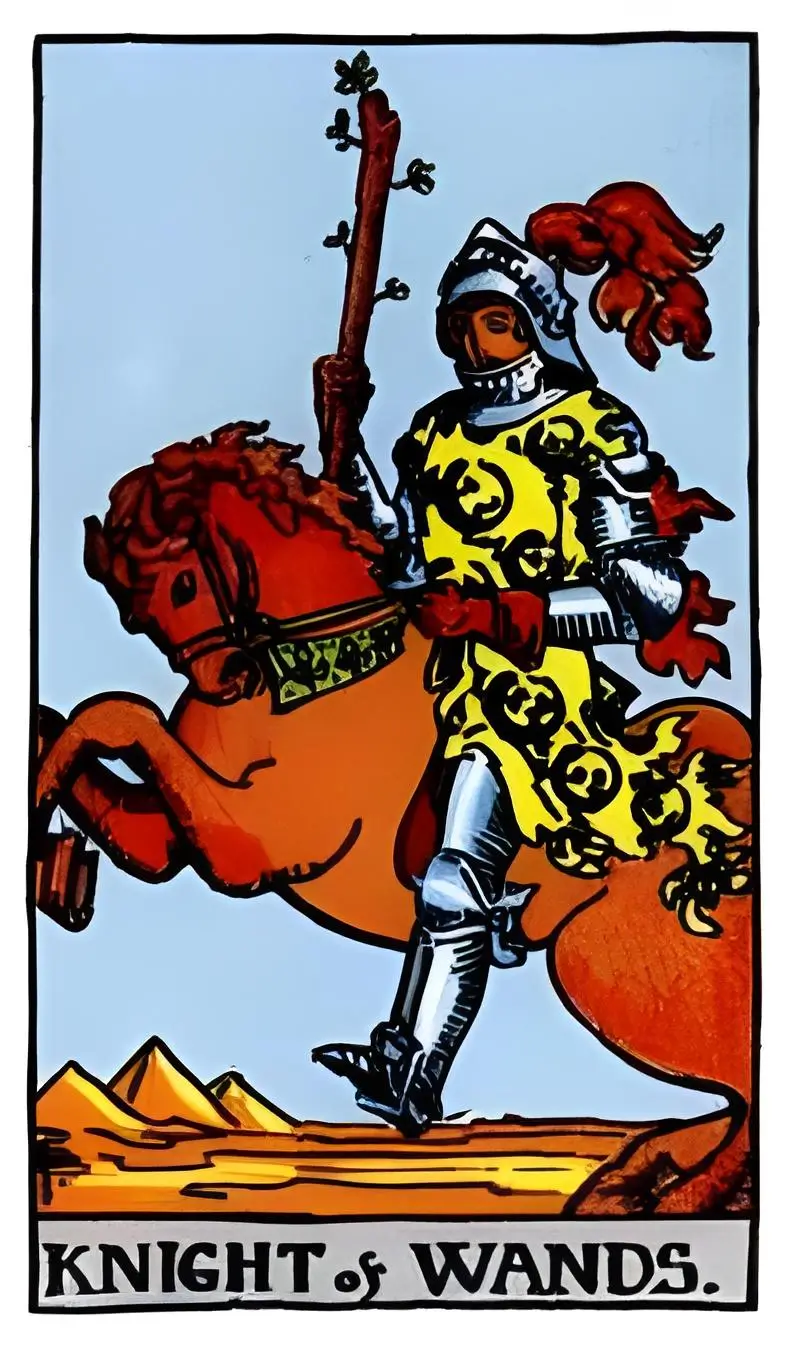
Smith drew the Knight's chestnut horse rearing with both front hooves off the ground, the rider in yellow and orange armour with red plumes streaming behind him, a leafing wand held at an angle like a lance, and odd shoes on his feet. The desert under him is bare and brown. The Five's ground is green and the action is a crowd: youths in four colours swinging staves in every direction, with no plan and no blood. The Knight is one person acting fast. The Five is many people acting at once.
Since both cards are Fire, the pairing amplifies itself: boldness meets rivalry, and speed meets heat. The Knight leads, as the force that decides what happens to the contest. Upright, he brings initiative and quick decisions into it. Reversed, he brings the quarrels and impulsive anger his card also carries.
Combinations are common patterns, not rules
The readings here describe how a pair most often reads. Check each one against two things before you apply it. The first is the question: the same pair says one thing about a relationship and another about a job offer, and the question decides which side of the pair matters. The second is the background, meaning what the querent already knows about the situation, the position each card holds in the spread, and the cards around the pair. When the question or the background points another way, go with them over the general reading. Each pair page lists the exceptions that come up most often.
Four ways the pair can fall
Both upright
Outlook: Harmonious Yes or no: Leans yesCourage and quick decisions carry you through a competitive stretch with energy to spare.
Here the contest suits the rider. The Five sets up competition, rivalry and a test of strength; the Knight answers with bold action, quick decisions and a willingness to take risks. The querent moves before rivals do and enjoys the challenge. The Knight also brings an ability to find compromises and make useful connections, which keeps the rivalry from turning hostile. A relationship can feel passionate and argumentative at the same time, with energy that tests and strengthens the bond. At work, a pitch, a sales push or a new important project rewards initiative, and the Five's advice to prepare thoroughly balances the Knight's speed. Money questions favour calculated, energetic moves against competitors, provided the querent checks their actual capabilities first. Both cards are fast, so the pace needs rest scheduled into it.
Advice
Make your move on the opportunity this week, and plan the evening after it as time off rather than the start of the next push.
Five of Wands upright, Knight of Wands reversed
Outlook: Challenging Yes or no: Leans noRivalry meets a short fuse, and arguments escalate faster than anyone can fix them.
The heat gets out of hand. The upright Five supplies rivalry and clashing opinions, and the reversed Knight adds recklessness, impulsive anger and a tendency to quarrel, so ordinary competition turns into open conflict. Thoughtless words and hasty decisions create mistakes that take longer to repair than to make. Whether the flare-ups start with the querent or only surround them, the reversed Knight's counsel holds: look for peaceful resolutions and avoid unnecessary clashes. In love, passion that flared up quickly can fade just as fast, and fights about small things wear the relationship down; the querent may start an argument before hearing the other side out. At work, a struggle for leadership becomes a series of clashes with colleagues, and energy goes into the fight instead of the project, which then stalls for lack of follow-through. Money decisions made in anger or in a rush to beat a rival risk losses, so the Knight's call for realistic planning over blind momentum is the one to follow.
Advice
Wait a full day before answering any message that annoys you, and settle the most urgent dispute in person rather than in writing.
Five of Wands reversed, Knight of Wands upright
Outlook: Mixed Yes or no: Leans yesA quick truce frees you to move on, though haste may skip a full resolution.
Speed follows the settlement. Taken as reconciliation, the reversed Five settles the dispute, often by a concession or a fast compromise, and the upright Knight is off toward the next venture or trip almost at once. That speed is useful, and it also carries a risk: issues closed quickly may not be closed fully. In love, a couple can make up and move straight into something exciting together, a trip or a change of scene, and the querent's enthusiasm returns. At work, a conflict ends and the querent takes the initiative on a new project or meets an influential person who inspires the next step. Bold financial moves suit the moment once terms are agreed, with a check on capabilities before the risk is taken.
Advice
Before moving on, confirm in one sentence what the settlement covers, so the old dispute does not follow you into the new venture.
Both reversed
Outlook: Challenging Yes or no: Leans noThe fight burns out and the fire goes with it, leaving delays and plans left unfinished.
Two exhausted Fire cards. The reversed Five, in its tired form, has lost interest in competing; the reversed Knight brings exhaustion, no follow-through and postponed plans. Quarrels may stop, and only because nobody has the energy left. Struggle without a clear aim is part of the reversed Five, and beside a reversed Knight it ends in a gap between what the querent wants and what they can do. A relationship that ran on excitement can go flat, and the querent may feel disappointed, detached or unsure whether to continue. At work, momentum drops sharply, the energy to finish projects runs short, and chances for advancement pass while plans are postponed again. In money, disorganisation and a lack of confidence let opportunities slip. Rest comes first; then realistic planning, which both cards name as the way back.
Advice
Give yourself a short, defined rest, then choose a single unfinished plan and set a realistic date for its next step.
When this reading may not apply
When the Knight stands for a person in the querent's life, the pair can point to an energetic, argumentative presence in a competitive situation, and what the querent controls is their own response. For travel or relocation questions, the Knight brings movement and the Five brings friction around it, such as competing plans or a hectic move. In sport and physical challenges, the upright pair fits a competition and the push to win it. As an obstacle, it warns that haste is turning rivalry into conflict. Should the Knight be the significator, the rider is the querent, and the Five maps the competition around them.
Frequently asked questions
Latest Posts
Discover the ancient wisdom of tarot cards and unlock the mysteries of your spiritual journey. Our blog is your gateway to understanding the rich symbolism, meanings, and practical applications of tarot reading.




















































