
 EN (English)

Synastry ♀ ☌ ♀ · Venus conjunct Venus
Venus Conjunct Venus in Synastry
When both people's Venuses fall at the same place in the zodiac, they like the same things and show affection in much the same manner. The first effect is recognition: each feels liked for what they already like in themselves. The cost is that two people with one taste rarely surprise each other, and both may avoid the argument that needs to happen.
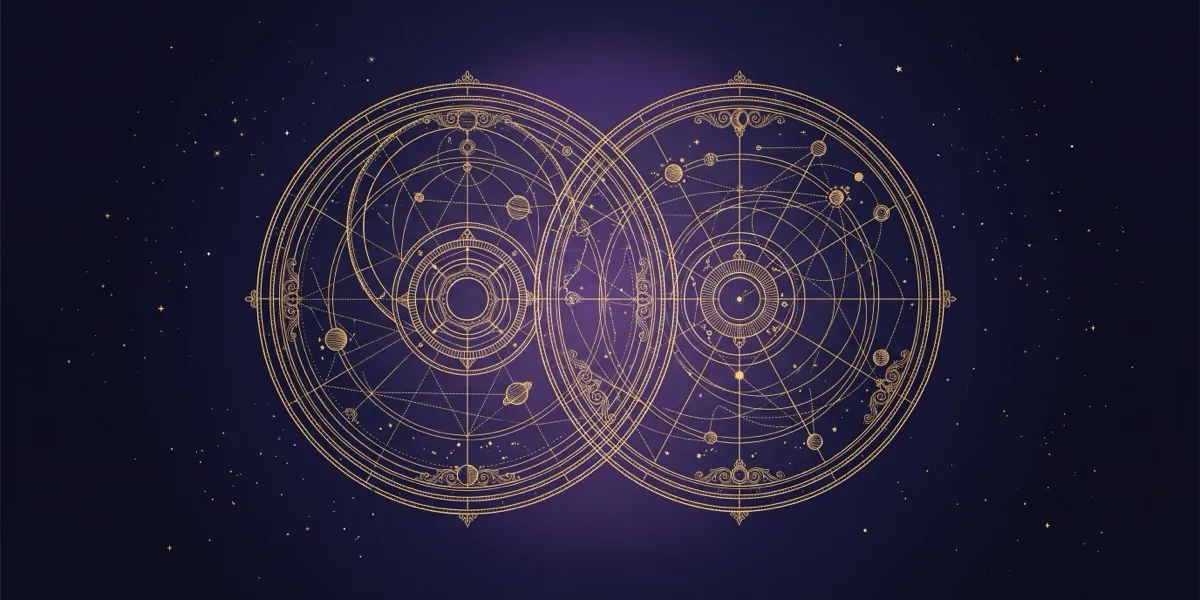
Two people whose sense of what is pleasant, beautiful and kind was set to the same degree.
Gifts
- agreement on taste before anyone explains
- affection given and received in one language
- shared pleasures that need no negotiation
- a home, a party or a project that looks right to both
- feeling liked for one's own preferences
- easy company on an ordinary day
Shadow
- both avoiding the hard conversation
- a closed circle where nothing new gets in
- quiet competition for the same prizes
- mistaking sameness for depth
- resentment stored up to keep the mood
Tarot
The Empress
Two charts, one place for pleasure
Synastry compares two birth charts point by point. In this contact each person's Venus sits within 6° of the other's, usually in the same sign. Venus is the lesser benefic of traditional astrology, a planet of the night sect that describes what a person finds beautiful, how they enjoy themselves, what they value and how they show care. When two Venuses fuse, those preferences line up. The pair do not need to agree on everything in life, but they tend to agree on what makes an evening good, a room comfortable or a gesture kind.
The sign colours the agreement. Two Venuses in Taurus may share a love of good food, fabric and unhurried time. Two in Gemini enjoy talk, gossip and a full calendar. In Scorpio the shared value is intensity and loyalty, and in Aquarius it is friendship with room to breathe. The tarot links Venus to The Empress, the card of comfort, beauty and abundance, and with this contact two people tend to recognise the same version of her in each other. Because both points are the same planet, neither person plays a separate role: the contact describes a shared temperament in matters of pleasure, not a division of labour.
How it feels to meet your own taste in someone else
Each side tends to report the same thing first: an odd familiarity. Someone else chooses the café you would have chosen, laughs at the film you thought was underrated, wraps a present the way you would have wrapped it. Being around this person is restful because so little needs translating.
There is also a mild shock in it. Seeing your own preferences from the outside shows you how strong they are. Habits of spending, flirting or keeping the peace that felt like neutral common sense turn out to be a style, and the other person has it too. Some people enjoy this mirror; others start to notice the less flattering parts of their taste in the other and feel oddly irritated by them.
Because both Venuses carry equal weight, neither person is the one who gives or the one who receives. Each offers affection in the form they would like to get, and for once it lands. When the rest of the charts differ a great deal, this contact can be the place where the two meet with no effort at all.
A romance built on recognition
In a romantic relationship astrologers read this contact as a sense of being understood in matters of love. Both people tend to want the same kind of date, the same rhythm of contact, the same mix of romance and comfort. Small acts of care land well because each knows what the other would value: they would have wanted it themselves. Couples with matching Venuses often build a shared aesthetic quickly, in how their home looks, how they host and what they spend on.
What the contact does not give on its own is heat. Venus describes attraction through liking and appreciation, and two Venuses fusing produce warmth more than urgency. Astrologers look at Mars and Moon contacts between the charts for passion and emotional security. A relationship with this link alone may feel like the best of friendships with a romantic layer, and whether that suits the two people depends on what they want from love. The contact describes a strong area of agreement, not the whole compatibility of two lives.
Friends, family and colleagues with matching Venuses
This is one of the easiest contacts to see in friendship. Two friends with conjunct Venuses swap recommendations that always work, shop well together and can plan a holiday without a single argument about where to stay. They often become each other's first call for advice on clothes, gifts or decorating, because the other person's eye matches their own.
In families it can show as a parent and child or two siblings who share hobbies and a sense of occasion, and who quietly agree on how holidays should look. At work it helps any shared task where judgement of quality matters: two designers who sign off on the same draft, two event planners who reach the same menu, two shop owners who stock the same shelf. The weak spot at work is the same as at home. When both prefer harmony, nobody wants to say the project is weak, and a needed critique arrives late.
Too much agreement
The trouble with a perfect match of taste is that it closes the door to anything new. Two people who like the same restaurants, music and friends can spend years inside a comfortable circle that slowly shrinks. Neither pushes the other toward a pleasure they have never tried, because neither feels the lack.
A second problem is conflict avoidance. Venus prefers peace, and two Venuses together can make keeping the mood the highest value in the relationship. Irritations get swallowed, small resentments pile up, and when the hard conversation finally comes it carries the weight of everything left unsaid.
The third is rivalry. When two people want the same things, they sometimes want the same scarce things: the same attention at a party, the same praise from a parent, the same role in a group. This competition is usually quiet and polite, which makes it harder to name. If one person starts to feel they are always second in a contest neither admits to, the warmth of the contact can sour.
How exact the meeting of the two Venuses is
This chart counts the conjunction within 6°. Within about 2° the shared taste is obvious from early on and shows up in many small choices. Near 6° it is more of a general sympathy, strongest in one or two areas such as music or hospitality and weaker elsewhere. When the two Venuses fall in neighbouring signs, the conjunction still counts by degree, but the styles differ: a Libra Venus and a Scorpio Venus may share a love of beauty while one wants it light and social and the other private and intense.
The rest of the two charts shapes how this agreement plays out. A Mars contact between the charts can add the spark and the willingness to argue that matching Venuses lack. Saturn contacts to either Venus can bring commitment, or a sense that pleasure has to be earned. Moon contacts decide whether the shared taste comes with emotional ease. If both people's Venuses are also tightly linked to Neptune, the recognition can tip into idealising each other.
Keeping a shared taste alive
Use the agreement as a base, then bring in what neither of you has tried. Take turns choosing something outside your shared comfort, a cuisine, a city, a kind of music, and treat it as an experiment rather than a test of the relationship. Invite people into the circle who see things differently.
Practise disagreeing on small matters so that larger ones are not so frightening. Say which film you did not like. Name the habit of the other's that grates, early and lightly. If you notice a rivalry over the same prize, say so with humour: it loses force once it is named. Over time this contact can teach each of you which of your preferences you hold because you love them and which you hold out of habit, and the other person is the clearest mirror you will find for that question.
Questions to reflect on
- Which of our shared tastes did I bring, and which did I adopt?
- What have I stopped saying to keep the mood between us?
- When did one of us last introduce the other to something new?
- Is there a quiet contest between us that neither of us names?
Frequently asked questions
What does Venus conjunct Venus mean in synastry?
It means both people's Venuses sit within a few degrees of each other, usually in the same sign. They tend to share tastes in beauty, pleasure and affection, and to show care in similar ways. The result is a quick sense of recognition and easy companionship.
Is Venus conjunct Venus good in synastry?
It is one of the most comfortable contacts for friendship and shared life, because the two people agree on what is pleasant. Its weak points are a lack of novelty and a habit of avoiding conflict. It describes agreement in taste, so astrologers read it alongside Mars, Moon and Saturn contacts before judging a relationship.
Does Venus conjunct Venus mean attraction?
It brings liking and warmth more than physical urgency. Two people feel drawn to each other's style and company. Physical chemistry is read mainly from Venus–Mars and Mars–Mars contacts between the charts.
Is having the same Venus sign the same as Venus conjunct Venus?
Not always. A shared Venus sign gives similar tastes, but the conjunction counts by degree, within 6° in this chart. Two Venuses at opposite ends of one sign may be too far apart, while two in neighbouring signs can still form a conjunction.
Can Venus conjunct Venus cause rivalry?
It can, because two people who want the same things sometimes want the same scarce things, such as attention or praise. The rivalry is usually quiet. Naming it lightly tends to take the sting out.
Is Venus conjunct Venus good for friendship?
Yes. Friends with this contact often share hobbies, shop and travel well together, and trust each other's judgement on gifts and style. The main thing to watch is avoiding honest criticism to keep the peace.
Latest Posts
Discover the ancient wisdom of tarot cards and unlock the mysteries of your spiritual journey. Our blog is your gateway to understanding the rich symbolism, meanings, and practical applications of tarot reading.

















