
 ZH (简体中文)



小阿卡纳 · 圣杯 (水)
圣杯八
史密斯将这张数字牌描绘为一场离别:一名身披红色斗篷的人物拄着长杖,背向八只叠放整齐的圣杯,走向远方的群山,头上是一片食相的天空。
Read the complete guide: 塔罗中的「权杖八」:象征意义和含义的完整指南
卡牌一览
- 数字命理
- 8
- 元素
- 水
- 占星
- 双鱼座第一旬(2月19日 - 28日),土星主宰
- 卡巴拉路径
- 宏伟(Hod),八号牌所在之处
- 时机
- 双鱼座前十天,冬末
- 是/否
- 留下为否,离去为是
正位
转身离去
放弃执念
离别
幻想破灭
心灵探索
释怀放下
寻找意义
朝圣之旅
逆位
惧怕改变
停滞不前
逃避
执着不放
漫无目的
停滞
犹豫不决
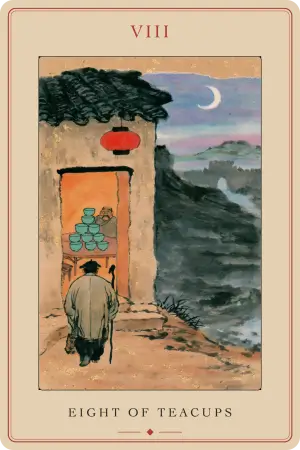
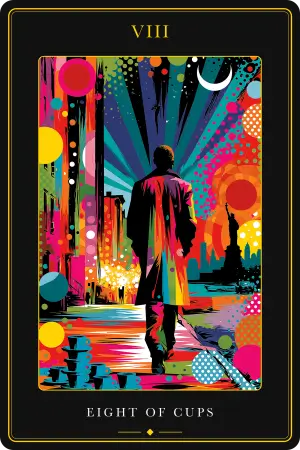
各牌组中的 圣杯八
每副牌组都在重新诠释同一个原型。对比牌面艺术,然后打开具体牌组阅读完整解读。
图像与象征意义
帕梅拉·科尔曼·史密斯将这张牌绘制为一个人背对既定生活的瞬间。1909年,在阿瑟·爱德华·伟特的指导下,她为这张数字牌赋予了具体的人形主角与富有意境的风景,而在马赛塔罗牌中仅展示了八只按几何图案排列的圣杯。一名身穿红色斗篷、脚踏红靴的孤独背影渐行远去,手持结实的木杖,正从湿地海岸攀向陡峭崎岖的群山。这副牌将整个场景解读为自我探索的艰辛历程,即离开一个已然圆满的现状去寻觅更高意义的确定时刻。
八只圣杯承载着牌意的前半部分。它们矗立在前景中,以拱门般的层叠结构排列得整整齐齐,没有一只倾倒、破损或打翻。这种完好无损使该牌与圣杯五的悲伤截然不同,在圣杯五中,有三只圣杯倒在地上。这副牌将叠放整齐的圣杯解读为已实现的欲望、物质成功与稳定性,即一种不再带来精神滋养的成熟生活方式。研究聚焦于一个结构上的异常:顶层原本属于第九只圣杯的位置留有一处空隙。那个空隙是心理上的锚点,表明即便积累了财富、地位或安全感,核心的关键要素依然缺失,且无法通过重新排列现有的一切来填补。
史密斯的色彩语言蕴含深意。人物的红色斗篷与红靴象征着激情、活力与世俗动力,因此这场离别需要炽热的勇气而非冷酷的漠然。这副牌表明,红色预示着在徒步中生存所需的持久热情与原始耐力,而长杖则证明旅人已为攀登的体力消耗做好了准备。景观从水域转向坚石。旅人离开了圣杯花色流动的感情世界,其中的河流与平静水域象征着执念与潜意识,并升入一片贫瘠的岩石荒野,展现了情感剥离的真实艰难。远处紫灰色的山峦拔地而起,成为灵魂远征的终点。
天空上方高悬着这张牌最具争议的象征。这副牌将高悬的月亮解读为内在阶段已达至完全成熟、潜意识促成了行动的信号,月光成为旅途中唯一的指引,要求旅人依赖直觉而非理性逻辑。图像本身展示了新月包裹着满月圆盘的面容,许多解牌者将其解读为满月或月食。伟特在《图解塔罗关键》中驳斥了纯粹的月亮解读:“这并非真正的夜晚,而是一场日食。虽是白昼,感觉却如黑夜。”在他的诠释下,理性的太阳意识被遮蔽,深层的潜意识拉力超越逻辑主导了这场离去。单词“eclipse”(食)本身源自希腊语“放弃”,这一词源极为贴合这张关于转身离去的牌。
核心含义
这副牌将莱德·伟特圣杯八解读为放弃与割舍:为了寻求更明确的目标与更高的真理,有意识地离开熟悉的环境。对现状的满足感已然崩解,迫使你做出改变人生轨迹的觉知决定。离别往往不易,这副牌清晰阐明了其运行机制:唯有告别过去方能前行。牌组背后的黄金黎明教团将此牌命名为“放弃成功的领主”(Lord of Abandoned Success),这一称号揭示了其中的悖论。该花色先前的圣杯在庆祝爱情、社群与情感里程碑,而圣杯八则是灵魂意识到物质稳定与表面满足已不再足够的时刻。它指向自我成长超越了原有生活所带来的隐痛,而非突如其来的遭遇或外部毁灭。
画面之下蕴含着数字八的份量,这副牌将其解读为力量、结构平衡与无限循环,在此处则完全内省。在小阿尔卡纳中,数字八标志着一个阶段的顶峰以及取得真实成就后对掌控力的考验。注入圣杯流动的元素之水后,那种僵化的结构最终令人感到停滞,因为水抗拒静止的容器并渴望流动。这张牌所要求的掌控力,在于明晰何时解脱并将自己注入新容器的自律,而非不断积累的功利。数字8本身的形状是一个无尽的回路,指向脱去旧蜕以让序列重新开始的循环。
正位含义
正位时,这副牌解读为从已然圆满的现状中有意识地离开,这是一场源于内心觉知而非高塔般突发灾难或死神般必然结局的勇敢离别。你清楚地明白,旧有的纽带、习惯与舒适已不再具备任何价值,你正在背向表面看似完好的事物,因为它已无法再滋养你。附带的建议切中要害:鼓起勇气离开舒适圈,学会对不再产生价值的人与义务说不,规划明确的下一步,随后毅然前行。这场转型会牺牲眼前的舒适,以换取长远的成长空间。
在感情中。 必须斩断的空洞执念。这副牌解读为一段曾经定义了你、但如今基础满意度已归零的关系,因此你选择离开以寻求更深厚、更真实的感情体验。该牌往往会强制带来一段必要的独处期,在与他人建立连接之前,先理顺自身的内在机制。你坚持追求深层的结构性统一,拒绝妥协于不配得的现状。对于单身者而言,这意味着告别不再适合的旧有模式与过去的自己。
在事业与工作中。 坚决的职业转型。这副牌解读为离开稳定、丰厚但精神消耗严重的职位,辞去舒适的工作并离开成熟的人际网络,迈向下一个职业阶段。深度的疲惫与强烈的满意度缺失促成了这场离去,该牌将其框定为将个人发展轨迹置于对公司盲目忠诚之上。当前的梯子正搭在错误的墙上,因此你需要果断清理负担并重新评估目标。其背后的认知在于:没有成就感的成功本身就是一种失败。
在财务中。 从收益已无法弥补投入的收入来源中审慎退出。这副牌解读为在毫无前景的投资或副业中及时止损,将自我价值与微小的物质得失解耦,并拆除旧有的财务策略以建立新体系。即时过渡会引发剧烈的不确定性,但这场切割对于下一个阶段的增长至关重要。
在健康与身体方面。 对日常作息的严格审查。这副牌解读为告别停滞不前的过时习惯与健身方式,放弃有毒的应对机制与惩罚性饮食,转向旨在恢复而非惩罚的修复性护理。在精神层面,它预示着一场朝圣,即留存旧教条并遵循内在指引,即便过渡期在身体上令人不适。
逆位含义
逆位时,这副牌解读为令人瘫痪的犹豫不决。你意识到自己需要离开,但对失去的恐惧让你原地困顿。画面中的人物停下脚步、频频回首,无法迈出步伐。这种拖延直接导致错失良机与长期的失望,该牌揭示了因下一步过于不确定而对前行产生的抗拒。建议是停下来审视自身的阻力,明确自己究竟为何执着不放,接纳改变带来的焦虑,随后彻底完成切割。
在感情中。 因子身一人的恐惧而困在已然破裂的关系残骸中。这副牌解读为因固执拒绝收拾行囊而使双方陷入深度停滞,出于怯懦或错位的责任感,对找到更好选择的隐秘怀疑将你锁死在破碎的动态中。重返有毒的前任身边或仅凭习惯维系关系,只会加剧伤害。
在事业与财务中。 由对未知的恐惧所驱动的严重停滞。这副牌解读为固守着死胡同职位中令人痛苦的确定性,或死抱着已失效的投资与过时的收入来源不放,仅仅因为它们感觉熟悉,即便它们正在耗尽资源并阻碍新机遇。你可能已经规划好了退出路线却一再拖延。有时这就是金手铐:财务安全感成为了你不敢离开的牢笼。
在健康与漂泊中。 在另一个极端,逆位牌可能意味着漫无目的的漂泊:过轻地放弃承诺,在不同的环境间跳跃,却从未解决引发不满的内在空虚。这副牌将其解读为逃避责任而非追求真理,一种缺乏自律的状态使你重新回到早已超越的旧境。它也表现为出于习惯固守着惩罚性且无效的健身方式,而无视身体发出的警告信号。
历史背景
离别场景是莱德·伟特·史密斯牌组的独创。早期欧洲牌组(如马赛塔罗牌)通过花色符号的抽象几何排列来展现小阿尔卡纳,既没有人类主角也没有旅程。1909年,帕梅拉·科尔曼·史密斯在A. E. 伟特的指导下引入了人物与富有意境的风景,将数字牌转化为简短的叙事,使深奥的理念变得清晰易懂。身披斗篷的旅人、叠放的圣杯、缺失的第九杯以及食相的天空,均出自她的笔下。
该牌更古老的含义保存在伟特的《图解塔罗关键》与黄金黎明教团的文献中,其中如“暂时的成功”与“一经获得即被抛在一旁的事物”等短语,暗指无常与缺乏持久力。黄金黎明教团赋予的标题“放弃成功的领主”(Lord of Abandoned Success)确立了这一原型。阿雷斯特·克劳利后来在“怠惰”(Indolence)的名称下将其塑造得更为暗淡,他利用相同的双鱼座土星对应关系,将这场离去重塑为逃离腐朽而非史密斯笔下充满希望的朝圣。
神秘学对应
数字。 八,这副牌将其解读为力量、结构平衡与无限循环,在圣杯的情感分量下完全聚焦于内省。在小阿尔卡纳中,它标志着阶段顶峰以及取得真实成就后的考验。注入水中后,那种结构变得僵化与停滞,因此这张牌真正的掌控力在于新事物扎根前解脱旧物的自律。
占星。 双鱼座土星,主宰双鱼座第一旬(大约2月19日–28日)。这副牌将这一配置解读为水元素的沉重情感漂移、土星的冷峻稳定性与双鱼座深层敏感性的融合。双鱼座向往遥远的理想与纯粹的共情,容易沉溺于情感中,因此土星介入其中,以现实检验与理性抉择取代无休止的梦幻。这种摩擦产生了厌世感与严酷的教训:世俗的成功永远无法满足灵魂无尽的渴望。张力存在于双鱼座的古典主宰星木星(扩张并寻求喜悦)与该旬的主宰星土星(限制并剥离)之间。
元素。 水元素,圣杯花色代表情感、直觉与潜意识的元素,在此处要求心灵探索与改变当前轨迹的意愿。
卡巴拉。 该牌位于水元素创造界(Briah)中代表理智、光辉与形式的源质霍德(Hod)。它承载着第27条路径,连接着代表情感与本能动力的奈扎赫(Netzach)以及引入理性分析的霍德(Hod)。这是理智审视情感成就并发现其存在缺憾的时刻。霍德的主宰星水星赋予了不安与批判性的心智,拒绝妥协于肤浅的喜悦。
元素尊贵。 当与水元素或宝剑牌相邻时,幻想破灭感会加深,转向分析与退缩。作为“是或否”的答案,它对停留在原地给予否定的答案,对离开给予肯定的答案。
心理学视角
在心理学层面,莱德·伟特圣杯八对应着“享乐适应”(hedonic treadmill),即人类盲目追求一个又一个里程碑、误以为获得它们就能带来持久幸福的习惯。这张牌是一个突破口,人在此时看清外部的获取并不等于内在的满足。它所描绘的幻想破灭是意识的进化而非失败。这副牌将这一转变与食相的天空联系在一起:内在阶段已达至完全成熟,潜意识促成了显意识宁愿逃避的行动。
看清某种状况已完成其使命,并体面地面对离开尚有美好之处的事物所带来的悲伤,需要真正的成熟。这张牌要求你区分舒适与契合。出于义务、习惯或惧怕他人失望而留在不契合的生活中,会直接导致克劳利版本所展现的情感腐朽。解牌者有时会在月食前后通过简单的见证与释放仪式来运用这张牌,写下怨恨与恐惧,并伴随诸如“我释放已圆满的一切。我信任前方的道路,即便目前尚不可见”的话语予以释怀。核心教训在于:在告别过去时为悲伤留出空间,但决不让悲伤阻碍前行的旅程。
圣杯八在不同牌组中的展现
每种传统都照亮了这场离别的不同侧面。在莱德·伟特·史密斯牌组(本页面所遵循的版本)中,它是身披斗篷的朝圣:身着红衣的人物拄着长杖,叠放的八只圣杯留有第九只的空隙,食相的天空以及前方的群山,侧重于离去的勇气与精神召唤。在马赛塔罗牌中,它是八只圣杯的正式排列,没有人物也没有旅程,是一张留给解牌者去填充情感叙事的抽象数字牌。
克劳利与弗里达·哈里斯夫人的托特塔罗牌将此牌改名为“怠惰”(Indolence),比伟特的朝圣之旅更为沉重。三排浅而破裂的圣杯立于泥泞有毒的景观中,上层空空如也,其上方的莲花垂萎腐烂,倾倒出的水黏稠脏污。克劳利写道,这“并不完全是狂欢后的清晨,但也相差无几。不同之处在于狂欢从未发生”。成功已从内部腐朽,这使得离去成为了生存抉择而非从容选择。
现代牌组将该原型还原为原始本能。金·克兰斯的《野性未知塔罗牌》(The Wild Unknown,2012)用一只离开阴暗森林的孤独野狼取代了人类主角,身后留着八只空杯。剥离了中世纪的华丽仪式感,图像呈现为摆脱不再滋养之物的原始本能拉力。
组合与语境
圣杯八常与宝剑六放在一起对比,因为两者皆为旅程。宝剑六是一场缺乏主动权的逃离,为了规避客观伤害而驶向平静水域,船上携带着心理负担,往往是在船夫陪伴下的共同渡过。圣杯八则具有更高的主动性与异质感:它放弃了表面看似成功的事物,是一场独行的离去,在保持实体圣杯完好的同时,承载着探索尚未完成的沉重情感觉知。此处没有显而易见的反派,而这恰恰是该牌沉静的悲剧所在。
圣杯四可视为其前身。在圣杯四中,人物冷漠无聊地坐着,无视从云端伸出的圣杯,表现为被动的不满。圣杯八则是那种冷漠变得无法忍受后的果断行动:旅人已然痛饮,发现水无法令人满意,于是选择离开以寻觅新源泉。
与隐士相比,两者相似度极高,皆为身披斗篷、拄着长杖走向荒凉之地的独行者。区别在于层级不同。隐士是有意识、有结构的退隐,迈向宇宙智慧,手提灯笼为他人照亮道路。圣杯八则在心灵层面运作,仅在食相天空的指引下走入黑暗,明确要放弃什么却尚不知道路通往何方。它往往是隐士的清晰视角到来之前那场痛苦的切割。作为建议,该牌让你鼓起勇气前行;作为结果,它预示着一场已在进行中的离别,并沉静地提醒你审视究竟是什么在拉动你前行。
反思问题
- 史密斯将八只圣杯排列得整整齐齐,却在原本属于第九只的位置留下了空隙。你用心建立并填满的生活中,是否依然缺失了某种核心要素?
- 画面中的人物从水域走向荒石。你所感受到的拉力,是对更真实事物的召唤,还是逃避尚未面对之物的冲动?
- 食相的天空仅提供迈出下一步的微光。如果你信任双脚直觉想要迈向的方向,那一步会带你走向何方?
通用牌意基于韦特塔罗(Rider-Waite-Smith)的解读标准 —— 这是塔罗学院全程采用的参考基准。如需查看特定牌组的独特诠释,请在上方打开具体牌组。
常见问题
最新文章
探索塔罗牌的古老智慧,揭开您精神之旅的神秘面纱。我们的博客是您了解塔罗阅读的丰富象征、含义和实际应用的门户。




















































