
 TL (Tagalog)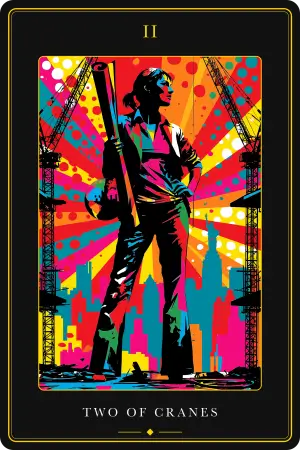


Minor Arcana ·
Tatlo ng mga Crane
Pagpapalawak, pag-asam, at paghihintay na dumating ang mga pinlano.
Kard sa isang sulyap
- Numerolohiya
- 3
- Elemento
- Fire (Apoy), na kumakatawan sa pagkilos at layunin.
- Astrolohiya
- Sun (Araw) sa Aries, nagbibigay ng sigla at pananaw.
- Landas ng Kabala
- Binah sa Atziluth, ang pagbibigay hugis sa enerhiya.
- Panahon
- Nagpapahiwatig ng mga planong nagsimula na at inaasahang magkaresulta.
- Oo / Hindi
- Oo, partikular para sa pangmatagalang plano at pagpapalawak.
Patayo
Pagpapalawak
Pananaw
Progreso
Aktibong paghihintay
Pagnenegosyo
Pangmatagalang pananaw
Pagtutulungan
Baligtad
Pagkaantala
Naipit na mga permit
Takot sa pagpapalawak
Manipis na pagpaplano
Natigil na progreso
Ligtas na paglalaro
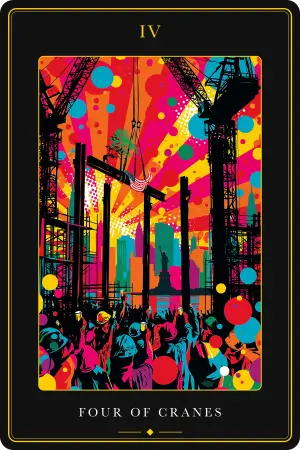
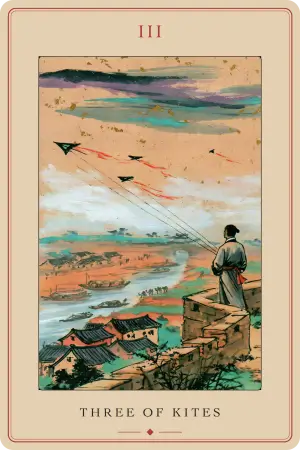
Tatlo ng mga Crane sa bawat deck
Muling inilalarawan ng bawat deck ang parehong arketipo. Ihambing ang sining, pagkatapos ay magbukas ng deck upang basahin ang buong interpretasyon nito.
Correspondences
Number. Tatlo. Ito ay tungkol sa paglikha, ang resolusyon ng tensyon na ginawa ng Dalawa. Nagtutulungan at nagpapahiwatig ito kaya naman nakasentro ang card sa pangkatang gawain. Mula sa numerong isa na pinarami nang tatlo, ito ay ang nag-iisang permiso na naging ritmo ng trabaho.
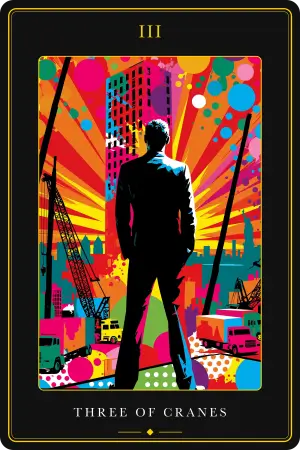
Astrology. Ang Araw sa Aries, sa pangalawang decan, mula bandang Marso 31 hanggang Abril 10. Mataas ang Araw sa Aries kaya nasa pinakamalakas nitong sign ang sigla at panlabas na ekspresyon. Nagbibigay ito sa card ng matibay na optimismo at pag-alis sa nakaraan. Sa deck na ito, kitang-kita ang Araw na nagliliyab sa likod ng tagabuo bilang isang sunburst.
Element. Fire, sa mundo ng Atziluth, ang kaharian ng purong kalooban at pinagmulan. Ang apoy ay enerhiya at pagkilos, ang pagnanais na sumakop ng mga bagong pananaw. Sa deck na ito, nangangahulugan iyon ng mga bagong palapag at mga bagong bahagi ng skyline.
Kabbalah. Binah, Pag-unawa, ang ikatlong Sephirah sa Atziluth. Ang Binah ay ang nag-aayos na ina ng Tree, ang pwersang sumasalo sa hilaw na enerhiya at nagbibigay hugis dito, upang magkaroon ng direksyon ang apoy.
Elemental dignity. Isang Fire card na lumalakas kapag katabi ng Air, at nakakaharap ng tensyon kapag katabi ng Water. Ang mga katabi nito ang humuhubog kung ang proyekto ay bibilis o babagal.
Sikolohikal na pananaw
Sa aspetong sikolohikal, ang Tatlo ng mga Crane ay ang pasulong na momentum pagkatapos umaksyon. Tinatag ng querent ang sarili sa mga nakaraang tagumpay at ngayon ay bumubuo sa mas malaking saklaw. Kaya naman mas masigla itong basahin kaysa sa mabigat na pagninilay ng Dalawa. Nakatayo ang mga tao rito sa bubong ng kanilang itinayo habang sinusukat na ang susunod na lote. Hawak nila ang malawak na pananaw ng buong skyline imbes na isang gusali lamang.
Nagsisilbi rin itong salamin sa kung paano maghintay ang isang tao. Ayon sa mga mambabasa, lumilitaw ang card na ito kapag dismayado sila sa mabagal na progreso o sinisisi ang sarili na hindi sapat ang ginagawa. Naghahatid ito ng dalawang mensahe. Una: itigil ang pag-micromanage sa mga bagay na labas sa iyong kontrol. Nasa byahe na ang mga trak at hindi ikaw ang kumokontrol sa panahon. Pangalawa: itigil ang pagiging mapangarapin lang sa bubong; sumakay sa barko dahil ang pananaw na walang aksyon ay maganda lamang na tanawin. Ang hinihingi nitong pag-unlad ay estratehikong pagtitiis, ang pananatiling alisto nang hindi sapilitang kinokontrol ang nasimulan mo na.
Ang Tatlo ng mga Crane sa ibang decks
Nananatili ang archetype kahit magbago ang imahe. Sa Tarot de Marseille, ito ang Trois de Baton, tatlong nagsasalubong na tungkod na may umuusbong na dahon. Binabasa ito base sa geometry at numero. Sa Thoth deck ni Crowley, tinawag itong 'Virtue' at inalis ang imahe ng tao pabor sa elemental geometry: ang magulong apoy ng Dalawa ay pinatatag ng numerong tatlo para maging layunin. Ginawa ni Crowley ang maliwanag na bahagi nito bilang tagumpay; ang anino nito ay kayabangan at labis na pagtaya sa sariling kakayahan.
Ang bersyon ng Rider-Waite-Smith ay ang prinsipeng mangangalakal na pinapanood ang kanyang mga barko, isang malawak na pustura na ginagamit sa modernong decks. May mga pagbabago sa Tarot of New York City pero pinapanatili ang gamit ng bawat isa: ang tatlong barko ay nagiging convoy ng mga trak, at ang dalawang nakatanim na wand ay nagiging crane sa gilid ng card. Nagiging pop-art na sunburst ang dilaw na kalangitan, at ang malayo na pantalan ay naging asul na skyline na may Statue of Liberty. Ang mga dating dumadaan sa dagat ay dadaan na ngayon sa mga tulay.
Sa kumbinasyon at konteksto
Madaling mapagkamalan ang Tatlo ng mga Crane sa katabi nito, kaya't mahalaga ang konteksto. Laban sa Dalawa, ito ay nagmamarka ng paglipat mula sa plano patungo sa paggawa: ang Dalawa ay nagpapasya pa rin kung ano ang gagawin sa likod ng pader, habang ang Tatlo ay nagpatakbo na ng mga trak. Laban sa Walo ng mga Copa, parehong naglalakbay ang dalawang tauhan palabas. Iniiwan ng Walo ang magandang sitwasyon nang may kalungkutan, habang ang Tatlo ay umaalis patungo sa mas magandang hinaharap.
Kapag kasama ng major cards, binabago nito ang pananaw. Kapag katabi ng The Wheel of Fortune, makakaranas ang querent ng itinakdang pagbabago habang pinapanatili ang pananaw na magplano para rito. Kapag katabi ng The Tower, nagiging patag na lupa ang biglaang pagkasira para malayang maitayo ng querent ang kanilang mga plano. Sa pag-ibig, maaaring magdulot ng takot ang numerong ito tungkol sa pangatlong partido, subalit kadalasang tumutukoy ito sa pagkagambala at ambisyon kaysa sa pagtataksil (na para sa mga card gaya ng Tatlo ng mga Espada). Ang payo nito ay palaging isaalang-alang ang pangmatagalang plano: tumayo sa iyong naitayo na at ituon ang enerhiya sa susunod na darating.
Historical notes
The scenic card readers know arrived in 1909 with Arthur Edward Waite and Pamela Colman Smith, who cast the figure as a merchant prince who has sent his goods abroad and waits on the threshold of adventure for his fleet. The Tarot of New York City keeps that merchant and gives him a hard hat, trading the harbor for a construction site and the fleet for a convoy of trucks.
Behind the RWS scene stand older forms. In the Tarot de Marseille the Trois de Baton shows three batons crossing, usually two in a saltire with a third through the center, dressed with foliage bursting from the wood to signal enthusiasm and growth. Marseille readers took it as the passage from theory to practice, from planning to execution. Crowley's later Thoth deck titled the card 'Virtue' and dropped the human figure for pure geometry, reading it as the fire of the Ace caught and directed by understanding, the ideal precondition to begin a large work. The image even reached literature: T.S. Eliot named 'the man with three staves' in The Waste Land of 1922 and, by his own account arbitrarily, tied him to the Fisher King.
Correspondences
Number. Three, creation and synthesis, the resolution of the tension the Two set up. It is expressive and collaborative, which is why the card leans on teamwork and the ability to inspire others. Built from the digit one taken three times, it is the single stamped permit multiplied into a working rhythm.
Astrology. The Sun in Aries, the second decan, roughly March 31 to April 10. The Sun is exalted in Aries, so vitality and outward expression sit in their strongest sign, which gives the card its steady optimism and its clean break from the past. In the deck that Sun is literal, blazing behind the builder as a sunburst that fills the sky.
Element. Fire, in the world of Atziluth, the realm of pure will and emanation. Fire is energy, action, and forward motion, the drive to conquer new horizons, which in this deck means new floors, new lots, new pieces of skyline.
Kabbalah. Binah, Understanding, the third Sephirah, in Atziluth. Binah is the structuring mother of the Tree, the force that catches raw energy and gives it form, so the volatile fire of the suit becomes directed and purposeful here.
Elemental dignity. A Fire card that strengthens beside Air and meets tension with Water, so its neighbors shape whether the venture accelerates or drags.
Psychological perspective
Psychologically, the Three of Cranes is the relief and forward momentum that follow decisive action. The querent has grounded themselves in past accomplishments and now builds on them at a larger scale, which is why it reads as more kinetic than the burdened contemplation of the Two. Its people are the ones who stand on the roof of what they built and are already measuring the next lot, holding a whole skyline of a vision rather than a single building.
It also works as a mirror for how a person handles waiting. Readers report the card appearing when they are frustrated with slow progress, trapped in a sunk-cost feeling and beating themselves up for not doing enough. In that mode it delivers one of two messages. The first is to stop micromanaging forces beyond your control, since the trucks are already on the road and the weather is not yours to command. The second is to stop merely dreaming on the roof and finally step onto the ship, because awareness without action is just a good view. The growth it asks for is the discipline of strategic patience, staying alert without trying to steer what you have already set in motion.
The Three of Cranes across decks
The archetype holds while the imagery shifts. In the Tarot de Marseille it is the Trois de Baton, three crossing staves sprouting foliage, read by geometry and number rather than narrative. In Crowley's Thoth deck it is titled 'Virtue' and abandons the human figure for elemental geometry: the chaotic fire of the Two steadied by the number three into directed will. Crowley set its bright side as accomplishment and justifiable pride, and its shadow as conceit, obstinacy, and the overestimation of one's own powers.
The Rider-Waite-Smith version is the merchant prince watching his ships, and most modern decks keep that outward, expansive posture even where they change the figure. The Tarot of New York City makes its own substitutions and keeps the function of each: the three ships become a convoy of trucks, the two planted wands become cranes fixed like masts at the card's edges, the yellow sky and red cloak become a pop-art sunburst, and the distant harbor shrinks to a teal skyline with the Statue of Liberty at the water's edge. What once came by sea now comes over the bridges, but it comes all the same.
In combination and context
The Three of Cranes is easily confused with its neighbor, so context matters. Against the Two it marks the shift from planning to execution: the Two is still deciding what to do behind a protective wall, while the Three has broken ground and set the trucks rolling. Against the Eight of Cups both figures travel outward, but the Eight leaves a good situation behind in sorrow, while the Three departs in confidence toward more.
With major cards it reframes them. Beside the Wheel of Fortune it says the querent will meet fated change yet keeps the foresight to plan around it. Beside The Tower it turns sudden destruction into cleared ground, freeing the querent to build the plans they were holding in reserve. In love spreads its number can spook anxious readers into fearing a third party, but it points to distraction and personal ambition far more often than to betrayal, which belongs to cards like the Three of Swords. Its standing advice is to keep your eyes on the long game: stand on what you have built, look at what comes next, and direct your energy toward it.
Mga tanong para sa pagninilay
- Ano ang nasimulan ko na maaaring hintaying dumating, at saan ako nag-aalinlangan na nasa byahe na ang mga trak?
- Lumipas na ba ako sa kasalukuyang block, at anong mas malawak na skyline ang maaari kong planuhin?
- Kapag wala na sa aking mga kamay ang trabaho, hinihintay ko ba ang mga bagay nang may pasensya?
Ang pangkalahatang kahulugan ay sumusunod sa pagbasang Rider-Waite-Smith — ang sangguniang ginagamit sa buong Tarot Academy. Magbukas ng partikular na deck sa itaas para sa sarili nitong interpretasyon.
Mga madalas itanong
Tuklasin ang Tarot
Pinakabagong Post
Tuklasin ang sinaunang karunungan ng mga tarot card at buksan ang mga misteryo ng iyong espirituwal na paglalakbay. Ang aming blog ang iyong daan tungo sa pag-unawa sa mayamang simbolismo, kahulugan, at praktikal na gamit ng pagbasa ng tarot.




















































