
 EN (English)


Minor Arcana · Swords (Air)
Nine of Swords
The nightmare card: waking in the dark to phantom fears the mind has manufactured out of guilt and anxiety.
Read the complete guide: The Nine of Swords Tarot Card: A Complete Guide to Symbolism and Meaning
Card at a glance
- Numerology
- Nine
- Element
- Air
- Astrology
- Mars in Gemini (second decan)
- Kabbalistic path
- Yesod (Foundation)
- Timing
- Gemini season, late spring
- Yes / No
- Upright no, Reversed mixed
Upright
anxiety
nightmares
catastrophizing
guilt
mental anguish
insomnia
worry
despair
Reversed
recovery
release
facing the truth
hope returning
suppression
hidden fears
shifting perspective
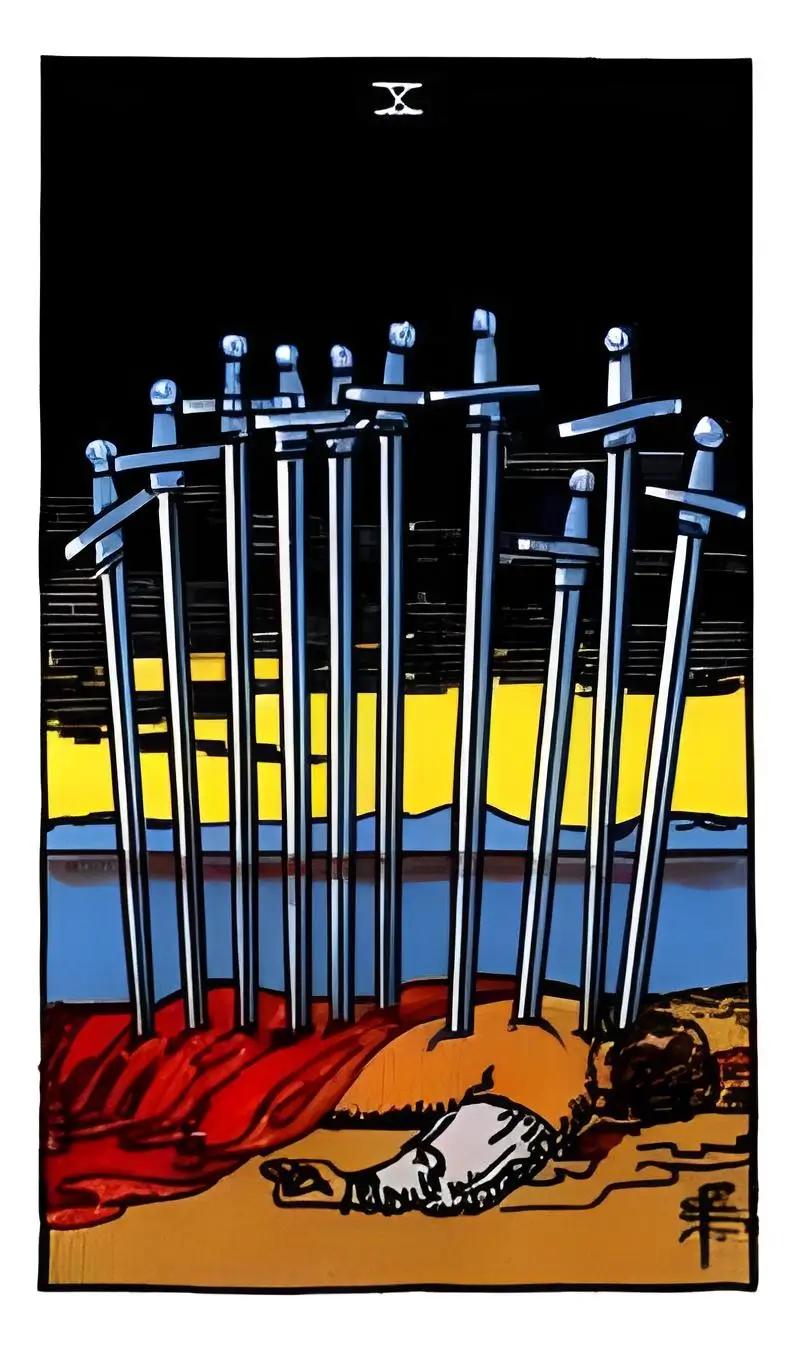
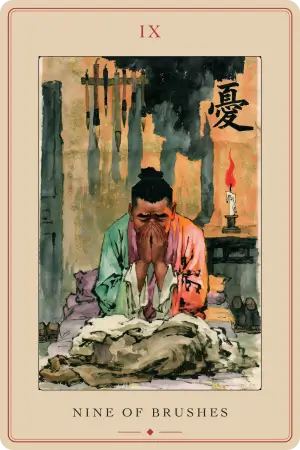
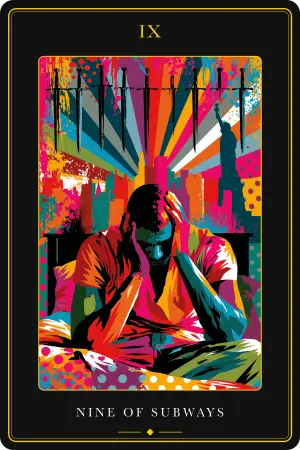
Nine of Swords in each deck
Every deck reimagines the same archetype. Compare the art, then open a deck to read its full interpretation.
Imagery and symbolism
In the Rider-Waite-Smith card a figure sits bolt upright in bed in a pitch-black room, head buried in both hands, apparently just woken from a nightmare. Nine heavy blades hang horizontally in the dark behind them, stacked like a weapon rack. The first read is unmitigated despair, but the details tell a gentler story about the nature of the fear.
The floating swords. The blades hang suspended in the black air and never touch the figure. That is the whole point: the source of suffering is internal, a phantom of the mind rather than a real weapon at the throat. The threat is generated by fear itself.
The posture and darkness. Covering the face and bowing the head is a self-imposed blindness, a refusal to look at the actual room. The pitch-black setting is the loss of perspective, where fears swell out of all proportion in the absence of light.
The carved bed panel. At the base of the bed Pamela Colman Smith carved a scene of one figure striking down another, often read as Cain and Abel. The nightmares are not happening in a vacuum. Past trauma and historical pain are carved into the foundation of the psyche and feed the present panic.
The quilt. A heavy blanket covers the lower body, patterned with red roses and astrological glyphs, the planets and zodiac signs. The roses are earthly passion and beauty, the glyphs the ordered cycles of the cosmos. While the mind spins in its loop, the body is safe and swaddled in warmth, and the universe remains ordered even when grief refuses to see it.
Core meaning
The Nine of Swords is the deck's nightmare card, the point where the analytical mind turns aggressively against itself. Esoteric tradition names it the Lord of Cruelty, and in practice it depicts the peak of mental anguish: the 3 a.m. spiral of guilt, dread, and catastrophic thinking that feels utterly real while it is happening.
Its deepest message is diagnostic and, oddly, reassuring. The swords never touch the sleeper, so the suffering is manufactured internally. Experienced readers often greet the card with relief, because when it answers a terrifying worry it is saying the problem is in your head. The disaster you are bracing for will not arrive, and the worst thing that happens is the worrying itself. The card asks you to turn on the light and drag the fear into daylight, where it loses its edge.
Upright meaning
Upright, you are in the grip of acute, unmitigated fear. The threat feels completely real even though the mind generated it, and the body pays for it with lost sleep and a nervous system stuck in overdrive. The card works as an emergency flare from the subconscious, a signal that a cognitive distortion is causing genuine distress. Its remedy is confrontation: write the specific fear down and demand evidence for it, so the swords lose their edge and the problem shrinks.
In love. A dynamic poisoned by jealousy and the terror of abandonment. You lie awake over-analyzing silences and bracing for a breakup that has not happened, often projecting old relationship trauma onto a current partner. As a partner's feelings, it can mean they care so intensely that vulnerability has triggered a suffocating dread.
In career. The archetype of imposter syndrome and burnout. Work stress has eclipsed the actual stakes, and you are losing sleep over reviews and second-guessing every decision, convinced failure is guaranteed. Left unchecked, it warns of a coming breakdown, the Ten of Swords.
In finances. The crushing weight of debt or scarcity, the classic 3 a.m. calculations where the fear of ruin looms far larger than the real ledger. Since avoidance makes it worse, the counsel is to write the exact numbers down and separate the facts from the catastrophic story.
In health. Severe anxiety and chronic insomnia, with the body carrying the mind's suffering into adrenal fatigue and fight-or-flight overdrive. It is a compassionate push to seek professional support rather than pushing through alone.
Reversed meaning
Reversed, the card forks in two directions and the surrounding cards decide which. In its hopeful sense the fever is breaking. The darkest night has passed, hope returns, and you release deep-seated guilt or fear as the swords fall away from the mind. The Sun nearby confirms this brighter reading, a directive to get out of the bed of anxiety and step into the day.
In its darker sense the anxiety has not resolved but gone underground. Suffering becomes habitual and suppressed beneath a facade of normalcy, or it hardens into paranoia and phobia. The Devil nearby can point to anguish that has manifested as illness or addiction. Here you are white-knuckling through life while refusing to face the root cause, and the body keeps score until the trauma is addressed.
In love. Either the honest release of a fear you finally spoke aloud, or a partner burying resentment and dread rather than naming it.
In career. Recovery from burnout and a truer read of the stakes, or a stress that has been hidden rather than healed.
In finances. Facing the real numbers and steadying, or continuing to avoid a ledger that keeps growing in the dark.
In health. The anxiety loop easing with support and rest, or a warning to seek professional help before suppressed trauma resurfaces in the body.
Historical notes
Like the rest of the Minor Arcana, the Nine of Swords began as an ordinary trick-taking card in European card games before divination loaded it with meaning. As the Tarot turned esoteric it gathered a fearsome reputation. In some folk-magic traditions a physical Nine of Swords hidden in a home was treated as an anxiety hex, meant to plunge the victim into a dark night of the soul.
The Golden Dawn systematized its darker character, a lineage the Thoth deck later titled outright as 'Cruelty.' Pamela Colman Smith and Arthur Edward Waite gave it the modern scenic image of the weeping sleeper, shifting the emphasis from active cruelty toward the internal, psychological experience of dread. That version, with its floating swords and comforting quilt, has shaped how the card is read ever since. The contrast between the two traditions, cruelty inflicted versus fear suffered, still defines the card's range.
Correspondences
Number. Nine, near-completion, the agonizing final mile before the Ten closes the cycle. It carries the full weight of everything the suit has learned, and in Swords that fulfillment is negative, the peak of mental overload. Nine reduces to itself and links to Major Arcana IX, The Hermit, sharing his isolation but also his hidden promise of inner wisdom for anyone who navigates the dark honestly.
Astrology. Mars in the second decan of Gemini. Mars is aggression and heat; Gemini is rapid, analytical air ruled by Mercury and tied to the nervous system. Together they weaponize the intellect against the self, violent action fused with chronic indecision, an engine revving in the redline while standing still.
Element. Air, the element of the mind, here turned into an internal battlefield of uncontrollable thought.
Kabbalah. Yesod, the ninth sphere, the Foundation, the sphere of reflection and the subconscious. A driven, ambitious intellect resting on a base of reflection produces the calculating, sleepless mind of this card.
Elemental dignity. A Sword among Swords, doubly Air, pure mind with nothing to cool it.
Timing and yes/no. It leans to Gemini season and late spring. As a yes or no it is a no upright, since the outlook is dominated by fear rather than reality, and the reversal is mixed depending on whether the anxiety is releasing or being buried.
Psychological perspective
This is the tarot's portrait of the dark night of the soul, the intellect untethered from reality and turned into a weapon against its owner. Mary K. Greer reads the card as the analytical mind actively fencing the person in, and its counsel is to acknowledge the fears and recognize that obsessive worry may be a coping mechanism for avoiding a deeper, scarier truth.
Contemporary practice has tied it closely to clinical anxiety and Complex PTSD. It is often named a 'stalker card' for people trained by trauma into hyper-vigilance, always waiting for the other shoe to drop and unable to trust abundance. When it keeps appearing it asks the person to step out of the isolation of their own mind and trust the present moment. Modern readers also frame it as the shadow of the Law of Attraction: rehearsing disaster so relentlessly that the expectation of failure becomes a self-fulfilling prophecy. The work is to rewire the catastrophic pathway toward grounded realism, and, bluntly, to go to sleep.
Nine of Swords across decks
Tarot de Marseille. Non-scenic pips, nine swords in a geometric arrangement, the dread carried by number and suit rather than a pictured nightmare.
Crowley-Thoth. Painted by Lady Frieda Harris and titled 'Cruelty,' the card drops the human figure and shows nine rusty, jagged swords pointing downward, still dripping blood. The rusty Mars brown clashes with the orange-red of Gemini in a deliberate visual cacophony. This is waking, active cruelty, the machiavellian precision with which a mind can destroy the bonds it loves. Rooted in Yesod as the Foundation of the Prince, it forces an encounter with the bloody regret that follows self-serving harm.
Modern decks. The Deviant Moon Tarot shows a figure ignoring a small daemon biting their shoulder while they bite their own hand, a precise image of misdirected self-sabotage: the worry inflicts more pain than the real problem ever could. Community artists have redrawn the card with the swords pointing straight at the sleeper, dramatizing mental-health struggles that threaten to crash down and the need to reach out for help.
In combination and context
The Nine of Swords sits at the center of a three-card arc through the suit. The Eight of Swords is paralysis, a bound and blindfolded figure who feels victimized by outside forces yet could walk free. The Nine internalizes that trap: the person has made it home but carried the punishing thoughts into the bedroom, and the criticism now comes from within. The Ten of Swords is the exhausted conclusion, the figure pinned by ten blades, often read with relief because the worst has finally happened and the overthinking is exposed as futile, with dawn breaking to clear the slate.
Other cards offer antidotes. Beside the Nine of Pentacles, grounding in skill and material reality is the cure for the mental spiral. Beside The Sun, the directive is to physically change your view, get out of bed and go outside, since the angst is imaginary. Beside The Devil, the anguish may have hardened into illness or addiction that needs structured help. In a yes or no spread the upright card reads as a no dominated by fear.
Questions for reflection
- Which of the swords hanging over you are real, and which are phantoms your mind built in the dark?
- If you turned on the light and wrote your fear down in plain words, what evidence would actually survive the morning?
- What deeper truth might the obsessive worry be helping you avoid looking at?
The general meaning follows the Rider-Waite-Smith reading, the reference used across Tarot Academy. Open a specific deck above for its own interpretation.
Frequently asked questions
Explore the Tarot
Latest Posts
Discover the ancient wisdom of tarot cards and unlock the mysteries of your spiritual journey. Our blog is your gateway to understanding the rich symbolism, meanings, and practical applications of tarot reading.




















































