
 EN (English)

Synastry ☉ ☌ ☉ · Sun conjunct Sun
Sun Conjunct Sun in Synastry
When both Suns fall on the same degree, the two people were born within about a week of the same date in the year, and astrologers read a shared core: the same kind of purpose, the same things to be proud of. Recognition comes quickly and explaining yourself takes little effort. The cost is a single stage both may want, and a blind spot neither of you can see.
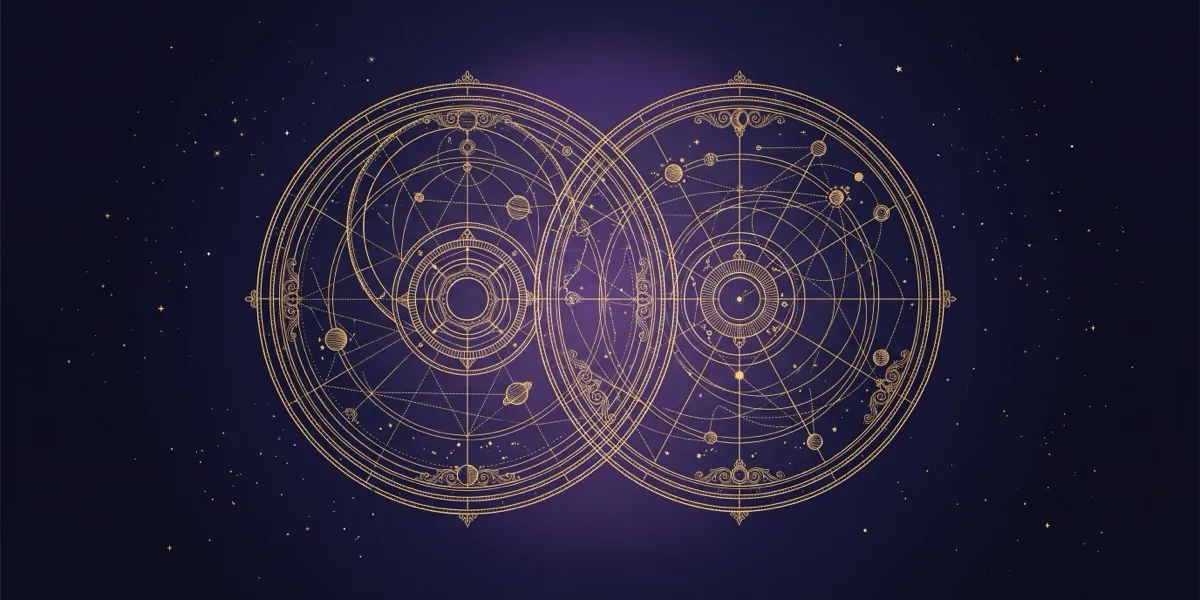
Both people aim their lives in the same direction, so each meets a familiar will in the other.
Gifts
- quick, mutual recognition
- allies on the big questions
- little need to explain yourself
- a shared birthday season
- brainstorming that runs in parallel
Shadow
- competing for the same credit
- a blind spot both share
- agreement that is only an echo
- too little contrast to learn from
- rivalry over one family role
Tarot
The Sun
Two Suns on one degree
Synastry compares two birth charts point by point. When both Suns occupy the same part of the zodiac, within 6° of each other, the two people were born at about the same time of year. The Sun moves close to a degree a day, so the orb works out at roughly a week either side of the same birthday, in any year. Age plays no part: a grandmother and a grandchild can share this contact as easily as two classmates.
In traditional astrology the Sun is the day luminary, the planet of vitality and will, and of the purpose a person organises a life around. When both Suns share a place they usually share a sign too, and with it an element, a mode and a style of wanting to be seen. Two Leo Suns both want their effort noticed. Two Virgo Suns both feel most themselves when something has been made to work properly. A conjunction fuses two functions, and here the function is the same one, so the pair meet one core aim twice over. What sets them apart lies elsewhere: their Moons and Ascendants, the houses the Suns occupy, and the rest of the two charts.
How it feels from inside both charts
A same-body contact has no giver and no receiver. Each person plays both parts. The first impression is often familiarity: the other laughs at the same moments, gets restless at the same point in a meeting and cares about the same kind of success. Explaining yourself takes less effort than usual, because the listener already runs on the same fuel.
That recognition can flatter and unsettle at once. Watching your own habits played back by someone else shows you their charm and their limits more clearly than a mirror would. A person who tends to take over a room will notice how it looks when the other does it. Pairs with this contact often joke about how alike they are, while knowing that neither can surprise the other much.
Birthdays add a small, concrete detail. The two usually celebrate within days of each other, sometimes on the same date, and this tends to become part of the bond: joint parties, and a stretch of the year both of them think of as theirs.
Same aim, one household
As a romantic contact the conjunction gives a strong sense of being allies. Two people who want the same broad things from life rarely have to negotiate the big direction, and they tend to defend each other's choices to outsiders. Attraction here grows from likeness, the comfort of being understood, more than from the pull of something foreign.
What the contact cannot supply is contrast. Romance often feeds on difference, and on the level of identity this link offers very little of it. Whether the relationship also has tenderness, desire or staying power depends on other contacts: the two Moons for daily comfort, Venus and Mars for chemistry, Saturn for commitment. Two Suns together describe what each person is aiming at. They say little about how the two will share a kitchen or get through a bad winter, so read the conjunction as one strong thread among many in two whole charts.
Friends, siblings and colleagues born in the same season
Friendship may be the easiest home for this contact. Two people of the same Sun sign and season tend to like the same pace and pick the same causes, and they understand each other's bouts of ambition. Colleagues with it often think in parallel. Brainstorming goes fast, though both may overlook the same risk.
In families the conjunction appears when relatives share a birthday season across generations, a parent and child both born in late March, say. Other relatives often spot the likeness before the two people do. It can produce a strong ally inside the family or a rival for the same role, especially when both want to be the one who leads, hosts or decides. At work it suits shared projects with clearly divided turf, where each can be the visible one in their own area.
Two people wanting the same spotlight
The Sun wants a centre, and one centre is hard to share. With both Suns on the same degree, both people may reach for the same kind of recognition at the same moment: credit for the plan, the last word in an argument, the role of the one others turn to. The competition is often polite and still tiring.
The second risk is collusion. Two people who share a core outlook share its blind spot as well. If both Suns are in Aries, neither may notice how often they start what they never finish. If both are in Taurus, neither may see that a comfortable routine stopped serving them years ago. Agreement then feels like confirmation when it is only an echo. A third voice, a friend or relative with a very different chart, can often see what neither of them can.
A day apart or a whole week
The chart counts this conjunction within 6°. Within about 2°, the birthdays fall a day or two apart and the likeness tends to be plain from the first meeting. Near the 6° limit the two were born about a week apart. The shared core is still there, and the differences elsewhere in the charts weigh more in how the bond feels.
A wide conjunction can also cross a sign boundary. Someone born on the last degrees of Gemini and someone born on the first degrees of Cancer share a season and a birthday week, yet one Sun is in a mutable air sign and the other in a cardinal water sign. Astrologers still read the fusion by degree, but the two express their purpose in visibly different styles, which takes some of the edge off the competition.
The rest of the comparison sets much of the tone. Different Moon signs give each person a separate emotional life and keep the pair from merging into one outlook. Contacts between one person's Sun and the other's Moon or Venus add warmth. Squares between the two Mars placements, or one person's Saturn on the other's Sun, can turn likeness into rivalry, or into the feeling of being judged by the one person who should understand.
Sharing the centre on purpose
Take turns at being the visible one, and agree on it out loud. Pairs with this contact often do best when each has an area that is plainly theirs: one runs the dinner party and the other the holiday, one pitches the project and the other leads the launch. Both get recognised without fighting over a single stage.
Look for outside views as a habit. Because the two of you see the world from the same angle, ask friends of a different temperament to look over your joint plans before you commit to them. Use the mirror as well. When the other person's habit annoys you, check whether it is your own, seen for once from the outside, and decide whether you want to keep it.
Questions to reflect on
- Which of my own habits do I see most clearly in this person?
- Where do we compete for the same kind of recognition?
- What might both of us be missing because we see it the same way?
- Does each of us have an area that is plainly our own?
Frequently asked questions
What does Sun conjunct Sun mean in synastry?
It means both people's Suns fall within 6° of each other, which happens when they were born within about a week of the same date in the year. Astrologers read it as a shared core purpose and quick recognition. The two tend to want similar things from life and understand each other's drive without much explanation.
Is Sun conjunct Sun good in synastry?
It is usually an easy, companionable contact that gives a strong sense of being on the same side. Its weak points are competition for the same recognition and a blind spot both people share. One contact never decides a relationship, so it is read together with the Moons, Venus, Mars and Saturn in both charts.
Does Sun conjunct Sun mean we share a birthday?
Not always the same date, but a close one. The Sun moves about a degree a day, so a 6° conjunction means birthdays within roughly six days of each other, in any year. People born on the same day of the year have a very tight conjunction.
Is having the same Sun sign the same as Sun conjunct Sun?
No. Two Libra Suns at 1° and 28° Libra are 27° apart, far outside the orb, so they share a sign without forming a conjunction. They still share an element and a mode, which astrologers read as like-mindedness. The conjunction proper needs the two Suns within a few degrees.
Can Sun conjunct Sun work in a romantic relationship?
Yes. As a romantic contact it gives two people the feeling of being allies with the same broad aims. It brings likeness more than chemistry, so desire and emotional comfort come from other contacts between the charts. Taking turns at the centre keeps the likeness from turning into rivalry.
What orb is used for Sun conjunct Sun in synastry?
This chart counts it within 6°. Within about 2° the likeness is obvious and constant; near 6° it is still felt, but other contacts weigh more. A conjunction that crosses into the next sign still counts, though the two people then express their purpose in different styles.
Latest Posts
Discover the ancient wisdom of tarot cards and unlock the mysteries of your spiritual journey. Our blog is your gateway to understanding the rich symbolism, meanings, and practical applications of tarot reading.

















