
 EN (English)

Transits ♃ ♄ ♅ ♆ ♇
Transits: The Slow Planets and Your Birth Chart
A transit is the sky of today measured against the sky of your birth. These pages read the five slow planets, Jupiter, Saturn, Uranus, Neptune and Pluto, as they form aspects to the points of your natal chart and as they pass through your twelve houses. Each page explains what the period tends to bring, how long it lasts and how to work with it.
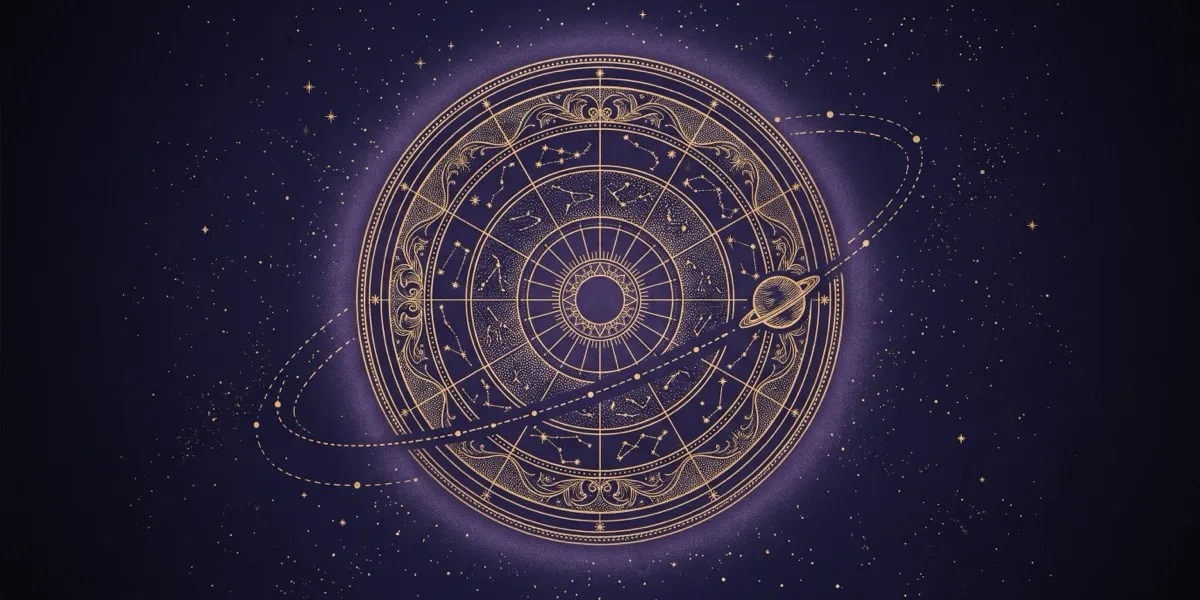
Your birth chart stays fixed while the planets keep moving, and transits are the record of where the moving sky touches the fixed one.
The moving sky against the fixed one
Your natal chart is a snapshot. It records where each planet stood at the moment and place of your birth, and it never changes. The planets themselves keep travelling, and astrologers have long read a person's life partly by watching where the current sky falls against that snapshot. When a moving planet reaches a sensitive angle to one of your natal points, or crosses into one of your houses, that is a transit.
The tradition gives the slow planets most of the weight. The Moon crosses your whole chart in about a month, and the Sun in a year, so their contacts come and go too fast to define a chapter. Jupiter and Saturn move slowly enough that a single contact can colour a season or a year. Uranus, Neptune and Pluto move so slowly that one transit can stay within orb for one to three years or longer, and astrologers often date the large turns of a life by them: the Saturn return around age 29 to 30, the Uranus opposition around 40 to 42.
A transit describes a theme and a timing. It does not decide what you do with either. Astrologers read Saturn's contacts as periods of test and structure, Jupiter's as growth and opportunity with a risk of excess, and the three outer planets as slower pressures toward change, dissolution and renewal. How each one lands depends on the natal point it touches, on the aspect it makes, and on the life you are already living when it arrives.
How to read a transit page
Every transit has three parts: the planet that is moving, the natal point or house it reaches, and, for aspects, the angle between them. The pages name all three in the title, so Saturn square natal Sun is transiting Saturn at a right angle to the Sun of your birth.
The aspects follow the classical five. The conjunction fuses the two functions. The sextile and the trine are the harmonious ones, an opening and an easy flow that can go unused if you do nothing with them. The square and the opposition are the challenging ones: friction that forces action, and a polarity that asks for balance. A hard transit is not a bad one, and astrologers often read a Saturn square as a year for building something that lasts.
Orbs are kept narrow. A contact counts when Jupiter or Saturn sits within 2 degrees of the exact angle, and Uranus, Neptune or Pluto within 1.5 degrees. Because planets appear to move backward for part of each year, a slow transit often makes its exact angle two or three times before it separates, and each page's timing section says how long that usually takes for its planet.
Some contacts reach whole age groups at once. When Uranus opposes its own natal place, or Neptune squares its own, everyone born within a few years of you meets it at about the same age. Those pages read the transit as a stage of life shared with your generation, not a personal signature.
How the transit pages are organised
The section holds 360 pages, grouped by the moving planet. Each of the five planets has its own folder, and the address tells you what you are reading. An aspect page follows the pattern /astrology/transits/saturn/square-sun: the planet, then the aspect, then the natal point. A house page follows the pattern /astrology/transits/pluto/in-7th-house.
For aspects, each planet is read in all five aspects to twelve natal points: the Sun, the Moon, Mercury, Venus, Mars, Jupiter, Saturn, Uranus, Neptune and Pluto, plus the Ascendant and the Midheaven. That gives sixty aspect pages per planet. Some of them are named cycles. Saturn conjunct natal Saturn is the Saturn return, and Jupiter returns to its natal place about every 12 years.
For houses, each planet has twelve pages, one for its stay in each of your houses. The house pages explain the planet's work on that area of life, from the money of the second house to the solitude of the twelfth. House sizes vary from chart to chart, so the stay a page gives is typical, not exact. The full list of pages follows below.
Finding the transits to your own chart
To see which of these pages apply to you right now, open the free natal chart tool at /natal-chart and enter your birth date, time and place. The Month tab then works out the sky for any month you choose against your chart. It lists the long transits in force, shows where each planet stands in your houses, marks the New and Full Moon, and gives a day-by-day calendar of the contacts that are exact. Tap a row to read a short meaning, then come back here for the full page.
Birth time matters for some transits more than others. Aspects to your planets need only a birth date, with the Moon as a partial exception because it moves fast enough to shift several degrees in a day. Aspects to the Ascendant and Midheaven, and every house transit, depend on your exact birth time. If you do not know it, read the planet pages with confidence and treat the house and angle pages as possibilities.
The slow planets rarely work alone. Two or three transits often overlap, and the way they combine says more than any one of them. Reading them side by side is where the craft of transit astrology lies.
Transiting Jupiter to your natal chart
Jupiter Conjunct Natal Sun
Jupiter Sextile Natal Sun
Jupiter Square Natal Sun
Jupiter Trine Natal Sun
Jupiter Opposite Natal Sun
Jupiter Conjunct Natal Moon
Jupiter Sextile Natal Moon
Jupiter Square Natal Moon
Jupiter Trine Natal Moon
Jupiter Opposite Natal Moon
Jupiter Conjunct Natal Mercury
Jupiter Sextile Natal Mercury
Jupiter Square Natal Mercury
Jupiter Trine Natal Mercury
Jupiter Opposite Natal Mercury
Jupiter Conjunct Natal Venus
Jupiter Sextile Natal Venus
Jupiter Square Natal Venus
Jupiter Trine Natal Venus
Jupiter Opposite Natal Venus
Jupiter Conjunct Natal Mars
Jupiter Sextile Natal Mars
Jupiter Square Natal Mars
Jupiter Trine Natal Mars
Jupiter Opposite Natal Mars
The Jupiter Return: Jupiter Conjunct Natal Jupiter
Jupiter Sextile Natal Jupiter
Jupiter Square Natal Jupiter
Jupiter Trine Natal Jupiter
The Jupiter Opposition: Jupiter Opposite Natal Jupiter
Jupiter Conjunct Natal Saturn
Jupiter Sextile Natal Saturn
Jupiter Square Natal Saturn
Jupiter Trine Natal Saturn
Jupiter Opposite Natal Saturn
Jupiter Conjunct Natal Uranus
Jupiter Sextile Natal Uranus
Jupiter Square Natal Uranus
Jupiter Trine Natal Uranus
Jupiter Opposite Natal Uranus
Jupiter Conjunct Natal Neptune
Jupiter Sextile Natal Neptune
Jupiter Square Natal Neptune
Jupiter Trine Natal Neptune
Jupiter Opposite Natal Neptune
Jupiter Conjunct Natal Pluto
Jupiter Sextile Natal Pluto
Jupiter Square Natal Pluto
Jupiter Trine Natal Pluto
Jupiter Opposite Natal Pluto
Jupiter Conjunct Natal Ascendant
Jupiter Sextile Natal Ascendant
Jupiter Square Natal Ascendant
Jupiter Trine Natal Ascendant
Jupiter Opposite Natal Ascendant
Jupiter Conjunct Natal Midheaven
Jupiter Sextile Natal Midheaven
Jupiter Square Natal Midheaven
Jupiter Trine Natal Midheaven
Jupiter Opposite Natal Midheaven
Transiting Jupiter through your houses
Jupiter Transiting the 1st House
Jupiter Transiting the 2nd House
Jupiter Transiting the 3rd House
Jupiter Transiting the 4th House
Jupiter Transiting the 5th House
Jupiter Transiting the 6th House
Jupiter Transiting the 7th House
Jupiter Transiting the 8th House
Jupiter Transiting the 9th House
Jupiter Transiting the 10th House
Jupiter Transiting the 11th House
Jupiter Transiting the 12th House
Transiting Saturn to your natal chart
Saturn Conjunct Natal Sun
Saturn Sextile Natal Sun
Saturn Square Natal Sun
Saturn Trine Natal Sun
Saturn Opposite Natal Sun
Saturn Conjunct Natal Moon
Saturn Sextile Natal Moon
Saturn Square Natal Moon
Saturn Trine Natal Moon
Saturn Opposite Natal Moon
Saturn Conjunct Natal Mercury
Saturn Sextile Natal Mercury
Saturn Square Natal Mercury
Saturn Trine Natal Mercury
Saturn Opposite Natal Mercury
Saturn Conjunct Natal Venus
Saturn Sextile Natal Venus
Saturn Square Natal Venus
Saturn Trine Natal Venus
Saturn Opposite Natal Venus
Saturn Conjunct Natal Mars
Saturn Sextile Natal Mars
Saturn Square Natal Mars
Saturn Trine Natal Mars
Saturn Opposite Natal Mars
Saturn Conjunct Natal Jupiter
Saturn Sextile Natal Jupiter
Saturn Square Natal Jupiter
Saturn Trine Natal Jupiter
Saturn Opposite Natal Jupiter
Saturn Conjunct Natal Saturn: The Saturn Return
Saturn Sextile Natal Saturn
Saturn Square Natal Saturn
Saturn Trine Natal Saturn
Saturn Opposite Natal Saturn
Saturn Conjunct Natal Uranus
Saturn Sextile Natal Uranus
Saturn Square Natal Uranus
Saturn Trine Natal Uranus
Saturn Opposite Natal Uranus
Saturn Conjunct Natal Neptune
Saturn Sextile Natal Neptune
Saturn Square Natal Neptune
Saturn Trine Natal Neptune
Saturn Opposite Natal Neptune
Saturn Conjunct Natal Pluto
Saturn Sextile Natal Pluto
Saturn Square Natal Pluto
Saturn Trine Natal Pluto
Saturn Opposite Natal Pluto
Saturn Conjunct Natal Ascendant
Saturn Sextile Natal Ascendant
Saturn Square Natal Ascendant
Saturn Trine Natal Ascendant
Saturn Opposite Natal Ascendant
Saturn Conjunct Natal Midheaven
Saturn Sextile Natal Midheaven
Saturn Square Natal Midheaven
Saturn Trine Natal Midheaven
Saturn Opposite Natal Midheaven
Transiting Saturn through your houses
Saturn Transiting the 1st House
Saturn Transiting the 2nd House
Saturn Transiting the 3rd House
Saturn Transiting the 4th House
Saturn Transiting the 5th House
Saturn Transiting the 6th House
Saturn Transiting the 7th House
Saturn Transiting the 8th House
Saturn Transiting the 9th House
Saturn Transiting the 10th House
Saturn Transiting the 11th House
Saturn Transiting the 12th House
Transiting Uranus to your natal chart
Uranus Conjunct Natal Sun
Uranus Sextile Natal Sun
Uranus Square Natal Sun
Uranus Trine Natal Sun
Uranus Opposite Natal Sun
Uranus Conjunct Natal Moon
Uranus Sextile Natal Moon
Uranus Square Natal Moon
Uranus Trine Natal Moon
Uranus Opposite Natal Moon
Uranus Conjunct Natal Mercury
Uranus Sextile Natal Mercury
Uranus Square Natal Mercury
Uranus Trine Natal Mercury
Uranus Opposite Natal Mercury
Uranus Conjunct Natal Venus
Uranus Sextile Natal Venus
Uranus Square Natal Venus
Uranus Trine Natal Venus
Uranus Opposite Natal Venus
Uranus Conjunct Natal Mars
Uranus Sextile Natal Mars
Uranus Square Natal Mars
Uranus Trine Natal Mars
Uranus Opposite Natal Mars
Uranus Conjunct Natal Jupiter
Uranus Sextile Natal Jupiter
Uranus Square Natal Jupiter
Uranus Trine Natal Jupiter
Uranus Opposite Natal Jupiter
Uranus Conjunct Natal Saturn
Uranus Sextile Natal Saturn
Uranus Square Natal Saturn
Uranus Trine Natal Saturn
Uranus Opposite Natal Saturn
Uranus Conjunct Natal Uranus: The Uranus Return
Uranus Sextile Natal Uranus
Uranus Square Natal Uranus
Uranus Trine Natal Uranus
Uranus Opposite Natal Uranus: The Midlife Opposition
Uranus Conjunct Natal Neptune
Uranus Sextile Natal Neptune
Uranus Square Natal Neptune
Uranus Trine Natal Neptune
Uranus Opposite Natal Neptune
Uranus Conjunct Natal Pluto
Uranus Sextile Natal Pluto
Uranus Square Natal Pluto
Uranus Trine Natal Pluto
Uranus Opposite Natal Pluto
Uranus Conjunct the Ascendant
Uranus Sextile the Ascendant
Uranus Square the Ascendant
Uranus Trine the Ascendant
Uranus Opposite the Ascendant
Uranus Conjunct the Midheaven
Uranus Sextile the Midheaven
Uranus Square the Midheaven
Uranus Trine the Midheaven
Uranus Opposite the Midheaven
Transiting Uranus through your houses
Uranus Transiting the 1st House
Uranus Transiting the 2nd House
Uranus Transiting the 3rd House
Uranus Transiting the 4th House
Uranus Transiting the 5th House
Uranus Transiting the 6th House
Uranus Transiting the 7th House
Uranus Transiting the 8th House
Uranus Transiting the 9th House
Uranus Transiting the 10th House
Uranus Transiting the 11th House
Uranus Transiting the 12th House
Transiting Neptune to your natal chart
Neptune Conjunct Natal Sun
Neptune Sextile Natal Sun
Neptune Square Natal Sun
Neptune Trine Natal Sun
Neptune Opposite Natal Sun
Neptune Conjunct Natal Moon
Neptune Sextile Natal Moon
Neptune Square Natal Moon
Neptune Trine Natal Moon
Neptune Opposite Natal Moon
Neptune Conjunct Natal Mercury
Neptune Sextile Natal Mercury
Neptune Square Natal Mercury
Neptune Trine Natal Mercury
Neptune Opposite Natal Mercury
Neptune Conjunct Natal Venus
Neptune Sextile Natal Venus
Neptune Square Natal Venus
Neptune Trine Natal Venus
Neptune Opposite Natal Venus
Neptune Conjunct Natal Mars
Neptune Sextile Natal Mars
Neptune Square Natal Mars
Neptune Trine Natal Mars
Neptune Opposite Natal Mars
Neptune Conjunct Natal Jupiter
Neptune Sextile Natal Jupiter
Neptune Square Natal Jupiter
Neptune Trine Natal Jupiter
Neptune Opposite Natal Jupiter
Neptune Conjunct Natal Saturn
Neptune Sextile Natal Saturn
Neptune Square Natal Saturn
Neptune Trine Natal Saturn
Neptune Opposite Natal Saturn
Neptune Conjunct Natal Uranus
Neptune Sextile Natal Uranus
Neptune Square Natal Uranus
Neptune Trine Natal Uranus
Neptune Opposite Natal Uranus
Neptune Conjunct Natal Neptune: The Neptune Return
Neptune Sextile Natal Neptune
Neptune Square Natal Neptune
Neptune Trine Natal Neptune
Neptune Opposite Natal Neptune
Neptune Conjunct Natal Pluto
Neptune Sextile Natal Pluto
Neptune Square Natal Pluto
Neptune Trine Natal Pluto
Neptune Opposite Natal Pluto
Neptune Conjunct Natal Ascendant
Neptune Sextile Natal Ascendant
Neptune Square Natal Ascendant
Neptune Trine Natal Ascendant
Neptune Opposite Natal Ascendant
Neptune Conjunct Natal Midheaven
Neptune Sextile Natal Midheaven
Neptune Square Natal Midheaven
Neptune Trine Natal Midheaven
Neptune Opposite Natal Midheaven
Transiting Neptune through your houses
Neptune Transiting the 1st House
Neptune Transiting the 2nd House
Neptune Transiting the 3rd House
Neptune Transiting the 4th House
Neptune Transiting the 5th House
Neptune Transiting the 6th House
Neptune Transiting the 7th House
Neptune Transiting the 8th House
Neptune Transiting the 9th House
Neptune Transiting the 10th House
Neptune Transiting the 11th House
Neptune Transiting the 12th House
Transiting Pluto to your natal chart
Pluto Conjunct Natal Sun
Pluto Sextile Natal Sun
Pluto Square Natal Sun
Pluto Trine Natal Sun
Pluto Opposite Natal Sun
Pluto Conjunct Natal Moon
Pluto Sextile Natal Moon
Pluto Square Natal Moon
Pluto Trine Natal Moon
Pluto Opposite Natal Moon
Pluto Conjunct Natal Mercury
Pluto Sextile Natal Mercury
Pluto Square Natal Mercury
Pluto Trine Natal Mercury
Pluto Opposite Natal Mercury
Pluto Conjunct Natal Venus
Pluto Sextile Natal Venus
Pluto Square Natal Venus
Pluto Trine Natal Venus
Pluto Opposite Natal Venus
Pluto Conjunct Natal Mars
Pluto Sextile Natal Mars
Pluto Square Natal Mars
Pluto Trine Natal Mars
Pluto Opposite Natal Mars
Pluto Conjunct Natal Jupiter
Pluto Sextile Natal Jupiter
Pluto Square Natal Jupiter
Pluto Trine Natal Jupiter
Pluto Opposite Natal Jupiter
Pluto Conjunct Natal Saturn
Pluto Sextile Natal Saturn
Pluto Square Natal Saturn
Pluto Trine Natal Saturn
Pluto Opposite Natal Saturn
Pluto Conjunct Natal Uranus
Pluto Sextile Natal Uranus
Pluto Square Natal Uranus
Pluto Trine Natal Uranus
Pluto Opposite Natal Uranus
Pluto Conjunct Natal Neptune
Pluto Sextile Natal Neptune
Pluto Square Natal Neptune
Pluto Trine Natal Neptune
Pluto Opposite Natal Neptune
Pluto Conjunct Natal Pluto: The Pluto Return
Pluto Sextile Natal Pluto
Pluto Square Natal Pluto
Pluto Trine Natal Pluto
Pluto Opposite Natal Pluto
Pluto Conjunct Natal Ascendant
Pluto Sextile Natal Ascendant
Pluto Square Natal Ascendant
Pluto Trine Natal Ascendant
Pluto Opposite Natal Ascendant
Pluto Conjunct Natal Midheaven
Pluto Sextile Natal Midheaven
Pluto Square Natal Midheaven
Pluto Trine Natal Midheaven
Pluto Opposite Natal Midheaven
Transiting Pluto through your houses
Pluto Transiting the 1st House
Pluto Transiting the 2nd House
Pluto Transiting the 3rd House
Pluto Transiting the 4th House
Pluto Transiting the 5th House
Pluto Transiting the 6th House
Pluto Transiting the 7th House
Pluto Transiting the 8th House
Pluto Transiting the 9th House
Pluto Transiting the 10th House
Pluto Transiting the 11th House
Pluto Transiting the 12th House
Frequently asked questions
What is a transit in astrology?
A transit is a moving planet forming an aspect to a point in your birth chart, or passing through one of your houses. Astrologers read it as a period when the themes of that planet act on that part of your life. The birth chart stays fixed, and transits describe how the current sky meets it.
Which transits matter most?
Astrologers give the most weight to the slow planets: Jupiter, Saturn, Uranus, Neptune and Pluto. Their contacts last from months to several years and often mark distinct chapters of life. Contacts to the Sun, Moon, Ascendant and Midheaven are usually read as the most personal.
How long does a transit last?
It depends on the planet. A Jupiter aspect can repeat up to three times over several months, a Saturn aspect usually repeats over most of a year, and Uranus, Neptune and Pluto can stay within orb for one to three years, sometimes longer. Each page gives the timing for its planet.
How do I find my current transits?
Enter your birth details in the free natal chart tool at /natal-chart and open the Month tab. It lists the transits to your chart for the month you choose, with a calendar of the days when contacts are exact. Each item links to its meaning.
Do I need my birth time for transits?
For aspects to your planets, a birth date is usually enough, though the Moon's position benefits from a time. Transits to the Ascendant and Midheaven, and transits through the houses, need an exact birth time to be read with confidence.
Are hard transits bad?
Not in themselves. Squares and oppositions bring friction and pressure, which astrologers read as a push toward action or balance. Astrologers often read the hardest transits as the periods for changing what needs to change.
Latest Posts
Discover the ancient wisdom of tarot cards and unlock the mysteries of your spiritual journey. Our blog is your gateway to understanding the rich symbolism, meanings, and practical applications of tarot reading.

















