
 EN (English)



Minor Arcana · Swords (Air)
Three of Swords
The pierced heart: heartbreak and the painful truth that finally has to be felt, not thought away.
Read the complete guide: Three of Swords in Tarot: A Complete Guide to its Symbolism and Meaning
Card at a glance
- Numerology
- Three
- Element
- Air
- Astrology
- Saturn in Libra
- Kabbalistic path
- Binah (Understanding)
- Timing
- Early October, mid-Libra season
- Yes / No
- Upright no, Reversed easing toward yes
Upright
Heartbreak
Grief
Betrayal
Painful truth
Separation
Sorrow
Loss
Rejection
Reversed
Healing
Forgiveness
Releasing pain
Recovery
Reconciliation
Suppression
Reopened wound
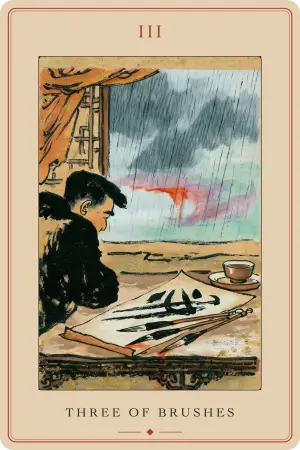
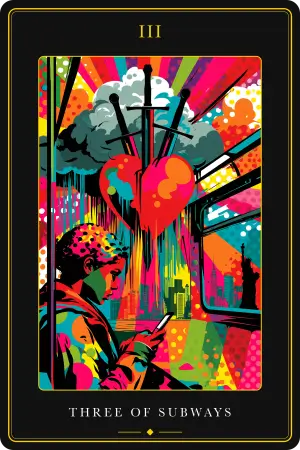
Three of Swords in each deck
Every deck reimagines the same archetype. Compare the art, then open a deck to read its full interpretation.
Imagery and symbolism
The Rider-Waite-Smith image is bare and needs no words: a single red heart, unnaturally large and fully exposed, pierced straight through by three swords, against a sky of bruised grey storm clouds and hard rain. There is no person here, and that absence is deliberate. With no figure to hide behind and no scene to blame, the card leaves only the wound itself.
Each part carries the meaning. The heart is love, vulnerability, and the soul's centre, resilient but open to the weather. The three swords are the intellect, logic, and harsh words, the element of Air driven symmetrically and deep into the emotional core. The storm clouds and rain are the confusion and weeping that come with fresh grief, but weather passes: the downpour says the pain is a passing front, not a fixed climate. The card holds an elemental paradox, Air piercing Water, which teaches that the sorrow is largely made and sustained by the mind. A real event may land the first blow, but it is the replaying, the projecting, the 'woulda, coulda, shoulda' that drives the blades deeper.
Core meaning
The Three of Swords is heartbreak in its clearest form: grief, betrayal, loss, and the sharp severing of a tie. Where the number three usually means growth and synthesis, under the suit of Swords it channels the destructive edge of the triad into worry, criticism, and pain. It is the moment a painful truth pierces the protective layers of denial and demands to be felt in the body rather than managed at an intellectual distance.
Often the card arrives as a brutal truth-teller. The swords are already in the heart; its appearance simply confirms a reality the querent long suspected but fought to avoid, and forces them to stop intellectualising and finally feel it. That is also its gift. Once the comfortable illusion ruptures, a clearer and more honest view of the situation can begin, and the wound can start to close.
Upright meaning
Upright, the Three of Swords signifies acute heartbreak, sudden separation, grief, betrayal, and disappointment. In love it is one of the strongest signals of a breakup, divorce, or a definitive ending. In work or money it points to a hard critique, a painful loss, bad news on a project, or a stinging unexpected bill. The card asks the querent to strip away denial and sit with the pain honestly rather than rush for a silver lining before the emotion has been felt.
In love. A breakup, an affair exposed, or a truth that ends something. The card validates the pain and asks the querent to grieve it fully instead of numbing it or intellectualising why it happened.
In career. A harsh critique, a rejection, or bad news on work that mattered. It stings, and it often confirms a professional reality that was already suspected.
In finances. An unwelcome bill, a loss, or hard financial news. The card advises facing the figures squarely rather than bracing against them.
In health. Real strain shows in the body: chest tightness, exhaustion from stress, the literal ache of a broken heart. The imagery of blades can also point to surgery or a hard diagnosis, and the advice is tenderness, rest, and professional support.
Reversed meaning
Reversed, the energy of the card shifts and the swords begin to come out. The main modern reading is recovery and release: the storm clouds part, the sharpest stretch of grief lifts, and the querent wakes without bracing for pain. It is the slow, deliberate work of forgiveness, of an external betrayer or, just as often, of oneself. There is a warning side too, and the surrounding cards decide which it is. The pain may be pushed down and suppressed rather than processed, so it festers, or an old wound that never closed is being reopened. The card asks one diagnostic question: are the swords coming out, or being driven deeper?
In love. Reconciliation, an apology, or the honest work of letting resentment go. Reversed, it can also warn that hurt is being buried rather than healed.
In career. Recovering from a setback and adjusting expectations. The acute disappointment is fading, though bitterness left unaddressed can linger.
In finances. Slowly recovering from a loss and regaining footing, provided the underlying problem is faced rather than ignored.
In health. Physical and emotional healing beginning, the heart opening back to hope. It still cautions against suppressing stress that needs to be expressed.
Historical notes
The pierced-heart image is far older than the modern occult decks. It appears in the Sola-Busca Tarot of about 1490 to 1491, the oldest known complete 78-card deck, printed in Venice and the first to fully illustrate the Minor Arcana. There the Three of Swords was a heart pierced by three blades, but its Renaissance meaning was not romantic heartbreak at all: it stood for silence, altruism, and suffering consciously undertaken for a higher value, a stoic endurance with a light heart.
The image drew on Christian devotion, the Sacred Heart of Jesus pierced by the Holy Lance and the Mater Dolorosa whose heart is pierced by seven sorrows. When Pamela Colman Smith illustrated the Rider-Waite-Smith deck in 1909, she had seen the Sola-Busca cards on exhibit at the British Museum, and the Three of Swords is one of the rare cases where she copied its core motif directly. Her genius was the setting: she stripped the Renaissance flourishes and hung the heart against weeping grey storm clouds, fixing the card's modern meaning as pure heartbreak.
Correspondences
Number. Three, usually growth and creative synthesis, but under Swords it turns to the destructive frequency of the triad: worry, criticism, and pain. It also marks a critical mass, the pressure of unsaid things finally breaking open into a turning point.
Astrology. Saturn in Libra, the second or middle decan of Libra, roughly October 3rd to 12th. Saturn is exalted in Libra, so its restrictive, karmic weight works at full, refined strength, making the sorrow structured and necessary rather than random.
Element. Air, the suit of mind and communication. The pain here is a mental realisation landing in the emotional body, Air cutting into Water.
Kabbalah. The card sits at Binah, Understanding, the third sphere, the Great Mother who gives form. Form requires limits and severing, so Binah carries a foundational sorrow, the mourning of the dark sea.
Elemental dignity. As an Air card driven into feeling, it sharpens and wounds, and its harshness eases when softer, watery cards nearby offer comfort and recovery.
Psychological perspective
The Three of Swords is the mind wounding itself. Because it belongs to Air, the pain reads as an internal, intellectual self-betrayal: the three blades are often the 'woulda, coulda, shoulda' thoughts that keep a person tethered to suffering long after the event has passed. The card warns against rumination loops, the endless re-litigating of the past, and asks the querent whether their own reactions and catastrophic thinking are driving the swords deeper.
In modern practice it works as a permission slip to hurt. Against a culture that demands instant silver linings, the card validates simply being in pain, resisting the urge to bypass grief or hunt for the lesson before the feeling has been metabolised. It reframes heartbreak from passive victimhood into an active meeting with reality: acknowledge the truth, feel it where it actually hurts, then consciously pull the mind off its fixations rather than clinging to righteous resentment. Read in sequence, it shatters the blindfolded denial of the Two of Swords, and the clarity that follows, however painful, is the point.
The Three of Swords across decks
The two dominant versions treat sorrow very differently. The Rider-Waite-Smith card is the accessible one this page follows: the red heart, the three swords, the grey rain, heartbreak made instantly legible.
In the Thoth deck Lady Frieda Harris replaced the heart with a white rose, symbol of the unfolding soul and Venusian love, violently pierced and shedding its petals, set against a dark, crystallised sea. The central sword stands heavy and upright with a Solomonic hilt while two curved blades tear in from the sides, and Crowley titled the card simply 'Sorrow', naming the Weltschmerz that underlies the whole material world. Modern decks push it further still: the Robin Wood Tarot moves the focus to the aftermath, a blindfolded figure meditating with the swords set aside, while the Ellen Cannon Reed deck frames the three swords as a doorway to walk through, making the pain a threshold rather than a destination. The Voyager Tarot even retitles it 'Creativity', for the growth that can follow a shattered worldview.
In combination and context
The Three of Swords takes much of its exact weight from its neighbours and its position. Read after the Two of Swords it is the breakthrough that ends the blindfolded stalemate, the agonising truth finally accepted. In a career or life-path spread its Saturn in Libra note can mean a long-held dream will take patience and painful compromise, the goal delayed rather than denied. Softer, watery cards around it point toward comfort and recovery; harder Swords cards keep the wound open.
Position sharpens the reading. In a past slot it names the loss the present was built on. As an obstacle it is grief or bitterness that blocks the way forward. As advice it says stop intellectualising and let it hurt where it hurts. As an outcome it warns of a painful ending, though the rain in the image promises the storm will pass. In a yes-or-no reading the upright card generally answers no; reversed, as the swords come out, it eases toward yes.
Questions for reflection
- What painful truth have I already sensed and been protecting myself from fully feeling?
- Am I pulling the swords out through forgiveness, or driving them deeper by replaying the story?
- Where am I intellectualising this grief from a safe distance instead of letting it hurt where it actually hurts?
The general meaning follows the Rider-Waite-Smith reading, the reference used across Tarot Academy. Open a specific deck above for its own interpretation.
Frequently asked questions
Explore the Tarot
Latest Posts
Discover the ancient wisdom of tarot cards and unlock the mysteries of your spiritual journey. Our blog is your gateway to understanding the rich symbolism, meanings, and practical applications of tarot reading.




















































